Daoist State Transformation
Emperor Taiwu embraces the Celestial Master movement, changes the reign title, and initiates state Daoist supremacy.
Northern Wei Dynasty (北魏) · HISTORICAL EVENT
太武帝灭佛
The Persecution of Buddhism under Emperor Taiwu of Northern Wei was the first of the four catastrophic anti-Buddhist campaigns in imperial Chinese history, known collectively as the Three Wus and One Zong persecutions. Following the unification of northern China, the Northern Wei state faced acute fiscal depletion and manpower shortages due to continuous warfare against nomadic rivals. Concurrently, monastic estates expanded rapidly, shielding fertile…
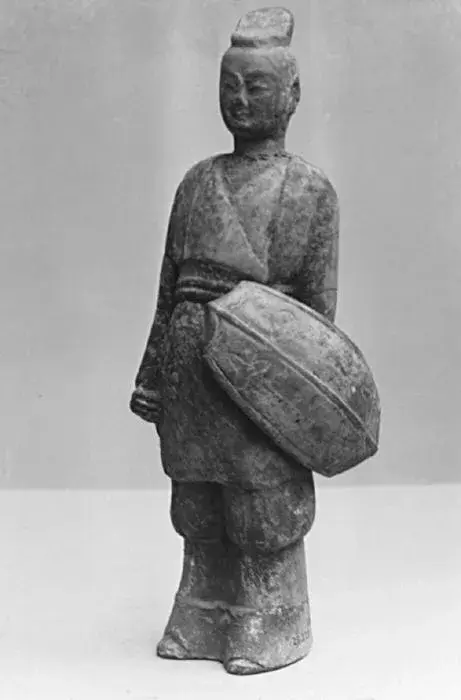
The Persecution of Buddhism under Emperor Taiwu of Northern Wei was the first of the four catastrophic anti-Buddhist campaigns in imperial Chinese history, known collectively as the Three Wus and One Zong persecutions. Following the unification of northern China, the Northern Wei state faced acute fiscal depletion and manpower shortages due to continuous warfare against nomadic rivals. Concurrently, monastic estates expanded rapidly, shielding fertile lands, immense wealth, and thousands of tax-exempt monks from imperial jurisdiction. Influenced by his Confucian minister Cui Hao and Daoist master Kou Qianzhi, Emperor Taiwu embraced Daoism as the state ideology. When imperial troops pacifying the Gai Wu rebellion in Chang'an discovered hidden caches of weapons and clandestine wealth inside Buddhist monasteries in 446, Emperor Taiwu suspected the clergy of treason. He promulgated draconian decrees ordering the execution of monks, the demolition of temples, and the burning of scriptures nationwide. The suppression persisted until 452, when the emperor was assassinated and his successor, Emperor Wencheng, formally rehabilitated Buddhism.
Emperor Taiwu embraces the Celestial Master movement, changes the reign title, and initiates state Daoist supremacy.
Gai Wu mobilizes regional tribes in Guanzhong, prompting Emperor Taiwu to personally lead the western punitive campaign.
Imperial troops discover hidden arsenals, illicit wealth, and private chambers in Chang'an monasteries.
Emperor Taiwu decrees the nationwide execution of monks and destruction of temples; Crown Prince Tuoba Huang delays transmission.
Chief minister Cui Hao is executed alongside his extended family following the National History incident.
Following the assassination of Emperor Taiwu, Emperor Wencheng repeals the persecution decrees and sponsors the Yungang Grottoes.
During the late Sixteen Kingdoms and early Northern Wei, imperial rulers pursued tolerant and supportive policies toward Buddhism to pacify newly incorporated populations across the Central Plains. Emperor Daowu and Emperor Mingyuan erected grand monasteries in Pingcheng, encouraging monastic ordination. Consequently, Buddhism spread rapidly throughout northern China, establishing vast monastic communities in Pingcheng, Luoyang, and Chang'an.
However, the rapid expansion of Buddhist institutions created deep structural tensions with the secular state. Emperor Taiwu of Northern Wei was an ambitious military conqueror who annexed Helian Xia, Northern Yan, and Northern Liang, unifying northern China while repeatedly campaigning against the Rouran Khaganate. These protracted campaigns placed severe strains on imperial grain supplies and military recruitment. Concurrently, Buddhist monasteries possessed tax immunity and corvee exemptions. Millions of peasants shaved their heads and entered monasteries as monastic dependents to evade heavy conscription, depleting the empire's taxable population and labor force.
At court, ideological tensions intensified. Minister Cui Hao, a member of the elite Han gentry, despised Buddhism as an alien barbarian superstition that undermined traditional Confucian social ethics. Cui Hao championed Confucian-Daoist synthesis to establish centralized imperial institutions. Simultaneously, Daoist Celestial Master Kou Qianzhi arrived at Pingcheng, reforming the Celestial Master tradition into the New Celestial Master movement, advocating state-sponsored Daoism to legitimize the Tuoba rulers. Impressed by their visions of universal rulership, Emperor Taiwu adopted Daoism in 440, changing his era name to Taiping Zhenjun (Supreme Realized Lord of Great Peace) and styling himself a disciple of the Celestial Master.
In 444, Emperor Taiwu initiated preliminary restrictions on monastic growth, prohibiting private support for sorcerers and compelling monks under the age of fifty to return to secular life and enter military service. These administrative measures failed to arrest the independence of monastic estates, setting the stage for a violent imperial confrontation.
In the autumn of 445, Gai Wu, a Lushuihu chieftain in the Guanzhong region, mobilized over one hundred thousand tribal warriors and displaced peasants in an open insurrection that captured major garrisons across modern Shaanxi. Threatened by the imminent collapse of imperial control in the northwest, Emperor Taiwu personally commanded tens of thousands of elite cavalry to pacify Guanzhong in early 446.
In February 446, while inspecting the defenses of Chang'an, Emperor Taiwu entered a major Buddhist monastery. Searching the premises, imperial guards uncovered hidden arsenals of bows, spears, iron armor, and shields concealed within secluded meditation chambers. Deeply alarmed, the emperor suspected the monastic community of secretly stockpiling weapons to collaborate with Gai Wu's rebels. He ordered an immediate, thorough search of all monasteries throughout Chang'an.
Subsequent investigations unearthed vast quantities of gold, silver, and silk deposited clandestinely by corrupt local aristocrats and wealthy merchants seeking to evade imperial taxes. Furthermore, imperial troops discovered underground liquor distilleries and concealed private chambers where monks entertained women from prominent gentry families. Convinced that the monastic community was a haven of hypocrisy, tax fraud, and sedition, Emperor Taiwu fell into an uncontrollable rage, declaring that Buddhism subverted imperial authority under the guise of compassion.
Minister Cui Hao exploited the emperor's outrage, arguing passionately that Buddhism should be eradicated completely. Although Daoist master Kou Qianzhi urged moderation to avoid excessive bloodshed, Emperor Taiwu issued an uncompromising nationwide extermination edict in March 446. The decree ordered the immediate execution of all Buddhist monks in Chang'an, the complete demolition of monasteries, stupas, and shrines throughout every prefecture, the public burning of all Buddhist scriptures, and the destruction of Buddha statues made of gold, bronze, or stone. Any local official who delayed enforcement or any civilian harboring clergy faced immediate execution alongside their entire clan.
At Pingcheng, Crown Prince Tuoba Huang, who was supervising the imperial administration and harbored deep personal sympathies for Buddhism, received the edict with horror. Recognizing that overt defiance would provoke his father's fury, the Crown Prince deliberately delayed the dispatch and dissemination of the decrees to provincial authorities. This critical delay gave monastic communities valuable time to react. Thousands of monks shaved their beards, donned secular attire, and escaped into remote mountainous regions or fled southward to the Liu Song dynasty, while devoted laymen hid precious scriptures and bronze statues within double walls and subterranean vaults.
Nevertheless, imperial forces executed the destruction with ruthless ferocity across major northern cities. Monasteries across northern China were razed to the ground, libraries of translated Buddhist texts were incinerated, and thousands of monks who failed to escape were slaughtered. The suppression raged unabated for six years. In 450, Cui Hao fell from imperial favor after his compilation of the Northern Wei official history exposed the unvarnished nomadic ancestry of the Tuoba ruling house, leading to his execution alongside his entire clan. In March 452, Emperor Taiwu was assassinated in his palace by the corrupt eunuch Zong Ai.
In October 452, Emperor Wencheng ascended the throne. Responding to widespread popular desire for religious stability, the new emperor issued an amnesty decree repealing all anti-Buddhist prohibitions. The state authorized the reconstruction of temples, permitted voluntary ordination, and appointed the monk Shixian as supreme overseer of Buddhist affairs. Soon after, under the leadership of master Tanyao, the imperial court initiated the carving of the Yungang Grottoes, inaugurating a golden age of state-sponsored Buddhist art and completing the full rehabilitation of the Buddhist faith.
Emperor Taiwu's persecution exerted a profound and lasting impact on the evolution of state-religion relations in medieval China. Economically, the campaign temporarily eliminated independent monastic landholdings across northern China. Hundreds of thousands of monks and monastic tenant laborers were returned to the imperial tax registries, while confiscated monastery wealth and metal statues were melted down into bronze coinage and armaments, replenishing imperial coffers.
Politically and ideologically, the violent suppression shattered the illusion that religious institutions could function as autonomous, self-governing entities immune from imperial authority. It demonstrated that within the centralized Chinese imperial system, any religious movement that challenged state fiscal sovereignty or harbored seditious elements would face annihilation.
Consequently, when Buddhism was rehabilitated under Emperor Wencheng, monastic leaders fundamentally restructured their institutional philosophy. Monastic supervisor Tanyao articulated the doctrine that the emperor was the living Tathagata Buddha on earth. The monumental Buddha statues of the Yungang Grottoes were sculpted explicitly to mirror the facial features and imposing stature of the Northern Wei emperors. By transforming Buddhism into a pillar of imperial legitimacy, the sangha secured permanent protection, establishing the enduring pattern of church subordination to the Chinese secular state.
Traditional historians and modern scholars evaluate the persecution as a pivotal clash between centralized imperial authority and expanding religious economic autonomy. The Book of Wei noted that while the destruction of scriptures and temples was a tragedy, the rampant tax evasion and corruption within early monasteries had genuinely compromised imperial governance.
Philosopher Wang Fuzhi argued that Emperor Taiwu's primary motivation was the restoration of state fiscal and military reserves rather than purely theological devotion, though his excessive cruelty inevitably stained his historical legacy.
Modern historians of religion emphasize that Emperor Taiwu's persecution forced Chinese Buddhism to abandon its foreign aloofness and adapt to indigenous political reality. The trauma of the suppression accelerated the sinification of Buddhism, aligning monastic institutions directly with the welfare, ritual order, and political legitimacy of the Chinese imperial state.