Founding of the Song Dynasty
The establishment of civil governance and urban markets creates fertile ground for lyrical poetry
· HISTORICAL EVENT
宋词兴盛
The Flourishing of Song Ci Poetry was an epochal cultural and literary movement across the Song Dynasty (960–1279) that elevated metric lyric poetry into the defining art form of the era, universally celebrated as the "Literature of an Era." Evolving from popular Sui and Tang musical songs set to Central Asian banquet music (Yanyue) and refined through the late Tang and Five Dynasties salons, Ci poetry reached its absolute zenith during the Song Dynasty.…
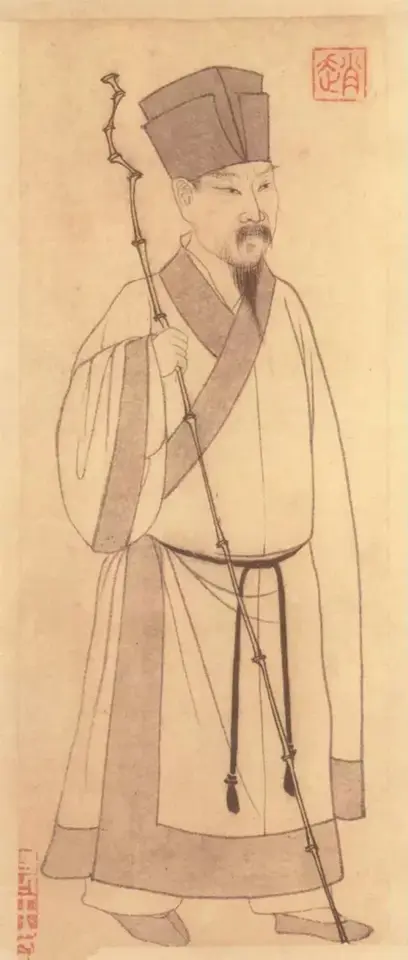
The Flourishing of Song Ci Poetry was an epochal cultural and literary movement across the Song Dynasty (960–1279) that elevated metric lyric poetry into the defining art form of the era, universally celebrated as the "Literature of an Era." Evolving from popular Sui and Tang musical songs set to Central Asian banquet music (Yanyue) and refined through the late Tang and Five Dynasties salons, Ci poetry reached its absolute zenith during the Song Dynasty. Across three centuries of economic prosperity and urban expansion, Song Ci evolved through diverse aesthetic schools: early Northern Song chancellors Yan Shu and Ouyang Xiu refined the genre into elegant courtly expressions; Liu Yong pioneered long-meter slow tunes (Manci) utilizing colloquial vernacular to portray urban society; Su Shi revolutionized the art by infusing philosophical breadth and heroic patriotism, founding the Bold School; Zhou Bangyan codified metrical and tonal precision as master of the Metrical School; Li Qingzhao established the seminal doctrine that "Ci is a distinct literary tradition," perfecting her poignant Yi'an style; during the Southern Song, Xin Qiji, Lu You, and Chen Liang forged passionate heroic songs lamenting territorial loss and advocating northern expeditions; while late Song masters Jiang Kui and Wu Wenying pursued classical tonal sophistication and structural complexity. Comprising over twenty thousand extant masterpieces by more than thirteen hundred poets, Song Ci stands alongside Tang poetry and Yuan drama as a towering pinnacle of classical Chinese literature.
The establishment of civil governance and urban markets creates fertile ground for lyrical poetry
Courtiers refine late Tang idioms, purging vulgarity to establish a polished literati lyric style
Liu Yong expands long-meter slow tunes, utilizing urban vernacular and popularizing lyrics across society
Su Shi infuses philosophical depth into lyrics, creating the Bold School with works like Red Cliff
Zhou Bangyan directs the Da Sheng Bureau, synthesizing Northern Song musical and metrical norms
Amid the Jingkang catastrophe, Li Qingzhao articulates "Ci as a distinct tradition" in her Ci Lun
Xin Qiji champions martial patriotism in song, creating heroic masterworks alongside Lu You and Chen Liang
Jiang Kui introduces original musical scores, while Wu Wenying perfects dense metrical craftsmanship
Following the Battle of Yamen and the fall of Song, loyalists Wen Tianxiang and Zhang Yan sing final elegies
Ci was fundamentally a musical literary genre conceived to accompany orchestral song performances. Its rhythmic foundation derived from "Yanyue" (Banquet Music), an eclectic musical synthesis developed during the Sui and Tang Dynasties that integrated Central Asian melodies from Kucha, Kashgar, and Bukhara with traditional Chinese musical traditions. Because the fluid cadences, syncopated rhythms, and uneven tempos of Yanyue could not easily fit the rigid five-syllable and seven-syllable structures of standard classical poetry, musicians, singing courtesans, and urban lyricists began crafting verses with irregular sentence lengths to match specific melodic templates (Cipai).
From early vernacular lyrics discovered among the Dunhuang manuscripts to late Tang experiments by Bai Juyi, Liu Yuxi, and Wen Tingyun, and subsequently the Five Dynasties Among the Flowers (Huajian Ji) collection, the genre gradually matured. However, prior to the Song Dynasty, Ci was strictly restricted in scale, largely confined to short stanzas (Xiaoling) of fewer than sixty characters, while its thematic horizon was narrowly circumscribed to romantic longing, feminine beauty, and ephemeral salon amusement, dismissed by Confucian elites as an inferior diversion.
The founding of the Song Dynasty marked a decisive social transformation. By implementing policies prioritizing civil administration over military warlordism, the state greatly expanded the civil service examinations, elevating an intellectual scholar-gentry class to supreme political prominence. Furthermore, the Song government abolished rigid residential curfews and segregated markets, sparking an unprecedented commercial revolution in metropolises such as Bianjing (Kaifeng) and Lin'an (Hangzhou).
Teahouses, wine taverns, and bustling entertainment quarters (Wasi Goulan) operated day and night, cultivating a vibrant urban citizenry with an insatiable appetite for secular musical entertainment. Simultaneously, Song civil officials enjoyed generous stipends and a tolerant cultural climate. Outside of solemn administrative affairs and Neo-Confucian moral inquiry, Ci poetry offered scholar-officials an ideal vehicle for personal emotional release and aesthetic play. This symbiotic intersection of metropolitan entertainment culture and high literati talent created the perfect crucible for the golden age of Song Ci.
During the early decades of the Northern Song through the reign of Emperor Renzong, the lyric tradition maintained the graceful elegance of the southern courts. In a climate of geopolitical stability and courtly luxury, high-ranking ministers composed lyrics at official banquets. Prime Minister Yan Shu, his son Yan Jidao, and literary titan Ouyang Xiu emerged as the preeminent masters of this formative period.
Serving at the pinnacle of government, Yan Shu hosted frequent salon gatherings. His lyrics reflected the refined contemplation and leisurely luxury of the high aristocracy, employing polished language and pure melody that purged the genre of late Tang decadence. Ouyang Xiu expanded this idiom by infusing heartfelt personal emotion, integrating pastoral landscapes, civic festivities, and autobiographical musings. His junior contemporary Yan Jidao, having experienced family decline, poured raw romantic longing into exquisite short stanzas. This early generation elevated Ci into a dignified literary genre embraced across the scholar-gentry class.
During the mid-eleventh century, the bohemian scholar Liu Yong executed an institutional revolution in Song lyricism. Prior to Liu Yong, poets worked almost exclusively within short stanzas. Possessing an extraordinary command of musical theory, Liu Yong ventured beyond aristocratic banquets into the commercial entertainment quarters of Bianjing, pioneering the extensive composition of long-meter slow tunes (Manci) exceeding one hundred characters, dramatically enlarging the narrative and psychological capacity of the genre.
Dispensing with aristocratic aloofness, Liu Yong adopted a populist perspective, utilizing realistic description and everyday urban dialect to depict the private lives of singing courtesans, traveling merchants, and urban commoners, exemplified by masterpieces like Bells in the Rain and Gazing at the Tidal Bore. His lyrics matched melodies with such natural fluency that contemporaries observed: "Wherever there is a well with water to drink, one can hear the singing of Liu Yong's lyrics." Liu Yong's slow tunes permanently democratized the genre, rooting it deeply in urban popular culture.
In the late eleventh century, universal literary giant Su Shi unleashed an unprecedented artistic transformation. Until his emergence, Ci remained confined by the conservative dogma that "lyrics are exclusively for romance." With boundless creative genius, Su Shi proposed the radical aesthetic doctrine of "treating lyrics as poetry," asserting that there was no human emotion, historical contemplation, or worldly matter that could not be articulated in song.
Su Shi infused historical reflections, patriotic aspirations, pastoral nature, philosophical inquiry, and deep filial devotion into the genre. Celebrated masterpieces such as Memories of the Past at Red Cliff and Prelude to the Water Melody exhibited sweeping vitality and unconstrained imagination, sweeping aside traditional perfumed melancholy to inaugurate the Heroic (Haofang) School. Su Shi elevated Ci to complete artistic equality with classical Shi poetry, opening infinite creative vistas for subsequent generations.
During the Huizong reign, scholar Zhou Bangyan directed the imperial Da Sheng Music Bureau, undertaking a comprehensive scholarly codification of musical meters. A master musician and meticulous craftsman, Zhou Bangyan enforced rigorous adherence to tonal contours, rhyme schemes, and structural transitions, pioneering complex temporal shifts between past memories and present observation. Honored as the "Crown of Lyricists," Zhou synthesized Northern Song techniques into a definitive standard for metrical composition.
During the catastrophic transition between the Northern and Southern Song, master woman poet Li Qingzhao achieved peerless acclaim. Li authored China's earliest dedicated theoretical treatise on the genre, On Ci (Ci Lun), articulating the core principle that "Ci is a distinct literary tradition" fundamentally distinct from Shi poetry in its musicality and emotional intimacy. Her early works captured youthful romance and garden leisure, but following the Jin invasion and the loss of the northern homeland, her poetry shifted to tragic laments mourning national ruin and personal exile. Her unique "Yi'an Style," celebrated for conversational clarity and devastating emotional resonance, remains the supreme monument of the Graceful School.
Following the fall of northern China to the Jurchen Jin, Song Ci underwent a profound spiritual transformation. Led by warrior-statesman Xin Qiji, patriotic lyricists forged a stirring school of martial song. Having experienced combat in his youth, Xin Qiji poured his anguish over court appeasement and unfulfilled military ambitions into epic compositions such as Gazing toward the North from Jingkou. His works combined fierce martial imagery with tragic pathos, establishing the "Su-Xin" heroic standard alongside Su Shi, accompanied by fellow patriots Lu You, Chen Liang, and Liu Guo.
In the late Southern Song, as the regional peace stabilized, poets pursued exquisite formal refinement. Recluse scholar Jiang Kui composed seventeen original musical scores complete with Gongche notation, crafting an airy, classical aesthetic that founded the White Stone school of metrical lyrics. Meanwhile, Wu Wenying developed the ornate, multi-layered "Mengchuang style," pushing verbal density and temporal mosaic techniques to baroque heights. During the final collapse of the Southern Song before the Mongol armies, Wen Tianxiang and Zhang Yan sang heartbreaking elegies of national martyrdom, bringing the three-century golden age of Song Ci to a magnificent close.
The Flourishing of Song Ci marked a monumental evolution in Chinese poetic history. Over three centuries, a genre originally dismissed as informal banquet accompaniment matured into the defining literary legacy of the dynasty. The Complete Song Lyrics preserves over twenty thousand compositions by more than thirteen hundred poets, demonstrating a magnificent aesthetic spectrum spanning graceful emotional intimacy, civic satire, and heroic patriotic fervor.
The golden age of Song Ci generated an enduring transformation across Chinese cultural history:
First, it revolutionized the emotional bandwidth of classical lyrical verse. The flexible sentence structures, diverse musical templates, and subtle tonal restrictions liberated poets from the rigid parallelism of classical regulated verse, enabling the artistic articulation of complex, shifting psychological nuances.
Second, it provided an authentic cultural chronicle of Song urban civilization. From Liu Yong's vivid depictions of bustling Hangzhou markets to Su Shi's philosophical meditations and Xin Qiji's battlefield laments, Song Ci preserved the vibrant texture of metropolitan life and the intellectual dilemmas of the scholar-gentry.
Third, it provided the structural and lyrical foundation for Chinese dramatic arts. The development of multi-stanza musical suites, narrative storytelling techniques, and colloquial characterizations directly nourished the emergence of Yuan Zaju drama, Southern Opera, and Ming-Qing theatrical traditions, establishing Ci as a vital link in the continuum of Chinese performing literature.