Establishment of the Yuan Dynasty
Kublai Khan proclaims the Great Yuan; the stratified four-class governance framework takes shape.
Yuan Dynasty (元朝) · HISTORICAL EVENT
元代四等人制
The Four-Class System of the Yuan Dynasty was a hierarchical socio-political order defined by ethnic discrimination and class domination, instituted by the Mongol ruling elite during their conquest of China. While the imperial court never promulgated a unified legal statute titled the Four-Class System, the state systematically enforced tiered discriminatory regulations across civil appointments, imperial examinations, criminal jurisprudence, weapon…
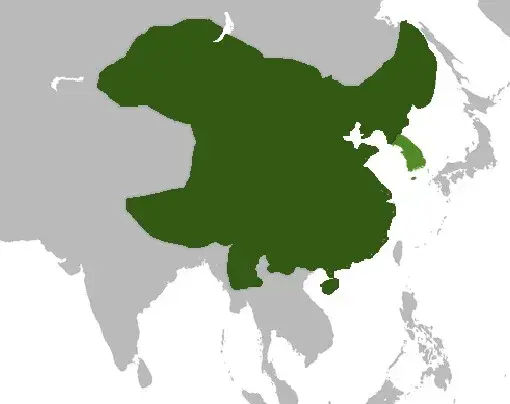
The Four-Class System of the Yuan Dynasty was a hierarchical socio-political order defined by ethnic discrimination and class domination, instituted by the Mongol ruling elite during their conquest of China. While the imperial court never promulgated a unified legal statute titled the Four-Class System, the state systematically enforced tiered discriminatory regulations across civil appointments, imperial examinations, criminal jurisprudence, weapon ownership, and fiscal obligations based on the chronology of conquest and geopolitical origin. Society was stratified into four distinct ranks: first, the Mongols, designated the imperial core and enjoying exclusive monopoly over state and military power; second, the Semu (diverse western and central Asian ethnic groups), who served as financial advisors and administrative deputies; third, the Hanren (inhabitants of the former Jin dynasty, including northern Chinese, Jurchens, and Khitans); and fourth, the Nanren (subjects of the fallen Southern Song dynasty), who formed the vast majority of the population but were relegated to the lowest social rung, excluded from high military and administrative posts, subjected to unequal legal penalties, and forbidden from bearing arms. This institutionalized inequality sowed deep ethnic resentment that culminated in the nationwide Red Turban rebellions that overthrew the dynasty.
Kublai Khan proclaims the Great Yuan; the stratified four-class governance framework takes shape.
An imperial decree outlaws Chinese subjects from fighting back against Mongols, codifying unequal penal sentencing.
The court decrees the total confiscation of civilian arms across China, banning horse ownership among Han populations.
Emperor Renzong revives examinations, allocating twenty-five quotas to each of the four ethnic classes in structural inequality.
Chancellor Bayan suspends examinations, bans Han subjects from bearing metal implements, and plots ethnic purges.
Chancellor Toghto repeals Bayan's extreme edicts, reinstates examinations, and offers partial tax relief to soothe tensions.
Forced labor on the Yellow River sparks general insurrection, mobilizing Chinese populations against Mongol autocracy.
Ming forces under Xu Da capture the capital of Dadu; the Mongol court flees north, dissolving the Four-Class System.
Beginning with the conquests of Genghis Khan, the Mongol armies dismantled the Western Xia, Jin, and Western Liao dynasties, campaigned across Central Asia and Eastern Europe, and ultimately conquered the Southern Song dynasty under Kublai Khan, establishing an unprecedented continental empire. In subduing such vast territories, the nomadic Mongol nobility found itself ruling diverse sedentary populations with distinct linguistic, religious, and cultural traditions. Facing an agrarian civilization vastly larger in population and sophisticated in administrative institutions, the Mongol rulers faced the dilemma of exploiting Chinese fiscal and technological capacities while preserving their martial identity and political supremacy.
The Mongol aristocracy recognized that they formed a tiny minority within a massive Han Chinese population. Under an egalitarian civil service system, central executive authority would inevitably fall under the control of Confucian scholar-bureaucrats. To maintain the preeminent status of the imperial lineage and ensure that supreme military and executive commands remained permanently in Mongol hands, Kublai Khan and his successors constructed a governing apparatus that institutionalized ethnic privilege and security safeguards based on genealogical pedigree and the chronological order of submission.
In governing their multiethnic realm, the Yuan rulers categorized imperial subjects into four broad strata based on their submission timeline and political reliability. At the apex stood the Mongols, revered as the foundational imperial ethnicity and enjoying supreme political immunity, legal protections, and fiscal dispensations. The second stratum consisted of the Semu, encompassing Central Asian Muslims, Uighurs, Persians, and Tibetans who had allied early with the Mongol conquests, whose administrative and commercial skills were deployed to counterbalance Chinese influence.
The third group, designated Hanren, comprised the inhabitants of northern China previously governed by the Jurchen Jin dynasty, including northern Chinese, assimilated Khitans, Jurchens, and Koreans. The lowest stratum was the Nanren, or southerners, encompassing the diverse populations of the former Southern Song realm across the Yangtze and Lingnan valleys. Having mounted fierce, multi-decade resistance against the Mongol armies and submitted last, the Nanren were viewed with profound suspicion. Late Qing historians Tu Ji and Meng Siming subsequently synthesized these codified practices into the definitive analytical category known as the Four-Class System.
In civil administration, the Yuan court instituted stringent safeguards to prevent indigenous populations from monopolizing executive power. Central to this policy was the Darughachi, or overseer system, established across every echelon of regional government. The chief executive post of Darughachi in every branch secretariat, route, prefecture, and county was legally restricted to Mongols. If a qualified Mongol candidate was unavailable, the vacancy could be filled only by a high-ranking Semu official from an illustrious family. Hanren and Nanren were barred by imperial decree from assuming this supervisory post, with exceptions permitted only in remote, pestilential border regions where northern officials refused to serve.
At the imperial core, grand chancellors of the Central Secretariat were chosen almost exclusively from the Mongol royal nobility, establishing a rigid precedent that no Chinese subject could serve as prime minister. Secondary ministerial posts were likewise reserved for Mongols and favored Semu. Furthermore, entry into the imperial keshik, the emperor's elite personal bodyguard that served as the primary launching pad for high administrative careers, was barred to ordinary Han and southern scholars, ensuring that inner palace authority remained an exclusive aristocratic preserve.
In the vital sectors of military command and state surveillance, the court maintained uncompromising vigilance against the Chinese populace. The Bureau of Military Affairs, which exercised supreme command over imperial troop deployments and defense secrets, operated under a statutory ban prohibiting Han and southern officials from viewing strategic troop registers. Throughout the ninety-seven years of the Yuan dynasty, every commissioner of the Bureau of Military Affairs was a Mongol nobleman, with only occasional exceptions made for trusted Semu allies.
The Censorate, charged with auditing government corruption and impeaching officials, was similarly controlled; its supreme executive, the Censor-in-Chief, was required by statute to bear the imperial Borjigin clan surname. Regional surveillance commissioners across the circuits were required to be Mongols or Semu aristocrats, with Chinese officials permitted to hold only junior assisting roles. This arrangement precluded Chinese officials from exercising disciplinary authority over Mongol or Semu magistrates, cementing a two-tier bureaucratic hierarchy.
The traditional imperial examination system, historically the primary avenue for social mobility in imperial China, was suspended for decades following the fall of the Jin and Song dynasties. It was not until 1314, during the Yanyou reign of Emperor Renzong, that civil examinations were formally reinstituted. However, the quota system adopted by the court incorporated rigid institutional discrimination.
The imperial edicts decreed that successful examinee quotas for both provincial and metropolitan examinations would be divided equally among the four groups: twenty-five places each for Mongols, Semu, Hanren, and Nanren in the metropolitan exams. Given that Han and southern populations constituted more than ninety-five percent of the total imperial population, this mechanical quarter-share quota represented egregious structural suppression. Furthermore, Mongol and Semu candidates were required to sit for only two testing rounds with elementary questions, whereas Chinese scholars were subjected to three grueling rounds featuring classical exegesis, deliberately curtailing southern representation in the bureaucracy.
The Yuan legal system, codified in the Da Yuan Shengzheng Guochao Dianzhang, or Statutes of the Yuan Dynasty, established stark legal inequality between ethnic groups. The law explicitly forbade Han and southern commoners from physically striking a Mongol in self-defense, ordering that victims submit petitions exclusively to state magistrates. If a Mongol murdered a Han or southern subject during an affray, the penalty was merely fifty-seven strokes of the bamboo rod and a fine of fifty taels of funeral silver paid to the victim's family. Conversely, if a Chinese person assaulted or killed a Mongol, the perpetrator was summarily executed and his entire household property was confiscated to compensate the victim's clan.
In property jurisprudence, commoners convicted of theft were subjected to permanent facial or arm branding: the left arm for a first offense, the right arm for a second, and the neck for a third. However, Mongol and Semu thieves were granted statutory exemption from judicial branding. If an overzealous Chinese magistrate dared to brand a Mongol thief, the magistrate himself was dismissed and subjected to seventy-seven strokes of the rod. This institutionalization of disparate sentencing reduced Chinese subjects to the status of disenfranchised second-class citizens.
Fearing popular uprisings from the vast subject majority, the Yuan court enforced Draconian disarmament decrees across northern and southern China. In 1285, the court issued an imperial edict ordering the total confiscation of civilian bows, crossbows, lances, and swords throughout Jiangnan and northern prefectures. Low-grade weapons were melted down, mid-grade weapons were distributed to Mongol military households, and high-grade armaments were locked away in state arsenals. Ordinary citizens were forbidden from possessing iron agricultural tools without collective neighborhood guarantees, and municipal constables were allocated meager quotas of hunting bows whose keys were kept in the custody of Mongol officers.
Horse ownership among the Chinese population was rigorously suppressed. Han and southern households were outlawed from breeding or owning cavalry mounts, and all private civilian horses were forcibly requisitioned into imperial herds. Chinese bridegrooms were prohibited from riding horses during wedding processions, and strict night curfews were enforced, with unexcused nocturnal travel punished as treasonous conspiracy. To enforce this disarmament, elite Mongol Tammachi detachments were permanently garrisoned in strategic agrarian centers across Henan and Shandong, while northern Han regiments were stationed in southern walled cities to monitor the southern population in a layered network of mutual surveillance.
The fiscal policies of the Yuan state imposed an asymmetric burden upon the four strata of society. Mongol military households were rewarded with sweeping grazing estates, captive serfs, and total exemptions from land taxes and labor corvee. Semu merchants enjoyed predatory commercial privileges under the ortoq system, partnering with Mongol aristocrats to run state-sponsored salt and tea monopolies and operating predatory moneylending networks known as ortoq silver, which extracted massive wealth from Chinese communities.
Conversely, the agricultural populations of Jiangnan shouldered over seventy percent of the total agrarian grain taxes of the empire. Dispossessed southern peasant farmers suffered under extortionate land rents from aristocratic estates while enduring compulsory, uncompensated labor conscription on canal and hydraulic projects. In civil customs, Mongol and Semu elites preserved their traditional nomadic levirate marriage practices while forcing their social conventions on Chinese communities, generating deep friction with orthodox Confucian scholars.
In the late Yuan period, the polarization engendered by the status system reached a dangerous climax under Chancellor Bayan, who dominated the court of Emperor Huizong from 1335 to 1340. A fanatical conservative, Bayan suspended the civil service examinations, banned Han, southern, and Korean subjects from bearing any metal instruments, confiscated civilian horses, and concocted a genocidal proposal to exterminate all Chinese subjects bearing the common surnames of Zhang, Wang, Liu, Li, and Zhao to eliminate the seeds of insurrection.
In 1341, Emperor Huizong and his nephew Toghto ousted Bayan in a palace coup, initiating the reform movement known as Toghto's Remedial Governance. Toghto rescinded Bayan's reactionary decrees, restored the imperial examination system, softened prohibitions on civilian horse ownership, appointed prominent Confucian scholars to the imperial lecture halls, and remitted back taxes in Jiangnan. While Toghto's reforms offered temporary relief, they left the structural framework of the four-class hierarchy intact, failing to heal the systemic social fractures that plagued the empire.
The Four-Class System achieved short-term political security for the Mongol aristocracy at the cost of catastrophic structural fragility. Denied lawful paths of political participation, the Chinese gentry and peasantry grew alienated from the imperial state. Concurrently, centuries of unearned institutional privilege led to the complete military decay of the Mongol and Semu ruling class, leaving metropolitan garrisons undisciplined, illiterate, and incapable of defending the throne.
In 1351, when imperial administrators pressed tens of thousands of unpaid southern laborers to re-channel the flooded Yellow River, the long-smoldering grievances erupted into the nationwide Red Turban Uprising under Han Shantong and Liu Futong. Millions of oppressed Chinese citizens joined the rebel armies, chanting slogans calling for the reclamation of Chinese sovereignty. Rebel commander Zhu Yuanzhang rallied the populace behind the historic proclamation to expel the northern barbarians and restore China. In 1368, Ming expeditionary armies liberated Dadu, driving the Mongol court into the northern steppes and permanently dissolving the Four-Class System.
The Four-Class System created an entrenched, four-tier pyramid of social and administrative stratification that dominated China for nearly a century. Mongols held an unchallengeable monopoly over the military, supervisory censorate, and central chancellery; Semu elites served as fiscal agents and administrative deputies; northern Hanren occupied subordinate bureaucratic and localized offices; and southern Nanren were systematically excluded from executive power, subjected to discriminatory legal penalties, and denied the right to bear arms or breed cavalry mounts. Tens of millions of southern subjects endured uncompensated labor and exorbitant tax quotas.
The Four-Class System severely distorted the social and political trajectory of late medieval China. By institutionalizing ethnic segregation, it strangled the organic integration of the diverse peoples of China, created deep social chasms, and paralyzed the civil bureaucracy. The sheltering of the Mongol and Semu elites behind legal privilege accelerated their military degeneration and intellectual decadence. Conversely, systemic oppression fostered a deep, shared identity of resistance among the subjugated Chinese populace, providing the explosive ideological impetus for the Red Turban rebellions and the founding of the Ming dynasty under the banner of ethnic restoration.