Appointment of the First Maritime Commissioner
Emperor Xuanzong dispatches Zhou Qingli as Maritime Commissioner to Guangzhou, establishing formal state customs oversight.
Tang through Qing Dynasties (唐代至清代) · HISTORICAL EVENT
市舶司
The Maritime Trade Supervisorate (市舶司) was the specialized state institutional system established across coastal ports from the Tang to the Qing dynasties to manage foreign trade, collect maritime tariffs, and oversee foreign commercial affairs. In 714 CE (the second year of the Kaiyuan era), Emperor Xuanzong of Tang dispatched Zhou Qingli to Guangzhou as the first recorded Maritime Trade Commissioner, instituting tonnage duties, state monopoly purchases,…
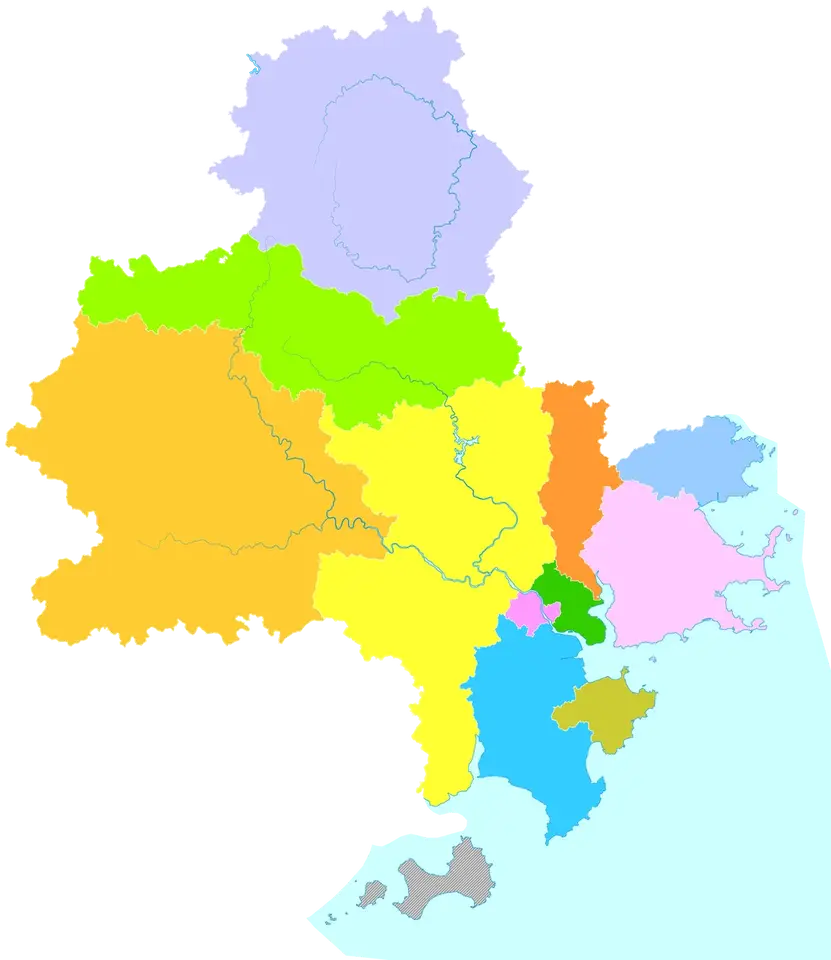
The Maritime Trade Supervisorate (市舶司) was the specialized state institutional system established across coastal ports from the Tang to the Qing dynasties to manage foreign trade, collect maritime tariffs, and oversee foreign commercial affairs. In 714 CE (the second year of the Kaiyuan era), Emperor Xuanzong of Tang dispatched Zhou Qingli to Guangzhou as the first recorded Maritime Trade Commissioner, instituting tonnage duties, state monopoly purchases, and merchant registration. In 971 CE, the Northern Song established the first permanent Maritime Trade Supervisorate in Guangzhou following the pacification of the Southern Han, subsequently expanding the office to Quanzhou, Mingzhou (Ningbo), and Hangzhou. The Song system progressed from prefecture administration to circuit coordination and finally to dedicated superintendent appointments, enacting the earliest comprehensive foreign trade statute, the Yuanfeng Guangzhou Maritime Regulations, in 1080 CE. During the Southern Song, maritime commerce became an indispensable financial pillar of the imperial state; annual customs revenues exceeded two million strings of cash, elevating Quanzhou and Guangzhou to premier world ports. The Yuan Dynasty continued the institution across seven major ports and introduced the state-capital vessel system to finance long-distance expeditions. Under the early Ming Dynasty, strict maritime bans subordinated maritime commissions to the tributary framework, mandating that trade could occur only under official tributary embassies authenticated by tally credentials. Following the Longqing Opening of 1567 at Yuegang, private overseas commerce was legalized and regulated through tonnage and cargo levies. During the Qing Dynasty, the establishment of the Guangdong Customs (Yuehaiguan) and the 1757 Canton System formally transitioned medieval maritime supervisorates into modern customs administration.
Emperor Xuanzong dispatches Zhou Qingli as Maritime Commissioner to Guangzhou, establishing formal state customs oversight.
Emperor Taizu establishes the Guangzhou Maritime Trade Supervisorate following the conquest of the Southern Han.
Emperor Shenzong enacts the Yuanfeng Guangzhou Maritime Regulations, establishing the first codified maritime trade statute.
Facing fiscal exhaustion after fleeing southward, the Southern Song court promotes maritime trade, generating over two million strings annually.
Kublai Khan establishes seven Maritime Trade Supervisorates and introduces state-financed commercial voyages.
The Hongwu Emperor bans private overseas navigation and reorganizes supervisorates to service official tributary missions.
The Ministry of Rites introduces tally books to verify the diplomatic authenticity of tributary trading fleets.
Rival Japanese embassies clash violently in Ningbo, prompting the Ming court to abolish northern supervisorates and retain only Guangzhou.
The Longqing Emperor approves private overseas merchant voyages from Yuegang, transitioning from tributary to private commercial trade.
The Qing Dynasty opens four maritime customs houses, marking the formal evolution of the medieval supervisorates into modern customs bureaus.
From the Han and Tang dynasties onward, maritime shipping across the South China Sea, the Indian Ocean, and the Persian Gulf gradually surpassed overland caravan corridors as the primary artery connecting China with Southeast Asia, South Asia, and the Middle East. Advances in shipbuilding, navigational astronomy, and sternpost rudders during the Tang Dynasty enabled sustained transoceanic voyages. Merchant vessels from the Abbasid Caliphate, Persia, India, and Southeast Asian principalities arrived in growing numbers at Guangzhou, which emerged as a thriving international emporium.
Foreign merchant colonies known as foreign quarters (Fanfang) were established in coastal port cities, complete with foreign markets and schools. These merchant communities imported vast quantities of frankincense, myrrh, pepper, ivory, rhino horns, and pearls, while exporting Chinese silks, porcelains, tea, and copper coinages. The volume of commerce overwhelmed traditional county administrative structures, creating an urgent need for specialized administrative offices capable of handling cross-border commercial litigation, ship inspections, and foreign residential governance.
To the imperial court, overseas commerce represented an immense reservoir of fiscal revenue. Incoming merchant vessels were subject to docking dues and ad valorem tariffs, while the imperial court required steady supplies of Southeast Asian aromatics, medicinal ingredients, and precious gems. Under uncoordinated local administration, extortion by provincial magistrates, private smuggling, and coastal piracy severely eroded imperial tax yields and disrupted maritime traffic.
Furthermore, the uncontrolled ingress and egress of foreign crews posed sensitive frontier security and public order challenges. Successive dynasties recognized that regulating deep-sea commerce required centralized supervision. Dedicated imperial commissioners and permanent administrative bureaus were deployed to inspect vessel manifests, issue travel permits, standardize tariff rates, and maintain maritime order along China's maritime frontier.
In 714 CE (the second year of the Kaiyuan era of Emperor Xuanzong of Tang), the imperial government formally appointed Zhou Qingli, a middle-ranking officer of the Right Militant Guard, as Maritime Trade Commissioner of Guangzhou. This event marks the earliest confirmed appointment of a specialized maritime customs commissioner in official Chinese historical records, shifting trade governance from ad hoc provincial management to centralized state oversight.
The Tang Maritime Trade Commissioner exercised four foundational administrative duties: first, the collection of ship mooring duties (bo jiao), levied based on vessel dimensions and deadweight tonnage; second, the execution of official pre-emptive purchases (shou shi), whereby state officials purchased luxury commodities and aromatic goods at fixed official prices for court consumption; third, cargo inspection (yue huo), entailing aboard-ship audits to detect contraband and verify manifests; and fourth, register compilation (ji qi ming wu), which recorded the names, nationalities, and cargo declarations of incoming foreign merchants and navigators.
Following the conquest of the Southern Han in 971 CE, Emperor Taizu of Song established the Guangzhou Maritime Trade Supervisorate, creating the first permanent, specialized bureaucratic bureau dedicated to overseas trade in Chinese history. As maritime trade boomed, additional supervisorates were instituted at Hangzhou, Mingzhou (Ningbo), Quanzhou, and Banqiao in Mizhou. The Song supervisory apparatus evolved across three distinct phases: the initial era of concurrent prefecture administration, where local prefects managed port affairs; the circuit coordination phase, in which fiscal intendants oversaw tax collections; and the dedicated superintendent phase, wherein the central court directly appointed dedicated fifth-rank officials to enforce maritime regulations.
In 1080 CE (the third year of the Yuanfeng era), Emperor Shenzong promulgated the Yuanfeng Guangzhou Maritime Regulations, recognized by historians as China's first comprehensive maritime customs code. The supervisorate functioned through an orderly sequence of procedures: upon arrival, officials boarded vessels to seal cargo hatches and conduct formal inspections; cargo was then subject to tariff levies (chou jie), deducting between ten and thirty percent of merchandise in kind; the state then exercised compulsory purchase rights (bo mai) over select monopolies like frankincense, while remaining goods received official clearance permits (gong ping) allowing open trade in municipal markets; outgoing Chinese merchants were required to register their destinations and obtain sailing licenses (gong yin). Following the southward retreat of the Song court, Emperor Gaozong remarked that maritime revenues were vast and far superior to taxing the agrarian peasantry, with annual customs yields exceeding two million strings of cash.
Following the reunification of China under the Yuan Dynasty, Kublai Khan recognized maritime trade as an indispensable revenue stream. In 1277 CE, the Yuan court established seven Maritime Trade Supervisorates at Quanzhou, Qingyuan, Shanghai, Ganpu, Wenzhou, Hangzhou, and Guangzhou. While retaining Song procedures regarding tariff deductions and pre-emptive purchasing, the Yuan pioneered the innovative state-capital vessel system (guan ben chuan).
Under this system, the Yuan government financed the construction of ocean-going junks and advanced capital and goods, selecting experienced private merchants to command maritime trading expeditions. The resulting profits were divided proportionally between the state and the merchant operators, typically on a seventy-thirty basis favoring the court. This state-backed commercial model mobilized substantial maritime capital. Quanzhou rose to its historical zenith, matching Alexandria in Egypt as one of the world's twin commercial capitals, as vividly described in the travel narratives of Marco Polo and Ibn Battuta.
At the founding of the Ming Dynasty in 1368, the Hongwu Emperor enacted severe maritime prohibitions, forbidding private subjects from setting sail on pain of death. To accommodate diplomatic relations, the Ming restructured the supervisorates at Ningbo, Quanzhou, and Guangzhou to service official tributary missions. Under the Ming framework, maritime trade was completely subordinated to diplomatic tribute: commerce was permissible only when foreign vessels arrived as accredited tribute envoys bearing sovereign missives.
The Ming court implemented rigid administrative protocols, allocating specific ports to designated tributary kingdoms: Ningbo handled missions from Japan, Quanzhou received envoys from Ryukyu, and Guangzhou handled Southeast Asian realms such as Champa and Siam. In 1383, the Ministry of Rites introduced the tally system (kanhe), issuing numbered register volumes to foreign rulers to verify embassy legitimacy. When tributary vessels entered port, official tribute gifts were transported to the capital, while secondary private goods brought by envoys were permitted to be traded in the supervisorate markets or at the Huitong Hall in Beijing. While early Ming policy followed the generous principle of bestowing imperial gifts exceeding the value of tribute received, the court introduced a twenty-percent ad valorem tariff on accompanying merchandise during the Hongzhi and Zhengde eras. In 1523, a violent clash between rival Japanese delegations at Ningbo led to the closure of all supervisorates except Guangzhou, driving commerce underground into rampant piracy.
Confronted with widespread smuggling and coastal unrest, Ming statesmen recognized the futility of absolute prohibition. In 1567 (the first year of the Longqing era), Fujian Governor Tu Zemin submitted a landmark memorial urging the relaxation of maritime bans. The Longqing Emperor approved the request, officially permitting private merchants to sail overseas from the port of Yuegang in Zhangzhou, Fujian. This policy pivot, known as the Longqing Opening, dismantled the two-century monopoly of tributary trade and opened Chinese maritime commerce to private merchants.
To manage the bustling trade at Yuegang, the Ming established the Revenue Inspection Office (Duxiangguan), implementing modern tariff structures: water dues (shui xiang) based on vessel hull dimensions, land dues (lu xiang) based on cargo valuations, and supplementary silver dues (jiazeng xiang) levied on galleons returning laden with Spanish American silver from Manila. Following the Qing conquest, the Kangxi Emperor lifted coastal evacuation bans in 1684 and established four maritime customs houses—Guangdong, Fujian, Zhejiang, and Jiangnan—in 1685. In 1757, the Qianlong Emperor restricted all Western maritime commerce exclusively to Guangzhou under the Canton System, administered through the Thirteen Hongs and the Guangdong Customs, marking the historic transition from traditional maritime supervisorates into modern customs institutions.
The millennium-long institutional evolution of the Maritime Trade Supervisorate laid the architectural foundation for foreign trade governance, ship licensing, and customs taxation in pre-modern China. In the Song and Yuan periods, customs duties provided essential state revenues, alleviating fiscal shortfalls without burdening internal agricultural populations. Under the supervisorate's administrative framework, coastal port cities such as Guangzhou, Quanzhou, Mingzhou (Ningbo), and Wenzhou flourished into cosmopolitan trading metropolises. Domestic industries, including porcelain kilns, silk weaving, shipbuilding, and tea cultivation, expanded production to meet overseas market demand, decisively transforming the economic geography of southeastern China.
The Maritime Trade Supervisorate served as the operational nucleus of the Maritime Silk Road. Through regulated customs channels, Chinese manufactured luxuries—porcelain, silk, and tea—flowed across Southeast Asia, India, the Persian Gulf, and the Mediterranean, exchanged for silver, precious gems, and botanical aromatics. Foreign merchant communities thrived within coastal port cities, fostering peaceful co-existence among diverse ethnic and religious traditions. Navigational knowledge, magnetic compass technologies, and maritime cartography were refined and shared, making an indelible contribution to the emergence of early modern global maritime commerce.