Dong Zhuo Usurps Power
Dong Zhuo leads Liangzhou cavalry into Luoyang, deposes Emperor Shao, enthrones Emperor Xian, and establishes military rule
Eastern Han Dynasty (东汉) · HISTORICAL EVENT
关东联军
The Guandong Coalition was a military alliance formed between January 190 (the first year of the Chuping era) and 191 by regional governors and commandery administrators in eastern China to overthrow the despotic rule of Liangzhou warlord Dong Zhuo. In traditional Chinese geography, the region east of Hangu Pass was known as Guandong, giving the allied armies the collective name of the Guandong Coalition. Following Dong Zhuo's deposition of Emperor Shao…
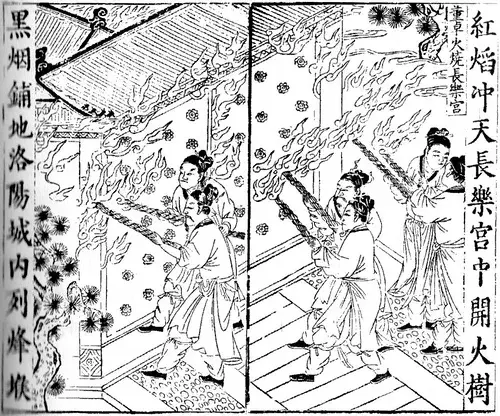
The Guandong Coalition was a military alliance formed between January 190 (the first year of the Chuping era) and 191 by regional governors and commandery administrators in eastern China to overthrow the despotic rule of Liangzhou warlord Dong Zhuo. In traditional Chinese geography, the region east of Hangu Pass was known as Guandong, giving the allied armies the collective name of the Guandong Coalition. Following Dong Zhuo's deposition of Emperor Shao and bloody purges in Luoyang, Qiao Mao forged an imperial appeal calling for armed resistance. Yuan Shao was acclaimed supreme alliance leader, supported by over ten regional commanders—including Yuan Shu, Han Fu, Kong Zhou, Liu Dai, Wang Kuang, Zhang Miao, Zhang Chao, Yuan Yi, Bao Xin, and Cao Cao—who established headquarters at Suanzao, Henei, and Luyang. While southern commander Sun Jian scored consecutive victories and recovered the ruins of Luoyang, compelling Dong Zhuo to burn the capital and flee west to Chang'an, the main allied lords refused to advance. After Cao Cao's isolated pursuit was defeated at Xingyang, the coalition dissolved in internal conflict, plunging China into the Three Kingdoms era.
Dong Zhuo leads Liangzhou cavalry into Luoyang, deposes Emperor Shao, enthrones Emperor Xian, and establishes military rule
Qiao Mao circulates forged imperial appeals, prompting eleven regional governors to elect Yuan Shao leader of the anti-Dong alliance
Dong Zhuo burns Luoyang, loots imperial tombs, and forcibly transfers Emperor Xian and the capital population to Chang'an
Pursuing alone, Cao Cao and Bao Xin are routed in an ambush by Dong Zhuo's general Xu Rong at the Bian River
Sun Jian routs Liangzhou forces at Yangren, executes commander Hua Xiong, and enters the ruined capital of Luoyang
Facing supply collapse, Liu Dai murders Qiao Mao; the allied encampment at Suanzao breaks apart in disorder
Yuan Shao forces Han Fu to surrender Jizhou, completing the collapse of the alliance into regional civil war
In August 1889 (Zhongping 6), Emperor Ling passed away, and his young son Liu Bian ascended the throne under the regency of Empress Dowager He. In an effort to eliminate powerful palace eunuch factions, General-in-Chief He Jin disregarded the warnings of Cao Cao and Chen Lin, secretly ordering Bingzhou Governor Dong Zhuo to lead his fierce Liangzhou cavalry to the outskirts of Luoyang to intimidate the court. Before Dong Zhuo arrived, eunuchs assassinated He Jin in a preemptive strike. In response, Yuan Shao and Yuan Shu led troops into the palace precincts and slaughtered the eunuchs, prompting the young emperor and his brother Liu Xie to flee toward Mount Beimang.
Dong Zhuo capitalized on the power vacuum, marching his frontier cavalry into Luoyang and securing the imperial entourage at Mount Beimang. By absorbing the private retinues of He Jin and He Miao, and suborning Lü Bu to assassinate Ding Yuan to annex the Bingzhou army, Dong Zhuo seized control of all armed forces in the capital. In September, he deposed Emperor Shao, demoting him to Prince of Hongnong and placing eight-year-old Liu Xie on the throne as Emperor Xian. Shortly afterward, Dong Zhuo poisoned both Empress Dowager He and Prince of Hongnong. Proclaiming himself Chancellor of State (Xiangguo) and Marquis of Mei, Dong Zhuo exercised terror over the imperial capital, pillaging residential quarters, executing prominent scholar-officials, and plundering imperial tombs.
Horrified by Dong Zhuo's tyranny, scholar-officials fled the imperial capital for eastern provinces. Yuan Shao openly defied Dong Zhuo's plan to depose the emperor, hung his insignia on the capital's eastern gate, and rode north to Jizhou. Cao Cao fled disguised under an assumed name to Chenliu, liquidating his family inheritance to recruit a volunteer army.
In January 190 (Chuping 1), Dongjun Administrator Qiao Mao recognized that while regional administrators resented Dong Zhuo, they lacked legal justification to march on the capital. Qiao Mao forged letters in the name of the Three Excellencies (Sangong—the Grand Commandant, Minister over the Masses, and Minister of Works), circulating them to eastern provinces. The appeal enumerated Dong Zhuo's crimes, invoked national survival, and summoned righteous governors to unite in restoring the Han house. This summons resonated among regional magistrates, transforming fragmented grievances into a massive armed coalition.
In January 190, regional leaders across the eastern commanderies formed a punitive military confederation. The core leadership comprised eleven ranking regional administrators: Bohai Administrator Yuan Shao, General of the Rear Yuan Shu, Jizhou Governor Han Fu, Yuzhou Inspector Kong Zhou, Yanzhou Inspector Liu Dai, Henei Administrator Wang Kuang, Chenliu Administrator Zhang Miao, Guangling Administrator Zhang Chao, Dongjun Administrator Qiao Mao, Shanyang Administrator Yuan Yi, and Jibei Chancellor Bao Xin. Additionally, Cao Cao served as Acting General of Resolute Martial Prowess, while Changsha Administrator Sun Jian marched north with elite southern troops.
Given the prestigious pedigree of the Yuan clan of Ru'nan, which had produced high ministers across four successive generations, the allied commanders elected Yuan Shao as Supreme Leader (Mengzhu), appointing Cao Cao as acting general to assist strategic coordination. Mobilizing forces reputed at hundreds of thousands, the alliance established a three-pronged cordon around Luoyang. In the north, Yuan Shao and Wang Kuang garrisoned Henei along the northern bank of the Yellow River, menacing Luoyang's rear, while Han Fu supplied grain from Ye. In the east, Kong Zhou occupied Yingchuan. In the south, Yuan Shu and Sun Jian deployed at Luyang, preparing to penetrate southern passes. The central strike force—commanded by Liu Dai, Zhang Miao, Zhang Chao, Qiao Mao, Yuan Yi, Bao Xin, and Cao Cao—concentrated at Suanzao, blocking the eastern approach toward Hulao Pass.
Throughout the campaign, the most combat-effective allied force was led by Changsha Administrator Sun Jian. Marching north from the Xiang River, Sun Jian executed uncooperative officials, including Jingzhou Inspector Wang Rui and Nanyang Administrator Zhang Zi, before uniting his forces with Yuan Shu at Luyang. Sun Jian maintained strict military discipline and pressed relentlessly toward Luoyang's southeastern fortifications.
Alarmed by Sun Jian's advance, Dong Zhuo dispatched Generals Hu Zhen, Lü Bu, and vanguard commander Hua Xiong with five thousand infantry and cavalry to intercept him. Establishing defenses at Yangren, Sun Jian exploited bitter rivalries between Hu Zhen and Lü Bu, launching a devastating counterattack that crushed the Liangzhou forces. Sun Jian personally oversaw the slaying of Hua Xiong, sending shockwaves through Dong Zhuo's command. (Later fictionalized in the fourteenth-century novel Romance of the Three Kingdoms as Guan Yu's feat, Hua Xiong's defeat and execution was historically achieved by Sun Jian). Rejecting Dong Zhuo's marriage and truce proposals, Sun Jian advanced through Dagu Pass, routed Dong Zhuo and Lü Bu outside the southern gates of Luoyang, and entered the Xuan Yang gate.
Confronting repeated breakthroughs along his southern front and intimidated by allied strength, Dong Zhuo resolved to withdraw westward. In February 190, Dong Zhuo forcibly evacuated Emperor Xian, the imperial court, and millions of Luoyang residents to the western capital of Chang'an. Prior to departure, his troops put Luoyang's palaces, ancestral shrines, and residences to the torch, turning the four-hundred-year-old imperial capital into ash and plundering royal tombs. Entering the ruined capital, Sun Jian wept over the desolation, ordered his troops to clear imperial shrines, made sacrifices to Heaven and Earth, and withdrew toward Luyang due to lack of supplies.
In sharp contrast to Sun Jian's campaign in the south, the main allied armies encamped at Suanzao remained paralyzed by caution and internal rivalry. Concentrating tens of thousands of troops, commanders including Liu Dai and Zhang Miao feared incurring casualties against Dong Zhuo's experienced cavalry. Under the pretext that Dong Zhuo's core army remained formidable, they refused to advance, spending their days in lavish banquets and mutual observation.
Frustrated by this inaction, Cao Cao presented an operational plan to encircle and exhaust the regime: Yuan Shao should advance from Henei to Mengjin; the Suanzao commanders should seize Chenggao, secure Ao Granary, and choke off Hulao, Huanyuan, and Dagu passes; and Yuan Shu should march from Nanyang through Dan and Xi to threaten the Wu Pass. Cao Cao argued that by entrenching behind fortifications without committing to open cavalry combat, the coalition would demonstrate unassailable geopolitical superiority and fracture Dong Zhuo's regime from within. The allied commanders rejected his counsel.
Indignant at their hesitation, Cao Cao led his own contingent of several thousand men, accompanied by Jibei Chancellor Bao Xin and Bao Xin's brother Bao Tao, on an isolated pursuit toward the retreating enemy. Advancing to Bian River near Xingyang, Cao Cao's force fell into an ambush orchestrated by Dong Zhuo's commander Xu Rong. Heavily outnumbered and outflanked, Cao Cao's forces were routed. Cao Cao's horse was shot beneath him and he sustained arrow wounds; he narrowly escaped through the bravery of his cousin Cao Hong, who surrendered his own mount, while Bao Tao fell in battle and Bao Xin was wounded. Cao Cao retreated with his survivors back to Suanzao.
Returning to Suanzao, Cao Cao made a final appeal to the assembled lords to pursue the fleeing court, but was met with indifference. Shortly thereafter, the immense forces at Suanzao exhausted their grain reserves, escalating dormant personal enmities into bloodshed. Yanzhou Inspector Liu Dai clashed with Dongjun Administrator Qiao Mao, executing Qiao Mao and absorbing his army before installing Wang Hong as administrator. Terrified by this fratricidal violence, the allied contingents broke camp and scattered, leaving Suanzao abandoned.
Concurrently, alliance leader Yuan Shao and Jizhou Governor Han Fu plotted to enthrone Liu Yu, the revered Inspector of Youzhou, to establish an eastern rival to Dong Zhuo's court in Chang'an. This proposal was rejected by both Cao Cao and Liu Yu himself. Abandoning their pretext of restoring the Han dynasty, the warlords openly engaged in territorial expansion against one another. Yuan Shao intimidated Han Fu into ceding Jizhou; Yuan Shu proclaimed hegemony in Huainan and feuded with his cousin Yuan Shao; Gongsun Zan moved south from Youzhou to invade Hebei; and Cao Cao secured Yanzhou by assimilating the Yellow Turban remnants. The Guandong Coalition thus disintegrated into civil war.
The mobilization and dissolution of the Guandong Coalition permanently dismantled the centralized imperial framework of the Eastern Han dynasty. Although Emperor Xian retained ceremonial legitimacy, he was held hostage by Dong Zhuo in Chang'an, buffeted by regional fighting under Li Jue and Guo Si, and ultimately made a figurehead by Cao Cao at Xuchang under the policy of "holding the Son of Heaven to command the princes."
Regional governors, inspectors, and administrators completely cast off central civil supervision and fiscal taxation. Rather than remitting taxes and recruits to the imperial court, provincial rulers diverted local grain revenues and manpower into expanding private standing armies. Regional administration transformed into a network of militarized warlord domains, inaugurating centuries of aristocratic warlord rule and dynastic division.
The collapse of the coalition marked the transition of late Han social tensions from confrontations between court usurpers and loyalist elites into internecine warfare among ambitious warlords. Once the alliance shattered, commanders abandoned moral claims of restoring imperial harmony to seize territory and grain resources.
In northern China, Yuan Shao and Gongsun Zan fought for supremacy over the four northern provinces, while Cao Cao consolidated the Central Plains through the Battle of Guandu. In southern China, Sun Jian's sons Sun Ce and Sun Quan established the foundation of Eastern Wu south of the Yangtze River, while Liu Bei navigated rivalries across Jingzhou and Yizhou to build Shu Han. The Guandong Campaign severed imperial unity and set in motion the tripartite division of China among Wei, Shu, and Wu.