Recruitment Edict Promulgated
Duke Xiao lamented national humiliation and issued a universal recruitment edict, bringing Shang Yang from Wei to Qin with Li Kui's legal texts.
Warring States Period (State of Qin, mid-Warring States) · HISTORICAL EVENT
商鞅变法
Shang Yang's Reforms (商鞅变法) represent the most comprehensive, radical, and enduring state institutional transformation in ancient Chinese history, executed in the State of Qin under Duke Xiao and directed by the foremost Legalist statesman Shang Yang. In the early Warring States period, Qin languished as a backward polity on the western periphery, repeatedly suffering military defeats and losing the fertile Hexi corridor to the State of Wei while enduring…
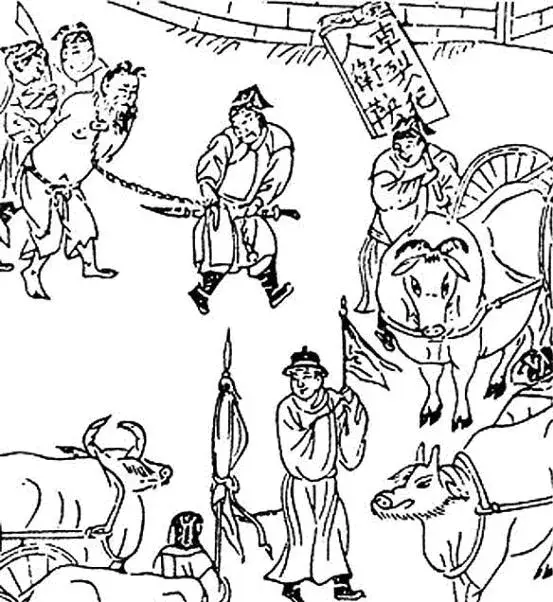
Shang Yang's Reforms (商鞅变法) represent the most comprehensive, radical, and enduring state institutional transformation in ancient Chinese history, executed in the State of Qin under Duke Xiao and directed by the foremost Legalist statesman Shang Yang. In the early Warring States period, Qin languished as a backward polity on the western periphery, repeatedly suffering military defeats and losing the fertile Hexi corridor to the State of Wei while enduring diplomatic contempt from central Chinese states. In 361 BCE, Duke Xiao promulgated an imperial recruitment edict to enlist visionary advisors. Shang Yang arrived from Wei bearing Legalist doctrines of agrarian-military statecraft, gaining Duke Xiao's absolute confidence and directing two successive legislative transformation programs between 356 BCE and 350 BCE. The reforms abolished hereditary aristocratic privileges by instituting a merit-based twenty-rank military nobility, rewarding agricultural surplus while penalizing commerce and indolence. In agriculture, Shang Yang abolished the archaic well-field system, dismantling field boundaries and establishing private land tenure. In civil governance, he instituted strict mutual-guarantee household registration networks, reorganized municipal townships into directly administered counties, standardized measures, and relocated the capital to Xianyang. Although conservative aristocrats orchestrated Shang Yang's execution via dismemberment by chariots following Duke Xiao's demise, his entire legal and bureaucratic architecture was faithfully sustained by successive Qin rulers. This transformation forged Qin into an efficient total-war state, establishing the institutional and economic foundations for Qin Shi Huang's eventual unification of the Chinese realm.
Duke Xiao lamented national humiliation and issued a universal recruitment edict, bringing Shang Yang from Wei to Qin with Li Kui's legal texts.
Shang Yang engaged in a decisive debate against conservatives Gan Long and Du Zhi, establishing that governing effectively requires breaking with past traditions.
Shang Yang established legal credibility by moving timber at Yueyang, enacting the twenty military ranks, agrarian rewards, and mutual responsibility networks.
When the Crown Prince broke the law, Shang Yang mutilated royal tutors Prince Qian and Gongsun Jia, enforcing equal application of the law.
Shang Yang routed Wei forces at Yuanli and took Shaoliang, being elevated to Grand Commandant with supreme civil-military command.
Qin relocated its capital to Xianyang, abolishing the well-field system, creating the county system, and standardizing weights and measures.
Shang Yang ambushed Prince Ang, compelling Wei to surrender the Hexi plain, and was granted fifteen cities as Lord Shang.
Following Duke Xiao's death, conservative nobles fabricated charges of rebellion, leading to Shang Yang's execution by chariots, while his legal codes were permanently maintained.
At the dawn of the Warring States period, the rapid spread of iron agricultural implements and ox-drawn plows shattered the traditional well-field system of communal servitude. Individual smallholders and emerging landlord classes began to reshape the agrarian economy. In response to existential interstate competition, eastern regional states initiated institutional modernizations, notably Li Kui's legal reforms in Wei and Wu Qi's aristocratic curbs in Chu.
In sharp contrast, the State of Qin occupied an isolated geographic position in the Guanzhong basin, coexisting alongside non-Sinitic Rong and Di tribes. Its civil administration remained rudimentary, while noble families monopolized political offices without accountability. Militarily, the celebrated Wei general Wu Qi led elite heavy infantry (Weiwuzu) in crushing successive Qin hosts, seizing the vital Hexi lands and confining Qin west of the Luo River. The central feudal courts excluded Qin from interstate summits, regarding it as a culturally unrefined barbarian territory, plunging the realm into an existential survival crisis.
In 362 BCE, the twenty-one-year-old Duke Xiao of Qin (Ying Quliang) ascended the ducal throne. Consecrated to reversing national decline, he issued a celebrated recruitment edict in 361 BCE, declaring that anyone who could devise extraordinary strategies to enrich and strengthen Qin would be rewarded with senior ministerial rank and hereditary fiefdoms.
Shang Yang, a descendant of the royal house of Wey who had studied Legalist jurisprudence and statecraft under Wei Prime Minister Gongshu Cuo, answered the call and journeyed west. Introduced to Duke Xiao by courtier Jing Jian, Shang Yang initially discoursed on the moral pathways of the Sovereign and the Hegemon. Finding Duke Xiao impassive, Shang Yang directly presented the pragmatic Realpolitik of Legalist wealth and military mobilization. Enchanted by his vision, Duke Xiao conferred with him for days on end.
To overcome conservative opposition, Duke Xiao convened a court debate pitting Shang Yang against veteran aristocratic leaders Gan Long and Du Zhi. Gan Long maintained that wise rulers govern by ancient customs without burdening people, while Du Zhi argued that a law should not be changed unless the benefit was a hundredfold. Shang Yang forcefully countered that governing eras require differing paths, and that benefiting the state does not require emulating antiquity; King Tang of Shang and King Wu of Zhou triumphed without copying ancient codes, whereas the Xia and Shang dynasties fell despite maintaining old rites. Overcoming the conservative coalition, Shang Yang was appointed Supreme Minister (Zuoshuchang) with absolute plenary powers to enact reform.
Recognizing that entrenched cynicism among the populace would hinder enforcement, Shang Yang orchestrated a legendary demonstration of governmental integrity in 356 BCE before promulgating the new statutes. Outside the southern gate of the capital Yueyang, he erected a monumental wooden spar thirty feet in height, announcing that anyone who carried the timber to the northern portal would be awarded ten ounces of gold. When citizens expressed disbelief, he increased the prize to fifty ounces of gold. When a courageous civilian transported the timber, Shang Yang immediately disbursed the gold on the spot, demonstrating that state decrees were inviolable and truthful.
With public trust established, Shang Yang promulgated the initial reform edicts. Economically, he prioritized agriculture over secondary mercantile trades, granting exemption from corvee labor to farmers who produced surplus grain and textile cloth, while reducing bankrupt merchants and indolent laborers to state serfs. To encourage population growth and agrarian production, adult sons living under the same roof were legally compelled to divide into nuclear households.
Militarily, Shang Yang eradicated hereditary feudal privileges by enacting the twenty-rank system of military nobility. Aristocratic status was tied entirely to enemy decapitations in battle; a soldier who took an enemy head was awarded one rank, accompanied by agricultural land and residential property. Conversely, imperial princes and high-ranking aristocrats without military merit were stripped of titles and ceremonial perquisites. In local administration, the populace was organized into collective squads of five and ten households (shiwu) under strict mutual-responsibility surveillance; concealing a criminal was equated with desertion on the battlefield, while denouncing a malcontent was rewarded as slaying an enemy warrior.
The radical measures severely dismantled the vested interests of Qin's traditional aristocracy, provoking widespread resentment and resistance across the capital. Within a single year, Crown Prince Ying Si violated an administrative ordinance. Shang Yang stated to Duke Xiao that failure to enforce the law stemmed from infractions by high-ranking royals; because the heir apparent could not be physically mutilated, his royal tutors had to bear judicial responsibility.
Backed by Duke Xiao, Shang Yang severely punished the crown prince's closest mentors: Duke Xiao's elder brother Prince Qian suffered knee-joint mutilation (feixing), while Tutor Gongsun Jia had his forehead tattooed with punitive ink (qingxing). The execution of these harsh sentences sent shockwaves through the nobility, extinguishing open resistance.
At an imperial judicial assembly along the Wei River, Shang Yang executed several hundred defiant nobles and lawbreakers in a single day, causing the river to run crimson. Over the subsequent decade, the relentless application of the legal code completely remodeled civic culture: personal thievery ceased, mountain bandits dispersed, families became self-sufficient, and the peasantry displayed fierce bravery in state warfare while abandoning private feuds.
In 352 BCE, Shang Yang led Qin armies in overrunning the Wei forces at Yuanli and capturing Shaoliang, resulting in his elevation to Chief Minister and Grand Commandant (Daliangzao), consolidating his supremacy over civil and military administration. Yueyang's constrained geography and entrenched clan networks restricted further eastward expansion.
In 350 BCE, Shang Yang designed and constructed the planned imperial capital of Xianyang on the northern bank of the Wei River, formally transferring the ducal court thither. Immediately following the move, Shang Yang enacted the second wave of structural reforms to deepen state centralization.
In land administration, he issued the decree to eradicate the well-field system and demolish traditional boundaries, formally recognizing private land ownership and unhindered land commerce, which unleashed a vast wave of agricultural land reclamation. In municipal administration, Shang Yang dismantled traditional clan estates, consolidating towns and villages across the realm into forty-one standardized administrative counties (xian), each governed by magistrate officials appointed and remunerated by the central court, inaugurating the centralized bureaucratic county system. In commercial standardization, he introduced uniform weights, capacities, and lengths, casting official standard bronze measuring vessels (Shang Yang Fang Sheng). Concurrently, he prohibited adult male family members from residing in identical chambers, forcing the dissolution of patriarchal clan compounds into manageable nuclear family units.
In 341 BCE, the State of Wei suffered a catastrophic defeat against Qi at the Battle of Maling, where General Pang Juan committed suicide and Crown Prince Shen was captured. Shang Yang urged Duke Xiao to seize this historic window of vulnerability to reclaim the Hexi territories.
In 340 BCE, Duke Xiao appointed Shang Yang supreme commander to lead a campaign against Wei. Wei dispatched Prince Ang to command its defense. Leveraging his past personal friendship with Prince Ang, Shang Yang sent letters proposing a peaceful banquet settlement. When Prince Ang arrived at the summit, Shang Yang deployed concealed commandos to capture him, launching a surprise assault that routed the leaderless Wei host. Wei King Hui was compelled to cede the entire Hexi plain to Qin and relocate the Wei capital eastward from Anyi to Daliang.
In gratitude for this historic recovery of ancestral lands, Duke Xiao enfeoffed Shang Yang with fifteen cities in the Shang and Yu districts, granting him the honorific title Lord Shang (Shangjun). However, Shang Yang's draconian policies had alienated the entirety of Qin's old aristocracy. In 338 BCE, Duke Xiao died, and Crown Prince Ying Si mounted the throne as King Huiwen. Prince Qian and conservative factions immediately accused Shang Yang of treason. Pursued by royal soldiers, Shang Yang sought refuge at an inn, but the innkeeper, oblivious to his identity, refused him admittance because Shang Yang's own law prohibited boarding travelers without official identity passes, leading Shang Yang to lament the unintended consequences of his own legalism. Retreating to his fiefdom, Shang Yang organized a defense but was killed in battle at Zheng County. King Huiwen had his corpse dismembered by chariots at Xianyang and executed his entire clan.
Shang Yang's Reforms eradicated the institutional vestiges of the Western Zhou well-field regime, granting individual smallholders and landlords legally protected property rights. This unlocked vast agricultural productivity, filling Qin's state granaries and enriching its fiscal reserves.
Militarily, the twenty-rank meritocratic hierarchy destroyed the parasitic dependence of the hereditary nobility. Rewarding combat bravery with social status turned Qin soldiers into formidable shock troops who welcomed warfare. Consequently, Qin recovered the entirety of the Hexi corridor, shifting the balance of power decisively against the State of Wei.
By universalizing county administration, establishing household registers, and unifying legal standards, Shang Yang provided the prototype for ancient China's centralized bureaucratic monarchy.
Although Lord Shang died, the laws of Qin endured. Across six generations from King Huiwen to Qin Shi Huang, successive sovereigns maintained Shang Yang's administrative, agrarian, and military structures without deviation. The fiscal extraction capability, bureaucratic mobilization power, and unstoppable military discipline forged during these reforms constituted the definitive historical mechanism that enabled Qin to conquer the six eastern states and forge the first unified Chinese empire.