The Strategic Proposal
Seizing the window of Qapaghan's western expedition, Zhang Renyuan pledges his life to propose building fortresses north of the Yellow River.
Tang Dynasty (唐朝) · HISTORICAL EVENT
三受降城
The Construction of the Three Shouxiangcheng Fortresses (三受降城) refers to the historic strategic fortification campaign executed in 708 during the Jinglong era of the Tang Dynasty under the command of Zhang Renyuan, Supreme Commander of the Shuofang Military Region. For decades, the Second Turkic Khaganate under Qapaghan Qaghan had launched seasonal winter cavalry raids across the frozen Yellow River, devastating the Ordos Loop and exhausting Tang…
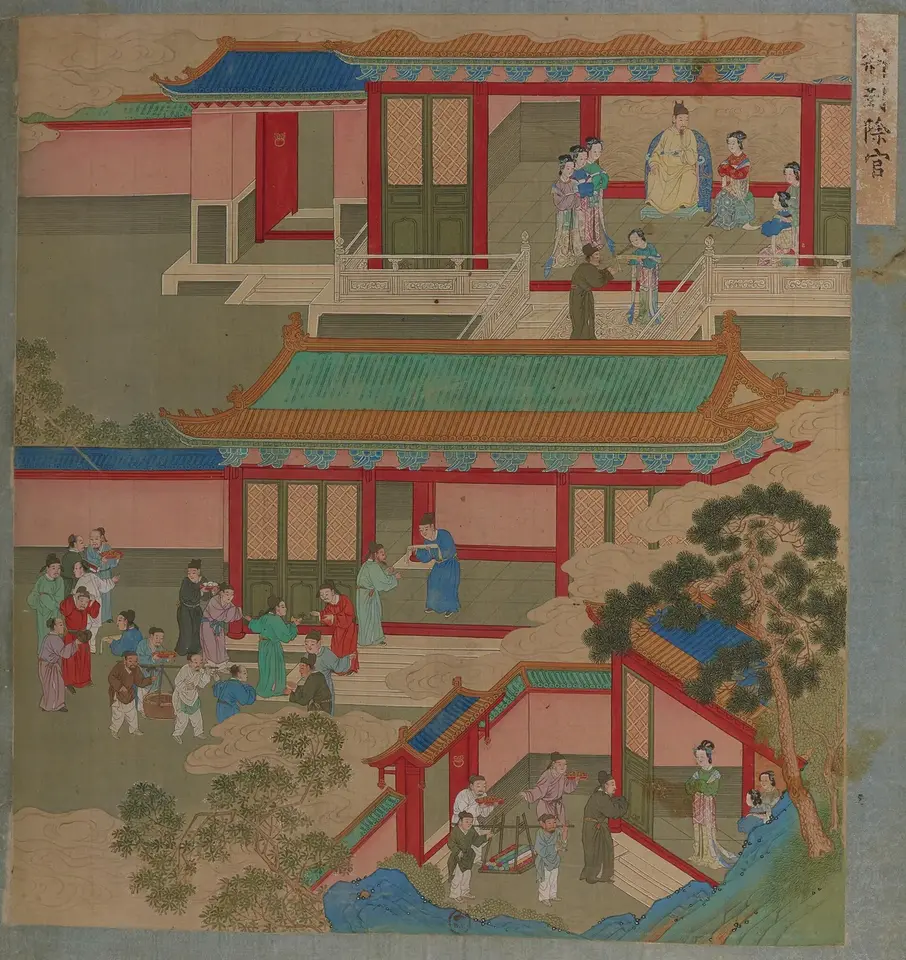
The Construction of the Three Shouxiangcheng Fortresses (三受降城) refers to the historic strategic fortification campaign executed in 708 during the Jinglong era of the Tang Dynasty under the command of Zhang Renyuan, Supreme Commander of the Shuofang Military Region. For decades, the Second Turkic Khaganate under Qapaghan Qaghan had launched seasonal winter cavalry raids across the frozen Yellow River, devastating the Ordos Loop and exhausting Tang defensive forces positioned passively along the southern banks. Exploiting a unique strategic window when Qapaghan mobilized his veteran hordes to campaign westward against the Turgesh in Central Asia, Zhang Renyuan overcame fierce court opposition to lead tens of thousands of soldiers across the river. In an astonishing display of civil-military engineering, Zhang constructed the Eastern, Middle, and Western Shouxiangcheng fortresses across an eight-hundred-li front in just sixty days. Interlocking with beacons and mountain defiles, the fortresses sealed off all avenues of southern advance, expanding Tang territory by three hundred li, ending generations of border plunder, and establishing an enduring frontier bulwark.
Seizing the window of Qapaghan's western expedition, Zhang Renyuan pledges his life to propose building fortresses north of the Yellow River.
Zhang Renyuan leads the Shuofang army across the river, initiating round-the-clock construction on three citadels.
In just sixty days, the Eastern, Middle, and Western Shouxiangcheng fortresses are completed, fortifying an eight-hundred-li frontier.
Qapaghan's return offensive is thwarted before the impregnable citadels; nomadic cavalry retreats permanently into the northern desert.
Beginning during the reign of Wu Zetian, Ashina Gudulu and his brother Qapaghan Qaghan resurrected the Second Turkic Khaganate, establishing dominance across the northern steppe. Qapaghan repeatedly led mobile cavalry hordes southward into Tang border prefectures, sacking Lingzhou, Shengzhou, and Yuanzhou while plundering thousands of civilians and herds of livestock.
Historically, imperial strategists had adhered to a passive doctrine of stationing troops along the southern bank of the Yellow River. Whenever winter ice bridged the river, Turkic cavalry crossed effortlessly to plunder the Ordos Loop, retreating north as the thaw arrived in spring. Tang regional garrisons were exhausted by continuous mobilization, border agriculture was chronically disrupted, and the state treasury expended immense sums transporting grain northward across mountain passes.
In the winter of 707, Qapaghan mobilized the bulk of his steppe warriors on a distant expedition westward to crush the Turgesh khaganate, leaving the northern frontier pastures undefended.
Serving as Supreme Commander of the Shuofang Circuit and Protector-General of Anbei, Zhang Renyuan possessed exceptional strategic acumen. Grasping the strategic vulnerability of the nomadic rear, he submitted an urgent memorial to Emperor Zhongzong: "The Turks have recklessly marched west, leaving their northern pastures empty. If our armies cross the Yellow River immediately to fortify defensive strongholds along the northern banks, we will choke off their avenues of invasion and permanently secure the Ordos frontier."
When Zhang's memorial reached Chang'an, senior ministers erupted in sharp dissent. Imperial chancellors Zong Chuke and Ji Chene denounced the plan, arguing that Chinese dynasties had always relied upon the Yellow River as a natural moat. They warned that constructing isolated fortresses deep within the northern wilderness would waste imperial funds and invite total destruction when Turkic armies returned.
Undaunted by aristocratic skepticism, Zhang submitted a second memorial, pledging his own life: "In military strategy, speed is paramount and success lies in striking the unexpected. If we fail to fortify the frontier today, Turkic hordes will inundate the Ordos upon their return. Should the fortresses fail, I willingly submit to military execution." Impressed by Zhang's patriotic resolve, Emperor Zhongzong overruled the court, formally decreeing financial appropriations and granting Zhang full executive authority.
In February 708, as river ice began to melt, Zhang Renyuan marched tens of thousands of veteran Shuofang troops and skilled artisans across the Yellow River. Zhang enforced strict operational discipline while sharing the physical labor and modest rations of his troops.
Studying the topography of the Yin Mountains and the northern bank of the river, Zhang selected three formidable geographical positions spanning an eight-hundred-li front. Dividing his forces into three simultaneous engineering corps, Tang soldiers quarried stone, fired brick kilns, and rammed earth day and night. Through brilliant coordination, the Tang army accomplished an engineering marvel, completing three imposing walled citadel complexes within sixty days: the Eastern, Middle, and Western Shouxiangcheng.
The three fortresses occupied crucial geopolitical bottlenecks, forming a mutual support axis that sealed every natural passage from the Yin Mountains onto the Yellow River plains.
The Western Shouxiangcheng was situated on the eastern shore of Wuliangsu Lake in modern Urad Front Banner, guarding the fertile western Ordos plain. The Middle Shouxiangcheng sat opposite the northern bank in modern Baotou, commanding the vital Baidao mountain pass through which nomadic armies entered the central plains. The Eastern Shouxiangcheng stood opposite Shengzhou in modern Tuoketuo, elevated above the fertile Tumochuan plain and connected to the southern bank via defensive pontoon bridges. Each fortress was protected by deep moats, towering masonry walls, subterranean grain silos, water cisterns, and military barracks capable of withstanding prolonged siege warfare.
To complement the three bastions, Zhang Renyuan constructed hundreds of watchtowers and beacon stations along the mountain crests between the fortresses.
Spanning over eight hundred li, these beacon outposts were permanently garrisoned by alert scouts. By burning wolf dung for dark smoke signals by day and lighting pine flares by night, military dispatches traversed the entire eight-hundred-li perimeter within hours, alerting central headquarters to any hostile troop movements and eliminating surprise cavalry incursions.
In the autumn of 708, Qapaghan Qaghan returned victorious from his Central Asian campaign. Discovering that Tang armies had erected stone fortresses across his traditional southern pastures, Qapaghan led tens of thousands of elite cavalry southward to raze the garrisons.
However, arriving at the defiles of the Yin Mountains, the Turks confronted three impregnable citadels bristling with flags and lethal Tang heavy crossbow batteries. Probing cavalry units were decimated by ranged missile fire, and the nomadic horsemen realized they could neither storm the walls nor bypass them without exposing their supply lines to envelopment.
Unable to access the river waters or plunder the Ordos, Qapaghan ordered his warriors to withdraw into the northern steppe. Thenceforth, nomadic cavalry ceased crossing the Yin Mountains, permanently losing their forward winter staging grounds.
With the Three Shouxiangcheng established, Zhang Renyuan reorganized the northern defense apparatus. He relocated the bulk of the Shuofang regional army from the southern bank to garrison the three northern fortresses, stationing several thousand elite soldiers at each post.
Zhang then petitioned the imperial court to abolish seventeen archaic river crossings and dozens of costly beacon stations along the southern bank, decommissioning thousands of auxiliary river patrols. This administrative consolidation saved hundreds of thousands of silver taels and millions of bushels of grain transport annually, sparing hundreds of thousands of peasant households across the Central Plains from crushing corvee burdens and allowing regional commerce to flourish.
The completion of the Three Shouxiangcheng fundamentally transformed Tang northern defense strategy. It dismantled centuries of passive river-line defense, projecting imperial authority three hundred li north into the strategic shadow of the Yin Mountains.
The three citadels became the administrative and military hubs for governing the steppe tribes, later accommodating the headquarters of the Anbei Protectorate and providing the strategic security that enabled the flourishing Kaiyuan golden age under Emperor Xuanzong.
In socio-economic terms, ending nomadic incursions allowed the Ordos Loop to transform into a secure agricultural sanctuary. Abandoned fields were reclaimed for massive military and peasant agrarian colonies, reviving regional irrigation canals.
By decommissioning archaic river defense stations, the imperial court eliminated immense grain transport taxes across Guanzhong and Shanxi, transforming the formerly war-torn frontier into a prosperous grain-producing paradise celebrated in Chinese annals as "Jiangnan Beyond the Great Wall."
The Old Book of Tang recorded: "Since the construction of the Three Shouxiangcheng, territory expanded by over three hundred li. The Turks were unable to cross the Yellow River to water their horses, ending northern border perils and saving hundreds of thousands in annual defense funds while sparing border inhabitants crushing transport labor. For more than thirty years following their erection, frontier alarms were stilled."
Sima Guang praised in Zizhi Tongjian: "Zhang Renyuan achieved an enterprise of sixty days to secure a century of prosperity. He severed the southern incursions of the nomads and founded a border of absolute peace. In comparison with ancient champions Lian Po and Li Mu, what could be added to his fame!"