Xia Empire Proclaimed
Li Yuanhao declares himself emperor of Great Xia; Song revokes titles and declares total war along the frontier.
Northern Song Dynasty (北宋) · HISTORICAL EVENT
三川口之战
The Battle of Sanchuankou (Sanchuankou Zhi Zhan, 三川口之战) was the first major strategic confrontation between the Northern Song and Western Xia dynasties, fought in the first month of 1040 (the first year of the Kangding reign in Song, the third year of Tianshou Lifayanzuo in Xia) at Sanchuankou near Yanzhou (present-day Yan'an, Shaanxi). Having proclaimed himself emperor of Western Xia, Li Yuanhao sought to compel the Northern Song court to recognize his…
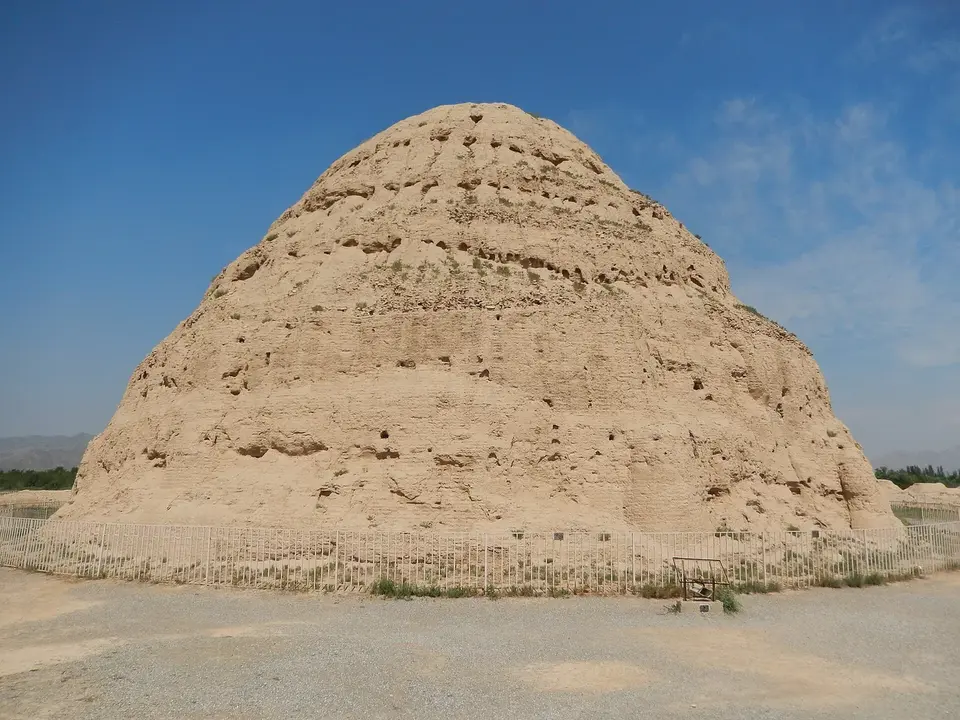
The Battle of Sanchuankou (Sanchuankou Zhi Zhan, 三川口之战) was the first major strategic confrontation between the Northern Song and Western Xia dynasties, fought in the first month of 1040 (the first year of the Kangding reign in Song, the third year of Tianshou Lifayanzuo in Xia) at Sanchuankou near Yanzhou (present-day Yan'an, Shaanxi). Having proclaimed himself emperor of Western Xia, Li Yuanhao sought to compel the Northern Song court to recognize his sovereign status and seize strategic terrain across Guanzhong, leading a 100,000-strong cavalry army across the frontier toward Yanzhou. Employing a feigned defection stratagem, Li Yuanhao deceived the civilian prefect of Yanzhou, Fan Yong, and captured the vital northern fortress of Jinming Stockade in a surprise night raid. Panic-stricken, Fan Yong urgently summoned Song field armies; commanders Liu Ping and Shi Yuansun marched 10,000 infantry and cavalry day and night to relieve the siege. At Sanchuankou, the Song relief column was encircled by overwhelming Western Xia heavy cavalry. Vanguard general Huang Dehe fled in cowardice, fracturing Song formations. Liu Ping fought heroically on an isolated knoll until arrows were exhausted, falling into enemy hands alongside Shi Yuansun. Although victorious in the field, Li Yuanhao was unable to breach Yanzhou's fortifications and was forced to withdraw amid heavy snowstorms and logistical collapse.
Li Yuanhao declares himself emperor of Great Xia; Song revokes titles and declares total war along the frontier.
Li Yuanhao finalizes military reforms and identifies the frontier capital of Yanzhou as his primary invasion target.
Li Yuanhao utilizes fake defectors to deceive Fan Yong, storming Jinming Stockade and capturing Li Shibin in a night raid.
Liu Ping and Shi Yuansun lead 10,000 men from An'yuan to relieve Yanzhou, colliding with Xia forces at Sanchuankou.
Huang Dehe flees the field; Liu Ping makes a last stand on the heights before being captured with Shi Yuansun.
Li Yuanhao fails to breach Yanzhou's walls and retreats northward amid severe blizzards and approaching Song armies.
In 1038, the Tangut chieftain Li Yuanhao proclaimed himself emperor of the Great Xia dynasty (Western Xia) in Xingqing Prefecture. Versed in classical Chinese and military strategy, Li rejected vassalage to the Northern Song, sending an imperial missive demanding parity of protocol from Emperor Renzong. Regarded by the Song court as an egregious act of rebellion, Emperor Renzong revoked Li's bestowed surname and imperial titles, terminated border tea and horse trade, and placed bounties on his capture, escalating tensions into total war.
Along the frontier dividing Western Xia and Northern Song stretched the rugged Hengshan Mountain Range. North of Hengshan lay open deserts ideal for nomadic cavalry maneuvers; south of the ridge lay deeply dissected loess valleys dotted with Song defensive stockades. Yanzhou, serving as the administrative seat of the Fuyan Circuit, commanded the primary avenue connecting northern frontier passes with the fertile Guanzhong Plain. If Yanzhou fell, Xia cavalry could easily plunge into the heartland of Shaanxi, threatening the ancient capital region.
Decades of the Song policy of subordinating military commanders to civilian scholar-officials had hollowed out border armaments. Frontier fortresses were isolated and understaffed, with officers possessing little cohesion with their assigned units. Serving as Military Commissioner and Prefect of Yanzhou, Fan Yong was an inexperienced civilian magistrate. Naively trusting fraudulent surrender declarations from Xia frontier tribes, Fan neglected reconnaissance and garrison preparedness, leaving the northern gates of Yanzhou perilously exposed to surprise attack.
Prior to and following his self-proclamation as emperor, Emperor Jingzong of Western Xia (Li Yuanhao) instituted far-reaching military and administrative reforms. He discarded the bestowed Tang and Song dynastic surnames of Li and Zhao, restoring the ancestral clan name Weiming and styling himself Wuzu (Son of Blue Heaven). Across Western Xia, he enforced the Tonsure Decree, mandating the traditional Tangut tonsure over Han hair arrangements to fortify ethnic distinctiveness. Militarily, Li established twelve Military Supervision Directorates, registering all able-bodied men aged fifteen to sixty for universal conscription.
Within the standing army, Li Yuanhao developed elite specialized formations. Foremost was the "Iron Sparrowhawk" (Tieyaoxi), a 3,000-man force of catastrophic shock heavy cavalry where riders and mounts were fully encased in laminated iron armor and secured to saddles with rawhide cords, capable of unstoppable charges. In addition, he trained agile alpine infantry ("Bobaizi") for mountain assault and aristocratic guards cavalry ("Shan'e"). Well-versed in Han military strategy and regional topography, Li dispatched scouts into northern Shaanxi to map roads and fortifications, uncovering critical vulnerabilities in the dispersed deployments of the Song Fuyan Circuit.
In the first month of 1040, having surveyed Song vulnerabilities, Li Yuanhao executed his campaign strategy to sever frontier outposts, lure relieving forces, and destroy them in open terrain. Li dispatched Tangut tribal leaders to Yanzhou with their families, claiming to seek asylum from internal persecution. Delighted by what he perceived as a diplomatic coup, Fan Yong accepted the defectors without scrutiny and relaxed border vigilance. Fan even issued strict orders forbidding garrison commanders from provoking Xia cavalry, leaving Song frontier outposts in a passive stupor.
Simultaneously, Li Yuanhao led 100,000 troops south through the Helan Mountains in a rapid forced march toward Jinming Stockade, the northern gateway to Yanzhou. Commander Li Shibin had guarded the post for generations with his seasoned tribal cavalry, earning renown as the "Iron-Wall Prefect." Using covert turncoats as guides, Li Yuanhao attacked through a nighttime windstorm. Li Shibin's auxiliary troops mutinied, eighteen perimeter stockades fell within hours, and Li Shibin and his sons were captured. With Jinming destroyed, Yanzhou was directly exposed to Xia cavalry assaults.
News of Jinming's fall threw Yanzhou into profound panic. The city garrison contained only a few hundred infirm troops. Terrified, Fan Yong barred the city gates and issued desperate military dispatches ordering Liu Ping, Military Supervisor of Fuyan Circuit stationed at An'yuan, alongside Vice Supervisor Shi Yuansun and Inspector Huang Dehe, to march their combined armies immediately to save Yanzhou.
Approaching sixty years of age, Liu Ping was a veteran warrior of exceptional bravery and iron discipline. Knowing that speed was of the essence, he marshaled 10,000 infantry and cavalry and marched through freezing weather. Along the route, scouts reported that Jinming had fallen and Xia armies were encircling Yanzhou. Terrified by the news, Huang Dehe urged a tactical retreat, but Liu Ping severely rebuked him: "Yanzhou is the cornerstone of this entire province! If it falls, Guanzhong cannot be held. As commanders sustained by imperial grace, our duty is to die for the realm, not cower in avoidance!" Liu urged the column forward across frozen terrain.
At dawn on the twenty-third day of the first month, the exhausted Song relief column arrived at Sanchuankou, thirty li northwest of Yanzhou, where the Yan and Qingshui Rivers converged. As they navigated the narrow valley flanked by steep loess bluffs, dust clouds billowed ahead as tens of thousands of Western Xia "Iron Sparrowhawk" armored cavalry deployed across the valley, cutting off all forward advance.
Liu Ping reacted calmly, ordering his men to form battle arrays against the mountain slopes. Personally leading elite shock cavalry, Liu struck the Xia vanguard with an iron mace, slaying several enemy champions and temporarily checking the advance. However, stationed in the rear guard, Inspector Huang Dehe observed the vast Xia battle lines and succumbed to terror. Defying orders, Huang turned his cavalry around and fled south with several thousand troops.
Huang's cowardly flight triggered widespread panic, leaving the Song rear guard and supply wagons completely exposed. Xia cavalry exploited the breach, slicing the Song infantry phalanxes into isolated fragments. Though Liu Ping executed several fleeing soldiers on the spot, he could not arrest the rout. Over 10,000 Song soldiers were encircled in the river valley by an enemy outnumbering them tenfold.
Confronting overwhelming odds, Liu Ping gathered roughly 1,000 surviving retainers and fought an orderly withdrawal to an isolated knoll overlooking Sanchuankou. Liu ordered his men to fell trees and pile stones into makeshift parapets, interlocking heavy tower shields on the perimeter while crossbowmen fired from within, repelling repeated Xia assaults from elevated terrain.
Li Yuanhao personally directed the assault, rotating heavy shock cavalry and agile mountain infantry ("Bobaizi") against the heights. Fighting with desperate resolve, the Song defenders unleashed volleys of arrows and boulders, heaping Xia corpses along the slopes. By sunset, Song arrows were completely spent, and every soldier was wounded, famished, and parched. Below, Xia troops lit thousands of bonfires, illuminating the knoll while sounding war horns to torment the encircled survivors.
Under cover of darkness, Li Yuanhao committed fresh cavalry reserves for a final assault. Breaching the wooden perimeter, Xia shock troops engaged in brutal hand-to-hand combat. Struck by multiple arrows in the neck and chest with his armor drenched in blood, Liu Ping continued swinging his sword until he collapsed from exhaustion and was taken alive. Vice Supervisor Shi Yuansun was similarly captured. The remaining 1,000 defenders fought to the last man, refusing surrender.
Having destroyed the relief column and captured Liu Ping and Shi Yuansun, Li Yuanhao advanced directly upon Yanzhou to capture the regional capital. In Yanzhou, news of the relief army's total destruction plunged the civilian population into despair.
However, Yanzhou had been reinforced since the Five Dynasties period with towering masonry ramparts and deep moats. Realizing there was no alternative, Fan Yong collected bricks, timber, and domestic metalwork, mobilizing every adult citizen to defend the walls. Lacking counterweight siege engines, Xia attacks were repeatedly repulsed with heavy losses. Officers like Zhang Yan and Gao Jilong fought on the ramparts, repelling dozens of escalades.
Concurrently, a massive blizzard struck the northern Shaanxi highlands, dropping temperatures drastically. Xia supply lines traversing mountainous terrain froze over, and cavalry horses starved in droves. Furthermore, imperial dispatches warned that massive Song armies from Huanqing and Jingyuan Circuits were closing in from the west. Recognizing that the fortress could not be carried, Li Yuanhao lifted the siege on the twenty-eighth day, withdrawing his army northward with plunder and captives, leaving Yanzhou preserved.
The catastrophic defeat at Sanchuankou and the capture of two senior commanders sent shockwaves throughout Kaifeng and Chang'an. Emperor Renzong conferred overnight with Chief Councilor Lü Yijian and Bureau of Military Affairs head Wang Deyong. Citizens of Guanzhong fled in terror into the southern mountains, fearing Xia cavalry incursions.
Emperor Renzong issued stern edicts ordering Military Commissioner Xia Song to advance to Yongxing (Xi'an) to coordinate regional defenses, while dispatching tens of thousands of imperial guards through Tongguan to bolster western garrisons. Along the Hedong frontier, garrison commanders in Linzhou, Fuzhou, and Fengzhou were alerted, with General Zhe Jimin conducting cavalry screening operations against Xia's rear flank. The convergence of multiple imperial relief armies forced Li Yuanhao to withdraw, preventing Xia cavalry from penetrating the Guanzhong Plain.
Upon fleeing, Huang Dehe fabricated reports claiming that Liu Ping had defected to the enemy, bribing Fan Yong's retainers to endorse the slander. The court was deceived, briefly confiscating Liu Ping's property and imprisoning his family. However, veteran soldiers from Liu's command risked death to present the true facts to the throne.
Imperial censors Fu Bi and Pang Ji investigated the incident, disproved the slander, and executed Huang Dehe by bisection at the Yanzhou garrison gates to restore army morale. Liu Ping was posthumously cleared, enfeoffed as a military commissioner, and generously honored. The debacle at Sanchuankou forced Emperor Renzong to overhaul border command, replacing Fan Yong with visionary scholar-officials Fan Zhongyan and Han Qi. Fan Zhongyan instituted the strategy of defensive containment, fortifying hill passes, cultivating agrarian colonies, and training local tribal auxiliaries, gradually stabilizing the northwestern frontier.
The Battle of Sanchuankou wiped out the elite field army of nearly 10,000 troops belonging to the Fuyan Circuit, resulting in the capture of senior commanders Liu Ping and Shi Yuansun and the destruction of the eighteen Jinming frontier outposts. Nevertheless, Yanzhou's stubborn defense prevented Western Xia from securing a permanent foothold in the loess highlands, averting a deeper breakthrough into the Guanzhong basin.
Upon fleeing, Huang Dehe fabricated reports claiming that Liu Ping had defected to the enemy. Imperial censors Fu Bi and Pang Ji investigated the incident, disproved the slander, and executed Huang Dehe by bisection at the Yanzhou garrison gates to restore army morale. As recorded in the Long Draft of the Continuation of the Comprehensive Mirror in Aid of Governance and the Continuation of the Comprehensive Mirror in Aid of Governance, the debacle at Sanchuankou forced Emperor Renzong to overhaul border command, replacing Fan Yong with visionary scholar-officials Fan Zhongyan and Han Qi. Fan Zhongyan instituted the strategy of defensive containment, fortifying hill passes, cultivating agrarian colonies, and training local tribal auxiliaries, gradually stabilizing the northwestern frontier.