Japanese Invasion Begins
Hideyoshi mobilizes 158,000 troops to invade Busan; Joseon forces crumble, losing Hanseong and Pyongyang within weeks.
Ming Dynasty (明朝) · HISTORICAL EVENT
壬辰倭乱
The Imjin War (壬辰倭乱), also known as the Wanli Korean Campaign, was a massive international conflict fought on the Korean Peninsula between 1592 and 1598. Following the unification of Japan, Chancellor Toyotomi Hideyoshi mobilized nearly 160,000 veteran troops to conquer Korea as a strategic stepping-stone to invade the Ming Empire. Caught unprepared after two centuries of peace, Joseon defenses collapsed within weeks; the capital Hanseong, Kaesong, and…
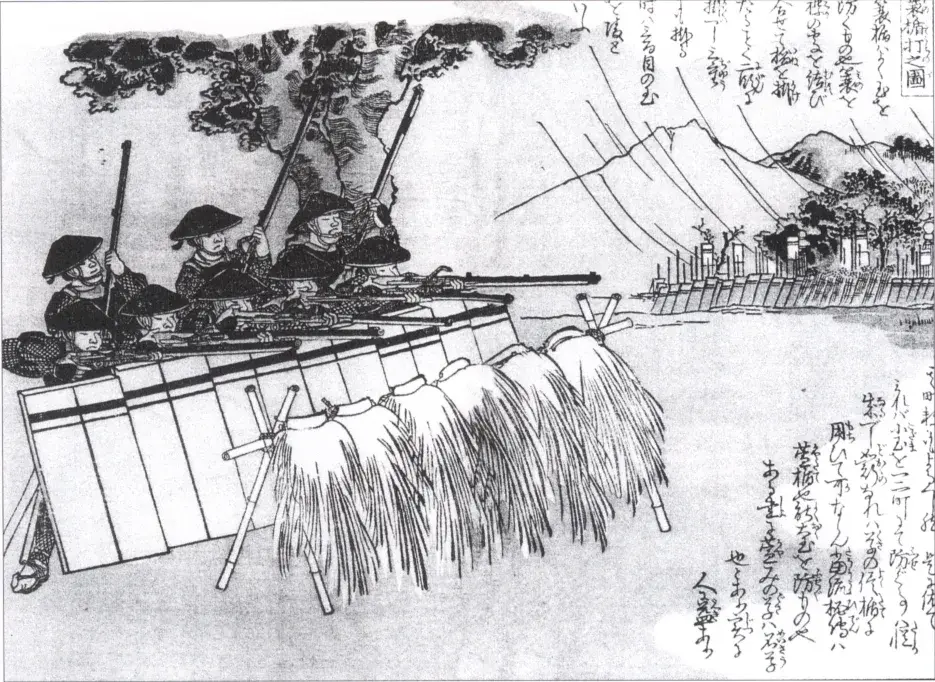
The Imjin War (壬辰倭乱), also known as the Wanli Korean Campaign, was a massive international conflict fought on the Korean Peninsula between 1592 and 1598. Following the unification of Japan, Chancellor Toyotomi Hideyoshi mobilized nearly 160,000 veteran troops to conquer Korea as a strategic stepping-stone to invade the Ming Empire. Caught unprepared after two centuries of peace, Joseon defenses collapsed within weeks; the capital Hanseong, Kaesong, and Pyongyang fell in rapid succession, forcing King Seonjo to flee to the border outpost of Uiju and plead for imperial Chinese intervention. The Wanli Emperor resolved to intervene, dispatching elite forces under commanders Song Yingchang and Li Rusong, followed by Xing Jie and Ma Gui. Sino-Korean forces achieved pivotal triumphs at the Siege of Pyongyang and the Battle of Jiksan, while joint naval forces under Admiral Yi Sun-sin, Chen Lin, and Deng Zilong shattered the Japanese fleets at Hansando and Noryang Strait. Following the death of Toyotomi Hideyoshi, the invasion collapsed into headlong retreat. The war reshaped Northeast Asian geopolitics, preserving the regional tributary order for nearly three centuries.
Hideyoshi mobilizes 158,000 troops to invade Busan; Joseon forces crumble, losing Hanseong and Pyongyang within weeks.
Zu Chengxun leads a three-thousand-man cavalry detachment into Pyongyang, suffering an ambush in heavy rains.
Li Rusong commands 40,000 Ming troops with heavy siege artillery, crushing Japanese defenders and liberating Pyongyang and Kaesong.
Li Rusong's cavalry fights a fierce defensive action at Byeokjegwan; Ming commandos incinerate the main Japanese granaries at Yongsan.
Admiral Yi Sun-sin uses turtle ships to destroy Japanese squadrons at Hansan Island, severing sea logistics and enforcing a ceasefire.
Following the breakdown of fraudulent peace talks, Hideyoshi launches a second invasion with 140,000 troops.
Ming commander Xie Sheng defeats Kuroda Nagamasa's elite vanguard at Jiksan, thwarting the enemy drive toward Hanseong.
Ma Gui and Yang Hao lead allied forces to besiege Kato Kiyomasa at Ulsan Fortress, withdrawing after more than ten days of fierce combat.
Hideyoshi dies at Fushimi Castle, ordering a general evacuation of all Japanese armies from the peninsula.
The combined Sino-Korean fleet crushes the Japanese armada at Noryang; Deng Zilong and Yi Sun-sin fall in combat as the war concludes in total allied victory.
During the late Sengoku period, Chancellor Toyotomi Hideyoshi completed the unification of the Japanese archipelago through relentless military campaigns, subjugating rival daimyo across Shikoku, Kyushu, and Odawara. As autocratic authority solidified, Hideyoshi's martial ambitions expanded toward continental Asia. He envisioned subjugating Joseon Korea, overthrowing the Ming dynasty to establish his court in Beijing, and ultimately conquering India.
In 1591, Hideyoshi dispatched envoys to the Joseon court, demanding that Korea grant Japanese armies unhindered passage and logistical provisions to invade China. Faithful to its tributary obligations toward the Ming sovereign, King Seonjo sternly rejected the preposterous demand. Infuriated by Korean defiance, Hideyoshi issued a general mobilization across Japan, concentrating massive armies and provisions at Nagoya Castle in Hizen to launch an overseas invasion.
For two centuries following its foundation, the Joseon dynasty enjoyed unbroken domestic peace. The civil bureaucracy neglected military preparedness, leaving frontier castles in disrepair and garrisons untrained while court politics descended into bitter factional strife between Easterners and Westerners.
To the Ming court, the Korean Peninsula constituted an irreplaceable geopolitical shield guarding Liaodong and the imperial capital. Ming statesmen recognized that if Korea fell, the Yalu River would cease to serve as a natural barrier, exposing Liaodong and Beijing directly to foreign aggression. Aiding Korea was thus not merely a moral obligation to protect an obedient vassal, but a vital imperative of national homeland security.
On April 13, 1592, the Japanese invasion armada crossed the Tsushima Strait under naval escort and launched a sudden assault on the port of Busan. Toyotomi Hideyoshi had deployed nine field armies totaling 158,000 veteran infantry armed with advanced matchlock firearms. Employing aggressive offensive tactics, Japanese shock divisions overran coastal defenses and advanced inland along separate converging axes.
Joseon regional garrisons disintegrated in panic before the ferocious Japanese firearm volleys. Vanguard divisions led by Konishi Yukinaga and Kato Kiyomasa marched northward with astounding speed, capturing the royal capital Hanseong within just twenty days. Kaesong and Pyongyang fell soon after, and Kato Kiyomasa's division reached the Tumen River frontier. King Seonjo fled northward in desperate flight, reaching Uiju along the Yalu River, where his ministers wept before the gates and pleaded for imperial Chinese military intervention.
Alarmed by urgent frontier dispatches, the Wanli Emperor and Minister of War Shi Xing recognized that the survival of Liaodong depended upon Korean defense. In July, Vice Commander Zu Chengxun crossed the Yalu with three thousand cavalry on a reconnaissance mission but suffered an ambush during rainstorms inside Pyongyang. Realizing the scale of the Japanese invasion, the Ming court mobilized four thousand veteran troops, including northern heavy cavalry and southern artillery regiments, appointing Song Yingchang as Military Commissioner and Li Rusong as General Commander.
In January 1593, Li Rusong marched his grand army to the walls of Pyongyang. Ming forces arrayed heavy siege cannons, including Great General Cannons and Frankish breech-loading guns, unleashing an unprecedented bombardment against Japanese fortifications. Li Rusong directed the assault under intense fire, having his warhorse shot from beneath him. Ming infantry scaled the battlements, engaging Konishi Yukinaga's first army in vicious hand-to-hand combat. Ming firearms and heavy swords inflicted over ten thousand casualties, routing the defenders and liberating Pyongyang. Konishi Yukinaga fled southward under cover of darkness.
Following the liberation of Pyongyang, Ming forces swiftly recovered Kaesong and liberated northern provinces. On January 26, Li Rusong led an advance reconnaissance detachment of elite cavalry toward Hanseong, colliding unexpectedly at Byeokjegwan with a Japanese army of tens of thousands led by Tachibana Muneshige and Kobayakawa Takakage. Surrounded in narrow ravines, Li Rusong and his Liaodong lancers mounted an obstinate defense, repulsing multiple infantry assaults before withdrawing in good order toward Kaesong.
Following Byeokjegwan, Ming commander Zha Dashou launched a nocturnal commando raid alongside Korean guerrillas against the primary Japanese supply depots at Yongsan near Hanseong. Setting fire to the granaries, they incinerated hundreds of thousands of bushels of grain. Deprived of food, Japanese forces abandoned Hanseong in April, retreating to coastal fortresses around Busan. Concurrently, Admiral Yi Sun-sin commanded Korean naval squadrons, deploying armored turtle ships and naval artillery to devastate Japanese fleets at Okpo and Hansan Island, severing sea supply routes and forcing the conflict into protracted diplomatic negotiations.
The ensuing truce dragged into a three-year diplomatic stalemate marked by deception. Ming envoy Shen Weijing and Japanese general Konishi Yukinaga fabricated peace terms to appease their respective rulers. In September 1596, when Ming envoys in Osaka presented an imperial edict that merely invested Hideyoshi as King of Japan without granting territorial cessions, Hideyoshi flew into a rage, ripped up the proclamation, expelled the envoys, and ordered a renewed invasion.
In early 1597, Hideyoshi launched the second invasion with 140,000 troops. After Korean admiral Won Kyun's fleet was destroyed at Chilcheollyang, Japanese forces advanced northward. The Wanli Emperor appointed Xing Jie as Supreme Commander and Ma Gui as Field General. In September, Ming commander Xie Sheng crushed Kuroda Nagamasa's vanguard at the Battle of Jiksan, permanently barring the Japanese army from approaching Hanseong. In December, allied forces besieged Kato Kiyomasa at Ulsan, subjecting the defenders to starvation before withdrawing when heavy Japanese relief columns arrived.
In 1598, the Ming court reinforced its expeditionary army to nearly 100,000 men, executing a coordinated four-route counteroffensive: Ma Gui pressed Ulsan, Dong Yiyuan struck Sacheon, Liu Ting attacked Suncheon, and Chen Lin led the Ming naval armada alongside Admiral Yi Sun-sin to blockade coastal anchorages. On August 18, Toyotomi Hideyoshi died in despair at Fushimi Castle, leaving dying orders for total withdrawal. Japanese garrisons began abandoning their coastal fortresses to escape across the sea.
On the night of November 19, 1598, the allied Sino-Korean navy intercepted the fleeing Japanese fleets under Shimazu Yoshihiro at the Battle of Noryang. The seventy-year-old Ming veteran commander Deng Zilong fought heroically in the vanguard until his warship caught fire and he fell in combat. Korean admiral Yi Sun-sin was fatally wounded by a stray bullet while beating war drums on his deck, uttering his immortal final words: Do not announce my death, for the battle is still fierce. United in grief and fury, allied naval crews unleashed fire arrows and explosive shells, sinking and burning over four hundred enemy vessels and annihilating the Japanese invasion fleet. The Imjin War concluded with the total victory of the Sino-Korean alliance.
The Imjin War concluded with the total strategic triumph of the Sino-Korean alliance. Toyotomi Hideyoshi's ambitious design to subjugate continental Asia was obliterated, with Japan losing over half its expeditionary forces and nearly its entire fleet. Joseon regained full territorial sovereignty, preserving its Confucian dynastic order.
The conflict affirmed the efficacy of the Ming tributary network, proving that the imperial court possessed both the will and the logistical capacity to project formidable military force across foreign terrain to protect its vassals. By decisively crushing Japanese military expansionism, the victory established the Pax Sinica that safeguarded Northeast Asian peace for nearly three centuries until the late nineteenth century.
Domestically, the disastrous expedition ruined the Toyotomi clan. Depleted daimyo factions clashed at the Battle of Sekigahara in 1600, enabling Tokugawa Ieyasu to establish the Edo Shogunate, which initiated more than two centuries of national isolation (Sakoku) and restored peaceful diplomatic ties with Korea.
However, the war inflicted devastating unintended consequences upon the Ming and Joseon realms. Korea suffered immense demographic and economic ruin, losing nearly half its registered population to slaughter and famine. For the Ming Empire, the expenditure of over ten million taels of silver and the attrition of elite Liaodong cavalry severely drained northern defenses. This power vacuum along the northern frontier created the crucial strategic opening for Nurhaci to unify the Jianzhou Jurchens, accelerating the dynastic collapse of the Ming and the rise of the Qing dynasty.
In the History of Ming, Qing historians evaluated the Korean campaign as a monument of imperial majesty, noting that the Wanli Emperor successfully liberated a loyal vassal, crushed a ruthless foreign invader, and projected Chinese prestige across the seas.
In his Book of Corrections, Joseon Chief Councillor Ryu Seong-ryong recorded deep gratitude for Ming intervention, reflecting that without the decisive mobilization of imperial armies, the people of Korea would have perished under foreign subjugation. He described the imperial rescue as a debt of restoration that would endure across generations.
The Veritable Records of King Seonjo echoed these sentiments, noting that the Wanli Emperor mobilized tens of thousands of troops and transported grain across thousands of li to reconstruct the fallen kingdom, cementing an enduring moral and cultural bond between the two realms.