Shaoxi Coup and Political Estrangement
Zhao Ruyu and Han Tuozhou dethroned Guangzong to enthrone Ningzong; Zhao became chancellor and dismissed Han's ambitions; Zhu Xi censured Han from the imperial lectern.
Southern Song Dynasty (南宋) · HISTORICAL EVENT
庆元党禁
The Qingyuan Proscription was a severe intellectual and political purge during the reign of Emperor Ningzong in the Southern Song dynasty. In 1194, Commissioner of Military Affairs Zhao Ruyu collaborated with palace attendant Han Tuozhou to orchestrate the forced abdication of Emperor Guangzong and the enthronement of Emperor Ningzong. Afterward, Zhao Ruyu became Right Grand Chancellor and appointed prominent Neo-Confucian scholars like Zhu Xi to reform…
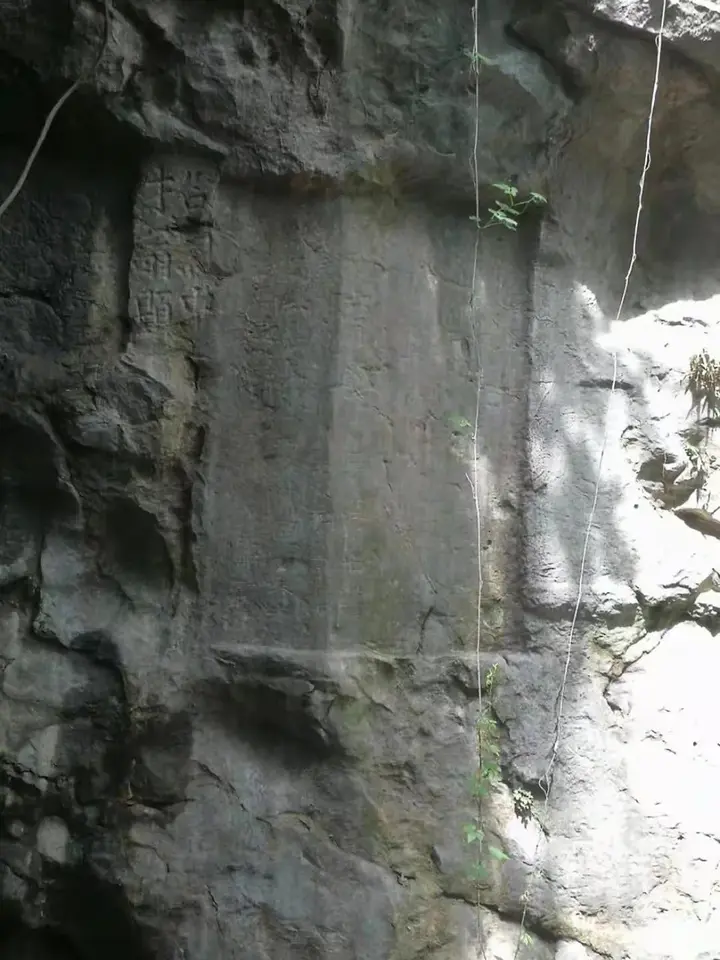
The Qingyuan Proscription was a severe intellectual and political purge during the reign of Emperor Ningzong in the Southern Song dynasty. In 1194, Commissioner of Military Affairs Zhao Ruyu collaborated with palace attendant Han Tuozhou to orchestrate the forced abdication of Emperor Guangzong and the enthronement of Emperor Ningzong. Afterward, Zhao Ruyu became Right Grand Chancellor and appointed prominent Neo-Confucian scholars like Zhu Xi to reform governance. However, Han Tuozhou was denied premier offices due to his status as an imperial in-law, creating fierce enmity. Literati officials repeatedly censured in-law interference, prompting Han to launch a sweeping counterattack. In 1195, Han Tuozhou utilized imperial censors to accuse Zhao Ruyu of treasonous ambition and denounced Zhu Xi's teachings as "False Learning" (Weixue). Emperor Ningzong dismissed both statesmen from the court. The Han faction intensified the proscription, outlawing Daoxue concepts in the civil service examinations. In 1197, the court promulgated the Register of the False Learning Traitorous Faction, banning fifty-nine prominent ministers and scholars. The ban persisted until 1202, when Han repealed it to rally intellectual support for his planned military campaign against the Jurchen Jin dynasty. The purge dealt a profound blow to Song scholar-official political autonomy and fostered authoritarian ministerial control.
Zhao Ruyu and Han Tuozhou dethroned Guangzong to enthrone Ningzong; Zhao became chancellor and dismissed Han's ambitions; Zhu Xi censured Han from the imperial lectern.
Censors denounced Zhu Xi, who was removed from court; Li Mu accused Zhao Ruyu of treason, leading to his dismissal; the court formally banned Daoxue as "False Learning."
Zhao Ruyu died under duress in Hengzhou; Shen Jizu fabricated crimes against Zhu Xi, stripping him of titles; the examination ban was enforced.
The court issued the Register of the False Learning Traitorous Faction, proscribing fifty-nine prominent ministers and scholars.
Zhu Xi passed away in Fujian; commoner Lu Zutai struck the petition drum demanding Han's execution; factional hostilities plateaued.
Han Tuozhou relaxed ideological controls to prepare for the Northern Expedition; Ningzong issued an edict abolishing the partisan register.
Originating with the Cheng brothers during the Northern Song, Daoxue (Neo-Confucianism) gained extensive traction throughout Jiangnan, Fujian, and Sichuan during the Southern Song reigns of Gaozong and Xiaozong. Master scholars such as Zhu Xi, Zhang Shi, and Lu Zuqian synthesized intricate philosophical frameworks that attracted widespread followings among the bureaucratic intelligentsia. Emphasizing personal moral cultivation and strict dynastic norms, these literati frequently engaged in moral criticism of imperial court policies and executive ministers. This moralism clashed sharply with pragmatic, utilitarian bureaucrats favored by Emperor Xiaozong, gradually polarising the central bureaucracy into pro-Daoxue and anti-Daoxue factions.
In 1194 (Shaoxi 5), Emperor Guangzong suffered mental instability, retiring to the Chonghua Palace and refusing to preside over the funeral rites of Emperor Emeritus Xiaozong. To avert an imperial crisis, Zhao Ruyu, then Administrator of the Bureau of Military Affairs, conspired with Han Tuozhou, an influential palace attendant and nephew of the Empress Dowager. Procuring an edict from Grand Empress Dowager Wu, they forced Guangzong's abdication and enthroned Prince Zhao Kuo as Emperor Ningzong. Following the coup, Zhao assumed the premiership. Fearing that elevating an imperial relative to supreme administrative office would incur widespread public condemnation, Zhao granted Han only honorary and military titles. Deprived of high ministerial office, Han deeply resented Zhao.
As Right Grand Chancellor, Zhao recruited Zhu Xi to the capital as an imperial lecturer to tutor Emperor Ningzong in the classics and state history. Zhu proved uncompromisingly stern, admonishing the young emperor to restrain personal desires and avoid sycophantic palace favorites. Crucially, Zhu submitted direct memorials warning against Han Tuozhou's monopolization of patronage. Recognizing the existential threat posed by the Daoxue scholar-official network, Han allied with censorate officials, including Jing Tang and He Dan, plotting to utilize the censorate to annihilate Zhao Ruyu and his ideological allies.
In late 1194, Han Tuozhou exploited his access to inner palace chambers to orchestrate a barrage of censorate memorials against Zhu Xi, alleging that Zhu used classical tutoring to organize subversive partisan networks. Weary of Zhu's rigid moral lectures, Emperor Ningzong dismissed him from the imperial lectern and ordered him to leave the capital. When court officials like Huang Du and Liu Guangzu protested Zhu's abrupt dismissal, they were demoted and banished.
In February 1195 (Qingyuan 1), Han targeted Chancellor Zhao Ruyu. Instigated by Han, Censor Li Mu accused Zhao of harboring treasonous ambitions because of his royal ancestry, insinuating that an imperial clansman presiding over the grand council threatened the ruling line. Compelled by escalating attacks, Zhao resigned and was demoted to become governor of Fuzhou. Six Imperial University students, celebrated as the "Six Gentlemen of the Imperial Academy," submitted petitions at court defending Zhao, but were arrested, flogged, and banished to distant frontiers.
With Zhao's downfall, Han Tuozhou became Military Affairs Chief Receiver, seizing control of executive policy and the censorate. In June 1195, examination official Liu Dexiu submitted a memorial urging the throne to eliminate moral hypocrisy by vetting candidates. In July, Censor-in-Chief He Dan formally denounced Daoxue as "False Learning," accusing its practitioners of deceptive rhetoric and subversive factionalism. Ningzong posted the memorial at court, making it official policy. Shortly after, Vice Minister of Personnel Mi Shidan implemented nationwide administrative screenings to purge Daoxue adherents.
In November 1195, Censor Hu Hong fabricated allegations that Zhao Ruyu was conspiring to restore the abdicated Emperor Guangzong. Ningzong stripped Zhao of all remaining titles and banished him to Yongzhou. Suffering from fever during the grueling winter journey through the winds and snows of the Xiang River, Zhao fell gravely ill due to incorrect medical prescriptions. In January 1196, Zhao reached Hengzhou, where local prefect Qian Mao subjected him to humiliation. On January 18, 1196, Zhao died suddenly in custody, widely believed to have been poisoned.
Following Zhao's death, Han's allies focused their ire upon Zhu Xi. In February 1196, Liu Dexiu successfully urged the court to legally designate Daoxue as "False Learning." Civil service examiners were strictly instructed to fail any candidate using Neo-Confucian concepts, and classical texts like the Analects, Mencius, and Great Learning were banned from examination halls. When Grand Empress Dowager Wu voiced concern and Ningzong tried to issue a conciliatory edict, Han's faction resisted vigorously, forcing the emperor to rescind his concessions.
At the end of 1196, Censor Shen Jizu submitted a sweeping indictment against Zhu Xi, fabricating wild charges including filial impiety, financial embezzlement, and illicit concubinage. Shen demanded that Ningzong execute Zhu as Confucius had executed Shaozheng Mao. Ningzong stripped Zhu of all honors and temple salaries, driving him into isolated retirement in Jianyang.
In 1197 (Qingyuan 3), the proscription peaked. Officials across the empire were forced to sign written pledges declaring that they had never studied False Learning. In June, courtier Liu Sanjie petitioned to elevate the charge from "false faction" to "traitorous faction." In December, Wang Yun proposed emulating the Northern Song Yuanyou partisan registers, prompting Ningzong to authorize the formal Register of the False Learning Traitorous Faction.
The register blacklisted fifty-nine prominent figures: the deceased Zhao Ruyu was branded factional chief, while Zhu Xi was named head of the subversive sect. It included four former prime ministers, thirteen high-ranking court ministers, thirty-one provincial officials and censors, three military commanders, and eight prominent private scholars. All listed individuals were stripped of ranks, exiled, or placed under house arrest, and academies were closed across the realm.
In the spring of 1200, Zhu Xi died in his rural hermitage in Jianyang. Despite severe police surveillance, loyal disciples gathered from near and far to conduct memorial services. In autumn, an independent scholar named Lu Zutai beat the imperial petition drum in Lin'an, demanding Han Tuozhou's execution for treason. Although Lu was beaten and exiled, his bold protest demonstrated the unyielding defiance of the literati.
By 1202, Han had attained unmatched autocratic authority as Grand Preceptor. Seeking to consolidate personal prestige and unify the country for an offensive war against the Jurchen Jin dynasty, Han recognized the necessity of placating the intellectual elite. In February 1202 (Jiatai 2), Ningzong officially decreed the abolition of the Register of the False Learning Traitorous Faction, restoring the official privileges of surviving scholars. In 1204, Zhu Xi's posthumous honors were restored, bringing the eight-year proscription to a close.
The Qingyuan Proscription represented the most extensive state suppression of intellectual thought during the Song dynasty. By criminalizing academic discourse as political treason, the imperial regime shattered the long-standing Song convention of respecting scholar-officials. Scores of classical academies were dismantled, and generations of scholars were alienated. Paradoxically, severe persecution solidified the moral authority of Cheng-Zhu Neo-Confucianism, forging unprecedented camaraderie among philosophical factions.
By eradicating Zhao Ruyu's administrative faction and silencing the censorate, Han Tuozhou dismantled institutional checks and balances within the central government. Attaining the unprecedented post of Grand Chancellor of Military and National Affairs, Han established an authoritarian precedent followed by later dictators like Shi Miyuan and Jia Sidao, causing chronic administrative corruption.
Following the repeal of the ban and the failure of Han's northern war, the historical trajectory of Daoxue reversed completely. During the reign of Emperor Lizong, the proscribed scholars were fully rehabilitated. Zhu Xi was ennobled, posthumously titled "Wen," and his commentaries on the Four Books were formally established as the imperial examination standard and the official orthodoxy of the Chinese empire.
Traditional historians uniformly condemned the Qingyuan Proscription. The History of Song noted that while Daoxue practitioners sought moral rectitude, Han Tuozhou invented ideological accusations purely to satisfy factional vendettas and eliminate upright ministers. Late Ming philosopher Wang Fuzhi asserted in his On the Song Dynasty that the purge reflected the usurped power of royal in-laws suppressing principled governance.
Modern scholars emphasize that the Qingyuan crisis was a turning point marking the transition from collaborative bureaucratic monarchy to autocratic ministerial rule in the Southern Song. Han's factional manipulation fractured the ruling class, precipitating the catastrophic failure of the 1206 Kaixi Northern Expedition.