Disaster at Sanchuankou
Li Yuanhao besieged Yanzhou and annihilated Song reinforcements at Sanchuankou; Fan Zhongyan was dispatched to reorganize western defenses.
Northern Song Dynasty (北宋) · HISTORICAL EVENT
庆历新政
The Qingli Reforms (庆历新政) were a significant political and institutional reform movement launched in the autumn of 1043 during the reign of Emperor Renzong of the Northern Song Dynasty. Led by prominent scholar-officials including Fan Zhongyan, Fu Bi, Han Qi, and Du Yan, the initiative sought to address systemic dysfunctions that had afflicted the Song state since its inception. Foremost among these was the "three redundancies" crisis: an explosion of…
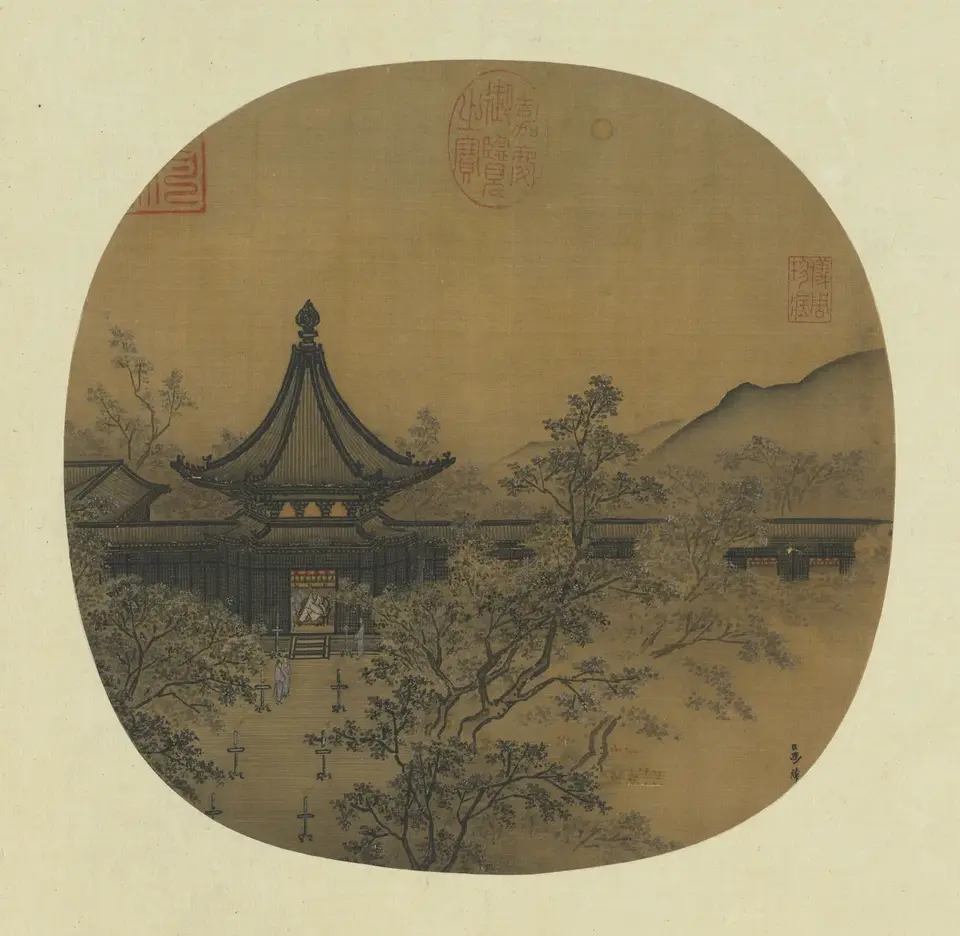
The Qingli Reforms (庆历新政) were a significant political and institutional reform movement launched in the autumn of 1043 during the reign of Emperor Renzong of the Northern Song Dynasty. Led by prominent scholar-officials including Fan Zhongyan, Fu Bi, Han Qi, and Du Yan, the initiative sought to address systemic dysfunctions that had afflicted the Song state since its inception. Foremost among these was the "three redundancies" crisis: an explosion of superfluous officials through lax imperial examinations and rampant hereditary protection privilege (yinbu), an undisciplined standing army exceeding one million mercenary recruits, and crushing administrative expenditures that exhausted state revenues. Following military disasters against Western Xia at Sanchuankou and Haoshuichuan, alongside territorial blackmail by the Khitan Liao empire, Emperor Renzong summoned Fan Zhongyan to Kaifeng to overhaul the imperial administration. Fan Zhongyan presented the landmark Ten-Point Memorial, outlining systematic policies to clarify evaluations, suppress unearned privileges, reform imperial examinations, choose local magistrates with prudence, equalize official landholdings, develop agriculture, restore militia defenses, reduce labor service, reinforce imperial credibility, and uphold legislative consistency. By deploying regional investigative commissioners to dismiss incompetent and corrupt officials, the reformers challenged entrenched aristocratic and conservative interests. Led by Xia Song and Zhang Dexiang, conservative opponents weaponized imperial paranoia by accusing reformist leaders of forming illicit factions (pengdang) and concocting treasonous rumors. Under escalating political pressure, Emperor Renzong wavered and capitulated. By early 1045, the leading reformers were dispatched to frontier prefectures, and the reform statutes were dismantled. Though short-lived, the Qingli Reforms marked the dawn of eleventh-century Song neo-Confucian statecraft.
Li Yuanhao besieged Yanzhou and annihilated Song reinforcements at Sanchuankou; Fan Zhongyan was dispatched to reorganize western defenses.
Song forces suffered a crushing defeat at Dingchuanzhai; Khitan forces massed along the Yan-Yun frontier, prompting Fu Bi's mission to negotiate tribute increases.
Emperor Renzong promoted Fan Zhongyan to Assistant Grand Councilor, Fu Bi and Han Qi to Deputy Military Commissioners, and Du Yan to head the military bureau.
Fan Zhongyan presented his comprehensive reform blueprint, which the emperor enacted into law across all circuits.
Circuit Investigative Commissioners inspected provincial magistrates, while Fan Zhongyan purged corrupt officials and restricted hereditary protection.
Conservative officials mobilized Shi Jie's poem to accuse reformers of factional conspiracy; Xia Song circulated forged treasonous letters against Fu Bi.
Facing sovereign suspicion, Fan Zhongyan voluntarily resigned to inspect frontier circuits; Fu Bi, Han Qi, and Du Yan were sequentially dismissed to regional posts.
The imperial court rescinded all civil service evaluation and protection restrictions, formally terminating the Qingli Reforms.
The structural roots of the Qingli crisis lay in the early dynastic policies instituted by Emperor Taizu and Emperor Taizong. Traumatized by the regional military warlordism (fanzhen) that destroyed the Tang Dynasty and prolonged the Five Dynasties period, the early Song founders implemented extreme centralizing measures designed to divide administrative, military, and financial power. The Grand Council was balanced by Vice Grand Councilors, the Bureau of Military Affairs held command authority while the Three Capital Guards held tactical training, and the State Finance Commission independently controlled national revenue. In local governance, temporary civil commissioners replaced permanent provincial governors, producing overlapping jurisdictions and crippling bureaucratic inertia.
To secure the political loyalty of the civilian scholar-official class, the Song court massively expanded civil service examination quotas while extending lavish hereditary protection privileges (yinbu) to royal kin, senior ministers, and imperial retainers. High-ranking dignitaries could regularly nominate sons, nephews, and even household guests for civil appointments upon ceremonial jubilees, suburban sacrifices, and retirement. Consequently, official ranks ballooned exponentially, doubling between the reigns of Emperor Zhenzong and Emperor Renzong, creating widespread redundant offices where bureaucrats drew handsome state salaries while performing zero useful governance.
Simultaneously, the empire relied upon a professional mercenary army through the recruitment system (mubingzhi). In times of famine or peasant disturbance, imperial agents enlisted displaced vagrants en masse into the Imperial Guards (Jinjun) or Provincial Constabulary (Xiangjun) to preempt agrarian insurrection. While this policy prevented armed internal uprisings, it saddled the imperial treasury with maintaining more than one million poorly trained, undisciplined troops. Massive military outlays, combined with excessive civilian stipends and recurrent imperial ceremonial largesse, consumed upwards of eighty percent of total annual fiscal revenue. This chronic state of redundant officials, redundant soldiers, and redundant expenditures precipitated severe domestic exhaustion and institutional paralysis.
These profound internal vulnerabilities were exposed with devastating clarity when external military conflicts erupted along the northern frontiers. In 1038, the Tangut chieftain Li Yuanhao proclaimed himself emperor of Great Xia, severing tributary vassalage to the Song crown. Emperor Renzong ordered punitive expeditions, sparking the protracted Song-Xia War. Hampered by rigid battle diagrams drafted in Kaifeng and a complete disconnect between field generals and enlisted conscripts, Song armies suffered catastrophic routs at Sanchuankou in 1040, Haoshuichuan in 1041, and Dingchuanzhai in 1042. Renowned commanders including Ren Fu and Ge Huamin fell in action alongside tens of thousands of elite imperial troops, causing widespread terror throughout the Guanzhong plains.
Exploiting the Song court's desperation in the northwest, Emperor Xingzong of the Khitan Liao empire mobilized armed divisions along the Yan-Yun frontier in 1042, demanding the cession of ten southern border counties. Facing imminent war on two fronts, Emperor Renzong dispatched Fu Bi to negotiate terms. In exchange for peace, the Song agreed to increase its annual tribute by one hundred thousand taels of silver and one hundred thousand bolts of silk (the Chongxi Tribute Increase). The confluence of military debacles, diplomatic extortion, and spiraling military costs triggered peasant and soldier uprisings in Henan and Shandong. Shocked by the visible fragility of his empire, Emperor Renzong heeded urgent memorials from reform-minded literati like Ouyang Xiu and Yin Zhu, resolving to elevate reputable statesmen to reconstruct the imperial state.
In the spring of 1043, following years of exhausting frontier warfare, Western Xia agreed to preliminary armistice talks, providing the Song court with a critical window of domestic opportunity. Recognizing that internal bureaucratic rotting had imperiled national survival, Emperor Renzong decided to break through established seniority conventions and overhaul the leadership of the imperial government.
In August, Emperor Renzong summoned Fan Zhongyan, whose defensive fortifications and disciplined administration in Shaanxi had earned universal esteem among both front-line soldiers and civilian literati, promoting him to Assistant Grand Councilor (Canzhi Zhengshi). Concurrently, the brilliant diplomat Fu Bi was named Deputy Commissioner of Military Affairs (Shumi Fushi), joined by seasoned frontier strategist Han Qi in the same role. The upright veteran statesman Du Yan was appointed to head the Bureau of Military Affairs and subsequently elevated to Grand Councilor to oversee the State Council. Furthermore, intrepid junior scholars known for their moral vigor, including Ouyang Xiu, Yu Jing, Wang Su, and Cai Xiang, were appointed to the Remonstrance Bureau, forging a formidable alliance between the central executive leadership and the policy audit branches.
In September, Emperor Renzong convened a private audience in the Zichen Hall, instructing imperial attendants and eunuchs to withdraw. Handing personal hand-written edicts to Fan Zhongyan and Fu Bi, the emperor lamented the profound decay of state governance, the exhaustion of treasury revenues, and the pervasive culture of official prevarication. Renzong implored them to propose bold, practical remedies to rejuvenate the realm without hesitation or ambiguous compromise.
Fan Zhongyan initially proceeded with statesmanlike caution, advising that deep-seated institutional decay accumulated over eight decades could not be eradicated overnight through hasty or rash edicts. However, Emperor Renzong displayed extraordinary urgency, sending three consecutive handwritten queries to the Tianzhang Pavilion and providing personal brush and inkstones to urge immediate policy submissions. Deeply moved by this sovereign mandate, Fan Zhongyan collaborated intensively with Fu Bi, Han Qi, and Du Yan to formulate a comprehensive administrative blueprint.
In late September 1043, Fan Zhongyan presented his celebrated memorial entitled Ten Proposals in Response to the Imperial Decree (Da Shou Zhao Tiaochen Shishi). The document systematically dissected the systemic maladies of the Song polity, providing ten concrete, interlocking policy prescriptions centered on civil service purification, agrarian sustenance, and national defense:
The first proposal was "Clarifying Promotions and Demotions" (Ming Chuzhi). The existing evaluation system allowed bureaucrats to attain promotion automatically simply by accumulating tenure, regardless of competence. Fan proposed abolishing automatic seniority promotions, establishing rigorous performance examinations where officials with verified administrative achievements were advanced, while indolent or incompetent magistrates were demoted or cashiered.
The second proposal was "Suppressing Unearned Privilege" (Yi Jiaoxing). Fan targeted the rampant hereditary protection system (yinbu), which permitted civil and military dignitaries to bestow official ranks upon adolescent sons, distant relatives, and household retainers upon state festivities. He recommended raising the minimum qualification age for protected sons to twenty, requiring formal examinations in statecraft, and limiting protection grants strictly to senior ministers reaching retirement at age seventy, thereby closing the main channel of bureaucratic bloat.
The third proposal was "Refining the Imperial Examinations" (Jing Gongju). The prevailing civil service examinations prioritized rote memorization of Confucian classical texts and intricate rhyming poetry, producing literati devoid of practical governance capacity. Fan proposed transforming the Jinshi examinations to emphasize analytical policy essays on contemporary governance and classical statecraft, while restoring local prefectural academies to cultivate practical talent directly within provincial communities.
The fourth proposal was "Selecting Capable Regional Magistrates" (Ze Guan Zhang). To resolve erratic provincial administration, Fan proposed that the State Council and the Bureau of Military Affairs select high-minded, energetic dignitaries to serve as regional Fiscal Intendants and Judicial Commissioners. In turn, these regional intendants were held personally accountable for recommending competent prefects and county magistrates, instituting strict joint liability if their appointees committed graft.
The fifth proposal was "Equalizing Official Landholdings" (Jun Gongtian). While provincial magistrates received allocations of tax-exempt official land (zhitian) to supplement stipends, distribution varied drastically across circuits. Poorly endowed magistrates frequently engaged in extortion to survive. Fan proposed standardizing land allocations according to rank and jurisdiction size, ensuring sufficient compensation to foster integrity while strictly prohibiting unlawful encroachment upon peasant holdings.
The sixth proposal was "Developing Agriculture and Silviculture" (Hou Nong Sang). Recognizing agrarian production as the foundation of state wealth, Fan advocated a national water conservancy ordinance directing local authorities to dredge silting waterways, construct stone dams, and reclaim idle wastelands. Magistrates demonstrating tangible agricultural expansion were granted merit promotions, while neglectful officials were severely penalized.
The seventh proposal was "Rebuilding Armed Preparedness" (Xiu Wubei). To curb astronomical expenditures on ineffective mercenary soldiers, Fan proposed reviving the ancient militia tradition by reorganizing robust peasants in the capital circuits into local reserve battalions (weizu). Conscripts trained in horsemanship and archery during winter lulls while farming their own land during agricultural seasons, gradually replacing decrepit provincial regiments.
The eighth proposal was "Reducing Corvee Labor" (Jian Yaoyi). Fan called for a comprehensive census of land and population, merging underpopulated counties, cutting auxiliary clerical positions, and distributing statutory labor obligations equitably across households according to verified wealth, shielding agrarian producers from predatory official levies.
The ninth proposal was "Broadening Imperial Credibility" (Tan Enxin). Imperial tax remissions and amnesty edicts were frequently suppressed by corrupt county clerks who continued demanding back taxes. Fan demanded severe punishments for clerks concealing imperial beneficence, ensuring that sovereign tax relief reached ordinary taxpayers directly.
The tenth proposal was "Upholding Legislative Consistency" (Zhong Mingling). Conflicting ordinances issued haphazardly by rival ministries caused widespread confusion. Fan required that all future state laws undergo rigorous joint vetting by the State Council and Military Affairs Bureau prior to promulgation. Once enacted, statutory codes remained firm and unalterable by whimsical departmental memos.
Emperor Renzong embraced the Ten-Point Memorial with great enthusiasm, ordering the immediate promulgation of nine proposals, while holding the seventh on militia reorganization for phased frontier experimentation. The primary operational thrust of the reform descended upon the long-overdue rectification of official discipline. Fan Zhongyan maintained that purifying governance required cleansing the provincial magistracy from above.
In the winter of 1043, the court appointed incorruptible imperial auditors to serve as Circuit Investigative Commissioners (Ancha Shi), dispatching them with imperial credentials across Jiangnan, Huainan, Zhejiang, Shaanxi, and Hedong to inspect provincial conduct. Operating with unsparing rigor, commissioners gathered dossiers on judicial abuse, embezzlement, and administrative indolence.
Sitting in the Grand Council chamber in Kaifeng, Fan Zhongyan reviewed these dossiers personally. Whenever an investigation revealed an official guilty of venality or gross incompetence, Fan dipped his brush in vermilion ink and crossed the offender's name from the official roster, ordering instant dismissal. Witnessing this resolute purge, Deputy Commissioner Fu Bi warned anxiously: "Lord Fan, a single stroke of your brush brings an entire family to tears!" Fan Zhongyan straightened his posture and replied with historic gravitas: "If the tears of one corrupt family prevent the tears of an entire province of common people, it is far better that one family weeps than countless thousands of innocent subjects weep in misery!"
This energetic administrative storm swept through the empire. Scores of aristocratic scions and predatory magistrates were removed from office. Furthermore, strict new statutes governing civil service promotions (mokan fa) and restricted hereditary privilege (renzi fa) were enforced, barring thousands of aristocratic youths from effortless access to bureaucratic sinecures.
By shattering the hereditary privileges and tenure security of the imperial elite, the Qingli Reforms provoked frantic hostility across conservative aristocratic and bureaucratic circles. Entrenched clans and senior officials whose relatives were barred from office coalesced into a fierce reactionary opposition.
At the apex of this conservative counter-offensive stood Military Commissioner Xia Song and Senior Grand Councilor Zhang Dexiang. Xia Song had previously been impeached by Fan Zhongyan for military failures and ostentatious corruption, while Zhang Dexiang epitomized passive administrative inertia. Knowing that Emperor Renzong favored Confucian moral rectitude, conservative leaders avoided attacking anti-corruption statutes directly. Instead, they exploited the deepest structural anxiety of the Song monarch: the dread of ministerial factions (pengdang) usurping imperial sovereignty.
Conservative censors submitted a deluge of confidential memorials, alleging that Fan Zhongyan, Fu Bi, Han Qi, and Ouyang Xiu were building an illicit clique. They claimed the reformers utilized high-minded moral rhetoric merely to install partisan loyalists while purging non-conformist dignitaries, aiming to dominate policy and subordinate the throne.
Tensions reached a boiling point when a prominent academic scholar named Shi Jie composed a sweeping poetic tribute titled Ode to the Sage Virtues of the Qingli Reign (Qingli Shengde Shi). In impassioned verse, Shi Jie lauded Fan Zhongyan, Fu Bi, Han Qi, and Du Yan as peerless sages of dynastic revival, while branding Xia Song and his cohort as malevolent scoundrels. The poem circulated widely across Kaifeng. Seizing this golden opportunity, Xia Song presented the text to Emperor Renzong, alleging that the reformers had openly published a factional roster to intimidate dissenting voices.
Disturbed by the specter of factionalism, Emperor Renzong formally interrogated Fan Zhongyan in open court, asking whether the reformers were indeed operating as an organized faction. Fan Zhongyan replied candidly: "Base men have no true factions, for they unite solely for fleeting personal profit; only righteous gentlemen form enduring associations, bound by moral purpose and devotion to the dynasty. Your Majesty ought to distinguish loyalty from deceit rather than banning moral solidarity." Ouyang Xiu subsequently penned his famous essay On Factions (Pengdang Lun), arguing that a sovereign should actively rely upon a faction of superior men. However, in an absolute imperial autocracy, ministerial admissions of factional solidarity only intensified Renzong's visceral fear of a collective scholar-official usurpation of monarchical prerogatives.
Exploiting Emperor Renzong's growing unease, conservative conspirators orchestrated a lethal plot. When internal political turmoil erupted within the Khitan Liao dynasty, rumors swirled regarding frontier mobilization. Shi Jie had previously sent private correspondence to Fu Bi concerning northern defenses. Xia Song bribed a household servant to steal one of Shi Jie's old letters, then instructed a skilled female calligrapher to forge Fu Bi's handwriting, fabricating a counterfeit letter that implicated Fu Bi in a clandestine conspiracy to depose Emperor Renzong.
This forged document was secretly delivered into the inner palace. Although Emperor Renzong harbored doubts regarding the authenticity of the treasonous plot, the poisonous rumor destroyed his trust in Fu Bi and the military leadership. Simultaneously, conservative censors intensified their barrage, denouncing the regional investigative commissioners as ruthless inquisitors who paralyzed administrative routine.
Recognizing that monarchical confidence had dissolved and that prolonged resistance in Kaifeng would provoke catastrophic palace purges, the reform leaders chose self-sacrifice to preserve basic stability. In June 1044, Fan Zhongyan submitted a formal petition requesting release from his post as Assistant Grand Councilor to supervise frontier defenses in Shaanxi and Hedong. Relieved by this opportunity to diffuse factional tension, Emperor Renzong granted his departure, demoting Fan to Pacification Commissioner of Binzhou.
The reform coalition collapsed in rapid succession. In July 1044, Fu Bi requested a regional posting in Hebei and was transferred to Yunzhou. In August, Han Qi was assigned to Yangzhou. By winter, Grand Councilor Du Yan, who had staunchly resisted palace attempts to grant illicit appointments without bureaucratic review, was dismissed and sent to Yanzhou. The remaining reformist censors, including Ouyang Xiu, were targeted with fabricated personal scandals and exiled to peripheral prefectures, with Ouyang Xiu dispatched to Chuzhou. Within one year, the core architects of the reform were purged from the central government.
By early 1045, the central administration was reclaimed by conservative stalwarts, including Xia Song, Zhang Dexiang, and Jia Changchao. Under conservative direction, the Song court commenced the systematic dismantling of the Qingli legislative architecture.
In January 1045, imperial decrees formally abrogated the strict civil service promotion statutes (mokan fa) and hereditary protection limits (renzi fa), fully restoring seniority promotions and unrestricted aristocratic privilege. The regional investigative commissions were abolished, and the Jinshi examinations reverted to testing poetic form and classical recitation rather than policy discourse. Aside from isolated measures supporting local academies and water conservancy, the entire apparatus of administrative accountability was expunged. After fifteen months of intense institutional ferment, the Qingli Reforms were brought to an absolute standstill, returning the Northern Song state to administrative inertia.
The abortive collapse of the Qingli Reforms laid bare the fatal structural contradictions of the Northern Song imperial state. The core objective of the reform—cleansing the civil service and curbing hereditary protection—directly threatened the material privileges of the ruling scholar-bureaucratic aristocracy. In an institutional environment where sovereign favor was fragile and court factions weaponized emperor paranoia regarding ministerial solidarity, upright administrators could not sustain reforms against the collective hostility of the official apparatus. Emperor Renzong prioritized dynastic equilibrium over transformative reform, sacrificing systemic efficiency to maintain internal peace within the civil bureaucracy.
Despite its immediate political defeat, the Qingli movement unleashed an enduring intellectual and cultural revolution. Fan Zhongyan's moral axiom—to be first in worrying about the world's troubles and last in enjoying its pleasures—redefined the ethical mission of the Song intellectual elite. The movement galvanized a generation of idealistic scholars, including Wang Anshi, Sima Guang, and Su Shi, shifting intellectual discourse from decorative literary composition toward concrete socioeconomic governance, institutional jurisprudence, and agrarian economics.
The Qingli Reforms served as the essential prototype and ideological foundation for the sweeping Xining Reforms launched under Wang Anshi three decades later. Proposals first articulated by Fan Zhongyan—such as the equalization of official land, state-sponsored agricultural irrigation, the reorganization of militia reserves, and examination reform—were directly inherited, radicalized, and codified by Wang Anshi. By learning from Fan's narrow focus on bureaucratic personnel, Wang Anshi expanded his subsequent reforms into comprehensive fiscal engineering, cementing the Qingli era as the indispensable turning point of mid-Song dynastic history.
Traditional and modern historians have viewed the Qingli Reforms with profound admiration while analyzing the inevitable structural reasons for its defeat. In the History of Song, the official compilers noted: "Fan Zhongyan took the realm as his personal responsibility, curbing unearned privilege and embodying moral clarity; the entire empire looked forward to good governance, yet slanderous cliques undermined his efforts until the enterprise was abandoned, a tragedy indeed." The Neo-Confucian philosopher Zhu Xi remarked in the Classified Conversations of Master Zhu: "In the Qingli administration, Duke Fan dedicated his entire soul to the court, and his Ten Proposals struck at the very core of contemporary evils; yet his departure was too precipitous, leaving dynastic rejuvenation unfulfilled." The early Qing philosopher Wang Fuzhi observed in his On the Song Dynasty: "It was not that Fan Zhongyan's ambitions were not grand or his policies not pressing; rather, the Song institutional pathology had reached the marrow of the bone, with ministers burdened by accusations of factionalism and the sovereign consumed by suspicion, ensuring the reforms rose swiftly only to be extinguished."