Proclamation of Great Xia
Li Yuanhao assumed the imperial throne in Xingqing; Emperor Renzong terminated imperial titles and closed frontier markets, sparking war.
· HISTORICAL EVENT
庆历和议
The Qingli Peace Accord was a landmark diplomatic agreement concluded between the Northern Song Dynasty and the Western Xia regime in 1044 during the reign of Emperor Renzong. In 1038, Tangut ruler Li Yuanhao proclaimed himself emperor of Great Xia, breaking nominal vassalage to Song. Emperor Renzong retaliated by rescinding imperial surnames, prompting a five-year war. Although Western Xia secured tactical victories at Sanchuankou, Haoshuichuan, and…
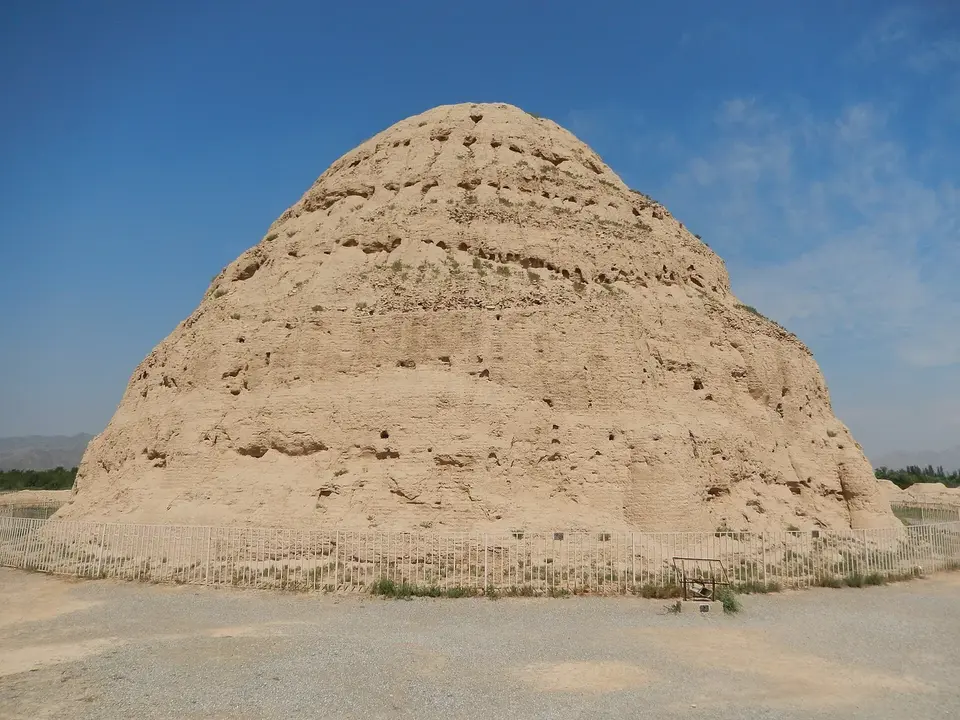
The Qingli Peace Accord was a landmark diplomatic agreement concluded between the Northern Song Dynasty and the Western Xia regime in 1044 during the reign of Emperor Renzong. In 1038, Tangut ruler Li Yuanhao proclaimed himself emperor of Great Xia, breaking nominal vassalage to Song. Emperor Renzong retaliated by rescinding imperial surnames, prompting a five-year war. Although Western Xia secured tactical victories at Sanchuankou, Haoshuichuan, and Dingchuanzhai, strategic fortresses and defense lines constructed by Fan Zhongyan and Han Qi prevented the Tanguts from seizing the Guanzhong plains. Prolonged warfare caused immense devastation to the fragile pastoral economy of Western Xia. Border closures deprived Tangut nomads of vital tea and grain supplies while blockading their salt trade. Confronted with famine, internal strife, and mounting hostility from the Jurchen-Liao empire to the north, Yuanhao initiated peace overtures. Burdened by staggering military expenditures, the Song court accepted negotiations managed by Pang Ji. Under the final 1044 treaty, Yuanhao renounced his imperial title to become a tributary vassal titled State Lord of Xia, while Song granted substantial annual subsidies of silver, silk, and tea, alongside reopening frontier trade markets.
Li Yuanhao assumed the imperial throne in Xingqing; Emperor Renzong terminated imperial titles and closed frontier markets, sparking war.
Tangut troops besieged Yanzhou and decimated Song relief forces at Sanchuankou; Fan Zhongyan took command of regional defenses.
Song commander Ren Fu perished in an ambush at Haoshuichuan; Fan Zhongyan and Han Qi implemented deep fortress defense networks.
Tangut forces defeated Ge Huamin at Dingchuanzhai; Yuanhao's advance halted at Yuanzhou; tensions erupted between Liao and Xia.
Severely weakened by economic blockades, Yuanhao dispatched He Congxu to initiate peace talks; negotiations over imperial nomenclature commenced.
Song and Xia ratified terms; Yuanhao formally submitted as State Lord of Xia in exchange for annual subsidies and reopened border trade.
In the early Northern Song period, the Tangut Tuoba clan held hereditary military governorship over the Dingnan Circuit (covering Xia, Yin, Sui, You, and Jing prefectures), submitting as nominal vassals to the Song imperial court. Under the industrious leadership of Li Jiqian and Li Deming, the Tanguts expanded westward across the Hexi Corridor, securing vital oasis trade routes and accumulating state power. In October 1038, Zhao Yuanhao (Li Yuanhao) established an imperial altar in Xingqing (modern Yinchuan), formally proclaiming himself emperor of Great Xia with the reign title Tianci Lifayanzuo.
Yuanhao dispatched envoys to Kaifeng demanding Song imperial recognition. Viewing this act as open rebellion, Emperor Renzong stripped Yuanhao of his bestowed royal Zhao surname and noble ranks, issued high bounties for his capture, and shut down all northwest border markets (quechang). Denied trade and recognition, Yuanhao mobilized his armies and launched an invasion, initiating the Song-Xia War.
Over the next four years, the Tangut army inflicted devastating casualties upon Song forces by deploying elite armored cavalry known as the Iron Sparrows alongside deceptive ambush maneuvers. Between 1040 and 1042, Western Xia won decisive victories at the battles of Sanchuankou, Haoshuichuan, and Dingchuanzhai, capturing Song generals Liu Ping and Shi Yuansun and killing commanders Ren Fu and Ge Huamin. These shocks rattled the Song court. However, Yuanhao's broader strategic aspirations to capture Yanzhou and advance south into the Guanzhong basin to seize Chang'an were repeatedly foiled.
To arrest the collapse of the western front, the Song court dispatched experienced statesmen Fan Zhongyan, Han Qi, and Pang Ji to reorganize defense commands. Fan implemented an elastic, depth-oriented defensive doctrine: fortifying high ridges, erecting strategic walled encampments such as Qingfeng Fortress and Dashun City, and consolidating auxiliary tribal militias. In late 1042, local prefect Jing Tai routed a major Tangut assault at Yuanzhou. The conflict ground into a strategic stalemate in which neither side possessed the military power to deliver a decisive blow.
Following the battle of Dingchuanzhai in 1042, Western Xia encountered systemic domestic crises despite battlefield victories. Under Tangut military law, all male pastoralists were conscripted for prolonged campaigns while self-financing their weapons, mounts, and provisions. Repeated mobilizations abandoned pasturage and agriculture, devastating herds and stirring deep discontent among tribal chieftains. Crucially, Song trade blockades cut off supplies of tea, grain, and cloth, while prohibiting the sale of Tangut white lake salt, creating widespread economic privation.
Simultaneously, Western Xia suffered military pushback from the Tibetan Gusiluo regime to the west, along with severe domestic droughts and rodent plagues. Tensions intensified between Yuanhao and the powerful Yeli clan nobility. Externally, the Khitan Liao empire utilized the Song-Xia war to extort territorial and financial concessions from Song, subsequently redirecting military pressure toward Xia and clashing with Tangut forces near the Helan Mountains. Trapped between Song fortifications and northern Liao threats, Yuanhao concluded that continuing the war threatened the survival of his new dynasty.
As early as 1041, Yuanhao had sent informal emissaries to Fan Zhongyan in Yanzhou to explore peace terms. However, finding Yuanhao's demands unrepentant, Fan burned the correspondence in front of the Tangut envoy, an act that resulted in Fan's temporary demotion for unauthorized communication with an enemy ruler. The Song court replaced Fan with Pang Ji.
In 1042, Song garrison commander Zhong Shiheng utilized forged letters to execute a counter-espionage operation, inciting mutual suspicion between Yuanhao and his senior general Yeli Wangrong. While Yuanhao detained Song emissary Wang Song, he dispatched his training commissioner Li Wengui to Yanzhou, signaling willingness to negotiate. Pang Ji detained Li for several months to ascertain Tangut sincerity. Following the battle of Dingchuanzhai, recognizing mutual war weariness, the Song emperor ordered Pang Ji to open formal diplomatic channels, demanding that Yuanhao formally surrender his imperial claim and submit as a vassal.
In early 1043, Yuanhao released Song captive Wang Song and sent palace envoy He Congxu to Kaifeng bearing a state letter. Yuanhao styled himself as "Son of the Great Nation Nangxiao writing to the Father Emperor of Great Song." Emperor Renzong received the letter and assented to negotiations, dispatching court official Shao Liangzuo to Xia. In July, Tangut representatives arrived in Kaifeng, presenting an aggressive eleven-point memorandum demanding Song territorial concessions, demolition of Song border fortresses, and free trade rights within the imperial capital.
A contentious impasse emerged regarding imperial titles. Yuanhao sought an egalitarian diplomatic framework comparable to the Song-Liao treaty, refusing to be categorized as a common provincial subject. Song scholars, including Fu Bi and Ouyang Xiu, vigorously opposed concessions, asserting that imperial hierarchy was non-negotiable. Pang Ji conducted protracted negotiations with Tangut delegates, insisting that outward dynastic submission was the absolute prerequisite for trade and financial subsidies. Confronted with impending military conflict with Liao, Yuanhao conceded, agreeing to renounce his emperor title in formal submissions to the Song throne while adopting the designation of "State Lord of Xia."
Financial subsidies and frontier commerce constituted the second major negotiating arena. Yuanhao demanded heavy yearly compensation to replenish his depleted treasury. The Song administration, calculating that annual subsidies were vastly cheaper than maintaining tens of thousands of active front-line garrisons, agreed to regular shipments of silver, silk, and tea.
Regarding boundary disputes, Song negotiators adamantly rejected Tangut claims to border fortifications built during the war. Both sides ultimately agreed to restore the pre-war territorial boundaries, requiring the evacuation of contested border posts and the refurbishment of frontier markers. Song officials also agreed to reopen regional border markets at Yanzhou and Bao'an, permitting Tangut merchants to exchange salt and livestock for tea, silk garments, and iron farming tools.
In October 1044 (Qingli 4), Tangut chief envoy Yang Shousu arrived in Kaifeng to deliver Yuanhao's official petition of gratitude, declaring perpetual submission to the Song imperial court. Emperor Renzong issued an imperial proclamation affirming the peace accord. In December, Song envoys traveled to Xingqing to formally invest Yuanhao as State Lord of Xia, presenting an imperial golden seal and ceremonial robes.
The Qingli Peace Accord established four operational pillars: first, Yuanhao renounced his imperial title and acknowledged the Song emperor as sovereign; second, Song granted annual subsidies totaling over two hundred thousand units of silver, silk, and tea; third, official border markets were fully reopened; and fourth, territorial boundaries reverted to the status quo ante bellum. The five-year conflict reached a formal diplomatic conclusion.
The Qingli Peace Accord restored stability to the ravaged borderlands of Shaanxi and Ningxia for nearly three decades. The Song court curtailed exorbitant wartime expenditures in Guanzhong, alleviating fiscal strain. Western Xia averted economic ruin through regular annual subsidies and open border commerce. Alongside the Song-Liao Treaty of Shanyuan, the accord consolidated a tripartite balance of power among Song, Liao, and Xia across northern East Asia.
The accord inaugurated a pragmatic diplomatic pattern of "nominal submission and actual autonomy." While Yuanhao observed tributary protocol toward Song in outward correspondence, he maintained full imperial administrative machinery within his realm. While securing short-term peace, this arrangement triggered recurring debates among Song scholar-officials regarding the indignity of buying security with tribute, culminating in aggressive military offensives under Wang Anshi during the Shenzong reign.
The restoration of official border markets catalyzed vibrant commercial exchange. Western Xia exported horses, camels, wool fabrics, and lake salt to the Central Plains, receiving essential shipments of tea, silk, porcelain, and grain. This commercial intercourse expedited the feudal transformation of Tangut nomadic society and facilitated the broader diffusion of Confucian literature across the northwest steppe.
Traditional historians offered varied perspectives on the treaty. The History of Song observed that while Song armies suffered tactical setbacks, the final accord successfully pacified the frontier, noting that annual subsidies represented less than a fraction of wartime military expenses. Sima Guang similarly considered pragmatic subsidies a classical statecraft tool for placating peripheral powers.
Southern Song commentators were more critical, viewing the treaty as symptomatic of civilian dominance over martial preparedness. Modern historians predominantly emphasize the positive socioeconomic impact of the accord, highlighting that it satisfied the collective desire of Han and Tangut populations for peaceful commerce and set realistic terms for multi-ethnic coexistence.