Imperial Mobilization
Zhuge Liang organizes internal governance, secures the northern frontier, and marches south from Chengdu.
Shu Han (蜀汉) · HISTORICAL EVENT
七擒孟获
The Seven Captures of Meng Huo (七擒孟获) refers to the historic military campaign executed from spring to autumn in 225 by Zhuge Liang, Chancellor of Shu Han, to pacify widespread insurgencies across the southwestern borderland of Nanzhong. Following Liu Bei's death in 223 after the catastrophic defeat at Xiaoting, regional Han magnate Yong Kai exploited dynastic vulnerability to collude with Sun Quan of Eastern Wu, inciting Sou tribal king Gao Ding, Zangke…
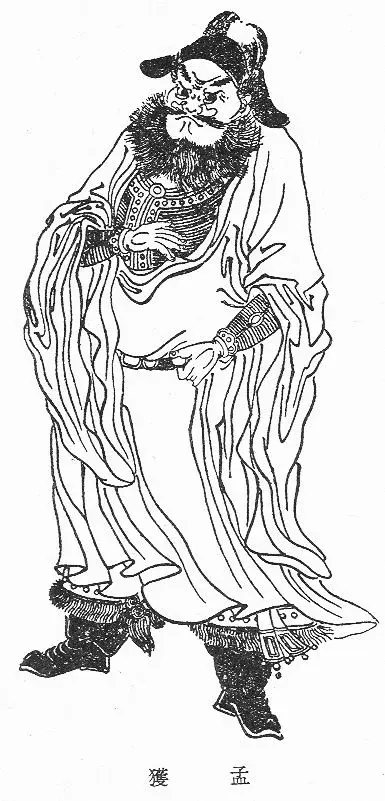
The Seven Captures of Meng Huo (七擒孟获) refers to the historic military campaign executed from spring to autumn in 225 by Zhuge Liang, Chancellor of Shu Han, to pacify widespread insurgencies across the southwestern borderland of Nanzhong. Following Liu Bei's death in 223 after the catastrophic defeat at Xiaoting, regional Han magnate Yong Kai exploited dynastic vulnerability to collude with Sun Quan of Eastern Wu, inciting Sou tribal king Gao Ding, Zangke governor Zhu Bao, and revered indigenous leader Meng Huo to revolt. Confronting threats from Cao Wei in the north and Eastern Wu in the east, Zhuge Liang restored diplomatic harmony with Wu, replenished military stores, and launched a three-pronged offensive in the spring of 225. Adopting strategist Ma Su's doctrine that psychological capitulation transcended physical siege warfare, Zhuge Liang crossed the perilous Lu River in the heat of summer. Through seven sequential captures and unconditional releases, he conquered Meng Huo's heart and mind, securing everlasting tribal loyalty and stabilizing the imperial rear.
Zhuge Liang organizes internal governance, secures the northern frontier, and marches south from Chengdu.
Imperial forces brave summer vapors to bridge the Lu River, capturing and releasing Meng Huo in the opening clash.
Zhuge Liang concludes seven captures and seven releases, winning Meng Huo's total loyalty and pacifying Nanzhong.
In 222, Liu Bei suffered an overwhelming defeat against Eastern Wu at the Battle of Xiaoting, losing the bulk of Shu Han's seasoned veterans. In April of 223, Liu Bei died at Baidicheng, leaving the young Emperor Liu Shan on the imperial throne. Observing central weakness, Yong Kai, an influential landed aristocrat in Yizhou Commandery, initiated a bid for regional independence.
Yong Kai murdered Commandery Governor Zheng Ang and captured his successor Zhang Yi, remitting him as a captive token to Sun Quan. Seeking territorial aggrandizement, Eastern Wu appointed Yong Kai as Governor of Yongchang and positioned general Liu Chan on the Jiaozhou frontier to absorb the southwestern provinces into Wu's orbit.
Through tribal allegiances and coercion, Yong Kai induced Zangke Governor Zhu Bao to assassinate imperial inspector Chang Qi, while Sou tribal monarch Gao Ding executed military commander Jiao Huang, declaring royal independence. The esteemed indigenous chieftain Meng Huo mobilized vast regional clans to join the anti-Shu coalition.
Amid widespread regional defection, only Yongchang Commandery remained steadfast. Official Lv Kai and assistant magistrate Wang Kang shut regional passes, fortified municipal ramparts, and rallied the populace to reject Yong Kai's summons, holding the isolated bastion through years of siege and preserving an indispensable forward base for imperial armies.
Faced with Cao Wei armies poised along the northern border, Sun Quan probing from the east, and flaming rebellion across the south, Zhuge Liang exhibited supreme strategic patience. He refrained from launching premature punitive strikes during the imperial mourning period, formulating a grand policy of pacifying southern tribes, allying with Wu, and cultivating internal administrative strength.
In late 223, Zhuge Liang dispatched brilliant diplomat Deng Zhi to Jiankang. Deng persuasively argued the mutual existential necessity of alliance against Cao Wei, restoring diplomatic solidarity and severing Eastern Wu's southern intervention. Over eighteen months of agricultural rehabilitation, military drilling, and logistical preparation, Shu Han assembled the strength required to mount a decisive campaign.
In the spring of 225, Zhuge Liang marshaled tens of thousands of elite imperial infantry and cavalry, marching south along the Min River. Strategist Ma Su accompanied the expedition, and Zhuge Liang solicited his counsel on long-term frontier pacification.
Analyzing southwestern geography and ethnic psychology, Ma Su remarked: "Protected by remote ravines and precipitous terrain, Nanzhong has long resisted centralized dynastic rule. If we conquer them by slaughter today, they will rise in revolt tomorrow. Total extermination of their lineages violates humanity and provides no lasting security. In the art of war, attacking minds surpasses attacking walls; psychological warfare surpasses physical battle. May your Excellency conquer their hearts." Deeply moved, Zhuge Liang designated psychological reconciliation as the supreme governing doctrine of the campaign.
Zhuge Liang designed a coordinated multi-axis envelopment. Ma Zhong led the eastern column from Dianjiang into Zangke to crush Zhu Bao; Li Hui advanced the central column from Pingyi into Jianning; while Zhuge Liang spearheaded the main western strike force through Yuexi to confront Gao Ding.
Gao Ding established fortified mountain redoubts along the valleys, but imperial shock troops pierced the defensive works in rapid succession. Fractured by internal panic, subordinate rebel troops assassinated ringleader Yong Kai before surrender, and imperial units subsequently captured and executed Gao Ding. Concurrently, Ma Zhong decimated Zhu Bao's rebel army in Zangke, and Li Hui triumphed against superior numbers in Jianning, leaving Meng Huo as supreme commander of the remaining confederacy.
Gathering remnants of the rebel coalition, Meng Huo retreated south across the formidable Lu River, relying on deep waters and toxic miasmas to halt imperial pursuits. The Lu River was flanked by vertical crags and suffocating malaria; during the height of summer, the scorching water poisoned any soldier who waded unprepared.
Arriving at the northern bank in May, Zhuge Liang studied seasonal wind currents and timber supplies, ordering troops to construct sturdy rafts and cross the currents at dawn when vapors were light. Once encamped on the southern bank, Zhuge Liang lured Meng Huo's vanguard into an ambush, capturing the tribal leader alive. Instead of punishing him, Zhuge Liang hosted a lavish banquet and escorted him through the disciplined ranks of the imperial camp, asking: "What think you of my military array?" Meng Huo defiantly answered: "Previously I knew not your disposition and was caught unawares; now that you show me your defenses, if released, I shall easily defeat you!" Zhuge Liang laughed heartily and ordered his ropes cut, granting him unconditional release.
Upon returning to his clans, Meng Huo recognized the futility of open field clashes, shifting to defensive barricades. He mobilized tribal warriors to erect extensive stockades and fortified earthen enclosures along torrential tributaries, refusing open engagement.
Zhuge Liang ordered his troops to construct towering assault mantlets and siege ladders, while covertly dispatching amphibious units upriver to outflank the palisades and cut off drinking water. When imperial forces attacked simultaneously from land and water, the tribal lines disintegrated, and Meng Huo was captured a second time. Upon being brought to the command tent, Meng Huo complained of treacherous terrain, and Zhuge Liang released him once more without reprimand. Reorganizing his broken units, Meng Huo attempted a midnight raid on the imperial camp, only to charge directly into an empty compound where concealed crossbowmen captured him a third time.
Suffering repeated humiliations, Meng Huo withdrew into the deep virgin forests, petitioning remote tribal chieftains for auxiliary reinforcements to trap imperial legions within disease-ridden valleys.
Zhuge Liang dispatched scouts to chart water sources and enforce sanitary boiling procedures, distributing local herbal remedies to neutralize malaria. Imperial cavalry severed rebel communications along narrow tracks, and Meng Huo was intercepted and captured a fourth time in a mountain defile. Following his release, Meng Huo took refuge in Yinkeng Cave, mobilizing ferocious valley warriors behind deep mountain streams. Utilizing deceptive feints that simulated withdrawal, Zhuge Liang drew the defenders out and captured Meng Huo a fifth time. Each time, Zhuge Liang granted him freedom, astonishing the tribal leaders with imperial benevolence.
Exhausted of conventional troops, Meng Huo sought the assistance of King Wutugu of the Wuge Kingdom. Wuge warriors wore armor woven from wild mountain vines soaked in oil and baked for months, impervious to arrows and buoyant in rivers. Meng Huo marched this seemingly invincible rattan-armored army to confront the Han forces.
Observing their equipment from an elevated ridge, Zhuge Liang recognized that while rattan resisted sharp blades, its dried oil-soaked fibers were exceptionally combustible. He formulated a fiery trap within Panshe Valley, instructing general Wei Yan to simulate fifteen consecutive defeats, luring Wutugu and his entire rattan vanguard into the narrow defile. Once inside, imperial troops blocked the entrance, rolling down pitch-soaked timber and firing volleys of flaming incendiary arrows. The valley turned into an inferno, destroying the rattan host and capturing Meng Huo for the sixth time.
Zhuge Liang ordered his bonds unloosened and wine served, dispatching a messenger: "The Chancellor is deeply grieved by your dishonor; if you still desire war, return and muster your forces for one final test." Overwhelmed by shame and gratitude, Meng Huo wept bitterly, realizing the celestial wisdom and magnanimity of the Chancellor. Leading his kinsmen and all cave chieftains, Meng Huo knelt before Zhuge Liang's tent, crying out: "Your Excellency possesses celestial majesty! The southern peoples shall never rebel again!" This marked the historic seventh capture and everlasting surrender.
Following Meng Huo's submission, Nanzhong was pacified. Senior generals urged Zhuge Liang to station permanent occupation garrisons and levy heavy taxes. Transcending imperial precedent, Zhuge Liang rejected permanent military occupation, announcing a revolutionary policy of leaving no occupation troops and collecting no transport grains.
Zhuge Liang reasoned: Stationing armies would inflame indigenous suspicion and exhaust imperial logistical lines, while imposing northern magistrates would spark friction over local customs. Instead, he reorganized Nanzhong into six administrative commanderies, appointing indigenous chieftains as local governors and elevating Meng Huo to Imperial Assistant Censor. By implementing indirect rule through native leaders, he anchored the empire's frontier in voluntary allegiance.
The pacification of Nanzhong permanently terminated decades of tribal warfare and warlord autonomy that had devastated the southwest since the late Han dynasty. Zhuge Liang's enlightened governance fostered profound ethnic integration between the Han populace and southwestern nationalities, weaving disparate tribal groups into the fabric of Chinese civilization.
Meng Huo was appointed to high administrative office at court, serving with unwavering loyalty. Throughout the remaining four decades of Shu Han's existence, Nanzhong remained tranquil, serving as a textbook archetype for enlightened frontier governance in Chinese historiography.
The campaign eradicated the danger of two-front warfare, transforming a hostile hinterland into a vital economic engine. Zhuge Liang recruited thousands of elite tribal warriors to establish the celebrated "Invincible Flying Army" (Wudang Feijun), an agile mountain strike force that distinguished itself across future campaigns against Cao Wei.
Furthermore, vast regional shipments of gold, silver, cinnabar, lacquer, iron ore, war oxen, and tens of thousands of horses flowed uninterruptedly into state armories in Chengdu and depots in Hanzhong. With his southern rear secured and state finances replenished, Zhuge Liang submitted the celebrated Memorial on Taking the Field in 227, embarking upon the epic Northern Expeditions across Mount Qilian.
Chen Shou recorded in the Records of the Three Kingdoms: "In the spring of the third year of Jianxing, Zhuge Liang led an expedition southward, pacifying all by autumn. Military supplies issued therefrom, enriching the state, whereupon he drilled legions and manufactured weaponry in preparation for grand campaigns."
Chang Qu lauded in Chronicles of Huayang: "Zhuge Liang reached Nanzhong, prevailing in every engagement. Recognizing that frontier tribes could not be subdued by force alone, he captured Meng Huo alive to show him his military arrays, releasing him to return. Seven times captured and seven times released, Meng Huo's heart was won, and the army marched back. Thenceforth, the southern peoples rebelled no more."