Imperial Proclamation
Yelü Abaoji founds the Khitan state, initiating cultural reforms to secure political and linguistic autonomy.
· HISTORICAL EVENT
契丹文字创制
The Creation of the Khitan Scripts was a landmark state-sponsored linguistic and cultural endeavor enacted in the early tenth century under the patronage of Emperor Taizu of Liao (Yelü Abaoji). Following the establishment of the Khitan Empire in 916, rapid administrative expansion across nomadic and agrarian territories necessitated a standardized writing system to issue imperial decrees, codify customary laws, and record diplomatic treaties. Rejecting…
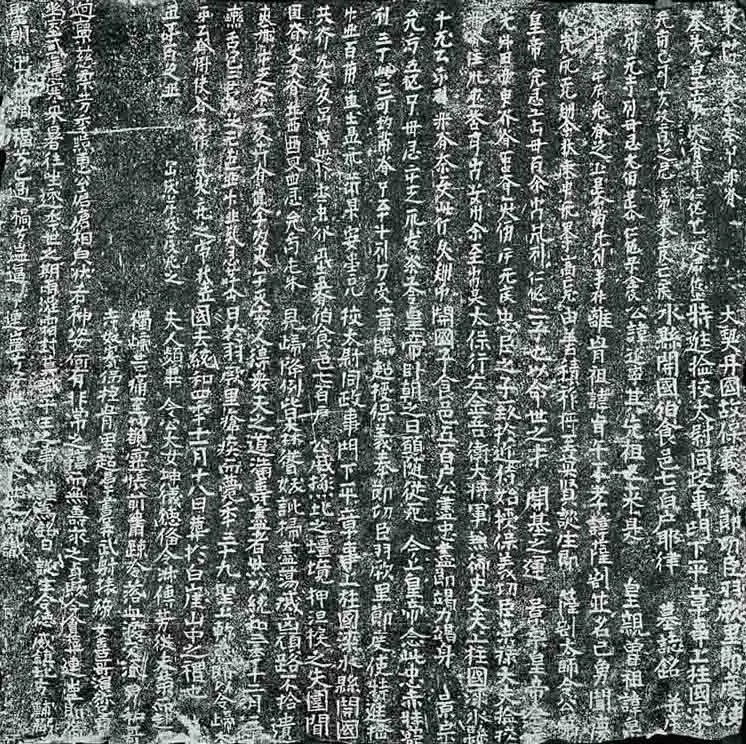
The Creation of the Khitan Scripts was a landmark state-sponsored linguistic and cultural endeavor enacted in the early tenth century under the patronage of Emperor Taizu of Liao (Yelü Abaoji). Following the establishment of the Khitan Empire in 916, rapid administrative expansion across nomadic and agrarian territories necessitated a standardized writing system to issue imperial decrees, codify customary laws, and record diplomatic treaties. Rejecting perpetual reliance on Chinese characters or Turkic runes, Emperor Taizu commissioned scholars Yelü Lubugu and Yelü Tulubu in 920 to formulate the logographic Khitan large script, adapted from Chinese regular script components. Several years later, around 925, the emperor's younger brother Yelü Diela synthesized Uyghur alphabetic principles to invent the ingenious, syllabic Khitan small script. Used side by side for over two centuries, these dual scripts preserved Khitan dynastic identity and profoundly shaped medieval Inner Asian writing traditions.
Yelü Abaoji founds the Khitan state, initiating cultural reforms to secure political and linguistic autonomy.
Emperor Taizu orders scholars Yelü Lubugu and Yelü Tulubu to compile an official national writing system.
The logographic Khitan large script is completed and officially promulgated across the realm.
A Uyghur diplomatic mission arrives at the Liao court; prince Yelü Diela studies Uyghur alphabetic mechanics.
Yelü Diela creates the syllabic Khitan small script, which is promulgated alongside the large script.
Emperor Zhangzong of Jin abolishes Khitan script usage; the writing system eventually becomes extinct.
In the late Tang and Five Dynasties periods, the Khitan confederation inhabiting the upper reaches of the Liao River basin expanded rapidly. In 907, chieftain Yelü Abaoji united the eight traditional tribes, ascending the throne as Khagan and founding the Khitan state (later the Liao Dynasty) in 916 under the reign era of Shence. Through military conquests of neighboring steppe nomadic tribes and southward expansion into the border regions of northern China, the Khitan realm evolved from a tribal confederacy into a sophisticated dual-administration empire governing both nomadic pastoralists and sedentary agriculturalists.
This rapid state consolidation encountered severe administrative obstacles due to the absence of an indigenous writing system. Historically, the Khitan relied on notched tally sticks and knotted cords for pastoral contracts, while diplomatic communication was conducted through borrowed Chinese characters, Sogdian script, or Old Turkic runes. Because the Khitan language possessed complex agglutinative morphology, grammatical case suffixes, and consonant clusters distinct from the isolating monosyllabic structure of Middle Chinese, using Chinese logographs to transcribe native speech produced extensive ambiguities and administrative confusion.
Furthermore, ideological considerations motivated the Liao ruling elite. Emperor Taizu sought to establish an enduring imperial dynasty equal in status and legitimacy to the Central Plains dynasties. True sovereign authority required not merely military prowess, but an autonomous written culture capable of recording dynastic genealogy, issuing sacred legal statutes, and fostering ethnic unity. Creating a national writing system became an urgent imperial priority.
In January 920 (the 5th year of Shence), Emperor Taizu issued a formal imperial edict ordering his younger brother Yelü Lubugu and Southern Chancellor Yelü Tulubu to establish an official orthographic bureau at the Upper Capital of Linhuangfu to formulate a sovereign Khitan writing system.
Yelü Lubugu and Yelü Tulubu established their research workshop at the Upper Capital of Linhuangfu. Both scholars were deeply versed in classical Chinese literature while possessing native command of Khitan grammar and phonology. They adopted standard Chinese regular script calligraphy as their aesthetic and structural baseline, designing new graphs through systematic modification: adding or eliminating strokes, decomposing and recombining radicals, and assigning native Khitan semantic values to modified forms.
After eight months of rigorous philological work, the scholars completed their compilation in August 920, creating thousands of distinct characters. In September 920, Emperor Taizu formally reviewed and approved the corpus, promulgating the script throughout the empire. The court established specialized bureaus and academic posts to instruct noble youths in its usage. This first script became known historically as the Khitan large script.
The Khitan large script functioned primarily as a logographic writing system. It absorbed standard Chinese strokes (horizontal, vertical, slashes, and dots) and character frames, borrowing many semantic radicals directly while inventing unique composite glyphs to represent native Khitan concepts. The implementation of the Khitan large script allowed the imperial court to record dynastic annals, issue executive proclamations, and carve monumental victory stelae, marking the formal entry of the Khitan into literate civilization.
However, practical administrative usage exposed inherent limitations within the Khitan large script. Because it was largely logographic, memorizing thousands of complex characters imposed heavy burdens on officials. Furthermore, agglutinative grammatical particles and variable phonetic inflections could not be easily represented by static logographs, leading to recurring phonetic distortion in legal and military records.
A brilliant breakthrough arrived a few years later. Around 925 (the Tianzan era), an official diplomatic mission from the Central Asian Uyghur Khaganate arrived at the Liao court. Emperor Taizu's younger brother, Yelü Diela, was appointed to host and accompany the foreign envoys. Possessing extraordinary linguistic talent, Yelü Diela mastered spoken Uyghur within months and thoroughly investigated the phonographic, alphabetic mechanics of the Old Uyghur script.
Inspired by the phonetic flexibility of the Uyghur alphabet, Yelü Diela devised an entirely new writing system tailored to Khitan phonology. He abandoned the unwieldy logographic approach, selecting approximately 370 to 400 compact basic graphic signs, termed original characters, derived from reduced Chinese character strokes.
Yelü Diela pioneered an ingenious method of block syllabic composition: depending on the syllables of a Khitan word, two to seven phonetic signs were grouped within a standardized rectangular block, read top-to-bottom and left-to-right to produce a single word. While visually resembling Chinese characters, it functioned as an advanced, highly scientific syllabic-phonetic script. Delighted by its phonetic precision and ease of learning, Emperor Taizu issued an imperial decree adopting the system, naming it the Khitan small script.
The creation of the Khitan scripts exerted a profound influence on the political civilization of northern China. Administratively, it eliminated the reliance of steppe nomads on oral agreements and foreign scribes, providing the Liao government with an official medium for taxation registers, military commands, and imperial treaties that underpinned over two centuries of unified dynastic rule.
Culturally, the scripts served as a vital bridge between steppe nomadic culture and Han civilization. The Liao court utilized both scripts to translate extensive Chinese classical texts—including the Analects, the Classic of Filial Piety, the Records of the Grand Historian, and the Book of Han—accelerating the Confucian education of Khitan nobles and cultivating a bilingual civil bureaucracy.
Linguistically, the Khitan small script represented a groundbreaking achievement in world orthographic history. Its synthesis of square character aesthetics with internal phonetic syllabic clustering preceded the Korean Hangul alphabet by more than five centuries. This successful synthesis established a prestigious model that directly inspired the Tangut script of Western Xia and the Jurchen large and small scripts of the Jin Dynasty.
Following the collapse of the Liao Dynasty, Khitan scripts continued to circulate widely in northern China under the Jin Dynasty and across Central Asia within the Qara Khitai empire until the thirteenth century. Following its official abolition by Emperor Zhangzong of Jin in 1191 and the Mongol conquest of Central Asia, the scripts faded into obscurity as dead languages. In the twentieth and twenty-first centuries, through monumental discoveries of imperial epitaphs in Inner Mongolia and the pioneering research of linguists like Luo Fucheng, Wang Jingru, Qinggertai, and Liu Fengzhu, the grammatical decipherment of both scripts has achieved major scientific breakthroughs.
Standard historical annals and modern linguists have celebrated the creation of the Khitan scripts as a monumental cultural accomplishment. The History of Liao praised Emperor Taizu for establishing formal institutions and literary culture, marking the transition of the Khitan from tribal society into civilized dynastic statehood.
Modern philologists emphasize that the creation of the dual Khitan writing systems demonstrated extraordinary linguistic adaptability. By synthesizing Chinese calligraphic traditions with Western Asian phonetic principles, the Khitan linguists created an original, sophisticated writing system that remains an enduring testament to the intellectual creativity of medieval Inner Asian civilizations.