Conscription for Guilin Defense
Eight hundred Xuzhou soldiers were dispatched to defend Guilin against Nanzhao under a three-year rotation agreement.
Tang Dynasty (唐朝) · HISTORICAL EVENT
庞勋起义
The Pang Xun Rebellion (庞勋起义) was a major soldiers' mutiny and popular uprising that erupted in 868–869 during the reign of Emperor Yizong of the late Tang Dynasty. In 863, amid military threats from Nanzhao along the southwestern frontier, the Tang court dispatched eight hundred elite troops from Xuzhou to garrison remote Guilin, pledging that they would be rotated home after three years. However, Xuzhou Surveillance Commissioner Cui Yanzeng repeatedly…
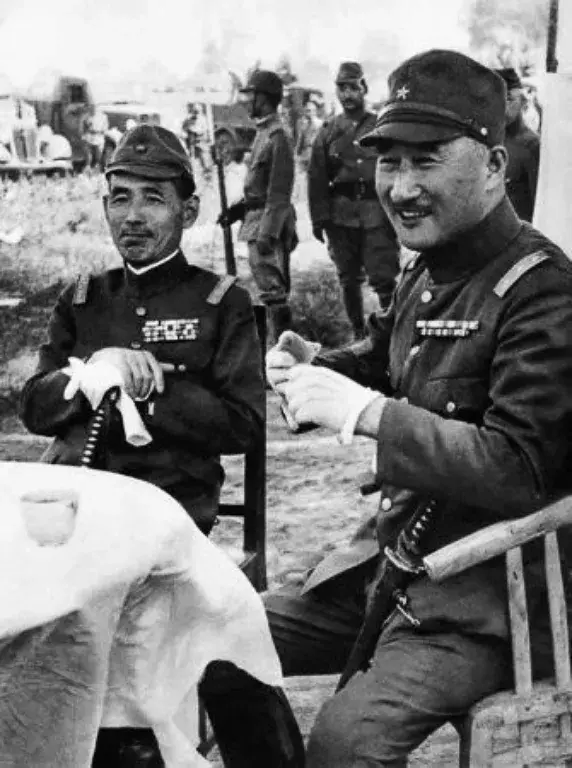
The Pang Xun Rebellion (庞勋起义) was a major soldiers' mutiny and popular uprising that erupted in 868–869 during the reign of Emperor Yizong of the late Tang Dynasty. In 863, amid military threats from Nanzhao along the southwestern frontier, the Tang court dispatched eight hundred elite troops from Xuzhou to garrison remote Guilin, pledging that they would be rotated home after three years. However, Xuzhou Surveillance Commissioner Cui Yanzeng repeatedly breached this statutory covenant. When the soldiers had served six exhausting years, Cui Yanzeng ordered them to remain for yet another year, driving the garrison into desperate fury. In July 868, garrison officers Xu Ji and Zhao Keli executed their commanding officer Wang Zhongfu and elevated supply officer Pang Xun as supreme leader, launching an armed march northward toward their homeland. The insurgents advanced through Hunan and Jiangxi, opening state granaries and attracting tens of thousands of impoverished peasants, displaced laborers, and salt smugglers. After storming Suzhou, the rebels seized Xuzhou and publicly executed Cui Yanzeng, swelling their ranks to more than two hundred thousand. By seizing the strategic corridor of the Huai River, Pang Xun severed the Grand Canal, choking off the grain supplies vital to Chang'an. In response, Emperor Yizong appointed Kang Chengxun as imperial commander and mobilized Shatuo Turkic cavalry led by Zhuye Chixin. In September 869, surrounded at Qimuzhen, Pang Xun died in desperate combat. Although crushed, the rebellion dealt a mortal blow to the late Tang dynasty, setting the stage for the Huang Chao Rebellion.
Eight hundred Xuzhou soldiers were dispatched to defend Guilin against Nanzhao under a three-year rotation agreement.
Reaching the three-year limit, Surveillance Commissioner Cui Yanzeng refused rotation and forced the troops to remain in Guilin.
Having served six years, the soldiers pleaded for repatriation; Cui Yanzeng ordered them to remain for an additional year.
Xu Ji and Zhao Keli executed commander Wang Zhongfu and elevated Pang Xun to lead an armed march back to Xuzhou.
The rebel force traversed Hunan and Jiangxi, defeating provincial garrisons and opening granaries to enlist thousands of peasants.
Insurgents stormed Suzhou and captured Xuzhou, publicly executing Cui Yanzeng and establishing an insurgent administration.
Pang Xun mobilized two hundred thousand men, capturing river junctions and severing Grand Canal grain transport to Chang'an.
Surrounded by Kang Chengxun's imperial army and Shatuo cavalry, Pang Xun died in combat at Qimuzhen, ending the rebellion.
During the late Tang period, the central imperial authority was deeply compromised by eunuch dominance in Chang'an and autonomous military commissioners (jiedushi) across the provinces. In the 860s, external crises erupted along the southwestern borders. The expanding kingdom of Nanzhao launched multiple offensives into Annan (modern northern Vietnam), capturing Jiaozhi and threatening southern circuits.
In 863 (Xiantong 4), the Tang court mobilized regional frontier regiments, enlisting two thousand veterans from the Wuning Army in Xuzhou, famed for their martial prowess. Of these, eight hundred men were assigned to garrison Guilin in Guangxi. The imperial government established a binding covenant with these conscripts: service was fixed strictly at three years, after which relief units would replace them, allowing the soldiers to return to their families.
However, when the three-year term expired in 866, Circuit Surveillance Commissioner Cui Yanzeng refused to dispatch replacements, citing fiscal insolvency and border insecurity. For three more years, the Xuzhou soldiers endured pestilential climates and tropical diseases in the far south. By 868, having served six continuous years in exile, the soldiers repeatedly dispatched representatives to plead for repatriation in accordance with the original imperial agreement.
Cui Yanzeng was an aristocratic administrator noted for his haughty demeanor and severe governance. Rather than caring for his troops, Cui enriched his inner circle—including corrupt subordinates Yin Kan, Du Zhang, and Xu Xingjian—who embezzled soldier rations and subjected disobedient troops to brutal physical mutilation.
In the early summer of 868, when the Guilin garrison submitted another formal plea for repatriation, Cui Yanzeng dismissed their petition with fury. Claiming that the provincial treasury lacked funds to purchase traveling rations and cloaks for their return journey, Cui issued an edict mandating that the eight hundred soldiers remain in Guilin for a seventh year. This final betrayal destroyed all remaining faith in imperial promises. Trapped thousands of miles from home with no prospect of relief, the soldiers resolved to risk execution through armed rebellion rather than perish in southern exile.
In July 868, conspiracy crystallized within the Guilin cantonment. Officer Xu Ji and lieutenants Zhao Keli, Yao Zhou, and Zhang Xingshi gathered the troops, declaring that waiting in Guilin would only result in dying in the wilderness, and urged an immediate strike to fight their way back to Xuzhou. The eight hundred soldiers wept in consensus.
On the night of July 20, Xu Ji and Zhao Keli led armed squads into the garrison headquarters, slaying commander Wang Zhongfu. Seeking a respected administrative figure to unify the movement, the mutineers selected supply officer Pang Xun as supreme commander. Although initially hesitant, Pang Xun accepted leadership upon seeing the fierce determination of his men.
Pang Xun opened the state armory and granary, distributing swords, crossbows, armor, and cash among the troops. Enforcing strict military discipline, he declared that their sole objective was to march back to Xuzhou and punish the corrupt commissioner. To bypass regional inspection barriers, Pang Xun utilized his administrative expertise to forge official passports and travel credentials in Cui Yanzeng's name. Burning their encampment, the eight hundred veterans commenced their epic march northward.
Advancing rapidly along river valleys, the mutineers constructed rafts to descend the Li River, then marched northward along the Xiang River valley. Regular provincial garrisons along the route, terrified of the fierce combat reputation of Xuzhou crossbowmen and paralyzed by military incompetence, either locked their city gates or fled into the hills.
In August, the insurgents traversed Hunan, capturing Daozhou and Yongzhou. Pang Xun enforced strict bans against plundering civilians and opened government storehouses to distribute grain to starving populations. Oppressed peasants, demobilized couriers, and rural laborers joined their ranks in droves. By the time the army entered Jiangxi, passing Jizhou and Linjiang, the original force of eight hundred men had expanded into several thousand.
When the imperial court learned of the uprising, Emperor Yizong commanded the Jiangxi surveillance commissioner to intercept the mutineers. However, at Lukou, the insurgent vanguard routed the provincial forces. Commandeering hundreds of river craft, Pang Xun crossed the Yangtze River into the Huai region, capturing Chuzhou and Hezhou, sending shockwaves throughout the southern bureaucracy.
In September 868, the insurgent army approached Suzhou in modern Anhui, the southern gateway to Xuzhou. Defending the city was Cui Yanzeng's confidant, Yin Kan, commanding several thousand troops. When Yin Kan rejected surrender demands, Pang Xun launched an assault with heavy crossbow barrages, scaling the city walls.
Oppressed civilian laborers inside Suzhou opened the gates to welcome the insurgents. Yin Kan's garrison was wiped out in street fighting, and Yin Kan was captured and publicly executed. Pang Xun opened the massive state treasury in Suzhou, distributing tens of thousands of taels of silver and grain reserves to the local populace. Tens of thousands of peasants and salt smugglers flocked to enlist.
On September 21, 1868, the rebel army arrived beneath the walls of Xuzhou. Paralyzed with terror, Cui Yanzeng sealed the gates. However, the urban populace and city garrison sympathized with the mutineers. A general uprising erupted inside the city, and rebel fighters scaled the ramparts. Cui Yanzeng, Xu Xingjian, and Du Zhang were captured. Pang Xun convened a public tribunal at the military headquarters, enumerating their crimes of defrauding the throne and brutalizing the soldiers, before beheading Cui Yanzeng and his associates in the marketplace amid thunderous public acclamation.
Having captured their provincial capital, Pang Xun established an insurgent administration, styling himself Great General Tiancheng and renaming Xuzhou as the Tiancheng Army. He abolished regional surcharges, recruited provincial scholars, and appointed Xu Ji, Zhao Keli, and Yao Zhou to senior military commands. Surrounding prefectures—including Yizhou, Haizhou, Mizhou, and Bozhou—expelled imperial magistrates and joined the rebellion.
At its peak, Pang Xun commanded over two hundred thousand armed combatants. Recognizing that the lifeblood of the Tang dynasty lay in southern tax revenues, Pang Xun directed his forces to sever the Grand Canal along the Huai River corridor. Rebel divisions under Yao Zhou seized Bozhou, while Liang Po captured the strategic water junction of Huaikou in Sizhou, establishing fortified checkpoints along the banks.
The interdiction of the Grand Canal was devastating. The central government in Chang'an depended completely upon the annual shipment of millions of bushels of tribute grain and textile revenues transported via the canal. With the waterway blocked, grain prices soared in the capital, imperial stipends were suspended, and panic gripped the imperial court. In Sizhou, Prefect Du Tao resisted behind city walls, enduring months of siege under rebel stone-throwing catapults until officer Xin Dang broke through the lines at night to summon relief from Yangzhou. The mutiny had transformed into a systemic threat to the empire.
Terrified by the fiscal strangulation of the capital, Emperor Yizong mobilized the full military power of the empire. In November 868, the court appointed veteran general Kang Chengxun as Commander-in-Chief of the Xuzhou Expedition, assisted by Yan Qingfu commanding the Imperial Divine Strategy Guards (Shence Jun) and provincial armies totaling over one hundred thousand troops. Crucially, the court summoned elite Shatuo Turkic auxiliary cavalry under tribal chieftain Zhuye Chixin (Li Guochang, father of Li Keyong) from the northern steppes.
In the spring of 869, the tide turned against the rebellion. Although numerically vast, the insurgent army lacked formal cavalry training and strategic coordination. While large rebel contingents were bogged down besieging Sizhou, imperial forces launched a coordinated counter-offensive, recapturing Huaikou. Operating in open terrain, Zhuye Chixin's armored Shatuo cavalry executed devastating charges, cutting down rebel infantry detachments across Suzhou and Haozhou.
In April, imperial commanders combined military assaults with political amnesties, inducing several rebel commanders, including Zhou Chong, to defect. Retiring toward Suzhou under mounting pressure, Pang Xun found his forces depleted and provisions exhausted.
On September 13, 869, Pang Xun attempted a desperate breakout with twenty thousand elite troops, seeking to cross the Huan River to reach southern hills. At Qimuzhen, fifty li west of Suzhou, the rebels walked into an ambush prepared by Shatuo cavalry and imperial infantry. A brutal battle ensued. Fighting in close combat, the insurgents resisted stubbornly, killing thousands of government troops. However, Shatuo cavalry repeatedly charged through their flanks. Suffering multiple wounds, Pang Xun refused surrender and was killed in combat. The remaining thousands of insurgent soldiers threw themselves into the Huan River or perished fighting. After fourteen months of warfare, the Pang Xun Rebellion was crushed.
The Pang Xun Rebellion inflicted fatal structural damage upon late Tang central finances by paralyzing the Grand Canal for nearly a full year. The loss of southern grain tribute forced the central court to implement predatory emergency levies across war-ravaged northern circuits, deepening rural impoverishment. To fund Kang Chengxun's massive military expedition, state reserves were exhausted, accelerating the total collapse of the Tang fiscal apparatus.
To defeat the rebellion, the imperial court relied heavily upon foreign nomadic cavalry, establishing a dangerous precedent. In recognition of his battlefield brutality against the insurgents, Shatuo chieftain Zhuye Chixin was awarded the imperial surname Li, granted the given name Guochang, and appointed military governor of Datong. His son, Li Keyong, subsequently emerged as one of the preeminent warlords of late imperial China. The Shatuo military machine, introduced directly into the Central Plains during the suppression of Pang Xun, became the dominant military power in tenth-century northern China, laying the foundation for three of the Five Dynasties (Later Tang, Later Jin, and Later Han).
The Pang Xun Rebellion served as the direct operational and social precursor to the nationwide Huang Chao Rebellion. By shattering the provincial security garrisons across Henan, Anhui, and Jiangsu, Pang Xun dismantled imperial authority across the Huai River basin. Thousands of veteran insurgent fighters escaped into the marshes of Shandong and Henan, preserving tactical experience and anti-dynastic sentiment. Only five years after Pang Xun's death, in 874, Wang Xianzhi and Huang Chao ignited a massive agrarian revolution across the exact same geographic corridor, bringing about the downfall of the Tang Dynasty.
Traditional and modern historians characterize the Pang Xun Rebellion as the decisive turning point that unraveled late Tang dynastic survival. In the New Book of Tang, Biography of Kang Chengxun, the official compilers observed: "Emperor Yizong indulged in alcohol while state policy was dictated by base men. When Cui Yanzeng drove garrison troops to desperation through cruelty, thousands shouted across a thousand miles, shaking the realm to its foundations; although Kang Chengxun overcame them with Shatuo horsemen, the ulcer that destroyed the Tang burst from this juncture." In the Comprehensive Mirror in Aid of Governance, the Song historian Sima Guang concluded: "The fall of the House of Tang was not the work of a single day. The disaster of Pang Xun began with the grievances of garrison soldiers in Guilin and culminated in national ruin; households were decimated, the capital depleted, and when Huang Chao followed in his wake, the Tang was doomed." In his Readings of the Comprehensive Mirror, the seventeenth-century philosopher Wang Fuzhi noted: "Pang Xun rose from the despair of isolated soldiers, yet the entire Huai region collapsed before him; it was not that Pang Xun was a military genius, but that popular suffering had reached its peak; when popular grievance boils over, millions follow a single cry."