Retirement to Dream Pool
Following imperial permission to reside freely, Shen Kuo retires to Dream Pool Garden outside Runzhou, sorting four decades of scientific and administrative notebooks.
Northern Song Dynasty (北宋) · HISTORICAL EVENT
《梦溪笔谈》著成
The authoring of the Dream Pool Essays (Mengxi Bitan) (《梦溪笔谈》著成) refers to the historic intellectual enterprise between 1086 and 1093 CE (the first to eighth years of the Yuanyou era of the Northern Song Dynasty) in which the eminent polymath and statesman Shen Kuo retired to Dream Pool Garden in Runzhou (modern Zhenjiang, Jiangsu Province) and systematically synthesized a lifetime of astronomical observations, technological investigations, and…
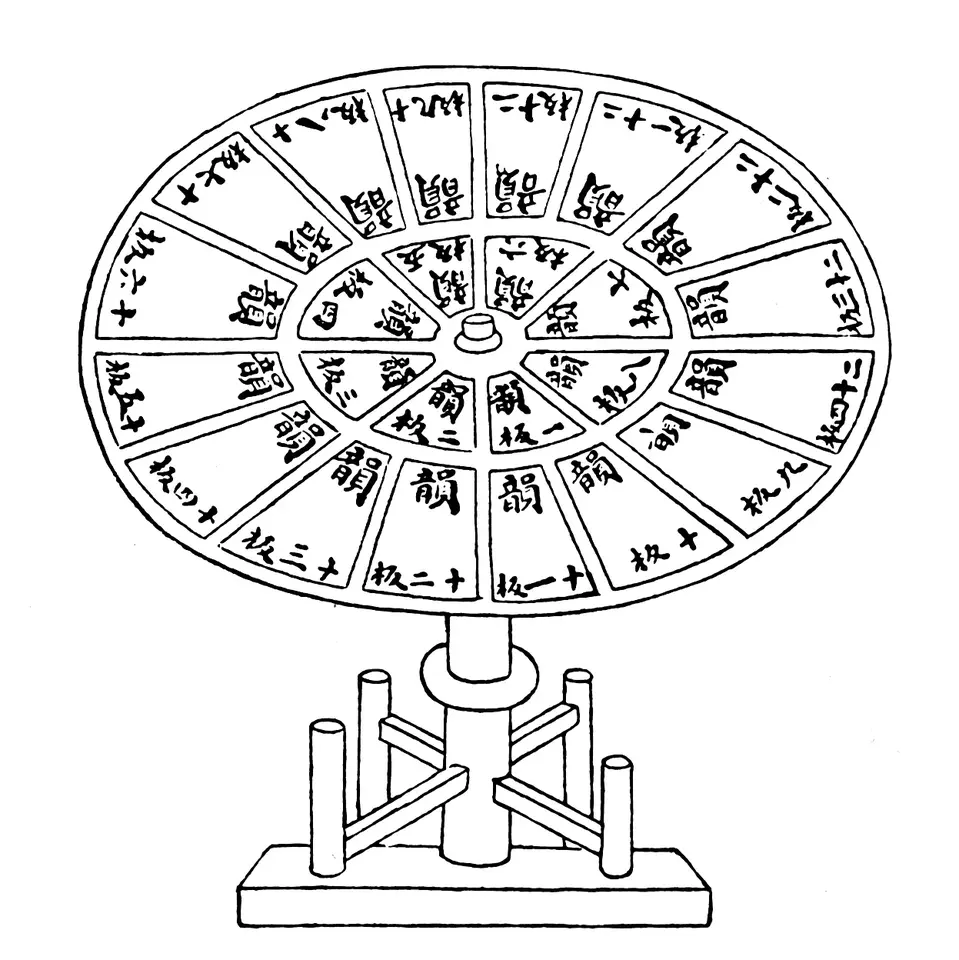
The authoring of the Dream Pool Essays (Mengxi Bitan) (《梦溪笔谈》著成) refers to the historic intellectual enterprise between 1086 and 1093 CE (the first to eighth years of the Yuanyou era of the Northern Song Dynasty) in which the eminent polymath and statesman Shen Kuo retired to Dream Pool Garden in Runzhou (modern Zhenjiang, Jiangsu Province) and systematically synthesized a lifetime of astronomical observations, technological investigations, and administrative records into a monumental thirty-fascicle encyclopedic treatise. The complete work encompasses twenty-six fascicles of the primary Essays, three fascicles of Supplementary Essays, and one fascicle of Sequel Essays, encompassing 609 diverse entries across seventeen distinct intellectual disciplines. Upholding a rigorous empirical and experimental methodology, Shen Kuo recorded the invention of movable clay type printing by the commoner Bi Sheng, the magnetic declination of the magnetic compass, the focal and inversion principles of concave mirrors, the identification and naming of petroleum, and the formation of inland mountain landforms through marine fossil evidence in the Taihang Mountains, while pioneering advanced mathematical formulas for finite series summation (xijishu) and circular geometry (huiyuanshu). The authoring of Dream Pool Essays marked the classical peak of ancient Chinese scientific literature, revered across global academic circles as an extraordinary milestone in the history of world science.
Following imperial permission to reside freely, Shen Kuo retires to Dream Pool Garden outside Runzhou, sorting four decades of scientific and administrative notebooks.
Synthesizes astronomical records from the Astronomy Bureau, drafting accounts of polar orbit deviation, clepsydra improvements, and the Twelve Solar Term Calendar.
Documents optical focus and image inversion, acoustic sympathetic resonance, compass magnetic declination, and petroleum naming and properties.
Records Bi Sheng's movable clay type printing and Yu Hao's architectural manual, formulating the xijishu series summation and huiyuanshu circular geometry.
Completes the thirty-fascicle compilation across seventeen categories and 609 entries, writing the author's preface to finalize the work.
Shen Kuo passes away at Dream Pool Garden at age sixty-five; manuscript copies begin circulating among Jiangnan scholars.
The Zhenjiang Circuit Confucian School carves the thirty-fascicle edition of Dream Pool Essays, which survives as the earliest and most complete ancestral woodblock edition.
During the mid-to-late Northern Song Dynasty, rapid socioeconomic prosperity and technological innovation propelled agricultural water conservancy, metallurgy, astronomical measurement, and printing into an unprecedented golden age. During the Xining reign of Emperor Shenzong, Chancellor Wang Anshi introduced the New Policies, championing state wealth, military preparedness, and practical administrative sciences. This reformist environment demanded versatile administrative officials adept in hydraulic surveying, military engineering, financial accounting, and astronomical calibration to furnish technical support for state transformations.
Following the death of Emperor Shenzong and the accession of Emperor Zhezong, the political landscape underwent a violent reaction. Grand Empress Dowager Gao assumed the regency and recalled conservative ministers led by Sima Guang, systematically dismantling the New Policies in the political turn known as the "Yuanyou Restoration." The bitter factional strife between reformers and conservatives led to sweeping purges of practical administrators who had served the reformist regime, plunging the Northern Song bureaucracy into decades of partisan instability.
Shen Kuo (1031–1095 CE), courtesy name Cunzhong, was a native of Qiantang (modern Hangzhou, Zhejiang Province). Early in his official career, he directed the construction of drainage canals and dikes along the Shu River in Shuyang, reclaiming vast tracts of arable land. Appointed Director of the Astronomy Bureau (Sitianjian), he overhauled astronomical instruments, supervising the construction of improved armillary spheres, clepsydras, and gnomons, while recruiting the brilliant commoner astronomer Wei Pu to formulate the Fengyuan Calendar.
As commissioner inspecting agricultural water control in the Liangzhe circuit, Shen Kuo personally surveyed the Bian River, pioneering layered earthen dikes to calculate hydraulic drop across different river reaches. In 1075 CE, serving as Hanlin Academician, he served as chief envoy to the Liao Dynasty, skillfully defending Song territorial borders through rigorous documentation. Later appointed Prefect of Yanzhou, he commanded border defenses against Western Xia. Decades of administrative governance, field surveys, and natural observation endowed Shen Kuo with unmatched empirical expertise.
In 1082 CE, Song forces suffered a disastrous defeat during the siege of Yongle City, commanded by Xu Xi. Although Shen Kuo had cautioned against the strategic site, he was held administratively culpable, stripped of his substantive posts, and banished to probationary residence in Suizhou and Xiuzhou. In 1086 CE, the court permitted Shen Kuo to choose his residence. Disillusioned with officialdom, Shen Kuo retired to a rural property in Runzhou that he had purchased years earlier, naming it "Dream Pool Garden" (Mengxi Yuan).
Retiring to Dream Pool Garden while suffering from chronic paralysis and political isolation, Shen Kuo refused to abandon intellectual inquiry. Reflecting that a lifetime of firsthand observations would otherwise perish with him, he gathered dozens of chests filled with field notebooks, administrative maps, and technical drawings. In the serene seclusion of his garden, he resolved to compose an integrated encyclopedic treatise documenting natural phenomena, institutional history, and craft techniques for posterity.
In the autumn of 1086 CE, following years of political exile, Shen Kuo settled permanently at his estate outside the Zhufang Gate of Runzhou. In his earlier youth, Shen Kuo had repeatedly dreamed of a scenic sanctuary blessed with dense woodlands, flowering ravines, and crystal streams; upon visiting Jingkou in middle age, he was struck by the uncanny resemblance of the site to his lifelong dreams, purchasing the land and formally naming it "Dream Pool Garden."
Nestled between rolling hills and clear waterways, Dream Pool Garden provided a peaceful refuge from court politics. Shen Kuo erected simple thatched pavilions, a library, and winding garden paths. Although approaching his sixtieth year and afflicted with chronic rheumatism that hindered mobility, the cessation of official duties granted him unbroken leisure to systematically organize the extensive research manuscripts, technical diagrams, and field diaries he had accumulated over four decades.
Inside his study, Shen Kuo labored daily by lamplight, classifying entries on unusual natural phenomena, geographic topography, ancient artifacts, and empirical technologies. Disdaining superficial social visits, he lived in scholarly solitude, conversing primarily with a few intimate disciples and local farmers regarding agricultural cycles and botanical lore. Whenever his memory faltered, he carefully verified details against classical texts and engineering manuals, or dispatched letters to former colleagues and artisans to ensure absolute factual accuracy.
From 1086 through 1093 CE, Shen Kuo resided continuously at Dream Pool Garden for eight productive years. Despite physical infirmity and political neglect, he dedicated his full intellectual vigor to his brush. Using the written word as his dialogue with the world, he recorded his insights across astronomy, calendrical computation, mathematics, optics, geology, medicine, engineering, and military strategy, establishing the foundational manuscript of the thirty-fascicle Dream Pool Essays.
Throughout the composition process, Shen Kuo adhered strictly to the principle of "recording only that which was personally witnessed and empirically verified." In addition to checking his voluminous files, he conducted practical experiments within Dream Pool Garden, testing soil moisture retention, botanical germination, and acoustic vibrations. When investigating ancient pitch pipes and bronze ritual bells, he personally fashioned musical pipes and strings to reconstruct classical musical scales, demonstrating an unswerving commitment to scientific truth.
Within the manuscript of Dream Pool Essays, astronomy, calendrical science, and musical harmonics occupied prominent sections. Drawing upon his tenure as Director of the Astronomy Bureau, Shen Kuo systematically synthesized the astronomical reforms he had supervised at the imperial capital of Kaifeng.
Shen Kuo detailed his systematic observations of the Pole Star. Traditional astronomers held that the Pole Star occupied the stationary center of heaven; using an improved sighting tube over three consecutive months, Shen Kuo discovered that the Pole Star was not fixed at the celestial pole, but orbited at a distance of more than three degrees. Based on these empirical measurements, he drafted a precise diagram tracking the true polar orbit, overturning a millennium of astronomical dogma.
Regarding astronomical hardware, Shen Kuo recorded the theoretical principles and structural modifications of armillary spheres, water clocks, and sundials. He detailed methods to eliminate structural visual blockage caused by multiple overlapping rings in traditional armillary spheres, anticipating the simplified armillary (jianyi). In clepsydra timekeeping, he analyzed how temperature and hydrostatic pressure affected water flow rates, designing compensating multi-stage reservoir vessels.
Most revolutionary was Shen Kuo's proposal for the "Twelve Solar Term Calendar" (Shi'er Qi Li), advocating the complete replacement of the traditional lunisolar calendar with a purely solar calendar. Recognizing that traditional calendars suffered from complex intercalary months and seasonal misalignments that confused agrarian planting, he proposed dividing the year into twelve months based strictly on the twenty-four solar terms, with large months of thirty-one days and small months of thirty days. This visionary proposal anticipated modern solar calendars, reflecting exceptional scientific boldness.
Furthermore, Shen Kuo provided a lucid physical explanation of lunar phases and eclipses. Comparing the moon to a silver ball painted half-white and illuminated from the side, he demonstrated that the moon emitted no light of its own, but reflected solar rays. Working with the commoner astronomer Wei Pu, he tracked planetary retrograde motions and orbital inclinations, dispelling superstitious omens associated with solar eclipses.
In measuring equatorial celestial coordinates and the twenty-eight lunar lodges, Shen Kuo rectified long-standing copyists' errors. Cross-referencing observational data from armillary spheres, he recorded exact angular distances for determinant stars, providing an extraordinarily reliable celestial coordinate system that guided Chinese astronomers through the Southern Song.
Geological investigation and landform evolution represent some of the most brilliant original contributions in Dream Pool Essays. In his youth and middle age, while surveying agricultural lands and serving as border envoy, Shen Kuo had explored the Yandang Mountains, the Taihang range, the Loess Plateau, and the northwestern deserts, collecting abundant empirical evidence.
In the Miscellaneous Notes and Critiques sections, Shen Kuo recorded his discovery of fossilized bivalve shells and water-worn pebbles embedded in the sheer stone cliffs of the Taihang Mountains. From these marine fossils, he deduced that the towering Taihang Mountains had once formed an ancient ocean shoreline, and that the vast plains of Northern China were created through centuries of sedimentary deposition. This geological deduction preceded Leonardo da Vinci's fossil theories by four centuries.
Examining the unique jagged peaks and deep gorges of the Yandang Mountains in eastern Zhejiang, Shen Kuo identified water erosion as the primary formative agent. He observed that ancient torrential runoff had carved away soft sand and mudstone, leaving behind sheer rhyolitic pinnacles, thereby scientifically explaining the erosion mechanics of fluvial landscapes.
During his service in northern Shaanxi along the Yan River, Shen Kuo investigated a black, viscous liquid seeping from subterranean strata, known locally as "grease water." Following systematic exploration and burning experiments, he coined the enduring scientific name "petroleum" (shiyou). He manufactured fine ink from petroleum soot and famously predicted: "This substance will surely enjoy immense application in the world, beginning from my introduction."
Furthermore, discovering petrified bamboo shoots buried deep beneath the arid soil of Yanzhou, Shen Kuo combined botanical knowledge with paleoclimatology to deduce that northern Shaanxi had once possessed a warm, humid climate comparable to southern regions, pioneering the modern method of paleoclimatic reconstruction through fossil evidence.
In cartography and physical terrain modeling, Shen Kuo documented his invention of the three-dimensional relief map. While commanding border defenses, he modeled mountain passes and rivers using flour paste, sawdust, and beeswax, creating the earliest known three-dimensional military terrain models. In Dream Pool Garden, he codified these techniques alongside mathematical grid systems and direct-distance conversions.
In physics and experimental mechanics, Dream Pool Essays preserved ancient China's most profound achievements in optics and magnetism. In his garden retreat, Shen Kuo conducted physical simulations, linking empirical observations with theoretical deductions.
In optics, Shen Kuo conducted concave mirror (yangsui) and camera obscura experiments, explaining the optical focal point and image inversion. Using the metaphor of a flying bird whose shadow inverts through an aperture like crossing tail feathers, he demonstrated how light rays converge at a focal aperture; for concave mirrors, he identified the focal point (ai), noting that an object positioned within the focal point creates an upright image, whereas an object positioned beyond it forms an inverted image.
In acoustics, Shen Kuo devised a paper-figure resonance experiment. Cutting miniature figures from paper and mounting them upon musical strings, he demonstrated that plucking a primary string caused paper figures on harmonically tuned strings to dance, while figures on untuned strings remained stationary. This elegant demonstration provided visual proof of sympathetic harmonic resonance.
In magnetism, Shen Kuo recorded a watershed discovery. In the Crafts and Skills section, he evaluated four methods of compass needle suspension: water floating, bowl-rim pivoting, fingernail balancing, and suspended silk filament, determining that hanging a magnetized needle from an unspun silk fiber adhered with beeswax offered maximum sensitivity.
Crucially, Shen Kuo documented the phenomenon of magnetic declination: "When magicians rub the point of a needle with lodestone, it can then point south, yet it always inclines slightly east and does not point true south." This observation shattered the ancient assumption that compass needles point due south, revealing that magnetic north and geographic north diverge. This passage represents the earliest definitive record of magnetic declination in human history, preceding European accounts by four centuries.
In atmospheric physics, Shen Kuo explained the nature of rainbows. Rejecting superstitions that rainbows were celestial dragons, he stated after rainstorm observations: "A rainbow is merely the sun's shadow in the rain; it appears whenever sunlight strikes rain." He also documented the selective heating effects of lightning strikes, recording cases where lightning melted metal weapons while leaving wooden structures undamaged.
In mathematics and practical engineering, Dream Pool Essays showcased Shen Kuo's exceptional technical ingenuity. Rejecting abstract mathematical speculations divorced from daily life, he applied quantitative methods to granary measurement, dam construction, and cartographic surveying.
Shen Kuo formulated the "technique of small spaces" (xijishu). When calculating the volume of stacked items in granaries or military depots, such as wine jars or shot stacked in truncated pyramids, traditional volume formulas produced significant errors due to internal voids. Shen Kuo developed higher-order arithmetic progressions that accounted for both voids and solid objects, pioneering finite difference series summation and inspiring later Song-Yuan mathematicians Yang Hui and Zhu Shijie.
In geometry, Shen Kuo invented the "circle-completion technique" (huiyuanshu). Calculating the arc length of a circle segment from its diameter had historically been difficult; Shen Kuo applied right-triangle relationships to derive an analytical approximation formula for arc length based on segment height and diameter. This provided a practical tool for canal surveying and astronomical conversions, serving as a vital bridge toward spherical trigonometry.
In technical craftsmanship, the treatise preserved invaluable industrial records, foremost among them the invention of clay movable type printing by the commoner Bi Sheng. Shen Kuo meticulously recorded the entire process: carving characters in clay, firing them in kilns, mounting them on iron plates with melted wax and resin, pressing the type level, inking, and disassembling the type over heat, while noting the economic efficiency of movable type for large print runs.
Without Shen Kuo's account, the invention of movable type printing—one of the Four Great Inventions of China—would have been lost to history. Furthermore, he documented master carpenter Yu Hao's Timberwork Manual (Mu Jing), detailing structural wind-resistance in pagoda architecture, double-lock water transport techniques, and cold-cast iron metallurgy.
In chemical metallurgy, Shen Kuo recorded the wet copper extraction technique using iron replacement in copper sulfate solutions (danshui jintie), alongside steel production methods including "hundred-fold refined steel" and crucible cast iron. In his medicinal chapters, he evaluated pharmaceutical authenticity and urged seasonal harvesting of herbs based on phenological growth.
Following eight years of unremitting writing and revision, the core manuscript of Dream Pool Essays was completed around 1093 CE (the eighth year of the Yuanyou era). Shen Kuo arranged all entries into seventeen broad topical categories, comprising twenty-six fascicles of the core Essays, three fascicles of Supplementary Essays, and one fascicle of Sequel Essays, encompassing 609 entries.
The seventeen categories were: Official Stories, Critical Evaluations, Musical Harmonics, Numerical Calculation, Human Affairs, Bureaucracy, Strategic Wisdom, Arts and Letters, Calligraphy and Painting, Crafts and Skills, Utensils and Instruments, The Marvelous, Strange Events, Errors Corrected, Wit and Satire, Miscellaneous Notes, and Medicinal Discussions. This taxonomy balanced traditional humanist and administrative concerns with unprecedented attention to natural science, engineering, and empirical crafts.
In his brief preface, Shen Kuo reflected that in retirement, his only companions were his writing brush and inkstone, hence the title "Brush Talks." He noted that while the entries contained varied observations, each derived from personal verification rather than hearsay.
Shen Kuo wrote in concise, lucid classical prose, free from the ornamental parallelisms of Six Dynasties style. Each entry clearly explained causes, physical mechanisms, and practical applications, reflecting the empirical mindset of an accomplished scientist and statesman.
Upon finalizing the manuscript, Shen Kuo directed his family and disciples to transcribe multiple copies for his private library and family school. In 1095 CE, Shen Kuo passed away at Dream Pool Garden at the age of sixty-five. Transcribed manuscripts circulated among Jiangnan literati, culminating in official woodblock editions during the Southern Song and Yuan dynasties, preserving this medieval scientific masterpiece for world civilization.
The completion of this treatise demonstrated the profound creative capacity of a classical Chinese scholar in late-life political adversity. Shen Kuo transformed isolated personal observations and administrative experiences into an enduring, systematic encyclopedia of empirical knowledge.
The authoring of Dream Pool Essays marked the zenith of ancient Chinese scientific literature and encyclopedic note-taking. Comprising thirty fascicles across seventeen distinct categories and 609 entries, the work encompassed astronomy, meteorology, mathematics, physics, geology, botany, medicine, metallurgy, architecture, archaeology, and administrative institutions.
Through empirical documentation, the treatise preserved the complete methodology of Bi Sheng's movable clay type printing, recorded the world's earliest discovery of magnetic declination, named petroleum, and formulated higher-order series summation and arc-length approximation, representing an unrivaled monument of medieval world science.
In institutional and social history, Dream Pool Essays provides primary firsthand material superior to later official dynastic histories. The book candidly documented civil service examination defects, bureaucratic appointments, military logistics, agrarian tax burdens, and geopolitical strategies concerning Western Xia and Liao.
In epigraphy and material culture, Shen Kuo pioneered Song antiquarianism. Opposing blind adherence to Han dynasty classical commentaries, he advocated cross-referencing excavated bronze inscriptions and dimensions with classical texts, establishing the rigorous empirical tradition of Chinese epigraphy.
Following its printing, Dream Pool Essays exerted profound international influence across East Asia and the Western world. In the mid-nineteenth century, Japanese scholars printed movable-type editions, making it a foundational text for Dutch Learning (Rangaku) scholars and Sinologists studying Chinese science.
In the twentieth century, Dream Pool Essays was translated into English, French, German, Italian, and Japanese. British historian of science Joseph Needham lauded Shen Kuo in Science and Civilisation in China as "one of the greatest scientific minds in Chinese history" and celebrated Dream Pool Essays as "a milestone in the history of Chinese science," cementing its global reputation.
Since its publication, Dream Pool Essays has received the highest praise from dynastic bibliographers and modern international historians of science for its scientific rigor and intellectual breadth.
The Yuan Dynasty preface to the Dade edition records: "Shen Kuo was vast in learning and skilled in composition; in astronomy, geography, calendars, music, medicine, and mathematics, there was nothing he did not master. Retiring to Dream Pool in Runzhou, he composed these thirty fascicles, which are precise, persuasive, and substantial, representing the supreme swan song of a true polymath."
The Qing Dynasty Annotated Catalog of the Complete Library of the Four Treasuries (Siku Quanshu Zongmu Tiyao) evaluated the text: "Shen Kuo possessed the most extensive erudition in the Northern Song, investigating the origins of contemporary institutions, literature, and music. His Dream Pool Essays is exhaustive in evidential research and incisive in argument, standing immeasurably above the baseless gossip of ordinary fiction writers."
Modern scholar Liang Qichao observed in Intellectual History of the Qing Period: "The scientific discoveries in Shen Cunzhong's Dream Pool Essays are extraordinarily systematic, and his empirical spirit of investigating things to extend knowledge rivals that of modern European scientists."
Dr. Joseph Needham concluded in Science and Civilisation in China: "Shen Kuo was the most interesting character in all of Chinese scientific history. His Dream Pool Essays is an encyclopedic work containing the foremost scientific knowledge of his era alongside original observations of genius, truly standing as an enduring milestone in the history of Chinese science."