Fall of Xiangyang and Fancheng
Mongol forces capture Fancheng and Lu Wenhuan surrenders Xiangyang, opening the Middle Yangtze gateway.
Southern Song Dynasty (南宋) · HISTORICAL EVENT
临安陷落
The Fall of Lin'an (临安陷落), taking place in February 1276 (the second year of Deyou), was the decisive historical turning point that marked the surrender of the Southern Song capital and the collapse of the dynasty. Following the disastrous loss of Xiangyang in 1273 and the annihilation of Song river forces at Dingjiazhou in 1275, imperial river defenses disintegrated. Khubilai Khan commissioned Senior Grand Chancellor Bayan to command an expeditionary…
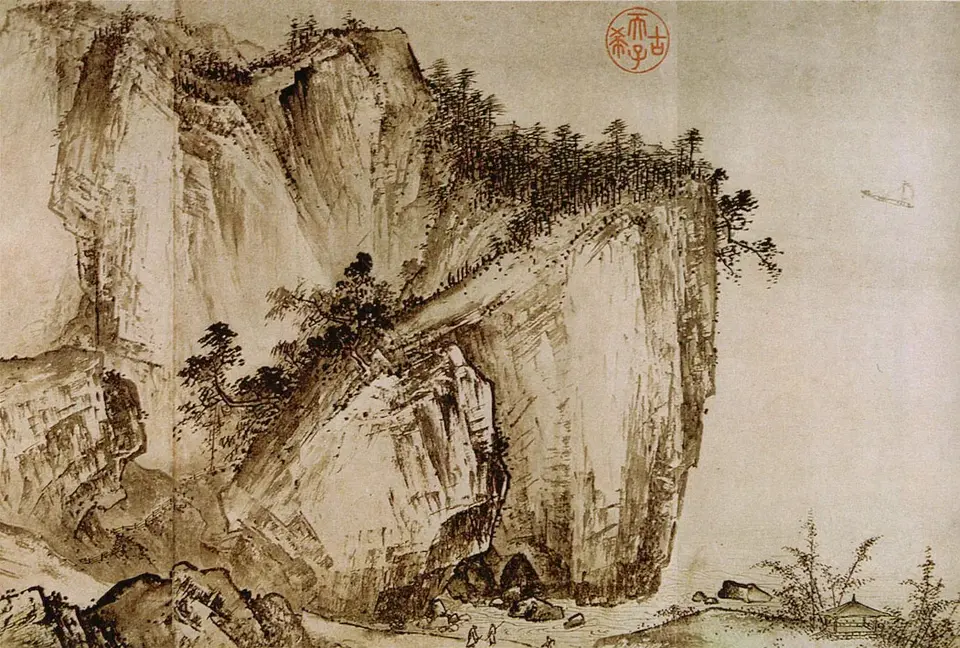
The Fall of Lin'an (临安陷落), taking place in February 1276 (the second year of Deyou), was the decisive historical turning point that marked the surrender of the Southern Song capital and the collapse of the dynasty. Following the disastrous loss of Xiangyang in 1273 and the annihilation of Song river forces at Dingjiazhou in 1275, imperial river defenses disintegrated. Khubilai Khan commissioned Senior Grand Chancellor Bayan to command an expeditionary force of two hundred thousand troops, executing a three-pronged pincer movement against Lin'an (modern Hangzhou). Courtiers deserted en masse, leaving Grand Empress Dowager Xie and four-year-old Emperor Gong (Zhao Xian) defenseless. Though loyalists Wen Tianxiang and Zhang Shijie mobilized volunteer armies, Chancellor Chen Yizhong pursued appeasement before fleeing to sea by night. Encamping at Mount Gaoting north of the city, Bayan detained Wen Tianxiang during negotiations. On February 4, 1276, the Song court submitted the ancestral Imperial Jade Seal; Bayan entered Lin'an under strict military discipline, sealing imperial libraries and escorting the royal house to Dadu, concluding 152 years of Southern Song sovereignty.
Mongol forces capture Fancheng and Lu Wenhuan surrenders Xiangyang, opening the Middle Yangtze gateway.
In February, Jia Sidao's field army of 130,000 troops is routed at Dingjiazhou, collapsing southern river defenses.
In November, Changzhou falls after months of siege and Bayan orders an indiscriminate massacre, demoralizing the capital.
On January 20, Bayan's three-pronged army reaches Mount Gaoting in the northern suburbs of Lin'an.
On February 4, Wen Tianxiang is detained during negotiations at Mount Gaoting; Chancellor Chen Yizhong flees to sea by night.
On February 4, Empress Dowager Xie formally presents the surrender memorial and the imperial jade seal to Bayan.
On March 20, Bayan occupies Lin'an under strict military discipline, sealing imperial libraries and archives.
In May, child-emperor Zhao Xian arrives in Dadu under escort; Khubilai Khan grants him the title of Duke of Ying.
During the reigns of Lizong and Duzong, Chancellor Jia Sidao monopolized executive authority, alienating loyal commanders. In 1268, Mongol commanders Ashu and Ariq Qaya invested the strategic twin fortress of Xiangyang and Fancheng in a six-year siege. Fancheng was stormed in 1273, and Xiangyang commander Lu Wenhuan surrendered, breaking the Middle Yangtze perimeter and allowing Mongol forces to bypass river strongholds.
In 1274, Emperor Duzong died, and four-year-old Zhao Xian ascended the throne with his grandmother Empress Dowager Xie as regent. Khubilai Khan dispatched Bayan with two hundred thousand troops down the Yangtze. In February 1275, Jia Sidao led 130,000 troops to confront Bayan at Dingjiazhou near Wuhu. Ashu launched massed crossbow bombardments, breaking the Song line; Jia Sidao panicked and fled, dissolving the field army. Jia Sidao was subsequently banished and assassinated at Mian'an by his escort officer Zheng Huchen.
Following the catastrophe at Dingjiazhou, the commandery of Changzhou became the critical strategic fortress barring the Mongol armies from the Southern Song capital. Prefect Yao Qian and Vice-Prefect Chen Zhao directed the garrison in a desperate defense, while five hundred volunteers under Huai commander Yin Yu launched an amphibious sortie, perishing to the last man at Wumu. Vice-Commander Ashu deployed counterweighted Muslim trebuchets to pulverize the ramparts, while Senior Chancellor Bayan personally directed the siege. Facing starvation, the defenders consumed warhorses and boiled leather armor, holding out for months.
On December 21, 1275 (the sixteenth day of the eleventh month), Changzhou was stormed. To shatter the psychological will of southern cities, Bayan violated Khubilai Khan's imperial admonitions against indiscriminate slaughter, ordering an absolute massacre. Tens of thousands of civilians were put to the sword; corpses choked the city wells and moats. The horrific news struck Lin'an like a thunderbolt, causing utter demoralization; magistrates across Wuxi, Pingjiang (Suzhou), and Jiaxing opened their gates and surrendered without resistance.
The ferocity of the Changzhou defense stood as an unparalleled tragedy in late Song military annals. Prefects Yao Qian and Chen Zhao slit their throats atop the breach, while dozens of administrative households threw themselves into wells to avoid dishonor. Following the breach, Bayan permitted three days of indiscriminate looting and execution; the entire urban fabric was reduced to smoldering ashes. This calculated atrocity shattered the psychological defense of Jiangnan, convincing regional administrators across Suzhou and Jiaxing that military resistance against the Mongol armies was futile.
Consolidating control over Changzhou and Suzhou, Bayan coordinated with veteran generals Dong Wenbing and Ashu to execute a master encirclement strategy. The Mongol-Yuan expeditionary force was partitioned into three coordinated columns to trap Lin'an within an inescapable pincer. The Eastern Column, led by Assistant Administrator Dong Wenbing, commanded thousands of naval transports embarking from Taicang along Hangzhou Bay toward Ganpu and Shaoxing, cutting Lin'an's sea escape routes.
The Western Column under Ashu and Ariq Qaya advanced along the western shores of Lake Taihu, sweeping through Changxing toward the Tianmu Mountains to turn the capital's southwestern flank. Meanwhile, Bayan personally directed the Central Column comprising tens of thousands of elite Mongol cavalry advancing down the Grand Canal through Jiaxing toward the northern gateway of Dusong Pass. Banners stretched for hundreds of li as three armies closed in, severing all communication between the imperial court and the outside provinces.
Bayan's coordinated three-pronged advance reflected the highest level of Mongol combined-arms operational strategy. Dong Wenbing's fleet sealed the mouth of Hangzhou Bay, completely interdicting maritime grain shipments and reinforcing troops from Fujian and Guangdong. The Western Column under Ashu and Ariq Qaya crossed the rugged hills of western Zhejiang, sweeping aside peripheral redoubts, while Bayan's Central Column applied crushing direct pressure along the Grand Canal. The three armies closed their trap with clockwork precision, isolating Lin'an within an inescapable pocket.
As the Mongol pincers tightened, Lin'an dissolved into paralysis and panic. Courtiers and scholar-officials abandoned their offices under cover of darkness; daily audiences saw only a handful of ministers, and the grand seal of state was left unattended. Weeping in grief, Grand Empress Dowager Xie posted imperial notices on the palace walls: 'For three hundred years the state has nurtured scholars. Today our altars are imperiled, yet not one official shares our burden; all flee and abandon mother and child. With what countenance will they face history?'
In this dark hour, Wen Tianxiang, Prefect of Ganzhou, arose to defend the dynasty. Receiving the imperial summons, Wen wept openly and liquidated his entire family estate to finance a patriotic volunteer army. Raising over thirty thousand recruits across Jiangxi, he marched northward to defend Lin'an. When pragmatists warned him that leading raw recruits against veteran Mongol cavalry was like driving sheep into a pack of tigers, Wen replied: 'The dynasty has fostered its people for centuries. If the state is imperiled and not a single horse enters the capital, it is our eternal shame. I offer my body as a martyr so that loyal souls across the empire may arise.'
The collapse of administrative cohesion within Lin'an accelerated unchecked. Imperial university students and townspeople crowded the Imperial Way in despair, denouncing peace advocates as traitors. Magistrates of the metropolitan districts abandoned their seals and fled, causing grain prices to skyrocket overnight. Although Empress Dowager Xie posted bounties for volunteers, few responded. When Wen Tianxiang marched his volunteer corps through the northern gate in mourning dress, citizens wept along the streets, recognizing that this isolated force could not avert dynastic collapse.
Marching alongside Wen Tianxiang was General Zhang Shijie, a veteran commander of the Huai armies. Gathering tens of thousands of scattered soldiers following Dingjiazhou, Zhang was appointed Commissioner of Baokang and Junior Guardian by Empress Dowager Xie. Zhang deployed his troops at Jiaxing, engaging Ashu's vanguard in fierce close-quarters combat. Maintaining strict discipline, Zhang repelled multiple cavalry probes at Xitang and Changxing, bolstering the morale of the capital defenders.
However, the natural mountain barrier of Dusong Pass (on the border between Yuhang and Anji) suffered a catastrophic collapse. The steep granite defile was impregnable if manned, representing the final northern bastion guarding Lin'an. Yet Chancellor Chen Yizhong's incompetent logistics and command failures demoralized the garrison, and the commanding officer abandoned his post as Mongol vanguards approached. Mongol scouts crossed the undefended pass, capturing Yuhang just thirty li from Lin'an, placing the capital under direct siege.
The loss of Dusong Pass severed the final lifeline guarding the imperial capital. Garrison commanders Ren Wu and Zhang Ru had long lost the will to resist, abandoning their stone ramparts at the first approach of Mongol scouts. With the pass compromised, Mongol cavalry poured into the open plains of Yuhang unopposed. Although Zhang Shijie organized rearguard delaying actions between Linping and Yuhang, his infantry formations were repeatedly fragmented by aggressive horse-archer charges, forcing surviving units to retreat behind Lin'an's city walls.
On January 20, 1276 (the third day of the first month of Dexyou), Bayan led the Central Column into the northern suburbs of Lin'an, establishing an expansive command encampment along the ridges of Mount Gaoting. Overlooking the roofs of Lin'an, the golden dragon standards of the Great Yuan fluttered atop the hills, and the sound of Mongol horns resonated into the imperial palaces. Civilians shuttered shops, while wealthy clans cast silver treasures into West Lake and fled into the hills.
Inside the palace, Empress Dowager Xie and five-year-old Emperor Gong (Zhao Xian) wept helplessly upon the throne. The imperial garrison was reduced to a few hundred sickly soldiers, devoid of reinforcements or heavy artillery. Weeping openly, Right Chancellor Chen Yizhong urged the Empress Dowager to abandon military resistance and sue for peace. Conceding to inevitable doom, she authorized emissaries to carry humble petitions to Bayan's tent, attempting to preserve the ancestral shrines of the Zhao clan through submission.
The establishment of Bayan's headquarters atop Mount Gaoting applied decisive psychological intimidation to the court. Bayan enforced absolute silence and order within his camp; thousands of white felt tents, disciplined horse lines, and glistening rows of lances created a terrifying spectacle of military organization. Looking north from the Wushan towers, Song officials could see cooking fires stretching for dozens of li across the horizon, extinguishing any remaining hope of defending the city.
On January 26, the Song court dispatched Censor Liu Foweng and Jia Xuanweng bearing one thousand taels of gold and ten thousand taels of silver to Bayan's camp at Mount Gaoting. In the surrender memorial, the Song court adopted debased terms, offering to surrender all southern commanderies, drop the imperial title, and recognize Khubilai Khan as 'Imperial Uncle', promising massive annual tributes in exchange for remaining a vassal state in Lin'an.
Seated atop his dais, Bayan laughed dismissively and rejected the petition. He declared: 'Your dynasty acquired the empire from the orphaned child and widowed mother of the Later Zhou; today the Great Yuan takes the empire from the orphaned child and widowed mother of Song. It is the inexorable cycle of heaven!' Desperate, Song emissaries returned days later offering to address Khubilai as 'Grand-Uncle' and designating the child-emperor as 'Grand-Nephew'. Unmoved, Bayan demanded the immediate surrender of the imperial jade seal and unconditional capitulation.
The successive peace petitions submitted at Mount Gaoting constituted the most humiliating chapter in Song diplomatic history. Censor Liu Foweng prostrated himself before Bayan's tent, pleading that the Zhao clan be granted an autonomous vassal fief in Lin'an to maintain ancestral sacrifices. Bayan dismissed the envoys, declaring that the Great Yuan would brook no divided authority. The court's subsequent offers to recognize Khubilai as Grand-Uncle and label Emperor Gong a Grand-Nephew were flatly rejected; Bayan demanded the immediate surrender of the imperial seal.
With negotiations deadlocked, the Song court appointed Wen Tianxiang as Right Chancellor and Military Affairs Commissioner, dispatching him to Mount Gaoting to treat with Bayan. Knowing the mission was perilous, Wen accepted to buy time for the royal princes to escape south. On February 4, Wen entered the Mongol camp. Bayan lined the pavilion with axemen to intimidate him into kowtowing; Wen bowed politely but refused to prostrate himself, standing with unyielding dignity.
Wen confronted Bayan: 'If the Great Yuan desires peace, withdraw your armies to Jiaxing; our state will reward your troops with silver. But if you seek to extinguish our shrines, the brave hearts of Jiangnan number in the millions. You cannot guarantee total victory!' Recognizing Wen's exceptional intellect and moral authority, Bayan feared he would organize resistance if returned to Lin'an. Violating diplomatic immunity, Bayan ordered Wen detained as an imperial prisoner. Wen looked toward heaven and swore never to submit.
Wen Tianxiang's steadfast defiance at Mount Gaoting commanded profound respect even among veteran Mongol princes. Refusing to kowtow before Bayan's armed guards, Wen boldly denounced the invasion as unprovoked aggression, declaring that southern patriots would continue resistance if the ancestral shrines were extinguished. Fearing that Wen's charisma would ignite renewed uprisings in Jiangnan, Bayan violated diplomatic convention by placing him under arrest, foreshadowing Wen's immortal martyrdom commemorated in his later poem Song of Righteousness.
While Wen Tianxiang was detained, Right Chancellor Chen Yizhong, the architect of capitulation, suffered a total collapse of resolve. Having pledged to meet Bayan personally to sign the surrender, Chen learned that Mongol scouts had secured the Yuhang sluices. Terrified of execution, Chen slipped out of the Yongjin Gate in the dead of night without informing the Empress Dowager, fleeing down the Qiantang River in a small fishing skiff toward Wenzhou.
The flight of the chief minister dealt the death blow to the Song court's remaining cohesion. When Empress Dowager Xie ascended the throne room next morning to find the chancellor's chair vacant, she wept bitterly: 'How could he abandon us!' Ministers, secretaries, and palace guards climbed over the palace walls in headlong flight. Government archives were abandoned, and the centralized administrative apparatus of the Southern Song collapsed completely into chaos.
The nocturnal flight of Chancellor Chen Yizhong sealed his historical infamy. Having achieved early fame by criticizing chancellor Jia Sidao, Chen demonstrated cowardice when the ultimate trial arrived. Slipping through the Yongjin Gate in a small skiff, Chen sailed into the East China Sea, eventually dying in overseas exile in Champa and Siam. The desertion of the chief minister in the hour of peril struck a mortal blow to the regime, leaving the bureaucracy in total paralysis.
In the final hours before Lin'an's fall, General Zhang Shijie, Lu Xiufu, and Su Liuyi executed a strategic rescue of the Song imperial lineage. Recognizing that Lin'an was lost, they resolved to evacuate the late Emperor Duzong's two surviving young sons—seven-year-old Zhao Shi (Prince of Yi) and four-year-old Zhao Bing (Prince of Guang)—to perpetuate legitimate dynastic resistance.
On the night of February 4, Zhang Shijie and loyal guards breached the palace, carrying the young princes through deserted streets to boats waiting on the Qiantang River. Sailing out to sea, they escaped toward Jiangxin Temple in Wenzhou. The two princes subsequently established an itinerant imperial court in Fuzhou and Guangdong, where Wen Tianxiang later joined them, setting the stage for the heroic and tragic final chapter of the Song dynasty at the Battle of Yamen.
The clandestine evacuation of Princes Zhao Shi and Zhao Bing preserved the final flame of legitimate dynastic resistance. Zhang Shijie and Lu Xiufu mobilized a fleet of several hundred coastal junks, carrying the young royals down the Qiantang River to Wenzhou. In Fuzhou, seven-year-old Zhao Shi was enthroned as Emperor Duanzong. Over the next three years, this floating court waged maritime warfare along the coasts of Guangdong, concluding with the tragic mass martyrdom at the Battle of Yamen.
On February 4, 1276 (the eighteenth day of the first month of Deyou), with Wen Tianxiang captured, the ministers fled, and foreign armies at the gates, the dying Empress Dowager Xie accepted absolute capitulation. She commissioned the draft of the official surrender memorial, dispatching Jia Yuqing and Xie Tang to carry the dynastic Jade Seal of State to Mount Gaoting to surrender to Bayan.
The memorial read: 'The fortunes of the state are exhausted; heaven's mandate has settled elsewhere. The child-ruler Zhao Xian bows before the Great Yuan Emperor... We surrender the ancestral Jade Seal, the imperial crown, and the robes of state, offering our realm in absolute submission.' Bayan received the seal with imperial honors, sending mounted couriers to inform Khubilai Khan. On February 6, Mongol vanguards occupied the city gates, marking the formal demise of the Southern Song state.
The formal presentation of the imperial jade seal brought to a close the 316-year reign of the Zhao Song dynasty established by Emperor Taizu in 960. In the inner palace, Empress Dowager Xie wept over five-year-old Emperor Gong as palace attendants took their own lives. On February 4, 1276, when imperial envoys carried the brocade caskets containing the dynastic seal through the Qiantang Gate, thousands of weeping scholars and commoners knelt in the dust, marking the end of the dynasty.
On March 20 (the fifth day of the second month), Senior Chancellor Bayan rode through the gates of Lin'an with his armored retinue. In striking contrast to the atrocities committed at Changzhou, Bayan enforced strict military discipline to win the hearts of the southern scholar-gentry. He proclaimed death penalties for any soldier guilty of looting, murder, or desecrating shrines, preserving order across the capital.
Bayan appointed seasoned Confucian administrators Lian Xixian and Dong Wenbing to seal the Imperial Archives, the National University, and the Board of Rites. Hundreds of thousands of historic dynastic scrolls, rare Song prints, astronomical records, and tax ledgers were inventoried and transported intact to the imperial libraries of Dadu. This preservation ensured that Song institutional memory survived, providing the source material for the later compilation of the History of Song and sustaining the continuity of Chinese civilization.
Bayan's strict military discipline during the occupation of Lin'an stood in sharp contrast to historical dynastic transitions. Aware that Jiangnan was the intellectual and commercial heartland of China, Bayan prohibited looting, arson, and executions. General Dong Wenbing secured the imperial palace, sealing tax treasuries, ceremonial bronzes, and the vast library of the Imperial Academy. This policy preserved southern cultural institutions, enabling the smooth administrative integration of Jiangnan into the Yuan imperial domain.
In April 1276, following the administrative handover, Bayan oversaw the deportation of the Song imperial court. Five-year-old Emperor Gong (Zhao Xian), Empress Dowager Quan, and thousands of royal princes, palace ladies, and surrendered ministers were formed into an immense carriage convoy under heavy Mongol cavalry escort, embarking on the northward journey along the Grand Canal to Dadu.
In May, the procession arrived in Dadu. Khubilai Khan presided over an imperial audience in the Daming Palace, receiving the surrendered child-emperor with broad imperial magnanimity. Khubilai granted Zhao Xian the high titles of Grand Master of the Palace and Duke of Ying, while providing generous stipends to the dowagers. The fall of Lin'an and the exile of its royal house marked the definitive unification of China under the Yuan dynasty, ending three centuries of division since the fall of the Tang.
The northward journey of the surrendered Song court symbolized the definitive passing of an era. Five-year-old Emperor Gong gazed through carriage curtains as the West Lake pavilions faded into the distance. Along the Grand Canal, weeping commoners in white mourning dress offered incense as the procession passed. In Dadu, Khubilai Khan received the young prince with imperial clemency, granting him the title of Duke of Ying and bringing three centuries of division to an end.
Throughout the arduous northern journey of the surrendered Song court, Mongol commanders maintained vigilant armed surveillance over the deposed child-monarch and the dowager empresses. Whenever the carriage convoy passed through major provincial cities, surrendered Han magistrates and local Yuan administrators greeted the procession with formal protocol, bowing respectfully to assuage the grief of regional scholar-gentry. As the procession traversed Yangzhou and Huai'an, former Song subjects in white mourning robes knelt along the roadside, burning incense and weeping aloud as the imperial house made its final passage into the imperial audience hall of Dadu.
The fall of Lin'an and the surrender of the imperial jade seal marked the formal demise of the Southern Song dynasty after 152 years of rule. Although loyalists such as Zhang Shijie, Wen Tianxiang, and Lu Xiufu evacuated the royal princes to wage maritime guerrilla resistance until the tragic climax at Yamen in 1279, the institutional core of the Song state ceased to exist. The Yuan Empire implemented the Branch Secretariat (Xingsheng) system across Jiangnan, terminating over three centuries of territorial fragmentation since the late Tang and establishing the vast geographic framework of unified China.
Because Bayan enforced strict military discipline and accepted a peaceful handover, Lin'an—then the world's most populous and sophisticated metropolis—escaped the catastrophic destruction suffered by Changzhou and Xiangyang. Urban marketplaces, West Lake gardens, and private commercial enterprises continued operations without interruption. The complete transfer of imperial Song archives and Confucian classics to Dadu preserved the literary and printing achievements of the Song dynasty, providing Khubilai Khan's administration with the intellectual resources needed to adopt Chinese institutional governance.
The humiliating capitulation at Lin'an and the subsequent maritime apocalypse at Yamen etched a deep psychological trauma into the consciousness of the southern scholar-gentry. Prominent literati such as Zheng Sixiao, Xie Fangde, and Wang Yuanliang withdrew from public life as unbending Song loyalists (yimin). Wen Tianxiang's transcendent poetry of martyrdom and the unyielding sacrifices of Zhang Shijie and Lu Xiufu elevated Confucian moral stoicism to its historical apex, exerting a profound influence upon later Ming-Qing intellectual transitions.
In the History of Song (Songshi), dynastic chroniclers reflected: "The fall of Song did not occur overnight. Jia Sidao monopolized governance for over a decade, blinding the throne and ruining public morals. When enemy armies arrived, ministers fled in the night, leaving an orphaned child and widowed mother to surrender the seal—what profound sorrow! Yet the radiant loyalty of Wen Tianxiang and Zhang Shijie repaid the dynasty's three centuries of Confucian education."
The Song loyalist poet Wang Yuanliang recorded in Huzhou Songs: "Officials played the music of surrender as the weeping child-emperor bowed toward the north. A thousand sails billowed along the river while cold moonlight fell on the abandoned royal palaces."
The late Ming philosopher Wang Fuzhi noted in On the Comprehensive Mirror: "The fall of Lin'an took place at Jia Sidao's rout at Dingjiazhou, not at Mount Gaoting. Field armies were broken; and while surrender was humiliating, it spared the million inhabitants of Lin'an from the horrific fate of Changzhou. Empress Dowager Xie's forbearance conferred immense mercy upon Jiangnan."