Northern Wei Precedent
Emperor Xiaowen of Northern Wei promulgates the first Equal-Field decree, establishing the prototype of state land allocation.
Tang Dynasty (唐朝) · HISTORICAL EVENT
唐代均田制与租庸调制推行
The Implementation of the Equal-Field and Zuyongdiao Systems in the Tang Dynasty (唐代均田制与租庸调制推行), spanning from 624 to 780 CE (from the Wude era of Emperor Gaozu to the Jianzhong era of Emperor Dezong), represents the foundational agrarian land tenure and tripartite fiscal-corvée regime that underpinned the rise of the early Tang Empire. Following the devastating chaos of the late Sui Dynasty, which shattered population registers and left millions of…
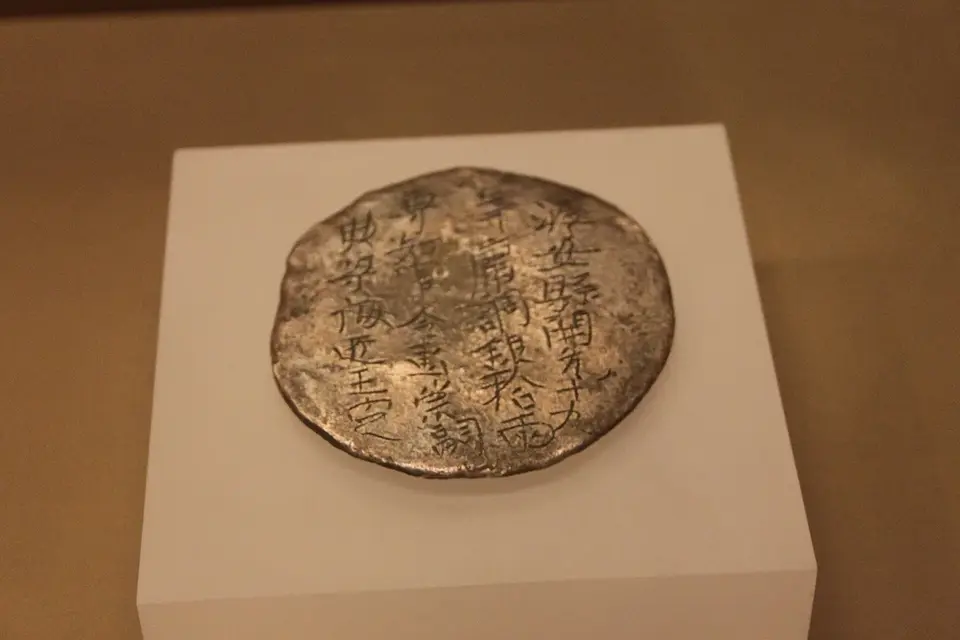
The Implementation of the Equal-Field and Zuyongdiao Systems in the Tang Dynasty (唐代均田制与租庸调制推行), spanning from 624 to 780 CE (from the Wude era of Emperor Gaozu to the Jianzhong era of Emperor Dezong), represents the foundational agrarian land tenure and tripartite fiscal-corvée regime that underpinned the rise of the early Tang Empire. Following the devastating chaos of the late Sui Dynasty, which shattered population registers and left millions of fertile hectares abandoned, Emperor Gaozu promulgated the Equal-Field Statutes (Juntian Ling) and Zuyongdiao Tax Regulations (Zuyongdiao Fa) in 624 CE, which were subsequently refined and institutionalized under Emperor Taizong during the Zhenguan era. The Equal-Field system stipulated that every able-bodied adult male (dingnan, aged twenty-one to fifty-nine) was entitled to an official land allocation of one hundred mu, comprising eighty mu of "personal shareland" (koufentian, which reverted to the state upon the holder's death or retirement) and twenty mu of "hereditary land" (yongyetian, which was perpetually inherited to support mulberry and hemp cultivation). Imperial princes and civil-military officials received graded hereditary allotments, office lands (zhifentian), and public administration lands (gongxietian). In tandem with land allocation, the Zuyongdiao system levied a standardized tripartite tax based on adult males: two shi of millet as grain tax (zu); two zhang of silk and three ounces of floss (or cloth and hemp) as household textile tribute (diao); and twenty days of compulsory annual labor (yi), with the revolutionary option of commuting labor service at three feet of silk per day (yong). This system guaranteed peasant farm-time and provided the material and conscript foundations for the High Tang, until population growth, elite land encroachment, and the An Lushan Rebellion brought about its replacement by the Double Tax System (Liangshui Fa) in 780 CE.
Emperor Xiaowen of Northern Wei promulgates the first Equal-Field decree, establishing the prototype of state land allocation.
Emperor Gaozu issues the Wude Equal-Field Statutes and Zuyongdiao Regulations, establishing 100 mu per adult male.
Emperor Taizong and Fang Xuanling refine official rank allotments and strictly outlaw the sale of personal shareland.
Emperor Gaozong promulgates the Tang Code with Commentary, providing rigorous penal sanctions against census fraud and land encroachment.
Peak demographic expansion exhausts arable reserves; imperial manors expand as the Equal-Field system faces structural decay.
Yuwen Rong conducts a nationwide campaign to register concealed lands and vagrant peasants, temporarily reviving state revenues.
Warlord warfare devastates northern agriculture; census records are destroyed, leading to the total breakdown of land distribution.
Chancellor Yang Yan institutes the Double Tax System, formally terminating the Equal-Field and Zuyongdiao systems in favor of property taxes.
The tyrannical exactions and foreign expeditions of Emperor Yang of Sui precipitated widespread rebellions that shattered the economic fabric of northern China. According to the Tongdian, the registered households of the empire plummeted from nearly nine million in the late Kaihuang era to fewer than two million at the inception of the Tang Dynasty. Across the Yellow River basin, villages lay desolate, corpses lined uncultivated highways, and vast expanses of prime agrarian land reverted to wilderness. Having crushed rival warlords such as Dou Jiande, Wang Shichong, and Xue Renguo, Emperor Gaozu and Prince Li Shimin confronted an urgent imperative: they had to settle displaced refugees onto abandoned lands to reconstitute the agrarian tax base upon which the new dynasty depended.
The Tang Equal-Field system was not created in a vacuum, but inherited over a century of institutional refinement dating back to the Northern Dynasties. In 485 CE, Emperor Xiaowen of Northern Wei promulgated the first Equal-Field Decree to curb aristocratic land hoarding and settle agrarian serfs, establishing the fundamental dichotomy between open arable land (loutian, which reverted to the state) and hereditary mulberry land (sangtian). This legal framework was inherited and modified by the Eastern Wei, Northern Qi, Western Wei, Northern Zhou, and Sui dynasties. In 582 CE, the Sui Dynasty fixed the adult allocation at eighty mu of open land and twenty mu of hereditary land. This established statutory tradition provided the early Tang court with an authoritative institutional model for land tenure and fiscal organization.
A paramount strategic imperative of the early Tang was the maintenance of the Fubing territorial army system inherited from the Western Wei and Northern Zhou. Under the Fubing system, soldier-farmers cultivated the soil during agricultural seasons and drilled or campaigned during military mobilization, providing their own armor, weapons, pack animals, and field provisions. To maintain hundreds of thousands of combat-ready troops without exhausting imperial treasuries, the state had to ensure that every farming household possessed sufficient arable acreage to generate agricultural surpluses. The Equal-Field and Zuyongdiao systems served as the economic pillar of this dual agrarian-military infrastructure, binding the peasantry directly to the central state.
In the third month of 624 CE (7th year of Wude), Emperor Gaozu instructed Chancellor Pei Ji and Secretariat Director Feng Deyi to codify imperial statutes, officially promulgating the Wude Equal-Field Statutes and Wude Zuyongdiao Regulations. These landmark decrees repealed all irregular levies imposed during the late Sui conflict, establishing standardized national regulations for land distribution and fiscal assessments.
The statutes mandated that every adult male (dingnan, aged 21 to 59) and sub-adult male (zhongnan, aged 18 to 20) be allocated one hundred mu of arable land. Eighty mu was designated as koufentian (personal shareland), representing state-owned land granted for usufruct that reverted to the magistrate upon the holder's death or reaching the age of sixty. The remaining twenty mu was designated as yongyetian (hereditary land), owned permanently by the family to cultivate mulberry, elm, and date trees to sustain household sericulture.
The legislation also accommodated vulnerable social groups: elderly males over sixty and disabled individuals received forty mu of shareland; widows and concubines received thirty mu; while female household heads were granted an additional twenty mu of hereditary land. Furthermore, the statutes distinguished between "spacious districts" (kuanxiang, where arable acreage exceeded registered populations) and "congested districts" (xiaxiang, where land was scarce), allocating full quotas in spacious districts while halving allocations in congested regions, and permitting landless peasants to migrate freely to open territories.
Following his ascension, Emperor Taizong collaborated with Chancellors Fang Xuanling and Du Ruhui to refine the Equal-Field statutes, establishing a comprehensive hierarchical framework for aristocratic and bureaucratic estates.
Princes, nobles, and civil-military officials received substantial hereditary estates calibrated by bureaucratic rank: imperial princes were entitled to one hundred qing (ten thousand mu); first-rank officials received sixty qing; second-rank officials received forty qing; third-rank officials received thirty qing; with allotments scaling downward to two qing for ninth-rank functionaries. Additionally, the court established office lands (zhifentian) ranging from twelve qing for first-rank ministers to two qing for local clerks, alongside public administration lands (gongxietian) whose tenant revenues directly funded provincial administrative expenses.
Crucially, the Zhenguan statutes instituted severe legal prohibitions against the alienation of peasant lands, decreeing: "Whoever sells or purchases personal shareland shall receive ten strokes of the light bamboo per mu, increasing by one degree for every twenty mu... the same penalties apply to unlawful sales of hereditary land." Sales of hereditary land were permitted only under strict exceptions, such as funding funeral expenses, migrating to spacious circuits, or constructing watermills. These statutory barriers curbed the expansion of private manorial estates throughout the early 7th century.
Coordinated with the Equal-Field allocations was the tripartite Zuyongdiao tax regime, which levied assessments per adult male (ding). The fiscal structure operated across three distinct components:
First, the Zu (grain tax): each registered adult male tendered two shi of millet annually (or an equivalent quota of unhusked rice in southern riverine circuits). This represented an exceptionally light tax rate, consuming roughly one-twentieth of the total annual harvest from a standard hundred-mu allotment, adhering to the Confucian principle of light taxation.
Second, the Diao (household textile tribute): levied according to regional handicraft production. In sericultural districts, each adult male tendered two zhang of silk gauze, two zhang of tabby silk, and three ounces of silk floss annually; in hemp-growing regions, the tribute was fixed at 2.5 zhang of linen cloth and three pounds of processed hemp fibers.
Third, the Yi (corvée labor) and Yong (labor commutation): every adult male was obligated to provide twenty days of uncompensated corvée labor annually for state infrastructure, with an additional two days in leap years. If royal construction projects required extended service, fifteen extra days exempted the peasant from the Diao tribute, while thirty extra days exempted both Zu and Diao, with total annual service strictly capped at fifty days. Most innovatively, the statutes permitted peasants to commute corvée service into material goods (shuyong daiyi), redeeming each day of required labor at the rate of three feet of silk.
The widespread institutionalization of Yong was a profound breakthrough in Chinese fiscal history. It not only supplied the imperial state with vast reserves of standardized textiles to finance military logistics and currency circulation, but fundamentally eliminated the arbitrary disruption of farming cycles that had devastated previous dynasties, granting freeholders the freedom to cultivate their fields without missing vital seasonal rains.
The successful operation of the Equal-Field system depended upon two prerequisite conditions: first, an abundance of open, unclaimed arable land for continuous redistribution; second, an incorruptible triennial household census. However, the sustained peace of the Zhenguan and Kaiyuan eras catalyzed an unprecedented demographic explosion, dramatically destabilizing the land-to-population ratio.
By the mid-8th century, formerly spacious circuits had transformed into densely populated congested districts. In most northern prefectures, local magistrates possessed zero unallocated land to distribute to newly registered youths, resulting in a systemic breakdown where young men reached adulthood without receiving land, while elderly males held onto holdings without returning them. Concurrently, imperial clansmen, high bureaucrats, and wealthy monastic orders exploited hereditary allowances and mortgage foreclosures to amass private manors spanning thousands of mu. Dispossessed freeholders were reduced to tenant serfs or fled their ancestral villages, causing official household registers to collapse.
The outbreak of the An Lushan Rebellion in 755 CE shattered the remaining foundations of the Equal-Field order. Northern China became a prolonged battleground for warlord factions, and imperial registries in Chang'an and Luoyang were incinerated during repeated sacks of the capitals. Millions of peasants migrated southward to the Yangtze River valley, completely severing the link between land records and actual physical residency.
Faced with empty treasuries and an unworkable per-capita tax apparatus, the Tang court experimented with ad-hoc levies. Finally, in 780 CE (1st year of Jianzhong), Chancellor Yang Yan persuaded Emperor Dezong to enact the revolutionary Double Tax System (Liangshui Fa). The reform abolished both the Equal-Field Statutes and the Zuyongdiao tripartite system, abandoning per-capita assessments in favor of wealth- and land-based taxation collected semiannually in summer and autumn: "Taxation shall assess neither guest nor master, but register actual residence; it shall evaluate neither adult nor youth, but assess property and land." After 156 years of operation, the early Tang land tenure and tax system formally came to an end.
The Equal-Field and Zuyongdiao systems successfully dismantled the entrenched manorial autarky of the Six Dynasties, liberating rural laborers from hereditary aristocratic bondage and establishing millions of independent peasant freeholders. Motivated by secure land allotments, farmers reclaimed vast tracts across northern China, generating unprecedented grain surpluses. State granaries bulged with decades of reserve grain, and provincial storehouses overflowed with silk tributes, providing the material, logistical, and manpower foundations that enabled the Tang Empire to defeat the nomadic steppe khaganates and dominate Central Asia.
In ancient pre-industrial states, uncompensated corvée labor was universally coercive and destructive to farming communities, precipitating the fall of the Qin and Sui empires. The Tang Zuyongdiao system was revolutionary in legally codifying Yong, permitting cultivators to redeem state labor through the payment of silk or cloth. This legal protection shielded rural households from seasonal disruption, guaranteed uninterrupted cultivation, and spurred household sericulture, fostering the commercialization of the rural handicraft economy.
The eventual collapse of the Equal-Field system and its replacement by the Double Tax System in 780 CE marked a monumental turning point in Chinese economic history. It signaled the irreversible transition from state-allocated land tenure to full private land ownership, freeing the individual from hereditary registration ties to the soil. The shift from taxing persons to taxing property served as the direct institutional ancestor for the Song Dynasty's equal-tax policies, the Ming Dynasty's Single Whip Reform (Yitiaobian Fa), and the Qing Dynasty's integration of the poll tax into land taxes (Tanding Rumu).
Classical Chinese historians and contemporary scholars consistently praise the early Tang land and tax systems as models of agrarian statecraft. The Old Book of Tang recorded: "The statutes of Wude distributed land according to adult status, establishing the Zuyongdiao regulations to nourish the common people. Emperor Taizong followed with light taxes and benevolent governance, bringing peace to All under Heaven and creating the Zhenguan reign, an achievement made possible by sound institutions."
Mid-Tang statesman Lu Zhi praised the system's humaneness, writing: "The Zuyongdiao was the grand design of ancient sage-kings. It levied lightly upon the people and demanded little of their labor, enabling them to understand duty and rejoice in their livelihood." Modern economic historians emphasize that the early Tang agrarian system represented the finest synthesis of state-regulated land tenure and household farming in the medieval world, embodying enduring administrative wisdom despite its structural limits in the face of demographic growth.