Chen Qun Proposes Controller System
As the Han recommendation system collapses, Chen Qun drafts the Nine-Rank System; Emperor Wen of Wei promulgates the decree nationwide.
Cao Wei (曹魏) · HISTORICAL EVENT
九品中正制
The Nine-Rank Controller System (九品中正制), also known as the Nine-Rank System of Official Selection, was an influential civil service recruitment institution created in 220 (first year of Yankang) by Chen Qun and promulgated by Emperor Wen of Wei (Cao Pi). In the wake of the late Han peasant uprisings and warlord fragmentation, the Han dynasty's traditional recommendation system based on local moral evaluations collapsed entirely. To secure the political…
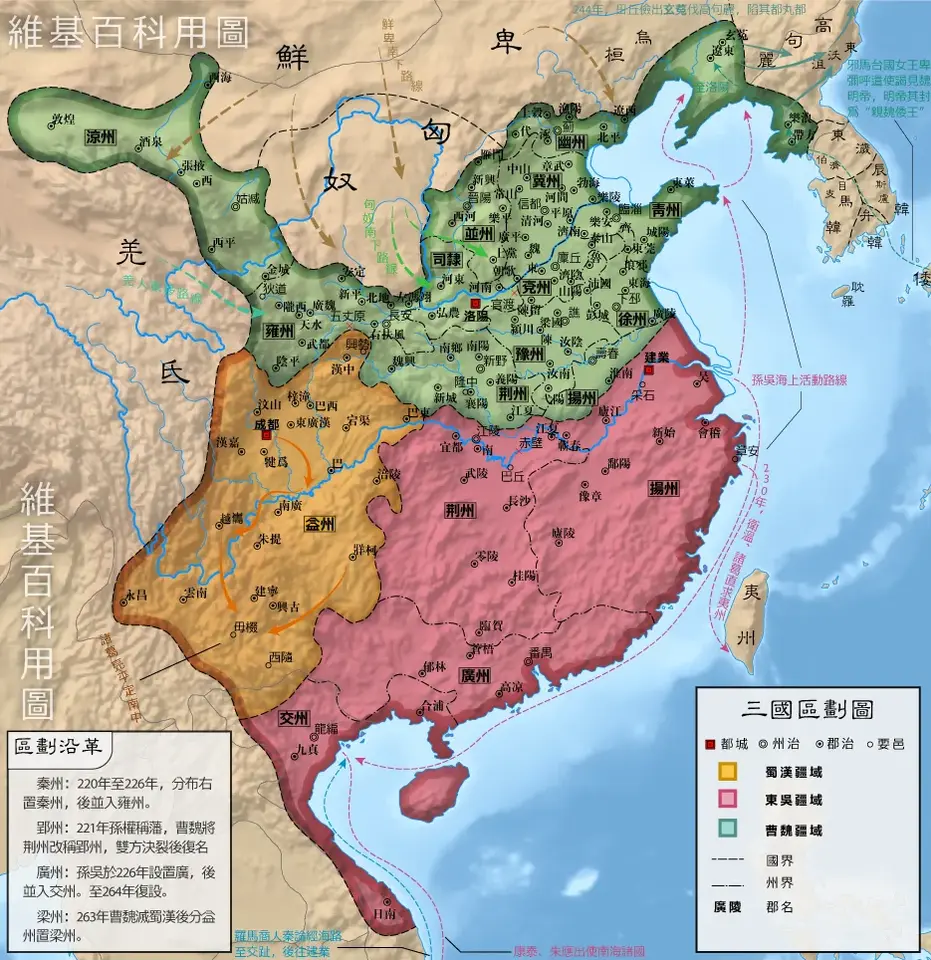
The Nine-Rank Controller System (九品中正制), also known as the Nine-Rank System of Official Selection, was an influential civil service recruitment institution created in 220 (first year of Yankang) by Chen Qun and promulgated by Emperor Wen of Wei (Cao Pi). In the wake of the late Han peasant uprisings and warlord fragmentation, the Han dynasty's traditional recommendation system based on local moral evaluations collapsed entirely. To secure the political allegiance of prestigious aristocratic clans such as the Xun and Chen families of Yingchuan for his usurpation of the Han throne, Cao Pi adopted Chen Qun's proposal, establishing a centralized apparatus wherein appointed imperial controllers evaluated scholars based on lineage and personal conduct, assigning them to nine local ranks that determined bureaucratic appointment. During its initial implementation under Cao Wei, the system balanced pedigree with individual competence, curbing private oligarchic patronage and centralizing appointments under the Ministry of Personnel. However, following the rise of the Sima clan and the founding of the Western Jin, the system was captured by great aristocratic houses. Selection degenerated into rigid genealogical discrimination, producing the entrenched phenomenon where "no humble men entered the upper ranks, and no aristocratic men fell into the lower ranks." Enduring throughout the Southern and Northern Dynasties, the institution was formally abolished by Emperor Wen of Sui in 583 (third year of Kaihuang), laying the constitutional groundwork for the imperial examination system.
As the Han recommendation system collapses, Chen Qun drafts the Nine-Rank System; Emperor Wen of Wei promulgates the decree nationwide.
Sima Yi petitions the throne to create Great Provincial Controllers, entrenching aristocratic influence within the recruitment apparatus.
Emperor Wu of Jin establishes the Western Jin; selection criteria shift entirely toward family pedigree, creating the "no humble men in upper ranks" phenomenon.
Left Chief Clerk Liu Yi submits a celebrated memorial denouncing the system for entrenching nepotism and urging the restoration of objective merit testing.
Following the southern migration, prestigious clans such as the Langye Wang and Chenjun Xie families utilize controller offices to monopolize ministerial appointments.
Emperor Xiaowen of Northern Wei utilizes the Nine-Rank framework to harmonize Xianbei and Han aristocratic status during his Sinicization reforms.
Erzhu Rong massacres over two thousand northern courtiers at Heyin, shattering aristocratic dominance in the Central Plains.
Emperor Wen issues an imperial edict abolishing the Nine-Rank Controller System, centralizing appointment under the Ministry of Personnel and birthing the examination system.
The Han recommendation system established by Emperor Wu originally selected talents based on local moral reputation through village scrutiny. However, by the mid-to-late Eastern Han, powerful magnates and entrenched aristocratic clans monopolized local recommendations. The evaluation of filial piety and administrative talent was subverted into mutual self-promotion among elite families, giving rise to popular laments: "Those recommended as scholars cannot read; those recommended as filial sons live apart from their fathers; the incorruptible are murky as mud, while acclaimed generals are cowardly as chickens."
The Yellow Turban Rebellion and Dong Zhuo's insurrection devastated the Central Plains, displacing millions across China. Decades of warlord conflicts shattered the household registration networks of commanderies and counties. Scholars fled as refugees to Jingzhou, Jiangdong, and Sichuan, severing traditional local social bonds. Under these chaotic conditions, the administrative mechanisms required for local magistrates to investigate candidates collapsed, obliging the central state to design an alternative mechanism to identify displaced talent.
Following Cao Cao's death in 220, Cao Pi accelerated preparations to usurp the Han throne. However, Cao Cao's meritocratic policy of "promoting talent irrespective of moral reputation" had alienated aristocratic clans. To achieve a peaceful dynastic transition and alleviate resistance from conservative scholar-officials, Cao Pi sought to formalize the political privileges of the scholar-gentry. Chen Qun, a leading scion of the prestigious Yingchuan Chen clan serving as Minister of Personnel, submitted a comprehensive proposal for the Nine-Rank System, achieving a historic compromise between the sovereign and the aristocracy.
By the end of the Eastern Han, the recommendation system had lost all objective credibility under the manipulation of aristocratic clans. Notables formed factional cliques to inflate one another's reputations, ensuring that elite scions attained high office before leaving their estates, while impoverished scholars possessing administrative brilliance were denied entry to public service. This superficial praise culture crippled dynastic administration.
Although Cao Cao broke with traditional moralistic criteria through his meritocratic decrees, these wartime measures lacked institutional permanence. Following regional pacification, the fundamental structural challenge facing the nascent Wei regime was the construction of a standardized selection mechanism that accommodated both centralized imperial authority and aristocratic interests.
The monopolization of local opinion by aristocratic magnates reached absurd heights in the late Han. The Ru'nan Yuan clan boasted that their ancestors had held the highest ministerial offices across four generations, distributing bureaucratic vacancies as private patronage. Impoverished scholars lacking illustrious lineage were systematically excluded from office, dissolving central dynastic authority and accelerating warlord fragmentation.
In February 220 (first year of Yankang), Cao Pi convened his closest civil counselors in the Wende Hall to discuss administrative reforms. Chen Qun formally submitted his memorial proposing the Nine-Rank Controller System. Chen advocated the appointment of imperial controllers at the provincial and commandery levels, selected from upright central officials, to investigate candidates and submit evaluations directly to the Ministry of Situ and Ministry of Personnel.
Cao Pi recognized that the system offered a mechanism to conciliate the aristocratic elite while reclaiming the selection power previously usurped by provincial warlords. The emperor approved the proposal, decreeing its nationwide implementation. When Cao Pi formally ascended the throne in October, the Nine-Rank System became the organizational cornerstone of the Wei state.
In drafting the legislation, Chen Qun synthesized the interests of the Yingchuan gentry with legalist centralism. Recognizing the flaws of uncontrolled local patronage, his proposal bypassed regional warlords by placing the final review within the Ministry of Situ, legitimizing elite status through statutory state channels and forging an enduring alliance between the throne and the gentry.
The operational core of the system resided in the establishment and jurisdiction of imperial controllers. The statute established Small Controllers at the commandery level and Great Controllers at the provincial level. Controllers were not elected locally; instead, the Ministry of Situ appointed active high-ranking central officials originating from those respective provinces, such as Ministers of the Masters of Writing or Court Chamberlains.
Great Controllers oversaw provincial reviews, while Small Controllers conducted field investigations into the backgrounds of local scholars. Controllers were assisted by staff investigators known as Visitors. This vertical recruitment hierarchy severed the monopolistic control previously exercised by regional commandants, restoring central oversight over the recruitment apparatus.
Controllers were governed by rigorous accountability regulations. Appointees were required to possess impeccable reputations and hold ministerial rank. The Ministry of Situ conducted annual audits of the rosters submitted by controllers, prosecuting officials who engaged in bribery or inaccurate evaluations. During the early Wei period, these checks effectively prevented local magnates from subverting selection procedures.
When evaluating candidates, controllers investigated three foundational criteria: Lineage, Conduct Appraisals, and Local Rank. Lineage scrutinized three generations of ancestral bureaucratic rank and hereditary noble titles; Conduct Appraisals comprised concise written assessments of the candidate's moral integrity, administrative talent, and learning; and Local Rank represented the synthesized evaluation grade awarded to the scholar.
Local Ranks were divided into nine grades: Upper-Upper, Upper-Middle, Upper-Lower, Middle-Upper, Middle-Middle, Middle-Lower, Lower-Upper, Lower-Middle, and Lower-Lower. Ranks Two and Three constituted the Upper Ranks; Ranks Four and Five formed the Middle Ranks; and Ranks Six through Nine comprised the Lower Ranks. Rank One remained an unassigned ideal. Certified rosters were forwarded to the Ministry of Personnel as binding qualifications for civil appointment.
The local rank awarded to a scholar directly determined their initial appointment rank and subsequent career ceiling. Under Wei law, candidates assigned Rank Two were immediately eligible for prestigious capital offices with rapid promotion paths, whereas candidates assigned Rank Six or below were relegated to subordinate provincial clerical posts. Local rank thus functioned as an all-encompassing determinant of social and political mobility.
During the reigns of Emperor Wen and Emperor Ming, the Nine-Rank System functioned with considerable meritocratic vitality. Influenced by Cao Cao's legacy of rigorous legalism and practical governance, Chen Qun and contemporary officials prioritized personal conduct over pedigree, ensuring that exceptional scholars from impoverished backgrounds were elevated to the upper ranks.
The implementation of the controller apparatus rapidly stabilized the administrative chaos caused by wartime displacement. Exiled northern scholars residing in the south were evaluated through controllers of their ancestral homes, integrating them into the imperial bureaucracy. This policy unified the northern intelligentsia behind the Wei state, filling the central administration with capable administrators.
Under Emperor Ming, the court repeatedly decreed that evaluations must reflect genuine administrative talent. The famous general Deng Ai, who rose from an impoverished farming household and suffered from a severe speech impediment, was recognized for his mastery of agronomy and military strategy, receiving a high appointment that enabled him to conquer Shu Han. This demonstrates that during its initial decades, the system remained open to talent.
Following the Gaoping Tomb Incident and the rise of the Sima clan, the Nine-Rank System underwent profound degeneration. To secure the political backing of the great families for the founding of the Western Jin, Emperor Wu conceded control of the apparatus to aristocratic magnates. Provincial controllers abandoned personal character investigations, relying solely on family genealogies.
Under this corrupted system, scions of prominent lineages were awarded upper ranks in their infancy regardless of moral character, while virtuous scholars of humble origins were relegated to lower ranks. Liu Yi, Left Chief Clerk to the Minister of Situ, submitted a famous memorial to Emperor Wu, lamenting: "There are no humble men in the upper ranks, and no aristocratic men in the lower ranks. Public offices belong to elite houses, inverting social virtue and ossifying class hierarchy."
As the Sima clan eliminated imperial rivals, the state relied entirely on aristocratic support. Great houses such as the Wang and Xun families monopolized controller appointments, ceasing all field investigations and relying exclusively on private genealogies. Intellectual mediocrities attained ministerial rank, while brilliant commoners were suppressed, reducing recruitment to pure dynastic nepotism.
From the Western Jin through the Southern Dynasties, the Nine-Rank System served as the institutional bulwark of aristocratic hegemony. The divide between aristocrats and commoners was codified in statutory law. Elite scions enjoyed total tax exemptions and early appointments to prestigious offices, while commoners were restricted to burdensome clerical posts. Intermarriage between the two classes was strictly prohibited.
This rigid monopoly eliminated social mobility, alienating middle and lower gentry. While elite aristocrats indulged in metaphysics and avoided governance, state administration devolved into incompetence. During the Hou Jing Rebellion, high-born nobles who had never ridden horses or handled weapons were slaughtered in their mansions, exposing the fatal weakness of aristocratic governance.
Following the flight of the court to the south, northern emigre clans and local Jiangnan families formed an exclusive political cartel. Shielded by the Nine-Rank System, elite scions viewed administrative affairs as vulgar, delegating daily governance to plebeian clerks and eunuch secretaries. This produced the bizarre spectacle of titled aristocrats reclining in leisure while commoners exercised de facto executive authority.
In northern China, the Sixteen Kingdoms and Northern Wei adapted the Nine-Rank System to integrate Xianbei nobility with the Han gentry. During his Sinicization reforms, Emperor Xiaowen established the Clan and Lineage Decrees, categorizing families according to ancestral standing. However, non-aristocratic Xianbei soldiers of the northern garrisons grew furious at being marginalized by civil pedigrees, erupting into the Six Garrisons Rebellion and the bloody Heyin Massacre.
By the late Northern and Southern Dynasties, the Nine-Rank System had reached an impasse across China. Aristocratic lineages were decimated in successive civil wars, while the defense and administration of states like Northern Zhou and Chen rested upon military officers and practical administrators of plebeian origin, rendering the hereditary pretenses of the Nine-Rank System obsolete.
The institutional ossification of recruitment sparked violent historical repercussions. In the south, general Liu Yu utilized plebeian military power to establish the Liu Song dynasty, breaking aristocratic monopolies; in the north, Erzhu Rong massacred thousands of high-born courtiers at Heyin. These violent eruptions sounded the death knell for the social hierarchy sustained by the Nine-Rank System.
In 581, Emperor Wen of Sui (Yang Jian) reunited China, establishing a centralized empire. Confronted with a unified realm, Emperor Wen resolved to eliminate the regional aristocratic networks that had constrained monarchical power for centuries. The hereditary recruitment powers exercised through the controller apparatus directly obstructed the centralization of state authority.
In 583 (third year of Kaihuang), Emperor Wen issued an imperial decree formally abolishing the Nine-Rank Controller System, disbanding controller offices nationwide and reassigning all recruitment authority to the central Ministry of Personnel. The subsequent introduction of open subject examinations under the Sui and Tang marked the dawn of the imperial examination system, terminating three centuries of aristocratic selection.
The abolition of the system dismantled the institutional foundation of aristocratic monopoly. Following 583, civil appointments were conducted through standardized imperial examinations open to all social classes. With the formal establishment of the Jinshi examination under Emperor Yang, merit-based testing replaced genealogical pedigree, leaving an enduring legacy for Chinese bureaucratic governance.
The Nine-Rank Controller System served as the institutional bedrock of aristocratic clan politics for more than three centuries. By granting legal sanction to hereditary status, the system created unprecedented social stratification, severing the bond between the common people and the governing class. High-born nobles secured high office without demonstrating practical talent, indulging in metaphysical debates while neglecting governance. Conversely, capable plebeians were barred from central decision-making, fatally undermining the administrative capacity and military resilience of the dynasties.
Despite its degeneration, the Nine-Rank System marked a crucial historical evolution by shifting recruitment authority from autonomous regional warlords to the central Ministry of Situ and Ministry of Personnel. It established the principle that civil appointments must be regulated through standardized central rosters and official evaluations. The Sui and Tang dynasties excised the hereditary aristocratic element from this framework while retaining centralized recruitment, establishing the imperial civil examination system that governed Chinese civilization for the subsequent millennium.
Modern historians evaluate the Nine-Rank Controller System as a functional institutional compromise born of political crisis, recognizing its efficacy in re-establishing administrative order during the transition from the Han to the Three Kingdoms. However, scholars emphasize that the system possessed an inherent structural flaw: by relying upon subjective reputational evaluations within an aristocratic society, it was inevitably subverted into an instrument of clan nepotism. Its degeneration and eventual replacement by the civil examination system demonstrated the historical necessity of objective, merit-based recruitment in a centralized bureaucratic empire.