Ningbo Tribute Dispute
Rival Japanese embassies clashed in Ningbo, prompting Ming authorities to close maritime trade supervisorates and enforce strict embargoes.
Ming Dynasty (明朝) · HISTORICAL EVENT
嘉靖倭患
The Wokou Raids of the Jiajing Era (嘉靖倭患) comprised a series of massive armed maritime incursions, coastal pirate insurrections, and imperial counter-offensive campaigns that engulfed southeastern China between 1522 and 1566. Following the violent 1523 Ningbo Tribute Dispute between rival Japanese delegations, the Ming court abruptly abolished maritime trade supervisory offices in Zhejiang and Fujian, reinforcing strict maritime embargoes. This policy…
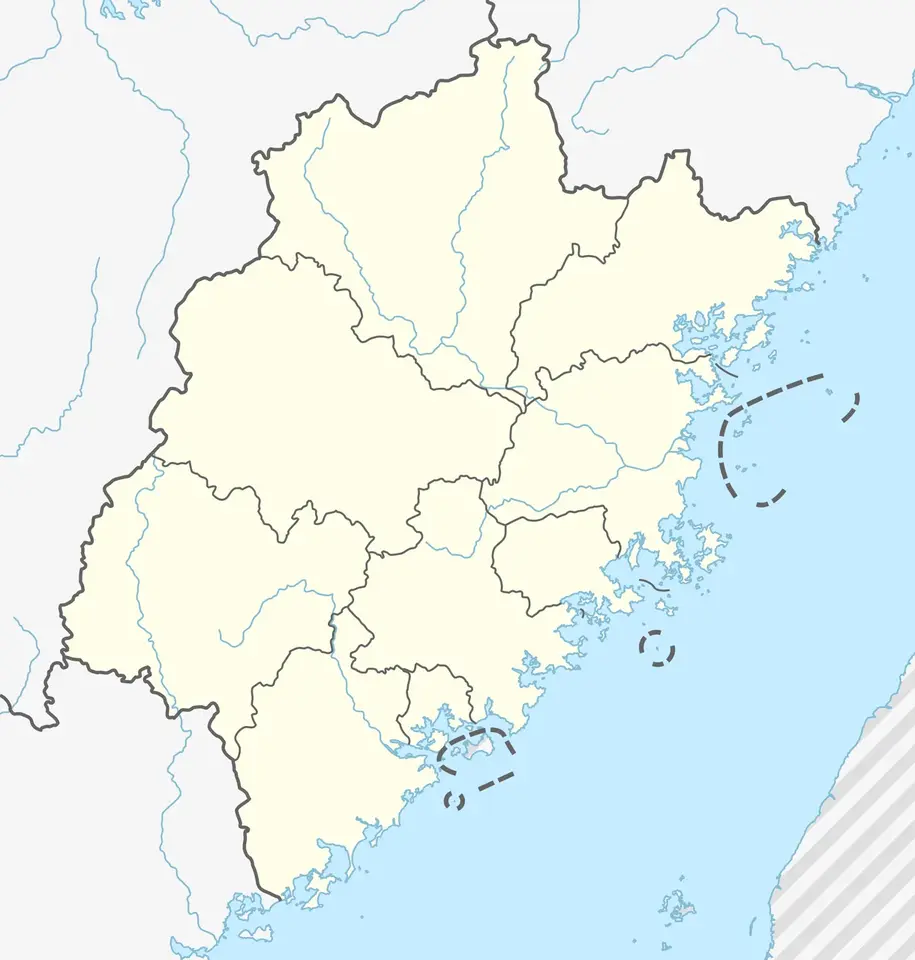
The Wokou Raids of the Jiajing Era (嘉靖倭患) comprised a series of massive armed maritime incursions, coastal pirate insurrections, and imperial counter-offensive campaigns that engulfed southeastern China between 1522 and 1566. Following the violent 1523 Ningbo Tribute Dispute between rival Japanese delegations, the Ming court abruptly abolished maritime trade supervisory offices in Zhejiang and Fujian, reinforcing strict maritime embargoes. This policy severed legitimate overseas trade networks, driving southeastern maritime merchants and coastal lineages into militarized smuggling syndicates. Operating under leaders such as Wang Zhi and Xu Hai, these coalitions recruited masterless Japanese samurai (ronin) and dispossessed fishermen, raiding urban centers across Zhejiang, South Zhili, Fujian, and Guangdong. Confronting the collapse of the hereditary guard garrison system, the court appointed Hu Zongxian as Supreme Commander of Coastal Defense, promoting exceptional commanders Qi Jiguang and Yu Dayou. Hu Zongxian utilized tactical diplomacy and psychological operations to divide the pirate coalitions, eliminating Xu Hai and inducing Wang Zhi's capture. Qi Jiguang recruited miners and farmers in Yiwu to build the disciplined Qi Family Army, developing the innovative Mandarin Duck Formation to neutralize Japanese swordplay, securing consecutive victories across Taizhou and Fujian. Coordinated amphibious sweeps under Yu Dayou obliterated pirate island redoubts. After four decades of warfare, the piracy crisis was completely suppressed, spurring military modernization and leading directly to the 1567 Longqing Open Sea Policy.
Rival Japanese embassies clashed in Ningbo, prompting Ming authorities to close maritime trade supervisorates and enforce strict embargoes.
Grand Coordinator Zhu Wan destroyed the illegal international trade emporium at Shuangyu, provoking pirate retaliatory raids.
Wang Zhi proclaimed himself King of Hui and launched mass amphibious raids across the southeastern provinces.
Minister of War Zhang Jing directed wolf-troops from Guangxi to achieve the first major victory over pirate forces at Wangjiangjing.
Supreme Commander Hu Zongxian engineered psychological warfare and ambushes at Shenzhuang, wiping out Xu Hai's forces.
Wang Zhi was executed in Hangzhou, while Qi Jiguang recruited Yiwu miners to establish the Qi Family Army and develop the Mandarin Duck Formation.
The Qi Family Army secured nine consecutive victories across Taizhou, clearing inland Zhejiang of pirate incursions.
Combined amphibious operations under Qi Jiguang and Yu Dayou destroyed pirate redoubts, ending the forty-year crisis.
At the founding of the Ming Dynasty, the Hongwu Emperor enacted strict maritime prohibitions forbidding private vessels from navigating overseas, aiming to suppress maritime remnants of rival regimes and prevent Japanese sea piracy. Maritime commerce was confined exclusively to official tributary missions administered through maritime trade supervisorates in Ningbo, Quanzhou, and Guangzhou. By the sixteenth century, the Japanese archipelago was fractured by Sengoku civil wars, with rival feudal daimyo fiercely competing for monopoly trade licenses issued by the Ming court.
In May 1523, rival Japanese embassies dispatched by the Hosokawa and Ouchi clans arrived in Ningbo. Disputes over official priority escalated into armed conflict when Ouchi envoys murdered Hosokawa delegates, pillaging municipal storehouses, murdering Ming soldiers, and seizing coastal junks to flee seaward. In response, Ming officials attributed the violence to maritime commerce, prompting the Jiajing Emperor to abolish the supervisorates in Zhejiang and Fujian, closing all coastal ports and enforcing severe blockades.
The abolition of trade supervisorates failed to extinguish commercial demand, instead driving maritime exchange into violent subterranean channels. Coastal populations in Fujian and Zhejiang, facing severe agrarian land shortages, depended historically upon overseas fisheries and seafaring. Destitute coastal communities and wealthy gentry clans formed clandestine partnerships with merchant syndicates to maintain illegal trade routes. Smuggling networks centered on the offshore island of Shuangyu in the Zhoushan archipelago, transforming it into an unregulated international emporium.
Simultaneously, perpetual civil warfare in Japan produced thousands of displaced samurai, ronin, and dispossessed peasants who enlisted as combat mercenaries for Chinese merchant fleets. Ming contemporary records observed that seventy to eighty percent of the so-called wokou were native Chinese smugglers and disaffected commoners, led by merchant magnates such as Wang Zhi and Xu Hai. When Zhejiang Governor Zhu Wan destroyed the Shuangyu trade depot in 1548, he provoked violent retaliatory strikes by dislocated smugglers, plunging the southeastern coast into full-scale guerrilla warfare.
In 1547, Grand Coordinator Zhu Wan launched strict crackdowns against coastal smuggling, enforcing maritime embargoes and executing wealthy merchant collaborators. In April 1548, Ming coastal fleets assaulted Shuangyu, demolishing merchant warehouses and sealing the harbor channels. However, powerful Jiangnan gentry clans orchestrating the illicit trade orchestrated political campaigns in Beijing, impeaching Zhu Wan for judicial excess. In 1549, Zhu Wan was stripped of office and committed suicide in despair. His downfall caused the complete paralysis of maritime administration, leaving coastal garrisons demoralized and leaderless.
Exploiting the security vacuum, merchant leader Wang Zhi gathered surviving fleets at Ligang in Zhoushan and subsequently expanded offshore bases to the Goto Islands and Hirado in Japan. Proclaiming himself the King of Hui, Wang Zhi orchestrated coordinated coastal landings. From 1553 onward, thousands of pirate raiders landed simultaneously across Zhejiang, South Zhili, and Fujian, besieging coastal cities and plundering agricultural towns.
The hereditary Ming guard garrison units, long eroded by officer corruption and peasant desertion, proved incapable of resisting the pirate incursions. In 1555, a notorious raiding party of merely fifty-three ronin landed at Shangyu, marching unhindered across hundreds of miles through Shaoxing, Yiwu, Shexian, and Jiangning, approaching the southern capital of Nanjing. The small force killed thousands of garrison troops before being encircled and destroyed near Suzhou. In May 1555, Minister of War Zhang Jing mobilized Guangxi Zhuang wolf troops under Lady Wa, defeating pirate forces at Wangjiangjing outside Jiaxing, slaughtering nearly two thousand raiders in the first major Ming field triumph.
Following the Wangjiangjing victory, political intrigue engineered by court factions led to Zhang Jing's execution. In 1556, Vice Minister of War Hu Zongxian was elevated to Supreme Commander of Coastal Defense across South Zhili, Zhejiang, and Fujian. Hu Zongxian was a shrewd strategist who recognized that maritime insurrections could never be solved through static coastal defense alone, perceiving that the root lay with merchant syndicates while the leaves were the Japanese mercenary swordsmen.
Hu Zongxian reorganized regional logistics, allocating salt revenues to fund frontline operations and promoting talented military commanders, including Qi Jiguang and Yu Dayou. He formulated a dual-track strategy combining military pressure with covert psychological subversion and divide-and-conquer diplomacy, resolving to liquidate Xu Hai's field army before inducing Wang Zhi's surrender.
In 1556, pirate commander Xu Hai concentrated tens of thousands of raiders, besieging Jiaxing and Tongxiang with Japanese warrior chiefs Xin Wulang and Chen Dong. Hu Zongxian dispatched emissaries into Xu Hai's camp, bestowing thousands of gold ingots and luxurious textiles upon Xu Hai's favorite concubines, Cui Qiao and Lu Zhu, while offering imperial pardons and trading privileges. Concurrently, Hu Zongxian forged compromising correspondence to make Xu Hai suspect his Japanese commanders of plotting against him, prompting Xu Hai to murder Xin Wulang.
With Xu Hai's vigilance lowered and his forces billeted at Shenzhuang in Pinghu, Hu Zongxian ordered Yu Dayou and Qi Jiguang to execute a midnight encirclement. Ming forces unleashed fire arrows and cannons upon the compound, annihilating thousands of trapped pirates. Xu Hai drowned himself in a local pond, and his pirate host was eradicated.
Following Xu Hai's defeat, Hu Zongxian turned toward Wang Zhi. Hu Zongxian released Wang Zhi's imprisoned family members, treating them generously, and dispatched diplomats across the sea to Hirado. Reassured of his family's safety and hoping for legal trade privileges, Wang Zhi sailed his fleet into Zhoushan in late 1557 to submit to imperial authorities. However, hardline censors in Hangzhou insisted on severe punishment. In November 1559, Wang Zhi was publicly beheaded in Hangzhou, warning before his execution that his death would unleash uncontrollable chaos upon the coast. His subordinate commanders withdrew to Zhoushan, prolonging the guerrilla conflict.
With Wang Zhi executed, pirate bands fragmented into elusive raiding units operating in mountainous and wetland terrain. Recognizing the combat inadequacy of traditional garrisons, Commander Qi Jiguang traveled to Yiwu in 1559, recruiting three thousand hardy peasants and miners to create a disciplined standing force known as the Qi Family Army.
To counter the close-quarters lethality of Japanese two-handed katana blades in marshy rice paddies, Qi Jiguang engineered the Mandarin Duck Formation (Yuan Yang Zhen). Operating as a cohesive twelve-man unit, the squad featured a squad leader in front, flanked by two shield-bearers protecting against missiles; two muscular soldiers armed with multi-branched, poison-tipped bamboo wolf-brushes (langxian) to entangle samurai blades; four spearmen wielding eighteen-foot pikes to impale the enemy; two short-sword wielders covering the flanks; and two logistical support staff. Backed by light artillery and firearms, the formation integrated offensive reach with impenetrable defense.
In April 1561, thousands of pirate raiders invaded the Taizhou prefecture in Zhejiang. Qi Jiguang executed rapid maneuvers, engaging pirate columns at Ninghai, Xinha, Huajie, Datian, and Baishuiyang in nine consecutive engagements over a single month. The Qi Family Army triumphed in every encounter, decapitating nearly three thousand enemy combatants with minimal casualties, an unprecedented achievement celebrated as the Nine Triumphs of Taizhou, which thoroughly cleared Zhejiang of inland pirate networks.
Driven out of Zhejiang, surviving pirates relocated south to Fujian and Guangdong, entrenching themselves on offshore islands such as Hengyu. In the summer of 1562, Qi Jiguang marched the Qi Family Army into Fujian. At Hengyu Island, surrounded by deep mud flats at low tide, Qi Jiguang commanded his soldiers to carry bundles of dry straw, spreading them across the mud to sprint across the tidal flats at low tide. The shock assault overran the stockades, decapitating hundreds of raiders and liberating over a thousand captives.
Qi Jiguang subsequently liberated Niutian and Lindun, recapturing the provincial prefecture of Xinghua alongside Admiral Yu Dayou. In 1564, Qi Jiguang and Yu Dayou coordinated with Liangguang Viceroy Wu Guifang in Chaozhou, Guangdong, executing amphibious encirclements that crushed pirate magnate Wu Ping. By 1566, the final island strongholds were eliminated, successfully concluding four decades of coastal warfare.
The conclusion of the Jiajing anti-piracy campaigns restored administrative stability to the southeastern coastal provinces. The powerful multi-ethnic smuggling syndicates based in Zhoushan and Kyushu were eradicated, terminating decades of widespread destruction across Jiangnan and Lingnan.
The conflict revolutionized the Chinese military establishment. The breakdown of the hereditary garrison system accelerated the transition toward merit-based professional standing armies, exemplified by the Qi Family Army. Tactical innovations, particularly the combined-arms integration of the Mandarin Duck Formation and the standardized deployment of firearms such as matchlock muskets (niaochong) and light mortars (hudunpao), established new standards for late imperial infantry warfare.
The protracted conflict convinced Ming policymakers that unconditional maritime embargoes fostered instability rather than security. Following the death of the Jiajing Emperor, the Longqing Emperor formally modified state policy in 1567, permitting private merchant vessels to trade abroad through the port of Yuegang in Zhangzhou, Fujian.
This transition, known as the Longqing Open Sea Policy, integrated China into expanding global trade networks. Massive volumes of silver extracted from the Americas and Japan flowed into southeastern China in exchange for silk, porcelain, and tea, cementing the silver monetization of the Chinese economy and fostering commercial urbanization throughout the late Ming period.