Kaixi Northern Expedition Begins
Grand Chancellor Han Tuozhou mobilized three armies to invade Jin, initiating the Kaixi Northern Expedition.
Southern Song Dynasty (南宋) · HISTORICAL EVENT
嘉定和议
The Treaty of Jiading (嘉定和议) was a humiliating peace accord concluded between the Southern Song Dynasty and the Jurchen Jin Dynasty in 1208 (1st year of Jiading / 8th year of Taihe). In 1206 (Kaixi 2), Southern Song Grand Chancellor Han Tuozhou launched the Kaixi Northern Expedition to recover northern Chinese territories and consolidate his supreme authority. However, poor strategic coordination and the treasonous defection of Sichuan Pacification Vice…
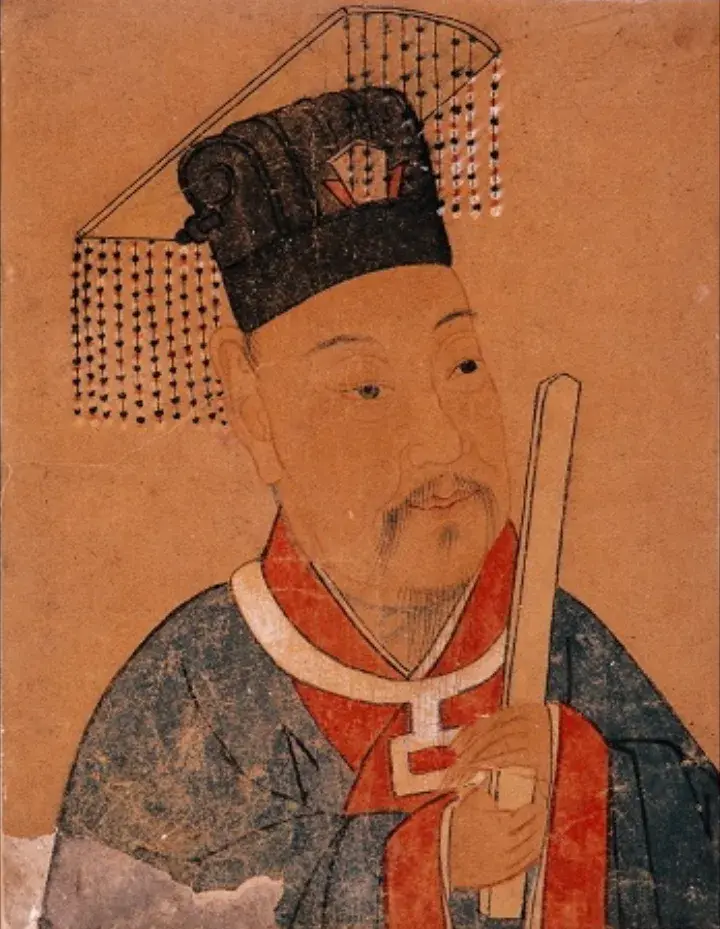
The Treaty of Jiading (嘉定和议) was a humiliating peace accord concluded between the Southern Song Dynasty and the Jurchen Jin Dynasty in 1208 (1st year of Jiading / 8th year of Taihe). In 1206 (Kaixi 2), Southern Song Grand Chancellor Han Tuozhou launched the Kaixi Northern Expedition to recover northern Chinese territories and consolidate his supreme authority. However, poor strategic coordination and the treasonous defection of Sichuan Pacification Vice Commissioner Wu Xi caused Song defenses to collapse, enabling Jin armies to counter-attack across the Huai River. Confronting military disaster, Song emissaries reopened negotiations, but Jin Emperor Zhangzong imposed severe terms, demanding substantial tribute increases and the severed head of the chief warmonger. In November 1207, Minister of Rites Shi Miyuan conspired with Empress Yang to ambuscade and assassinate Han Tuozhou in Lin'an's Yujin Garden, executing his confidant Su Shidan. Assuming dictatorial control, Shi Miyuan embraced total appeasement, exhuming Han Tuozhou and Su Shidan to sever their heads and dispatch them in lacquered wooden boxes to the Jin court. In September 1208, the treaty was ratified: Southern Song downgraded its diplomatic status to a nephew state addressing the Jin emperor as senior uncle; annual tribute increased to 300,000 ounces of silver and 300,000 bolts of silk; Song paid three million ounces of silver in military indemnities; and traditional Shaoxing borders were restored. The treaty crippled Song moral prestige and established Shi Miyuan's prolonged authoritarian regency.
Grand Chancellor Han Tuozhou mobilized three armies to invade Jin, initiating the Kaixi Northern Expedition.
Song forces collapsed across the Huai River basin while Wu Xi surrendered Sichuan to Jin, opening western routes.
Loyalists executed Wu Xi in Sichuan, while Fang Xinru undertook four diplomatic missions, defying Jurchen demands for Han's head.
Shi Miyuan and Empress Yang staged a coup, deploying guards under Xia Zhen to bludgeon Han Tuozhou to death.
Shi Miyuan exhumed and decapitated Han Tuozhou and Su Shidan, sending their heads in caskets to the Jin capital of Zhongdu.
Song and Jin formally ratified the treaty, expanding annual tribute, paying three million ounces in indemnity, and ending hostilities.
During the middle Southern Song period, internal corruption and border complacency weakened the Jin Dynasty, while rising Mongol tribes began raiding northern Jurchen frontiers. Grand Chancellor Han Tuozhou, seeking to erase the political stigma of his earlier Qingyuan Factional Ban against Neo-Confucian scholars and secure paramount prestige, resolved to exploit Jin vulnerabilities by launching an expedition to liberate central China.
In May 1206, without adequate logistical stockpiles or battlefield reconnaissance, Han Tuozhou ordered three field armies to strike north. Although Song vanguards initially seized Suzhou, Jin authorities quickly mobilized over one hundred thousand veteran troops in a devastating counter-offensive. Disorganized Song forces suffered consecutive defeats at Suzhou and Shuzhou. In the western theater, Sichuan Pacification Vice Commissioner Wu Xi defected to Jin, ceding strategic mountain passes and opening the upper Yangtze. Jin commanders Pusan Kui and Wanyan Kuang swept southward across the Huai River, besieging Chuzhou and Liuhe, throwing the Southern Song court into absolute panic.
Following initial defeats, Han Tuozhou executed retreating commanders and appointed Qiu Chong to stabilize the river defenses, while loyalist officers in Sichuan led by An Bing assassinated the traitor Wu Xi. Nevertheless, heavy military expenditures and casualties intensified domestic political opposition. The appeasement faction led by Minister of Rites Shi Miyuan forged an alliance with Empress Yang to remove Han Tuozhou.
Aware of Southern Song domestic hesitation, Jin negotiators hardened their stance, declaring that peace was impossible without the execution of the chief warmonger, explicitly demanding Han Tuozhou's head. Han Tuozhou furiously rejected the demand, resolving to recruit reinforcements for prolonged resistance. Fearing retaliation, Shi Miyuan and Empress Yang persuaded Emperor Ningzong to issue secret authorizations for Han Tuozhou's liquidation, finalizing plans for a palace coup in Lin'an.
Before dawn on November 24, 1207, thick autumn mist blanketed Lin'an. Han Tuozhou was traveling by sedan chair to the imperial palace for early morning audience. As his retinue approached the narrow corridor beside Yujin Garden near the Six Ministries Bridge, Palace Guard Commander Xia Zhen led hundreds of armored infantrymen out of concealment, surrounding the chancellor's sedan chair.
Xia Zhen brandished imperial decrees, declaring that he held orders to arrest the grand chancellor. Overcoming Han Tuozhou's furious protests, imperial guards dragged him into the garden grove. Mid-level commander Zheng Fa and guard soldiers beat Han Tuozhou with iron maces, fracturing his ribs and bludgeoning him to death on the grass. Concurrently, Shi Miyuan deployed troops to confiscate the chancellor's properties, dispatching agents to poison Han's chief confederate Su Shidan in Shaozhou.
Having seized executive power, Shi Miyuan assumed control of the Bureau of Military Affairs and civil ministries. He recalled all frontline pro-war pacification commissioners, halted offensive maneuvers across the Huai River, purged patriotic officials, and posthumously restored Qin Hui's princely title and noble posthumous name to signal absolute subservience to Jin.
Prior to the coup, diplomatic exchanges had commenced along the Huai River. Scholar-official Fang Xinru served as Southern Song envoy, undertaking four dangerous missions into the Jurchen lines. Jin Commander Wanyan Kuang deployed dozens of executioners with bared sabers to intimidate the envoy, but Fang Xinru stood composed and unbending, refuting Jurchen territorial claims.
Failing to coerce Fang Xinru, Wanyan Kuang presented four ultimatums: the execution and surrender of Han Tuozhou's head; additional territorial cessions along the Huai River and in Shaanxi; steep increases in annual tribute; and millions of ounces in military indemnity payments. Fang Xinru rejected the demand for the chancellor's head, stating that while tributary concessions possessed historical precedents, surrendering the head of an incumbent chief minister was an unprecedented outrage.
Upon returning to Lin'an, Fang Xinru faithfully reported the demands, which enraged Han Tuozhou into dismissing him. However, following the Yujin Garden coup, Shi Miyuan seized upon the Jurchen condition as an instrument to purchase peace and secure his domestic dominance. Shi Miyuan ordered the exhumation of the newly entombed remains of Han Tuozhou and Su Shidan, severing both corpses' heads.
In April 1208, Shi Miyuan appointed Wang Nan as Senior Envoy to travel to the Jin capital of Zhongdu. The primary diplomatic gift in Wang Nan's caravan consisted of two painted wooden caskets containing the severed heads of Chancellor Han Tuozhou and Military Bureau Deputy Su Shidan.
When the Song envoys delivered the caskets before the Jin imperial court, Jurchen ministers celebrated jubilantly. Jin Emperor Zhangzong ordered Han Tuozhou's severed head displayed outside the palace for several days, subsequently placing it alongside a portrait of Yue Fei to mock Southern Song treatment of its foremost military figures. Facing intensifying Mongol incursions across the northern steppe, Emperor Zhangzong consented to conclude formal peace.
In September 1208, Song and Jin plenipotentiaries exchanged signed diplomatic state letters on the banks of the Huai River, bringing the two-year Kaixi War to an official close under the Treaty of Jiading.
The articles of the Treaty of Jiading imposed heavy political and financial burdens upon the Southern Song: First, diplomatic subordination. Song-Jin relations reverted to the Jingkang precedent, downgrading Southern Song from a nephew state to an inferior nephew state, with the Song emperor addressing the Jin sovereign as senior uncle and designating himself nephew emperor in official correspondence. Second, expansion of annual tribute. The annual tribute established under the Shaoxing Treaty was increased from 200,000 ounces of silver and 200,000 bolts of silk to 300,000 ounces of silver and 300,000 bolts of silk, representing a fifty percent expansion. Third, military indemnity. Southern Song agreed to pay an exorbitant one-time military indemnity of three million ounces of silver to the Jin armed forces, imposing severe fiscal strains upon the southern economy. Fourth, restoration of traditional frontiers. Constrained by rising Mongol pressure in the north, Jin forces evacuated newly captured strongholds at Chuzhou and Dasanguan, reaffirming the Huai River and Dasanguan boundary defined under the 1142 Shaoxing Accord.
The Treaty of Jiading concluded two years of destructive warfare along the Huai River. Although Southern Song preserved its administrative borders across Jiangnan and Sichuan by paying immense fiscal indemnities, it suffered unprecedented national humiliation.
The demotion of the Song sovereign to a subservient nephew state and the court's readiness to murder an incumbent grand chancellor and present his severed head in caskets to a foreign rival shattered the moral foundations of imperial governance, universally condemned by traditional historians as an unpardonable atrocity.
Domestically, the treaty consolidated Shi Miyuan's uncontested dominance over the Southern Song government. Elevated to Right Grand Chancellor and Commissioner of Military Affairs, Shi Miyuan monopolized patronage for twenty-six years, purging reformist scholars, stifling administrative dynamism, and leaving the state unprepared for subsequent crises.
Geopolitically, the peace purchased by the Treaty of Jiading proved fleeting, lasting less than a decade. While Jin believed the treaty stabilized its southern frontier, Genghis Khan's Mongol cavalry surged across northern China, seizing the Jin capital of Zhongdu and forcing Jin Emperor Xuanzong to abandon the north and relocate to Kaifeng in 1214. Facing territorial strangulation, Jin launched predatory assaults against Southern Song in 1217, causing mutual exhaustion that expedited the eventual Mongol conquest of both empires.