Hong Taiji Mobilizes for the Western Raid
Hong Taiji leads more than 100,000 Eight Banners and Mongol troops from Shenyang, bypassing Shanhaiguan through the steppe.
Late Ming Dynasty (明末) · HISTORICAL EVENT
己巳之变
The Jisi Incident (己巳之变) was a critical strategic crisis that unfolded between 1629 and 1630 during the reign of the Chongzhen Emperor, when Later Jin Khan Hong Taiji led an expeditionary force bypassing the fortified Shanhaiguan corridor to strike directly into the Ming capital region. Frustrated by earlier defeats against the fortified Guanning-Jinzhou perimeter, Hong Taiji mobilized more than one hundred thousand troops, using allied Mongol guides to…
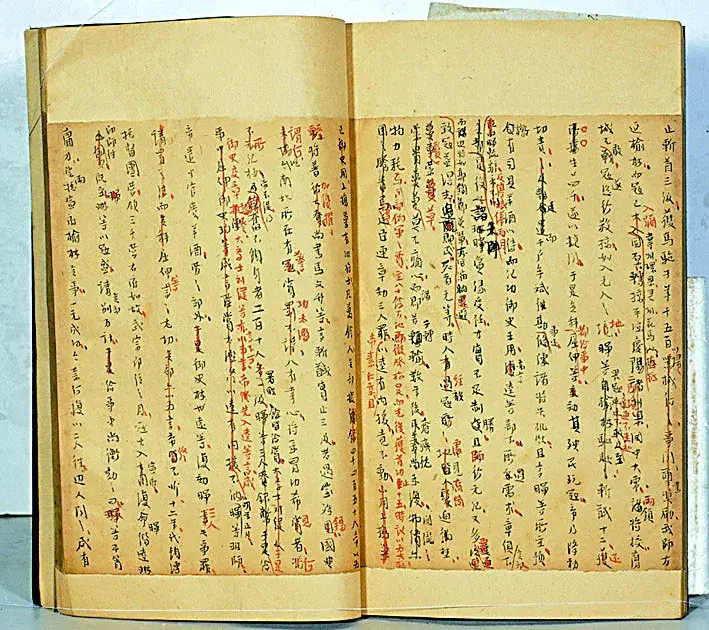
The Jisi Incident (己巳之变) was a critical strategic crisis that unfolded between 1629 and 1630 during the reign of the Chongzhen Emperor, when Later Jin Khan Hong Taiji led an expeditionary force bypassing the fortified Shanhaiguan corridor to strike directly into the Ming capital region. Frustrated by earlier defeats against the fortified Guanning-Jinzhou perimeter, Hong Taiji mobilized more than one hundred thousand troops, using allied Mongol guides to breach the Great Wall passes of Longjingguan and Da'ankou, capturing Zunhua and menacing Beijing. Regional Commander Zhao Shuijiao died in ambush, and the imperial court was thrown into profound panic. Upon receiving the alarm, Grand Coordinator Yuan Chonghuan led General Zu Dashou and nine thousand veteran Guanning Iron Cavalry on a grueling two-day forced march across three hundred li to reach Beijing's southern outskirts. In bloody engagements outside Guangqumen and Zuo'anmen, the Ming defenders repelled the elite Eight Banners cavalry. Stymied by the resolute resistance, Hong Taiji resorted to a counter-espionage scheme, deliberately leaking rumors that Yuan Chonghuan was colluding with the Later Jin. The suspicious Chongzhen Emperor had Yuan arrested at court and subsequently executed by slow slicing, prompting Zu Dashou to flee eastward in outrage. Veteran minister Sun Chengzong was recalled to restore command, pacifying the frontier troops and directing the counter-offensive that recaptured the four occupied cities of Zunhua, Yongping, Qian'an, and Luanzhou. The execution of Yuan Chonghuan permanently crippled Ming military leadership, directly precipitating the dynasty's collapse.
Hong Taiji leads more than 100,000 Eight Banners and Mongol troops from Shenyang, bypassing Shanhaiguan through the steppe.
Later Jin columns breach Longjingguan and Da'ankou, shattering the Ming Jizhou defenses and pouring into the interior.
Zhao Shuijiao's four thousand relief cavalry are wiped out in an ambush, Wang Yuanya commits suicide, and Zunhua falls.
Yuan Chonghuan and Zu Dashou lead nine thousand elite cavalry across 300 li in two days to take up positions outside Beijing.
Man Gui is defeated at Deshengmen, but Yuan Chonghuan engages the Later Jin at Guangqumen, inflicting heavy casualties and repelling them.
The Guanning army repulses another assault at Zuo'anmen; Hong Taiji releases a captive eunuch carrying planted rumors of treason.
The Chongzhen Emperor confronts Yuan Chonghuan in the Forbidden City, arresting him on charges of treason; Zu Dashou flees east.
Compelled to fight in the open, Man Gui and Sun Zushou are killed outside Yongdingmen as the provincial relief army collapses.
Reconciled by Sun Chengzong, Zu Dashou's cavalry recaptures Luanzhou, Yongping, Qian'an, and Zunhua, expelling the Later Jin.
Yuan Chonghuan is executed by slow slicing in Beijing's Western Market on fabricated charges, destroying the dynasty's premier strategist.
Following the cataclysmic Ming reversals at the battles of Sarhu and Guangning during the Tianqi era, the Later Jin overran Shenyang and Liaoyang, forcing Ming defenses back to Shanhaiguan. Starting in 1622, Grand Coordinator Sun Chengzong and strategist Yuan Chonghuan constructed the formidable Guanning-Jinzhou defense line, establishing fortified strongholds at Ningyuan and Jinzhou, training disciplined cavalry, and mounting European breech-loading cannons (Hongyipao). In 1626, Nurhaci suffered a mortal defeat during the Battle of Ningyuan; in 1627, his successor Hong Taiji assaulted the perimeter during the Battle of Ning-Jin and was similarly repulsed.
Recognizing that frontal assaults against the artillery-studded citadels of western Liaodong resulted only in ruinous casualties, Hong Taiji sought an alternative route into the Chinese interior. He launched campaigns to subjugate Chahar Mongol leader Ligdan Khan and courted eastern Mongol tribes through diplomacy and marital alliances. By 1629, the Later Jin had secured unobstructed passage across the southern fringe of the Mongolian steppe, establishing a springboard from which to bypass the impenetrable Shanhaiguan choke point and strike at the unfortified internal Great Wall line defending the imperial capital.
The Jizhou defense sector of the Great Wall stood as the direct northern rampart safeguarding Beijing, stretching hundreds of kilometers over rugged terrain. Decades of fiscal exhaustion had concentrated nearly all military allocations upon the Liaodong front, leaving the garrisons of Jizhou, Xuanfu, and Datong chronically underfunded, their garrisons demoralized, and their fortifications in disrepair. In 1628, when Yuan Chonghuan was appointed Supreme Commander of Jiliao, he warned the Chongzhen Emperor during their palace audience that Jizhou's defenses were dangerously frail and required urgent reinforcements. However, the imperial treasury was incapable of providing adequate funding.
Meanwhile, the young Chongzhen Emperor was characterized by impatience, suspiciousness, and an eagerness for quick military triumphs, frequently executing or demoting senior officials. Political infighting between the Donglin faction and their rivals continued to poison court deliberations. Yuan Chonghuan's summary execution of the rogue commander Mao Wenlong on Shuangdao Island in 1629 aroused deep suspicions among conservative bureaucrats. Confident that the frontier was quiet, the Ming court dismissed the possibility of a deep cavalry raid across the steppe, leaving Jiliao Viceroy Liu Ce with dispersed and inadequate garrisons.
In late October 1629 (the tenth month of the second year of Chongzhen), Hong Taiji personally led the Eight Banners army, accompanied by Karachin Mongol cavalry acting as guides, departing westward from Shenyang. Bypassing the Guanning-Jinzhou line entirely, the Later Jin host crossed more than one thousand li of Mongolian territory before pivoting southward toward the Great Wall. On October 27, the Later Jin left wing assaulted and overwhelmed Longjingguan, destroying the water sluice defenses, while Hong Taiji led the center column to seize Hongshankou and Han'erzhuang. The right wing stormed Da'ankou and Malanyu. Within days, Later Jin cavalry breached the frontier wall, causing the entire Jizhou garrison network to unravel.
Panic seized Beijing as reports reached the Forbidden City. The Chongzhen Emperor ordered Shanhaiguan Regional Commander Zhao Shuijiao to rush westward with four thousand cavalry. On November 3, Zhao Shuijiao arrived outside the garrison town of Santunying, but the garrison commander panicked and locked the city gates against him. Deprived of rest and shelter, Zhao Shuijiao pressed toward Zunhua, only to march into an ambush laid by Later Jin princes Ajige and Abatai. Zhao Shuijiao was struck by multiple arrows and died fighting bravely alongside his entire vanguard. Left without relief, Zunhua Governor Wang Yuanya hanged himself in his yamen, and Zunhua fell into enemy hands. Hong Taiji turned his advance columns directly toward Jizhou and Sanhe, placing Beijing under siege conditions.
Stationed at Jinzhou, Supreme Commander Yuan Chonghuan received intelligence of the breach on October 28 and resolved to enter the pass immediately. On November 4, Yuan led veteran commanders Zu Dashou and He Kegang, marshaling their crack cavalry to march through Shanhaiguan. Upon learning that Zunhua had already fallen, Yuan raced toward Jizhou to intercept the enemy. However, Hong Taiji used his superior cavalry mobility to bypass Jizhou, taking the western route through Sanhe and Shunyi directly toward the capital. Realizing the capital was exposed, Yuan Chonghuan selected nine thousand elite cavalrymen and covered three hundred li in forty-eight hours of non-stop riding, reaching the outskirts of Guangqumen on November 16, just ahead of the enemy's main force.
On November 20, Later Jin columns converged upon the outskirts of Beijing. Grand Prince Daišan assaulted Deshengmen, where Datong Regional Commander Man Gui engaged them outside the walls; outflanked by mounted archers, Man Gui was wounded and driven into the dry moat. That afternoon, Hong Taiji directed Abatai and Manggūltai to lead tens of thousands of armored horsemen in a direct charge against Guangqumen. Yuan Chonghuan and Zu Dashou anchored their formation against the city moat, deploying their cavalry on foot with multi-barrel firearms, muskets, and heavy crossbows. The ferocious charges of the white-armored elite guards were shattered by volleys of fire. Both armies engaged in hours of brutal close-quarters combat; Yuan Chonghuan's armor was pierced by multiple arrows, and Zu Dashou fought through wounds. Several Later Jin commanders were slain and Hong Taiji's mount was shot, forcing the invaders to fall back ten li.
Despite their triumph at Guangqumen, the Guanning soldiers were exhausted from continuous combat and exposure to freezing winter conditions. Yuan Chonghuan petitioned the throne to allow his men to enter the outer suburbs to rest and resupply, but the Chongzhen Emperor and court ministers refused, fearing the provincial troops might loot or spark disorder. On November 27, Hong Taiji tested the city defenses once more by launching an attack against Zuo'anmen. Anticipating the strike, Yuan Chonghuan coordinated cannon barrages with cavalry maneuvers, inflicting another sharp defeat upon the Later Jin vanguard.
Thwarted at both gates, Hong Taiji concluded that capturing Beijing was impossible as long as Yuan Chonghuan commanded the defense. Assisted by Chinese scholar Fan Wencheng, Hong Taiji devised a counter-espionage scheme. The Later Jin took captive two Ming palace eunuchs, Yang Chun and Gao Feng, holding them near the command yurt where guards were instructed to converse loudly about a fabricated secret pact between Hong Taiji and Yuan Chonghuan to partition the realm. The Later Jin then relaxed their vigilance, allowing Gao Feng to escape into the city. Upon reaching the palace, the eunuch reported the alleged treason directly to the emperor, who was already suspicious of Yuan's failure to block the passes.
Inside Beijing, panic and resentment boiled over. Gentry whose suburban estates had been burned and factional enemies of Yuan Chonghuan joined in denouncing him for treason, claiming he had guided the barbarians to the city walls. Pressured by the crisis, the Chongzhen Emperor sought a scapegoat. On December 1, the emperor summoned Yuan Chonghuan, Zu Dashou, and Man Gui to the palace platform under the pretext of discussing military finances and distributing imperial rewards. Once Yuan entered, the emperor berated him for illicit peace overtures, the execution of Mao Wenlong, and collusion with the enemy, ordering the Imperial Bodyguard to strip his insignia and cast him into prison.
The arrest of their revered commander stunned the Guanning army outside the city walls. Fearing they would all be slaughtered on charges of treason, General Zu Dashou and his officers wept in their camp. On December 4, Zu Dashou led fifteen thousand Guanning cavalrymen in breaking through the Shanhaiguan perimeter, retreating eastward toward Jinzhou. The departure of the army's most formidable fighting force left the capital defenses completely hollowed out.
Following Yuan's imprisonment and Zu's retreat, the Chongzhen Emperor appointed Man Gui as Supreme Military Commander, placing forty thousand provincial relief troops under his authority and demanding an immediate offensive. Recognizing that his green troops were no match for the Eight Banners in open combat, Man Gui hesitated, but imperial pressure compelled him to deploy outside Yongdingmen on December 17. Hong Taiji encircled the Ming formation with his entire cavalry corps. After a desperate struggle, Man Gui and Regional Commander Sun Zushou fell in battle, and the imperial army collapsed, leaving the surrounding countryside defenseless.
Facing total ruin, the Chongzhen Emperor turned to retired grand secretary Sun Chengzong, who traveled to Shanhaiguan to plead with Zu Dashou and the Guanning officers. Moved by their former patron's integrity, Zu Dashou and his men wept and pledged their loyalty to the throne. Meanwhile, Hong Taiji, running short of supplies and unable to breach Beijing's fortifications, withdrew eastward in early 1630. He captured Qian'an, Luanzhou, and Yongping, leaving Prince Amin and Shoto with strong garrisons while leading his main army back to Shenyang. Sun Chengzong capitalized on the division of enemy forces by orchestrating a coordinated counter-offensive. In May 1630, Ming forces led by Zu Dashou recaptured Luanzhou, Yongping, Qian'an, and Zunhua, annihilating the Later Jin garrisons and forcing Amin to flee north of the Great Wall, securing the "Great Victory of the Four Cities."
The Jisi Incident inflicted catastrophic damage upon the Ming Dynasty. For over six months, more than one hundred thousand enemy cavalry roamed through the metropolitan province, plundering dozens of towns and carrying off hundreds of thousands of captives along with vast quantities of grain and livestock, shattering the agrarian foundation of northern China. Even more catastrophic was the Chongzhen Emperor's execution of Yuan Chonghuan. By executing the foremost military talent in the realm on fabricated charges of treason, the emperor dealt a fatal blow to military morale. Officers along the frontier realized that loyalty was no protection against imperial paranoia, laying the psychological groundwork for the eventual capitulation of northern commanders like Zu Dashou and Wu Sangui.
The campaign marked an irreversible turning point in the Ming-Qing conflict. Hong Taiji demonstrated that the Later Jin could bypass the expensive Guanning fortifications at will to strike deep into the Chinese heartland. This raid inaugurated a devastating pattern: major incursions into north China were launched in 1636, 1638, and 1642, looting resources and paralyzing imperial administration. To counter these constant raids, the Ming court levied crushing surtaxes, including the "Liaodong tax," across already impoverished provinces. This fiscal pressure sparked widespread peasant uprisings led by Li Zicheng and Zhang Xianzhong, trapping the Ming Dynasty between internal rebellion and external conquest.