Siege of Yuzhang
General Zheng Fan deploys catapulted flying fire to burn down the city gate, recording the earliest military use of gunpowder.
Northern Song Dynasty (北宋) · HISTORICAL EVENT
北宋火药与火器应用
The Application of Gunpowder and Firearms in the Northern Song (北宋火药与火器应用) was a watershed technological revolution in military and scientific history between the tenth and twelfth centuries. Evolving from Daoist alchemical experiments in quest of elixirs during the Han and Tang dynasties, gunpowder was first deployed as incendiary flying fire during late Tang sieges. Following the founding of the Northern Song in 960, the dynasty faced acute strategic…
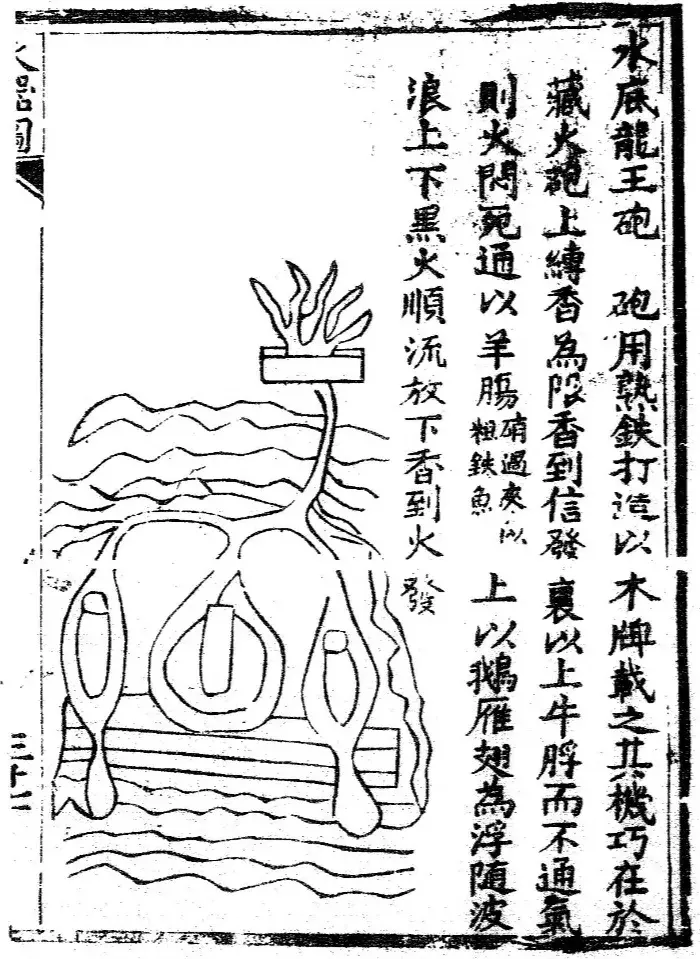
The Application of Gunpowder and Firearms in the Northern Song (北宋火药与火器应用) was a watershed technological revolution in military and scientific history between the tenth and twelfth centuries. Evolving from Daoist alchemical experiments in quest of elixirs during the Han and Tang dynasties, gunpowder was first deployed as incendiary flying fire during late Tang sieges. Following the founding of the Northern Song in 960, the dynasty faced acute strategic vulnerabilities against the heavy cavalry of the Liao Empire and Western Xia due to the loss of northern horse-breeding pastures. To offset cavalry deficits, the Song court prioritized chemical weaponry, rewarding inventors such as Feng Jisheng, Yue Yifang, and Shi Pu for presenting gunpowder arrows, explosive fireballs, and caltrop bombs. The state established centralized manufacturing arsenals in Kaifeng, including the Guangbei Siege Workshop and the Armaments Directorate, achieving large-scale standardized mass production. In 1044, the imperial military compendium Wujing Zongyao published the world's earliest official military gunpowder formulas, precisely specifying the chemical proportions of saltpeter, sulfur, and charcoal alongside toxic and incendiary additives. During the New Policies of Emperor Shenzong, annual production surpassed tens of thousands of rounds. In the Siege of Kaifeng in 1126, Li Gang deployed thunderclap bombs to destroy Jurchen siege towers. Transitioning from simple incendiaries to fragmentation bombs, toxic smokescreens, and early bamboo barrels, Northern Song firearms initiated the gunpowder age of human warfare.
General Zheng Fan deploys catapulted flying fire to burn down the city gate, recording the earliest military use of gunpowder.
Feng Jisheng demonstrates gunpowder-propelled arrows to Emperor Taizu, initiating state patronage of firearm research.
Naval captain Yue Yifang presents gunpowder arrows and explosive balls, earning palace appointments from Emperor Zhenzong.
Militia commander Shi Pu conducts live explosive trials before Emperor Zhenzong outside Chongzheng Hall.
The central government establishes state-run ordnance manufactories in Kaifeng, including dedicated gunpowder workshops.
The imperial military compendium publishes the world's first three standardized military gunpowder formulas.
Wang Anshi establishes centralized management for weapon production, vastly increasing output and enforcing quality control.
The Armaments Directorate delivers tens of thousands of gunpowder arrows and artillery bombs to northwestern frontiers.
Li Gang deploys thunderclap bombs from city walls, destroying Jurchen siege towers and repelling invaders.
Building upon Northern Song developments, Shouchun arsenals produce the eruptor lance, firing solid projectiles from barrels.
The invention of black gunpowder was the unintended byproduct of centuries of Daoist alchemical experimentation in search of immortality. From the Warring States period through the Han and Jin dynasties, alchemists heated mineral mixtures of lead, mercury, sulfur, and niter within crucibles.
In the sixth century, Daoist physician Tao Hongjing recorded the distinctive purple flame test for identifying potassium nitrate (saltpeter). In heating experiments known as subduing fire, alchemists discovered that sulfur ignited easily while saltpeter acted as a powerful oxidizing agent.
In the seventh century, Tang physician Sun Simiao documented the method of subduing sulfur with saltpeter and honey or locust pods in his alchemical writings, marking the earliest written record of heating sulfur, carbon, and saltpeter together.
By the mid-Tang period, Daoist texts such as the Essentials of the Marvelous Dao of the True Origin explicitly warned practitioners against heating sulfur, realgar, saltpeter, and honey together, cautioning that sudden flare-ups caused severe burns to hands and faces and incinerated workshops. These explosive incidents gradually revealed the rapid gas expansion and propellant potential of black powder.
As alchemical knowledge dispersed into commercial craft traditions, late Tang military warlords recognized the tactical potential of rapid combustion for siege warfare. During the siege of Yuzhang (modern Nanchang) in 904, general Zheng Fan under warlord Yang Xingmi launched flying fire from catapults to set fire to the Longsha Gate, storming the ramparts through the blaze.
This flying fire comprised primitive gunpowder parcels tied with hemp cord and hurled against wooden fortifications. Troops also fastened small gunpowder packets beneath arrowheads, discharging burning projectiles from composite bows to ignite enemy camps and baggage trains.
During the Five Dynasties and Ten Kingdoms period, rival states in southern China deployed naptha flame-projectors and gunpowder incendiaries in riverine naval battles, establishing gunpowder as an operational military asset.
When Zhao Kuangyin established the Northern Song dynasty in 960, the empire inherited an insecure northern frontier. The loss of the Sixteen Prefectures under the Later Jin had deprived the Central Plains of the Great Wall's mountain barriers and vital horse-breeding pastures across Shanxi and Hebei.
The Northern Song was perpetually starved of military warhorses, rendering its infantry vulnerable to mobile Khitan Liao horse archers and the cataphract heavy cavalry of Western Xia known as Iron Kites. In open plains engagements, Song infantry could not match nomadic shock cavalry.
To overcome this structural deficiency, Song monarchs and military strategists turned to technological innovation, seeking long-range missile weapons and concussive explosives to disrupt cavalry charges. Gunpowder arms offered extended engagement ranges, widespread incendiary destruction, and deafening thunderclaps capable of terrifying enemy horses, leading the court to elevate firearm research into an imperial priority.
During the opening decades of the Northern Song, Emperors Taizu and Taizong instituted generous patronage policies to stimulate military invention. Soldiers, engineers, and commoners who developed practical weaponry were granted direct imperial audiences at the Chongzheng Hall, receiving promotions and substantial cash gifts upon successful testing.
In the spring of 970, Ministry of War clerk Feng Jisheng presented his newly designed rocket arrow technique to Emperor Taizu. Feng attached a small gunpowder canister beneath the iron arrowhead; upon ignition of the slow match, the burning powder expelled propulsive gases backward while the bowstring launched the projectile, dramatically extending flight range.
Upon hitting timber stockades or canvas pavilions, the incendiary compound ignited fierce blazes that water could not easily extinguish. Emperor Taizu rewarded Feng Jisheng with lavish silk robes and ordered the imperial arsenals to manufacture the weapon for border garrisons.
Military innovation accelerated during the reign of Emperor Zhenzong. In August 1000, imperial naval captain Yue Yifang and militia commander Liu Yongxi submitted newly devised gunpowder arrows and explosive fireballs to the court. Emperor Zhenzong witnessed live trials on the palace parade grounds; the fireballs produced blinding flashes and thunderous concussions, prompting the emperor to commission Yue Yifang as a senior palace guard officer.
In May 1002, Jizhou militia commander Shi Pu designed multi-purpose incendiaries and spiked caltrop bombs, conducting personal demonstrations before Emperor Zhenzong outside Chongzheng Hall. Shi Pu utilized siege crossbows to fire propellant arrows while launching heavy explosive fireballs from rotary catapults.
Dense smoke enveloped the courtyard as iron shrapnel scattered across the stones. Astonished by the concussive power of the weapons, Zhenzong rewarded Shi Pu with warhorses, silver vessels, and copper cash. These imperial honors ignited widespread enthusiasm across frontier commands to integrate gunpowder into active service.
To transition from experimental individual crafts to mass standardization, the Song court established the Guangbei Siege Workshops in the imperial capital of Kaifeng. This vast state-operated military-industrial complex encompassed eleven specialized guild workshops, including dedicated workshops for gunpowder, rocket arrows, and explosive artillery balls.
The gunpowder workshop managed the procurement, purification, and grinding of chemical raw materials under strict quality controls. High-grade saltpeter was shipped along canal routes from Sichuan and Shanxi, refined sulfur was imported from Hunan, and willow wood charcoal was manufactured according to precise firing specifications.
The rocket workshop mounted standardized powder cylinders onto heavy arrows, while the artillery workshop stitched multi-layered treated rawhide casings, packed chemical formulas, inserted slow-burning fuses, and sealed payloads with pitch. Operating thousands of skilled artisans under strict security and compartmentalized firewalls, the complex constituted the world's first industrial firearm manufactory.
In 1044, responding to intense frontier warfare against Western Xia ruler Li Yuanhao, Emperor Renzong ordered Assistant Grand Councilor Zeng Gongliang and Vice Minister Ding Du to compile a comprehensive imperial military compendium. Completed after years of research, the Wujing Zongyao preserved in its eleventh and twelfth chapters the three earliest recorded military gunpowder formulas in world history:
The first was the Artillery Gunpowder Formula, specifying fourteen ounces of Jinzhou saltpeter, seven ounces of sulfur, and 5.4 ounces of willow charcoal, blended with pitch, hemp fibers, and vegetable oil to produce sustained incendiary combustion for catapult shells;
The second was the Poison Smoke Ball Formula, which added realgar, arsenic, croton seeds, aconite, and wolfsbane to the saltpeter-sulfur-charcoal base, creating dense clouds of toxic gas upon detonation to blind enemy defenders and asphyxiate cavalry mounts;
The third was the Caltrop Fireball Formula, engineered for maximum concussive blast, utilizing a high-nitrate ratio of 2.5 pounds of saltpeter, one pound of sulfur, and five ounces of charcoal, packed with three sharp iron caltrops, ceramic shards, and gravel to function as an early fragmentation grenade. These standardized proportions demonstrated that gunpowder technology had evolved into a precise empirical chemical science.
During the mid-Northern Song, imperial armories organized gunpowder weapons into four functional tactical categories: First, projectile incendiary weapons, epitomized by bow-launched and crossbow-launched gunpowder arrows, deployed in mass volleys to ignite enemy siege equipment, grain trains, and naval sails; Second, explosive fragmentation weapons, including caltrop balls, thunderclap fireballs, and leather-encased artillery balls hurled by catapults into charging infantry to inflict blast trauma and shrapnel wounds; Third, chemical toxic smokescreen weapons, represented by the poison smoke ball, deployed during saps, counter-mining operations, and defensive breaches to release lethal arsenic vapors; Fourth, pyrotechnic ignition systems, utilizing sulfur-impregnated hemp cords to calibrate fuse burn rates and ensure airburst or impact detonation.
These chemical munitions were combined with mechanical launching systems, converting traction trebuchets and multi-bolt siege crossbows into integrated artillery platforms that extended strike ranges hundreds of yards beyond conventional archers.
In 1069, Emperor Shenzong appointed Chancellor Wang Anshi to implement the New Policies, initiating comprehensive institutional overhauls of the imperial defense industry. In 1073, the central government created the Armaments Directorate, unifying fragmented weapon bureaus under a single supreme administration.
The directorate operated the Metropolitan Arsenal in Kaifeng, employing over 3,700 master artisans across specialized ordnance departments. Wang Anshi enforced strict accountability, mandating that every gunpowder batch, arrow, and ball be stamped with the names of the artisan and inspecting magistrate, punishing substandard work.
The scale of production expanded to astonishing levels: according to the Military Treatise of the History of Song, in 1083 during heightened operations against Western Xia, the Armaments Directorate received a single quarterly requisition ordering 7,000 crossbow gunpowder arrows, 10,000 bow gunpowder arrows, 3,000 caltrop bombs, and 20,000 leather artillery fireballs, completing and dispatching the order to northwestern border fortresses within months.
In the prolonged border wars across the Shaanxi and Hedong circuits, gunpowder weaponry served as the backbone of Song defensive tactics against Western Xia cavalry. Xia field armies relied heavily on the Iron Kites, heavily armored cataphracts capable of shattering ordinary infantry formations.
Song commanders, including scientist Shen Kuo and general Chong Shidao, developed effective combined-arms tactics: Song forces constructed deep ditches and planted caltrops around field bastions, using heavy siege crossbows to fire salvos of rocket arrows as enemy cavalry advanced, followed by rotary catapults lobbing explosive fragmentation balls.
The blinding flashes, billowing smoke, and concussive shockwaves terrified the Xia warhorses, causing them to rear, throw their riders, and trample rear ranks in panic. In subterranean sapping warfare, Song garrisons detected enemy tunneling and pumped toxic arsenic smoke through bellows into the tunnels, suffocating Xia miners. Shen Kuo meticulously analyzed these combustion dynamics in his Dream Pool Essays, noting the tactical decisiveness of explosive concussion in holding mountain passes.
The climax of Northern Song firearm employment occurred during the winter of 1126, when invading Jurchen armies under Prince Wolibu surrounded the imperial capital of Kaifeng. Jurchen assault columns deployed massive mobile siege towers, battering rams, and scaling ladders against the brick ramparts day and night.
Appointed commander of city defenses, Right Vice Director Li Gang mounted thousands of heavy thunderclap bombs onto catapults along the battlements of the western and Xuanhua gates. As dense Jurchen assault units pushed siege bridges toward the parapets, Li Gang signaled the artillery batteries to fire.
Song and Jin records describe the resulting devastation: catapults discharged salvos of thunderclap bombs that detonated like rolling thunder; roaring fireballs obliterated wooden siege towers, while jagged shrapnel tore through Jurchen armor, burning and lacerating attackers by the hundreds. Stunned by the deafening detonations and blistering flames, Jurchen assault columns retreated in disorder. The devastating artillery fire forced the Jurchen command to temporarily suspend direct assaults and accept peace parleys.
In the crucible of late Northern Song warfare, the mechanical limitations of catapult-hurled bombs and bow-fired arrows became apparent, prompting artisans to experiment with directional propellant tubes. Craftsmen began packing gunpowder into thick hollow bamboo tubes and wrought-iron cylinders, directing burning jets of flame and ceramic gravel at close range against scaling parties.
This empirical experimentation laid the direct technical groundwork for the military breakthroughs of the Southern Song. In 1132, scholar-official Chen Gui defended De'an against rebel assaults by deploying long bamboo fire lances held by pairs of soldiers to project liquid fire against wooden ladders, inventing the world's earliest true flamethrower lance.
By 1259, military arsenals in Shouchun produced the tuohuoqiang (eruptor lance), which packed explosive pellets into bamboo barrels that discharged solid projectiles using expanding propellant gases. This marked the historic transition from external combustion to internal barrel ballistics, culminating in the cast-bronze hand cannons of the Yuan dynasty.
The chemical formulas, refining techniques, and weapon designs developed during the Northern Song diffused across Afro-Eurasia during the twelfth and thirteenth centuries along maritime and overland Silk Roads. By the mid-eleventh century, potassium nitrate traveled to the Islamic world, where Arab scholars called the white mineral Chinese snow while Persians termed it Chinese salt.
During the Mongol conquests of the thirteenth century, Song-trained artillery corps accompanied Mongol armies through Persia, Mesopotamia, and Eastern Europe, deploying bombs and rocket arrows at the Battle of Ain Jalut in 1260 and across European battlefields. Islamic engineers assimilated the formulas, translating Chinese pyrotechnic terms and passing the technology into Moorish Spain and Italy.
Reaching Western Europe in the early fourteenth century, gunpowder shattered the medieval feudal order. Cannon artillery rendered stone castles obsolete, while firearms empowered infantry armies over aristocratic knights in armor. As Friedrich Engels observed, gunpowder pulverized the European feudal nobility, serving as a decisive material catalyst propelling Europe into the Renaissance and the modern era.
The development of gunpowder weapons during the Northern Song marked humanity's permanent departure from exclusive reliance on cold steel, initiating the era of chemical propulsion and thermal warfare. Song military engineers systematically converted raw incendiary compounds into fragmentation weapons, toxic gas canisters, and concussive bombs, creating the taxonomic foundation of all subsequent firearm classifications.
Gunpowder weaponry fundamentally transformed Chinese defensive strategy. For an agrarian civilization confronting highly mobile steppe cavalry without natural horse-breeding territories, firearms provided the decisive tactical equalizer, enabling disciplined infantry formations to break cavalry charges through acoustic shock and long-range firepower. In urban fortification, the destructive power of gunpowder forced architects to construct thicker brick battlements, deep moats, and forward bastions.
As one of the Four Great Inventions of ancient China, black powder spread across Afro-Eurasia along maritime and overland trade routes, reaching the Islamic world and Europe. The introduction of gunpowder into Western Europe destroyed the martial supremacy of feudal knights and dismantled stone castles, providing the material force that spurred the rise of centralized nation-states and ushered in the modern global era.