Development of Mafeisan
Hua Tuo declined bureaucratic appointment to treat rural populations, formulating the general anesthetic Mafeisan from medicinal herbs.
Eastern Han Dynasty (东汉) · HISTORICAL EVENT
华佗与外科医学
Hua Tuo and Surgical Medicine designates the groundbreaking clinical surgical procedures and general anesthesiology innovations pioneered by the master physician Hua Tuo during the late Eastern Han dynasty (ca. 190–208 CE). Amid the devastating civil wars and pestilences of the late Han era, visceral abscesses, internal gangrene, and severe blade wounds escalated drastically. Recognizing that internal pathological masses lay beyond the reach of standard…
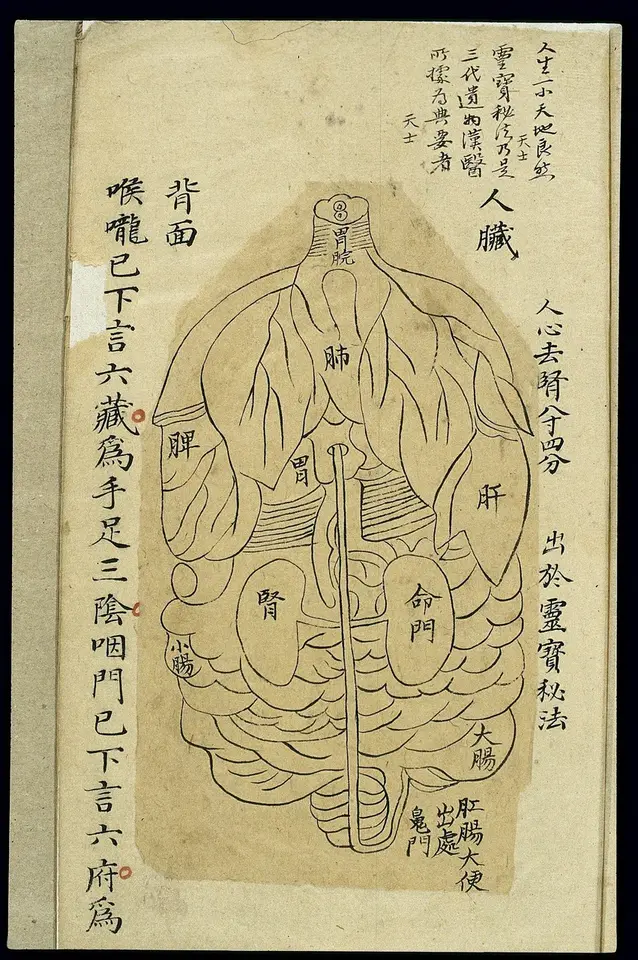
Hua Tuo and Surgical Medicine designates the groundbreaking clinical surgical procedures and general anesthesiology innovations pioneered by the master physician Hua Tuo during the late Eastern Han dynasty (ca. 190–208 CE). Amid the devastating civil wars and pestilences of the late Han era, visceral abscesses, internal gangrene, and severe blade wounds escalated drastically. Recognizing that internal pathological masses lay beyond the reach of standard decoctions and acupuncture, Hua Tuo formulated Mafeisan, the earliest recorded general anesthetic in global medical history. Administering this herbal compound dissolved in warm wine, Hua Tuo rendered patients fully unconscious and insensible to pain while performing complex laparotomies to resect diseased tissues, cleanse internal cavities, suture abdominal walls, and apply medicinal salves. Hua Tuo was equally skilled in internal medicine, gynecology, pediatrics, and acupuncture, and created the Five Animals Frolics therapeutic gymnastics to prevent disease. In his later years, Hua Tuo was summoned to treat Chancellor Cao Cao's chronic migraines. Declining to remain permanently as a private retainer, Hua Tuo returned home on leave and was subsequently imprisoned, tortured, and executed in Xuchang, while his masterwork Book of the Blue Pouch was destroyed. His pioneering clinical methods established the bedrock of ancient Chinese surgery.
Hua Tuo declined bureaucratic appointment to treat rural populations, formulating the general anesthetic Mafeisan from medicinal herbs.
Hua Tuo performed clinical abdominal surgery under general anesthesia, resecting diseased intestines and suturing the incisions.
Hua Tuo administered anthelmintic potions to purge visceral parasites from Administrator Chen Deng, predicting its three-year recurrence.
Hua Tuo codified the Five Animals Frolics medical gymnastics and transmitted the routine to his disciple Wu Pu.
Cao Cao summoned Hua Tuo to treat severe cephalalgia with acupuncture, seeking to retain him as a court physician.
Hua Tuo returned home on family leave, repeatedly rejecting imperial summonses to care for local commoners.
Cao Cao imprisoned Hua Tuo in Xuchang; Book of the Blue Pouch was burned before Hua Tuo died under torture.
Cao Cao's young son Cao Chong died of illness, prompting Cao Cao to publicly voice profound remorse for slaying Hua Tuo.
During the reigns of Emperors Huan and Ling in the late Eastern Han dynasty, imperial governance disintegrated amidst violent factional conflict between palace eunuchs and imperial consort clans. The outbreak of the Yellow Turban Rebellion and subsequent warlord fragmentation plunged northern China and the Huai River basin into continuous warfare, devastating towns and displacing millions of civilians.
Accompanying these widespread military conflicts were severe famines, floods, and devastating epidemics. The combination of unsanitary living conditions, malnutrition, and battlefield combat led to an unprecedented increase in traumatic injuries, compound fractures, infected blade wounds, and acute abdominal abscesses.
Combatants suffered internal hemorrhaging from arrow penetrations, while civilians endured debilitating visceral tumors and chronic gangrenous infections. Classical medicine faced extraordinary challenges, as conventional pharmacological broths proved ineffective against severe, life-threatening internal pathology.
Hua Tuo, styled Yuanhua, was a native of Qiao County in Pei Commandery (modern Bozhou, Anhui). Endowed with extraordinary intellect, he traveled to Xu Province in his youth to study classical Confucian texts. Chancellor Chen Gui of Pei Commandery recommended him as a Filial and Incorrupt candidate, and Grand Commandant Huang Wan summoned him to imperial office, yet Hua Tuo declined all bureaucratic overtures to dedicate his life entirely to the medical arts.
For decades, Hua Tuo traveled widely across Henan, Shandong, Anhui, and Jiangsu, ministering directly to common laborers and destitute peasants. Disregarding personal profit and bureaucratic rank, he established clinics along rural roadsides, harvested wild herbs, and treated high-ranking gentry and destitute farmworkers with equal diligence. His diagnostic insight and clinical efficacy became legendary throughout the Central Plains.
Prior to Hua Tuo's innovations, traditional Chinese medical practice relied primarily on herbal decoctions, pills, moxibustion, acupuncture, and massage therapy. While classical canons such as the Yellow Emperor's Inner Canon described superficial lancing of abscesses, deep abdominal pathology remained untreatable.
Critically, the human body cannot tolerate the immense physical shock of invasive surgery without anesthesia; severe pain invariably induced fatal neurogenic shock. Without effective general anesthesia, deep abdominal incision and internal organ resection were impossible. Discovering a method to render a surgical patient insensible to pain represented the most urgent barrier in early medical history.
Confronted by patients suffering from severe abdominal tumors and intestinal decay that resisted conventional pharmacology, Hua Tuo resolved to develop a medicine capable of safely suspending conscious pain sensation. Drawing on extensive field investigations of botanical properties, Hua Tuo gathered potent natural analgesics, including Datura stramonium (mandala flower), Aconitum carmichaelii (aconite root), Angelicae dahuricae, and related sedating herbs.
Through meticulous dosage adjustments and clinical trials, Hua Tuo successfully formulated Mafeisan, the first recorded general anesthetic compound in world medical annals. According to the Records of the Three Kingdoms and the Book of the Later Han, the procedure followed a systematic clinical protocol: prior to surgery, Mafeisan was dissolved in warm alcoholic wine and administered orally.
The alcohol accelerated systemic absorption of the active botanical compounds. Within moments, the patient fell into a deep coma-like slumber, losing all sensory awareness and somatic reflexes, allowing the surgeon to execute extensive incisions without causing agony, involuntary struggling, or shock.
This achievement resolved the primary barrier to invasive surgery more than sixteen centuries before William Morton's public demonstration of ether anesthesia in Boston in 1846.
Operating under the profound anesthesia induced by Mafeisan, Hua Tuo performed unprecedented abdominal procedures. Contemporary historical records state that when internal pathology lay beyond the reach of needles and potions, Hua Tuo instructed the patient to ingest Mafeisan, after which he used a surgical scalpel to make a clean incision through the lower abdomen.
Hua Tuo systematically inspected the internal viscera. If the intestines or stomach were ulcerated or necrotic, he excised the diseased tissues, washed the peritoneal cavity with sterile herbal lotions, and reconnected remaining healthy segments. He utilized mulberry-bark fiber or sterile silk thread to suture internal visceral walls and abdominal fascia in layered succession, subsequently dressing the wound with a proprietary therapeutic ointment to stimulate granulation and prevent microbial sepsis.
Following surgery, patients gradually regained consciousness as the anesthesia subsided. Historical chronicles note that surgical wounds closed within four to five days and patients achieved full clinical recovery within thirty days, without postoperative sepsis or wound dehiscence. This rigorous cycle of anesthesia, exploration, excision, irrigation, suturing, and antiseptic protection demonstrated remarkable clinical sophistication.
Hua Tuo's clinical genius extended far beyond surgical operations to internal pathology, pediatrics, and parasitology. When Administrator Chen Deng of Guangling fell gravely ill with severe chest congestion, flushed complexion, and loss of appetite due to consuming raw fish, Hua Tuo arrived to conduct pulse examination, diagnosing a heavy parasitic infection that had spawned visceral ulceration.
Hua Tuo boiled two liters of targeted anthelmintic decoction, directing Chen Deng to drink one liter immediately and the second shortly thereafter. Within moments, Chen Deng vomited over three liters of active, red-headed parasites, instantly relieving his distress and restoring his health. Hua Tuo cautioned Chen Deng that the disease stemmed from dietary habits and would recur after three years, requiring an expert physician's immediate presence. Three years later, Chen Deng suffered a fatal relapse while Hua Tuo was away on distant travels.
In another celebrated case, Hua Tuo examined the wife of General Li Tong, determining that her chronic abdominal torment was caused by a dead fetus retained in her womb, successfully administering herbal abortifacients to expel the deceased fetus and preserve the mother's life. He also employed targeted psychological provocation to treat an administrator's deep depression, causing him to vomit dark blood and recover fully.
Throughout his decades of clinical observation, Hua Tuo championed the ancient concept that superior physicians prevent disease before it manifests. He maintained that physical activity is essential to promote internal circulation and dissipate metabolic waste, famously instructing his disciple Wu Pu that the human body requires physical exertion to digest nutrients and maintain blood flow, just as a door hinge never rots from woodworm when continuously swung.
Synthesizing Taoist breathing exercises with natural animal behavior, Hua Tuo created the Five Animals Frolics, the earliest comprehensive system of medical gymnastics in China. The exercises mimicked the fierce pouncing of the tiger to strengthen joints, the graceful neck extensions of the deer to stretch tendons, the deliberate movements of the bear to regulate digestion, the agile leaps of the monkey to sharpen sensory reflexes, and the soaring motions of the bird to expand respiratory capacity.
Wu Pu practiced these exercises daily throughout his lifetime, living past ninety years of age with acute vision, robust teeth, and the physical vitality of a young man. The Five Animals Frolics laid the foundation for subsequent traditional practices such as Baduanjin and Taijiquan.
Around 205 CE, Chancellor Cao Cao suffered from debilitating chronic migraines (termed cephalalgia), which caused agonizing head pain and disorientation during vital political deliberations. Having heard of Hua Tuo's extraordinary reputation, Cao Cao summoned the physician to Xuchang. Applying precise acupuncture needles to craniofacial acupoints, Hua Tuo brought immediate relief, prompting Cao Cao to request that he remain permanently as his personal court physician.
Hua Tuo, possessing an independent temperament and prioritizing the care of ordinary citizens, was unwilling to become an aristocratic servant. He requested a temporary leave of absence to visit his family in Bozhou, promising to return. Once home, Hua Tuo repeatedly delayed his departure, citing his wife's illness as an excuse to avoid court service.
Cao Cao grew suspicious and dispatched secret agents to verify the claim, ordering that if his wife were truly sick, forty bushels of grain should be granted, but if he were dissembling, he should be arrested immediately. The agents discovered that Hua Tuo's wife was healthy. Hua Tuo was arrested, chained, and transported to the imperial prison in Xuchang. Chief Advisor Xun Yu pleaded for clemency, arguing that Hua Tuo's extraordinary talent was indispensable for saving human lives. Cao Cao angrily dismissed the appeal and ordered severe interrogation under torture, causing the master physician's death in prison in early 208 CE.
Shortly before his execution, Hua Tuo retrieved his comprehensive surgical treatise, Book of the Blue Pouch, from his garments and presented it to his jailer, stating that the manuscript contained life-saving clinical wisdom capable of rescuing countless future generations.
Terrified of Cao Cao's harsh discipline and fearful of execution for aiding a state prisoner, the jailer refused the gift. Heartbroken, Hua Tuo requested a torch and consigned his life's masterwork to the flames, permanently obliterating his detailed formulas for Mafeisan and comprehensive surgical manuals in one of the most tragic losses in world scientific history.
Months after Hua Tuo's death, Cao Cao's beloved prodigy son Cao Chong contracted a virulent fever. As court physicians proved powerless to arrest the child's demise, Cao Cao wept openly in grief, expressing profound remorse for having executed Hua Tuo.
Although the Book of the Blue Pouch perished, Hua Tuo's disciples preserved portions of his clinical legacy. Fan A of Pengcheng mastered deep acupuncture techniques, living past one hundred years. Wu Pu of Guangling systematized pharmacology in his celebrated Herbal Classic of Wu Pu and promulgated the Five Animals Frolics, ensuring that Hua Tuo's pioneering clinical spirit endured.
Hua Tuo's formulation of Mafeisan and execution of successful intestinal resection and anastomosis stand as an incomparable milestone in global medical history.
In Western medicine, general anesthesia using diethyl ether was not publicly achieved until 1846 by William T. G. Morton in the United States. Hua Tuo established a comprehensive surgical paradigm—comprising preoperative oral anesthesia, surgical resection, antiseptic cleansing, layered suture closure, and postoperative wound dressings—more than sixteen hundred years before modern anesthesia, representing the zenith of ancient operative medicine.
Beyond operative innovations, Hua Tuo established lasting frameworks for Chinese surgical theory and preventative care. Combining diagnostic pulse-taking with surgical exploration, he established the clinical rule that deep-seated abscesses require incision, drainage, and debridement, influencing medieval treatises such as Chen Ziming's Surgical Essentials and Chen Shigong's Orthodox Surgery.
Furthermore, his Five Animals Frolics liberated physical exercise from mystical Daoist rituals, employing biomechanical imitation of fauna to enhance circulation, laying the cornerstone for traditional Chinese rehabilitative and sports medicine.
The execution of Hua Tuo and the destruction of the Book of the Blue Pouch inflicted an irreparable wound upon ancient science, preventing the institutionalization of abdominal surgery in subsequent Chinese imperial dynasties.
Nonetheless, Hua Tuo's uncompromising moral independence and compassion for ordinary people established him as an immortal cultural archetype. For centuries, the honorary title Hua Tuo Reborn has served as the highest accolade for clinical excellence across East Asia, securing his legacy as the Divine Physician and China's foremost surgical pioneer.