Imperial Decree Declares War and Vanguard Crosses the Huai
Chai Rong launches the campaign; vanguard cavalry routs Southern Tang defenders at Zhengyang and surrounds Shouzhou.
Later Zhou Dynasty (后周) · HISTORICAL EVENT
后周攻南唐
The Later Zhou Campaign against Southern Tang (后周攻南唐, 955 CE–958 CE), also known as the Huainan Campaigns of Emperor Shizong or the Siege of Shouzhou, was a monumental strategic unification war during the late Five Dynasties and Ten Kingdoms period. Adopting strategist Wang Pu's grand plan of "Subduing the South before striking the North," Emperor Shizong of Later Zhou (Chai Rong) personally led three separate military expeditions comprising over 100,000…
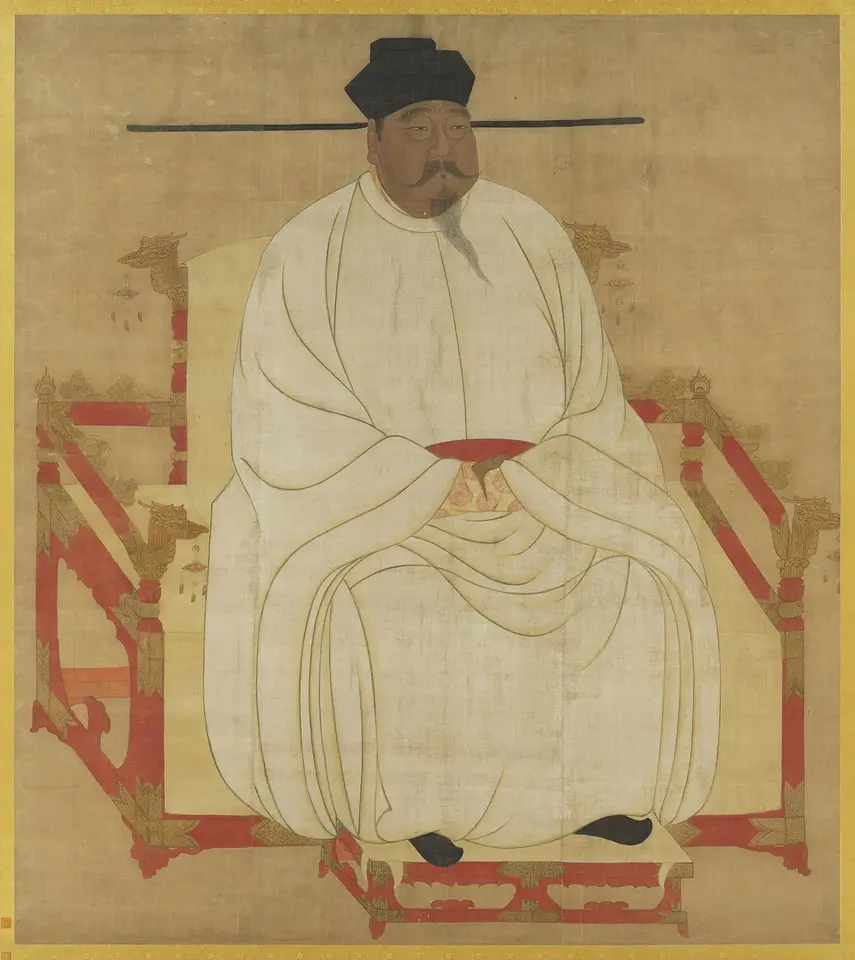
The Later Zhou Campaign against Southern Tang (后周攻南唐, 955 CE–958 CE), also known as the Huainan Campaigns of Emperor Shizong or the Siege of Shouzhou, was a monumental strategic unification war during the late Five Dynasties and Ten Kingdoms period. Adopting strategist Wang Pu's grand plan of "Subduing the South before striking the North," Emperor Shizong of Later Zhou (Chai Rong) personally led three separate military expeditions comprising over 100,000 ground and naval forces into the fertile Huainan region. Centered upon the protracted two-year siege of Shouzhou, Later Zhou commanders Zhao Kuangyin and Li Chongjin routed massive Southern Tang relief armies at Qingliuguan and Zhengyang, capturing generals Huangfu Hui and Yao Feng. After valiant resistance, Shouzhou defender Liu Renshan succumbed to terminal illness, and the fortress fell. Later Zhou combined armies swept down the Huai and Grand Canal to annihilate Southern Tang naval fleets along the Yangtze. Paralyzed by the threat to his capital at Jinling, Southern Tang Ruler Li Jing capitulated, ceding all fourteen Huainan prefectures (sixty counties) north of the Yangtze, abandoning his imperial title, and submitting as a vassal. This decisive triumph shattered Southern Tang supremacy and established the geostrategic foundation for the Song Dynasty's unification of China.
Chai Rong launches the campaign; vanguard cavalry routs Southern Tang defenders at Zhengyang and surrounds Shouzhou.
Chai Rong arrives at Shouzhou; Zhao Kuangyin shatters relief armies at Qingliuguan, capturing Huangfu Hui and Yao Feng.
Han Lingkun seizes Yangzhou, while Later Zhou detachments sweep across the Huainan plains, isolating Shouzhou.
Summer deluges and pestilence force Emperor Shizong to return to the capital, leaving forces to maintain a tight ring around Shouzhou.
Shizong returns to the front line; Later Zhou forces destroy the Southern Tang relief fleet at Wokou, extinguishing southern hope.
After twenty months of heroic resistance, a starved Shouzhou falls; dying commander Liu Renshan is honored by Emperor Shizong.
Shizong launches his final offensive with newly built battle fleets, capturing northern fortresses and descending to the Yangtze.
Later Zhou river squadrons burn the Southern Tang Yangtze defense fleet, deploying cavalry to the northern shore at Guabu Mountain.
Li Jing surrenders all territories north of the Yangtze, abolishes his imperial title, and agrees to annual tribute, concluding the campaign.
In 954 CE (the first year of Xiande), Emperor Taizu of Later Zhou (Guo Wei) passed away, and his adoptive son Chai Rong ascended the throne as Emperor Shizong. Seeking to exploit the imperial succession, Ruler Liu Chong of Northern Han allied with massed Khitan Liao cavalry to invade the south, clashing with Later Zhou forces at the Battle of Gaoping in Shanxi.
When the Later Zhou right wing broke in panic, the youthful Emperor Shizong personally led cavalry counter-attacks under heavy arrow fire. Guard commanders Zhao Kuangyin and Zhang Yongde charged recklessly into the enemy center, turning near-disaster into a historic rout of the allied Northern Han and Liao armies.
The victory at Gaoping consolidated Chai Rong's absolute authority over the military and reversed decades of northern nomad military psychological dominance. Endowed with heroic vision, Emperor Shizong proclaimed his grand vow: "Grant me thirty years: ten years to pacify the realm, ten years to nourish the people, and ten years to establish universal peace," initiating the final phase of ending Five Dynasties fragmentation.
Following Gaoping, Emperor Shizong summoned his court ministers to submit comprehensive memorials on grand strategy. Vice Director of the Ministry of Justice Wang Pu presented his famous Memorial on Pacifying the Borders (Pingbian Ce).
Wang Pu incisively evaluated the geopolitical alignment of the empire: the Khitans possessed formidable nomadic horsemen, while Northern Han was entrenched behind precipitous Shanxi mountain defiles, defying hasty conquest. Conversely, the southern states, though vast and wealthy, were mired in internal court corruption, luxury, and military decay.
Wang Pu proposed the strategy of "Subduing the South before striking the North, and overcoming the vulnerable before tackling the formidable": Later Zhou should first march south to dismantle Southern Tang and Later Shu, absorbing their vast agricultural populations, maritime salt revenues, and grain supplies to enrich the Central Plains; having secured the southern flank, imperial armies could then sweep north to recover the Sixteen Prefectures. Chai Rong adopted this doctrine as the guiding blueprint of the state.
Southern Tang was the largest, most populous, and economically prosperous regime among the Ten Kingdoms. Spanning Jiangnan and the fourteen prefectures between the Huai and Yangtze rivers, it commanded sophisticated wet-rice agriculture and the celebrated maritime salt pans of Hailing, filling state granaries and funding a flourishing artistic Renaissance.
However, Middle Ruler Li Jing was ambitious yet administratively inept. He launched expensive foreign campaigns that annexed Min in Fujian and Chu in Hunan, but brutal misgovernance sparked local insurrections, destroying veteran armies and draining the imperial treasury.
The Huai River plain was the northern protective bulwark of Southern Tang's capital at Jinling (modern Nanjing) and the primary source of its state revenue. Yet Southern Tang courtiers engaged in vicious factional feuds, generals lacked field experience, and the state relied blindly upon the natural moat of the Yangtze, remaining unprepared for Later Zhou's gathering storm.
In November 955 CE (the second year of Xiande), having mobilized grain depots and veteran cavalry, Emperor Shizong formally decreed the campaign against Southern Tang. He appointed Commander of the Metropolitan Cavalry Li Chongjin as supreme commander and Li Deming as vanguard commander, advancing ground and river forces across the border toward the strategic hub of Shouzhou (modern Fengtai and Shouxian, Anhui).
The Southern Tang border garrisons were caught unprepared. Later Zhou cavalry traversed floating pontoon bridges over the Huai River, encountering Southern Tang screening units at Zhengyang. Charging like a tempest, northern horsemen shattered the Southern Tang formations, slaying over a thousand defenders and capturing dozens of war barges.
Military Commissioner Liu Renshan of Shouzhou was stunned by the suddenness of the assault, rapidly withdrawing his forces behind the formidable ramparts of Shouzhou and dispatching urgent couriers to Jinling. Seeing initial success, Emperor Shizong left Kaifeng in January 956 CE to take personal command at the Shouzhou siege lines, opening the first imperial expedition.
To relieve Shouzhou, Ruler Li Jing dispatched fifteen elite divisions totaling over 100,000 men under veteran commanders Huangfu Hui and Yao Feng to garrison Chuzhou (modern Chuzhou, Anhui), seeking to sever Later Zhou supply corridors.
Emperor Shizong ordered Palace Inspector-General Zhao Kuangyin to lead cavalry detachments to dislodge the relief army. The two forces engaged at the narrow mountain defile of Qingliuguan. Huangfu Hui drew up defensive formations across the mountain pass; Zhao Kuangyin led elite shock cavalry across steep mountain goat trails, striking the Southern Tang rear unexpectedly.
Huangfu Hui fell back inside Chuzhou and demolished the moat bridges. Zhao Kuangyin spurred his battle steed across the ditch, leading daring climbers over the parapets. In the street fighting, Huangfu Hui rallied his guards, shouting, "We serve opposing lords—let us duel to decide the day!" Zhao Kuangyin charged into the melee, wounding and capturing Huangfu Hui alive, while deputy commander Yao Feng surrendered. The victory eliminated Southern Tang's primary field army.
Concurrently, general Han Lingkun executed a lightning cavalry raid that captured the vital metropolis of Yangzhou, prompting southern garrisons to flee. Later Zhou forces swept through the Jianghuai plain, securing Chuzhou, Taizhou, and Yangzhou in rapid succession.
Despite sweeping battlefield victories across the countryside, Later Zhou assault armies were halted before the colossal fortifications of Shouzhou. Situated between Mount Bagong and the Huai River, Shouzhou possessed massive granite walls and wide moats. Commander Liu Renshan was a resolute and experienced general who inspired his garrison to defend the ramparts to the death.
Later Zhou troops constructed extensive siege circumvallations, bombarding the city day and night with massive catapults and battering rams. Liu Renshan repeatedly led night sorties, burning siege towers and contesting every breach with timber barricades. In the summer of 956 CE, torrential seasonal rains flooded the Huai basin, inundating the besiegers' trenches and breeding rampant pestilence. Sensing northern instability, Emperor Shizong temporarily returned to Kaifeng in May, leaving his marshals to maintain the blockade.
In the spring of 957 CE, Southern Tang marshaled a second naval and amphibious relief force along the Huai River. Emperor Shizong launched his second personal expedition, establishing headquarters at Zhengyang. At the Battle of Wokou, Later Zhou amphibious squadrons ambushed and routed the relief flotilla, capturing thousands of vessels and cutting off all hope of outside rescue.
Inside Shouzhou, the siege reached its eighteenth month. Starvation devastated the defenders, and chronicles recorded that all bark, hides, and pack animals were consumed, reducing the population to cannibalism. Bedridden by severe illness, Liu Renshan lost consciousness. Believing the defense hopeless, his subordinate officers hoisted white flags and opened the city gates. Entering the fortress, Emperor Shizong praised Liu Renshan's unyielding loyalty, investing him with imperial honors; Liu died shortly thereafter and was posthumously created Prince of Pengcheng.
Following the fall of Shouzhou, panic swept Southern Tang. However, significant naval flotillas remained stationed at Haozhou, Sizhou, and along the northern banks of the Yangtze. Determined to compel total capitulation, Emperor Shizong launched his third personal expedition in late 957 CE.
Emperor Shizong supervised the construction of hundreds of heavy river warships, integrating northern soldiers with southern turncoats to build a powerful navy. In January 958 CE, Shizong arrived before Haozhou (modern Fengyang, Anhui), storming the fortress within days before moving downriver to capture Sizhou.
At the mouth of the Yingluan River near modern Yizheng, Later Zhou fleets engaged the main Southern Tang Yangtze defense fleet in a climactic naval showdown. Shizong beat war drums aboard his flagship as northern boarding crews hurled Greek fire and flaming arrows, incinerating the southern armada. The Southern Tang navy was annihilated, losing tens of thousands of sailors. Later Zhou cavalry galloped directly to Guabu Mountain overlooking the northern bank of the Yangtze, with their war drums clearly audible inside Jinling Palace.
With imperial armies deployed along the riverbank and an amphibious crossing imminent, Ruler Li Jing lost all resolve to continue the war. He dispatched senior ministers Zhong Mo and Li Deming bearing humble petitions and cartloads of gold, jewels, and silk to Shizong's military camp, pleading for peace.
In March 958 CE (the fifth year of Xiande), Southern Tang accepted all punitive peace conditions imposed by Later Zhou: Southern Tang formally ceded all fourteen prefectures north of the Yangtze (Shouzhou, Haozhou, Sizhou, Chuzhou, Guangzhou, Huangzhou, Shuzhou, Qizhou, Chuzhou, Yangzhou, Taizhou, Haizhou, Suzhou, and Hezhou) encompassing sixty counties; Li Jing abolished his imperial title, styling himself merely the "Ruler of Jiangnan"; Southern Tang adopted Later Zhou's "Xiande" calendar era; and the southern regime pledged an enormous annual tribute of hundreds of thousands of bolts of silk, silver bullion, copper coins, and maritime salt.
Spanning two years and four months, the war concluded in total victory for Later Zhou, returning Emperor Shizong to Kaifeng with the complete annexation of Huainan.
The annexation of Huainan represents a monumental turning point in medieval Chinese geopolitics. Prior to 955 CE, southern states utilized the twin watery moats of the Huai and Yangtze rivers to maintain durable defensibility against northern cavalry.
By conquering the fourteen prefectures, Later Zhou extended its borders directly to the northern shore of the Yangtze, neutralizing the natural shield of Jinling. Later Zhou captured the Hailing salt refineries—the largest salt-producing center in China—and secured the southern terminus of the Grand Canal, enriching northern treasuries while crippling the fiscal viability of Southern Tang.
As the preeminent political and military power of the south, Southern Tang's collapse shattered the regional balance of power. The dynasty surrendered one-third of its territory, over half its tax revenues, and hundreds of thousands of veteran soldiers.
To evade northern naval incursions, Li Jing fled his capital, temporarily moving to Nanchang in Jiangxi. The surrender exposed neighboring states such as Later Shu, Southern Han, and Wuyue to northern intimidation, shattering the collective security of the Ten Kingdoms and initiating the end of fifty years of political fragmentation.
The Huainan campaign served as the military laboratory that forged the Song Dynasty. The veteran palace army regiments, river fleets, and tactical commanders developed under Chai Rong became the core apparatus inherited by Zhao Kuangyin during the Chenqiao Mutiny of 960 CE.
Upon ascending the throne, Emperor Taizu of Song executed Chai Rong's unfinished master plan without deviation, leveraging the naval bases and border bridgeheads established in Huainan to absorb Jingnan, Later Shu, Southern Han, and finally Southern Tang. The triumph of Later Zhou in Huainan marked the historical pivot from Five Dynasties fragmentation to Song imperial reunification.