Accession of Emperor Xiaozong
Emperor Xianzong died; Crown Prince Zhu Youtang ascended the throne, inaugurating the Hongzhi era and preparing administrative reforms.
Ming Dynasty (明朝) · HISTORICAL EVENT
弘治中兴
The Hongzhi Restoration (弘治中兴) denotes the peaceful golden age spanning the Hongzhi reign (1487-1505) under Emperor Xiaozong of Ming (Zhu Youtang), characterized by political rectitude, harmonious monarch-minister relations, economic recovery, and social stability. In the late Chenghua era, the imperial government had succumbed to court corruption, eunuch encroachments, and widespread land amalgamation. Ascending the throne in 1487, Emperor Xiaozong…
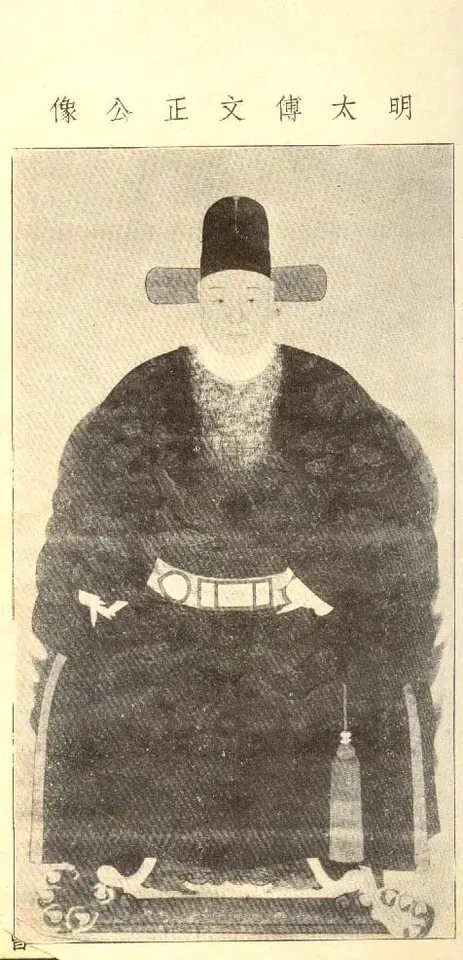
The Hongzhi Restoration (弘治中兴) denotes the peaceful golden age spanning the Hongzhi reign (1487-1505) under Emperor Xiaozong of Ming (Zhu Youtang), characterized by political rectitude, harmonious monarch-minister relations, economic recovery, and social stability. In the late Chenghua era, the imperial government had succumbed to court corruption, eunuch encroachments, and widespread land amalgamation. Ascending the throne in 1487, Emperor Xiaozong initiated sweeping administrative reforms. He dismissed the sycophantic Senior Grand Secretary Wan An, abolished thousands of irregular appointments, and disbanded the dreaded Western Depot secret police. In executive administration, Emperor Xiaozong placed immense trust in upright statesmen, forming a cabinet led by Xu Pu and the celebrated Three Grand Secretaries—Liu Jian, Li Dongyang, and Xie Qian—supported by esteemed ministers Wang Shu and Ma Wensheng. Practicing strict personal frugality and remaining monogamous throughout his life, Emperor Xiaozong reduced taxes, patronized classical scholarship, and commissioned Liu Daxia to tame catastrophic Yellow River flooding. Across eighteen years of domestic tranquility and full public granaries, the Hongzhi era restored dynastic prestige, earning Emperor Xiaozong universal acclaim as the most exemplary sovereign of the Ming dynasty.
Emperor Xianzong died; Crown Prince Zhu Youtang ascended the throne, inaugurating the Hongzhi era and preparing administrative reforms.
The emperor dismissed Wan An, cancelled over 3,400 irregular patents, executed charlatan monks, and abolished the Western Depot.
The throne appointed Wang Shu as Minister of Personnel and Ma Wensheng as Minister of War, assembling an upright civil and military cabinet.
Imperial decrees restricted noble manors, restored seized farmland to peasants, reduced court spending, and settled Jingxiang refugees.
Minister of Revenue Ye Qi introduced the silver-for-vouchers salt reform, boosting state silver revenues and stabilizing frontier defense finances.
Following catastrophic flooding at Zhangqiu, the emperor appointed Liu Daxia as River Conservator, constructing the Huangling Dike to secure the Grand Canal.
The throne commissioned Xu Pu and Li Dongyang to compile the Collected Statutes of the Ming Dynasty in one hundred and eighty volumes.
Following Xu Pu's retirement, Liu Jian, Li Dongyang, and Xie Qian formed an executive partnership, cooperating closely with the sovereign.
Ming frontier detachments repelled Dayan Khan's cavalry raids at Datong and Xuanfu, stabilizing northern border commanderies.
Senior judicial ministers reviewed capital convictions nationwide, commuting unjust sentences and abolishing brutal interrogation methods.
Emperor Xiaozong died in the Qianqing Palace at age thirty-six; Crown Prince Zhu Houzhao succeeded to the throne, concluding the golden age.
During the mid-to-late Chenghua reign under Emperor Xianzong, the Ming administrative apparatus suffered severe deterioration. Dominated by palace favorites such as Consort Wan and eunuchs Wang Zhi and Liang Fang, the court established the Western Depot, an aggressive secret intelligence agency that manufactured arbitrary political persecutions. Within the Grand Secretariat, Senior Grand Secretary Wan An and colluders avoided controversy through total subservience, derided by contemporaries as paper-pasted grand secretaries and mud-sculpted ministers.
Simultaneously, the irregular appointment system subverted bureaucratic meritocracy. Bypassing statutory civil service evaluations by the Ministry of Personnel, palace cliques secured thousands of direct imperial patents for sycophants, merchants, and mystical charlatans who gained favor by presenting elixirs and curiosities. Over three thousand irregular appointees received ministerial salaries and hereditary military ranks, depleting state coffers.
Concurrently, aggressive land amalgamation intensified across the empire. Imperial princes, aristocratic families, and court eunuchs petitioned for vast tracts of fertile land, creating imperial estates and private manors that dispossessed millions of peasant smallholders. In the central provinces, hundreds of thousands of displaced farmers joined major agrarian uprisings throughout the Jingxiang basin, while tribal insurrections flared in Dateng Gorge in the south. The imperial court mobilized extensive armies over decades, consuming substantial military revenues.
Along the northern border, nomadic Mongol confederations under Dayan Khan and regional chieftains crossed the Ordos Loop, raiding frontier commanderies in Yansui, Datong, and Ningxia. Upon his accession, Emperor Xiaozong inherited depleted treasuries, widespread social dislocation, and vulnerable frontiers.
In September 1487, Emperor Xianzong died, and Crown Prince Zhu Youtang ascended the imperial throne, adopting the reign title Hongzhi. Emperor Xiaozong's early childhood was marked by extreme peril. His mother, Consort Ji, was an indigenous Guangxi captive. To shield the child from Consort Wan's murderous purges, loyal eunuch Zhang Min and the deposed Empress Wu hid Zhu Youtang inside the inner palace for six years before his formal recognition.
These early hardships instilled in Zhu Youtang a resilient temperament and deep empathy for common suffering. Ascending the throne at eighteen, Emperor Xiaozong embraced the mission to revitalize the Ming realm, vowing to eradicate corrupt precedents and govern through Confucian benevolence.
In early 1488, Emperor Xiaozong demonstrated decisive executive resolve. Responding to memorials from supervising censors indicting Senior Grand Secretary Wan An for gross misconduct, Xiaozong dismissed Wan An and banished him to his ancestral home, while expelling his partisan collaborators from the Grand Secretariat.
Next, the emperor targeted irregular appointments and fraudulent monastics. Emperor Xiaozong directed the Ministries of Personnel and War alongside the Supreme Court of Justice to audit all irregular patents issued during the preceding reign. Within months, the throne revoked over 3,400 unmerited titles held by merchants, actors, and favorites, stripping civil occupants of office and abolishing hereditary military patents.
Simultaneously, the administration prosecuted corrupt clerics. The charlatan Jixiao, who had extracted immense wealth under Chenghua favor, was tried, executed in the public marketplace, and his illicit fortunes were confiscated. Astrologers Li Zisheng and Deng Chang'en were sentenced to penal exile. Emperor Xiaozong abolished the Western Depot, curtailed the investigative purview of the Eastern Depot and Embroidered Uniform Guard, and prohibited secret police from harassing scholar-officials, revitalizing central political life.
In executive leadership, Emperor Xiaozong demonstrated unmatched skill in selecting capable statesmen. He elevated the senior scholar Xu Pu to lead the Grand Secretariat. Renowned for calm prudence and consensus building, Xu Pu stabilized court debates and adhered to ancestral precedents, providing a foundation for early Hongzhi governance.
Following Xu Pu's retirement, the administration welcomed the golden age of the Three Grand Secretaries: Liu Jian, Li Dongyang, and Xie Qian. Senior Grand Secretary Liu Jian was resolute and strategic, confronting crises with unbending rectitude; Second Grand Secretary Li Dongyang was intellectually brilliant, excelling in statutory drafting and political strategy; while Third Grand Secretary Xie Qian was articulate and outspoken, debating imperial policy with persuasive force. Contemporary scholars praised them as an ideal triumvirate: Li envisioned the strategy, Liu executed the decisions, and Xie articulated the arguments.
Emperor Xiaozong extended absolute confidence to his cabinet ministers. The emperor initiated regular face-to-face audiences at the Wenhua Hall Platform, inviting the three grand secretaries to sit, sip tea, and discuss imperial policy without eunuch intermediaries. The sovereign embraced ministerial remonstrance with humility, approving nearly all draft edicts prepared by his cabinet. This partnership replaced the oppressive atmosphere of early reigns with mutual trust, establishing an enduring ideal of imperial governance.
In directing the executive ministries, Emperor Xiaozong appointed veteran statesmen renowned for moral integrity. The emperor recalled the venerable Wang Shu to serve as Minister of Personnel. Known across the realm for uncompromising incorruptibility, Wang Shu directed civil appointments based solely upon merit and virtue. He rejected irregular petitions from imperial relatives and palace eunuchs, dismissing hundreds of incompetent officials and elevating principled scholars, prompting popular acclaim that universal justice resided in Wang Shu.
In military administration, the throne appointed Ma Wensheng as Minister of War. Proficient in frontier strategy, Ma Wensheng submitted a fifteen-point reform memorial, reorganizing the twelve training divisions around the capital and enforcing strict military inspections. He purged over a thousand absentee officers, elevated combat commanders, and improved firearms integration. During his thirteen-year tenure, Ma Wensheng restored defense readiness, serving as the military pillar of the empire.
In provincial oversight, Emperor Xiaozong strengthened regular audits conducted by provincial governors and regional investigating censors. The administration conducted rigorous triennial reviews, penalizing extortionate magistrates and promoting clean officials. The emperor decreed that local officials extracting unauthorized levies beyond statutory taxes were indicted for grand corruption, curbing grassroots exploitation.
Emperor Xiaozong dedicated himself to the classical ideals of Confucian monarchy. Throughout his reign, the emperor attended the Imperial Lecture and Daily Exposition seminars without interruption, regardless of winter freezes or summer heat. Sitting alongside Hanlin academicians, Xiaozong listened to expositions on the Confucian Classics and historical treatises, conversing on statecraft with intellectual humility.
To ensure open communication, the emperor issued calls for counsel, encouraging central and provincial officials, censors, and academy students to submit critical memorials. Throughout the Hongzhi era, remonstrating officials submitted thousands of memorials criticizing imperial measures and warning of ministerial lapses. Even when memorials contained blunt or intemperate language, Emperor Xiaozong refrained from inflicting corporal beatings or arrests, responding with gentle tolerance or accepting constructive critique.
The emperor restored public petition pavilions outside palace gates, welcoming direct petitions concerning popular grievances. This atmosphere of intellectual freedom energized the scholar-official class with deep civic responsibility.
In agrarian economics, Emperor Xiaozong protected peasant livelihoods. Recognizing that rural uprisings were fueled by land amalgamation, the emperor curbed the expansion of imperial estates and private noble manors. Since their inception in the mid-fifteenth century, imperial estates had seized tens of thousands of acres of private farmland around Beijing.
In 1490, Emperor Xiaozong ordered the Censorate to audit imperial estates managed by eunuchs Wang Jing and Liang Fang. The throne prohibited nobles and eunuchs from encroaching upon peasant holdings or petitioning for additional land grants, restoring hundreds of thousands of acres of stolen farmland to dispossessed cultivators and establishing fixed boundaries for remaining estates. Corrupt estate managers who abused tenants were indicted and punished.
In fiscal management, Emperor Xiaozong practiced personal frugality, slashing court procurement budgets and palace household expenditures by two-thirds. The emperor halted the importation of exotic birds and luxury curiosities, issuing frequent tax exemptions for drought-stricken prefectures. In the Jingxiang basin, the administration registered displaced farmers into local household rolls, providing draft oxen and seed grain to settle thousands of farming families, expanding arable acreage and stabilizing the registered population beyond sixty million subjects.
In the early Hongzhi years, catastrophic flooding of the Yellow River threatened national survival. The river repeatedly burst its banks at Zhangqiu (modern Yanggu, Shandong), inundating agricultural plains and severing the Grand Canal, choking grain transport to Beijing. Previous flood commissions had foundered due to administrative mismanagement and exorbitant expenditures.
In 1493, Emperor Xiaozong appointed Censor Liu Daxia as River Conservator to direct flood remediation. Liu Daxia inspected floodwaters on foot, formulating a scientific strategy of building continuous dikes to direct main currents while excavating bypass channels to disperse excess volume.
Mobilizing hundreds of thousands of soldiers and laborers, Liu Daxia constructed the thirty-seven-li Huangling Dike along the northern bank, preventing the river from breaching the Grand Canal corridor. He simultaneously excavated over ten relief channels, directing floodwaters smoothly toward the sea. After years of labor, the Yellow River was confined to its natural channel, Grand Canal grain shipments resumed, and agricultural plains were preserved. The emperor awarded Liu Daxia silver bullion and honorary robes, cementing the Hongzhi river conservancy as a landmark in Chinese hydraulic history.
In legal governance, Emperor Xiaozong upheld the Confucian ethos of judicial mercy. Upon his accession, the emperor declared a general amnesty, releasing thousands of wrongful detainees.
In 1492 and 1500, the emperor convened grand judicial reviews. Senior judges from the Ministry of Justice, the Censorate, and the Supreme Court of Justice convened at the capital to review all pending capital sentences, rectifying thousands of miscarriages of justice and commuting exile or labor sentences. The emperor strictly prohibited physical torture during judicial interrogations and abolished the brutal standing-cangue penalty introduced under Chenghua.
In constitutional codification, Emperor Xiaozong commissioned Grand Secretaries Xu Pu and Li Dongyang in 1497 to compile the Collected Statutes of the Ming Dynasty in one hundred and eighty volumes. Organized around the functional jurisdictions of the Six Ministries, the compendium standardized imperial administrative, ritual, economic, military, and judicial regulations, providing an enduring legal encyclopedia for late imperial governance.
Along northern frontiers, the Hongzhi administration pursued a resolute defensive strategy. Addressing the vulnerability of northern defenses, Emperor Xiaozong implemented Minister of War Ma Wensheng's strategic proposals, modernizing garrison fortifications across the Nine Frontier Commands.
The central treasury dispatched tens of thousands of warhorses to reinforce cavalry units, repaired hundreds of fortress towers along the Great Wall, and eliminated military embezzlement among garrison commanders. The emperor promoted distinguished commanders, including Duke Zhu Yong, Xu Tai, and Wang Yue, to direct frontier detachments. In 1498 and 1500, when Dayan Khan launched massed cavalry raids against Datong and Xuanfu, imperial forces utilized coordinated artillery and archery to shatter the invading columns, repelling the incursions.
The court expanded defensive watchtowers and promoted military-civilian agricultural colonies along the Great Wall marchlands. These measures stabilized the northern perimeter for over a decade, shielding the central plains from nomadic disruption and creating a secure environment for domestic recovery.
In fiscal policy and merchant commerce, the Hongzhi administration enacted a fundamental overhaul of the traditional salt monopoly. Under the original grain-salt barter system, merchants were required to transport grain directly to remote northern frontier garrisons to obtain salt vouchers. By the late fifteenth century, court favorites monopolized vouchers, leaving private merchants waiting decades to redeem allocations and leaving frontier garrisons starved of provisions.
In 1492, Minister of Revenue Ye Qi introduced the monetary voucher conversion system with royal assent. The court abolished the mandatory physical grain transport requirement, allowing merchants to deposit silver bullion directly into the central treasury in Beijing at statutory rates to receive salt vouchers redeemable at coastal salt pans.
This reform aligned state finance with the growing commercialization and silver monetization of the mid-Ming economy. By eliminating arduous overland transport, it reduced operational costs for salt merchants while generating over one million ounces of silver annually for imperial reserves. The central government dispatched these silver revenues directly to northern frontier garrisons as military pay, securing reliable fiscal support for border defenses.
The Grand Canal served as the vital economic artery connecting southern agricultural basins with the imperial capital. During the Hongzhi era, the administration dredged the canal approaches at Tongzhou, the Qingjiangpu locks in Huai'an, and southern river waterways, restoring smooth transit.
The court refined grain collection systems through the forward delivery and official transport regulations. Previously, southern peasants were compelled to navigate private riverboats thousands of miles to deliver grain taxes directly to Beijing, suffering catastrophic losses from shipwrecks and administrative extortion. The Hongzhi court decreed that farming households were only required to deliver grain to local riverbank depots, after which professional canal transport troops handled long-distance navigation under state allowances.
This reform reduced rural labor impositions and halted flight among tax-paying families. Supported by this logistical network, over four million bushels of southern grain were delivered annually to the imperial depots at Tongzhou and Beijing. Stored within well-maintained public silos, grain reserves accumulated sufficient supplies to sustain the capital population for years, creating an image of imperial abundance.
Emperor Xiaozong championed classical scholarship and orthodox Confucian learning. In 1499, the emperor appropriated substantial palace funds to direct the Ministry of Works in rebuilding and expanding the ancestral Temple of Confucius and the Kong Family Mansion in Qufu, Shandong. Completed across years of construction, the temple featured the monumental Dacheng Hall and Apricot Altar, designed according to imperial architectural specifications to honor the sage.
In higher education, Emperor Xiaozong expanded the National Academy in Beijing, implementing structured examinations to evaluate imperial academy students. The court distributed authenticated editions of the Five Classics and Four Books to provincial academies and provided stipends for impoverished scholars. This cultural climate fostered intellectual vitality.
In the imperial examination of 1499, the philosophical master Wang Yangming (Wang Shouren) obtained his metropolitan degree, beginning his intellectual career. Simultaneously, the literary circle known as the Earlier Seven Masters—led by Li Mengyang, He Jingming, and Kang Hai—rose to prominence in Beijing, advocating an archaist literary revival that rejected the artificial styles of early Ming prose in favor of robust classical expressions.
In the imperial palace, court intrigue and consort rivalries frequently destabilized dynastic politics. Emperor Xiaozong demonstrated extraordinary moral self-discipline, standing as the only strictly monogamous sovereign across two millennia of imperial Chinese history. Throughout his lifetime, the emperor took no secondary consorts, concubines, or court ladies, living in shared domestic affection with Empress Zhang.
This disciplined household eradicated factional strife and succession struggles within the inner court. Empress Zhang maintained modest domestic standards, while palace eunuchs were held to strict behavioral codes. Although Emperor Xiaozong occasionally extended favors to the empress's brothers, Zhang Heling and Zhang Yanling, the sovereign acted upon memorials from Grand Secretaries Liu Jian and Li Dongyang, warning the imperial in-laws against abuses and barring them from executive offices. The tranquility of the inner palace provided a stable domestic environment for outward governance.
Supported by administrative reforms, the Hongzhi era fostered an agricultural and demographic revival. Regional community granaries and state depots stored tens of millions of bushels of grain, stabilizing grain prices at nominal rates. Interregional trade flourished through commercial hubs in Suzhou, Songjiang, Hangzhou, and Huizhou, transforming Jiangnan into the economic center of the empire.
Emperor Xiaozong frequently remitted tax arrears across northern and southern provinces, ordering public distributions of silver and grain whenever natural disasters struck. Protected by domestic peace, the registered imperial population climbed beyond sixty million subjects. The uprightness of the bureaucracy, the sufficiency of the populace, and the moral tone of the scholar-official class rendered the Hongzhi era an exemplary model of benevolent imperial governance.
The primary achievement of the Hongzhi Restoration was the arrest of systemic administrative decay following the Chenghua era. By purging corrupt cliques, revoking thousands of irregular appointments, curbing imperial estates, and settling displaced agrarian populations, Emperor Xiaozong restored state solvency and agrarian production. This benevolent governance extended dynastic longevity by over a century, averting early systemic collapse.
In institutional culture, the Hongzhi era established the ideal model of monarch-minister relations in late imperial China. Emperor Xiaozong abandoned the despotic and arbitrary methods of early Ming sovereigns, conducting governance through consultation, respecting cabinet decisions, and protecting freedom of remonstrance. The scholar-official class attained unprecedented prestige and civic responsibility, establishing an enduring administrative ideal remembered by subsequent generations.
Nevertheless, because the Hongzhi Restoration relied upon the personal moral self-discipline of Emperor Xiaozong and upright statesmen rather than structural overhauls of imperial institutions—such as the abolition of imperial estates, the elimination of eunuch military oversight, or the restructuring of hereditary garrisons—its accomplishments proved vulnerable. Following Emperor Xiaozong's early death in 1505, the accession of the juvenile Emperor Wuzong allowed eunuchs like Liu Jin to seize authority, illustrating the structural fragility of traditional imperial governance.