Western Xia Imperial Proclamation
Li Yuanhao declares himself emperor of Western Xia, initiating the Song-Xia Wars.
Northern Song Dynasty (北宋) · HISTORICAL EVENT
好水川之战
The Battle of Haoshuichuan was a catastrophic military engagement fought in March 1041 between the Northern Song Dynasty and the newly established Western Xia state at the foot of Mount Liupan. Following the founding of Western Xia by Emperor Jingzong (Li Yuanhao) and his victory at Sanchuankou in 1040, the Song court dispatched civil ministers Han Qi and Fan Zhongyan to oversee Shaanxi border defenses. Disregarding Fan Zhongyan's prudent doctrine of…
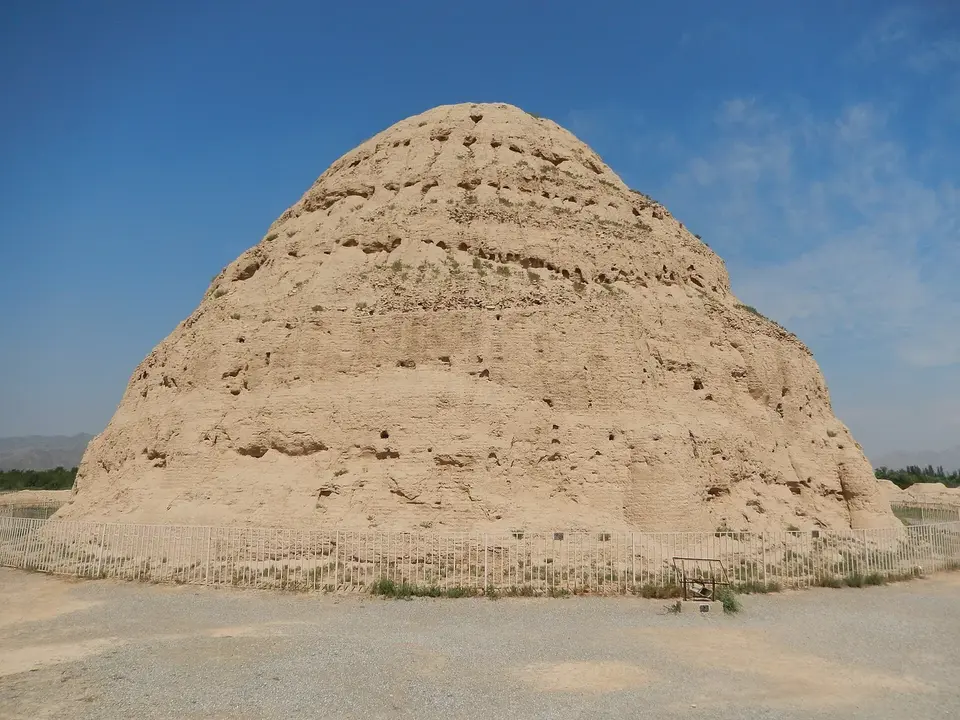
The Battle of Haoshuichuan was a catastrophic military engagement fought in March 1041 between the Northern Song Dynasty and the newly established Western Xia state at the foot of Mount Liupan. Following the founding of Western Xia by Emperor Jingzong (Li Yuanhao) and his victory at Sanchuankou in 1040, the Song court dispatched civil ministers Han Qi and Fan Zhongyan to oversee Shaanxi border defenses. Disregarding Fan Zhongyan's prudent doctrine of fortified defense, Han Qi authorized an aggressive offensive commanded by general Ren Fu. Exploiting Ren Fu's impetuous pursuit of retreating decoys, Li Yuanhao lured eighteen thousand Song troops deep into the treacherous, narrow defiles of Haoshuichuan. Using whistling pigeons released from sealed boxes as an ambush signal, one hundred thousand Western Xia heavy cavalry and mountain infantry swept down from cliffside ridges, encircling and annihilating the Song army. The disaster compelled the Song government to overhaul its northwest frontier defense and catalyzed the Qingli Reforms.
Li Yuanhao declares himself emperor of Western Xia, initiating the Song-Xia Wars.
Tangut armies defeat Song forces at Sanchuankou; Han Qi and Fan Zhongyan take command of Shaanxi.
Court adopts Han Qi's offensive doctrine; Li Yuanhao launches feint attacks toward Weizhou.
Ren Fu leads eighteen thousand troops in pursuit of Tangut decoys, violating Han Qi's orders.
Ren Fu opens sealed boxes in Haoshuichuan, triggering a massive Tangut mountain encirclement.
Ren Fu and senior commanders die in combat; over ten thousand Song troops perish; Han Qi weeps in Weizhou.
In 1038, Tangut chieftain Li Yuanhao proclaimed himself Emperor of Western Xia at Xingqing, asserting imperial parity with the Northern Song Dynasty. Outraged by this defiance, Emperor Renzong of Song stripped Li Yuanhao of imperial titles and commercial trading privileges, inaugurating the Song-Xia Wars.
In the spring of 1040, Western Xia forces achieved a decisive victory at the Battle of Sanchuankou, capturing prominent Song generals and menacing Yan Prefecture. In response, Emperor Renzong reorganized the Shaanxi military command, appointing renowned scholar-officials Han Qi and Fan Zhongyan as joint vice pacification commissioners.
However, strategic dissension split the Song high command. Fan Zhongyan advocated a long-term defensive doctrine centered on constructing mutually supporting stone fortresses, developing military agricultural colonies, and refusing set-piece battles against mobile Tangut cavalry. Conversely, Han Qi argued that passive defense would bleed imperial finances white while leaving frontier populations vulnerable, urging an aggressive, multi-pronged counteroffensive into Western Xia territory. The imperial court endorsed Han Qi's offensive strategy.
In early 1041, Li Yuanhao gathered intelligence regarding Song strategic divisions. Mobilizing one hundred thousand elite cavalry from Tiandu Fortress along the Hulu River valley, Li Yuanhao devised an operational trap. He deployed diversionary detachments to attack minor Song outposts at Zhangjia Fort while circulating rumors of an imminent assault on Weizhou, concealing his main striking force within the forested gorges of Haoshuichuan.
In March 1041, upon learning of Tangut raids threatening Weizhou, Han Qi dispatched Jingyuan garrison commander Ren Fu, accompanied by vanguard officer Sang Yi and generals Geng Fu and Wang Gui, leading eighteen thousand elite cavalry and infantry to relieve frontier garrisons. Before departure, Han Qi issued strict tactical orders: Ren Fu was instructed to execute limited flanking ambushes, cut off enemy retreat routes, and under no circumstances advance into unmapped mountain gorges.
Arriving at Zhangjia Fort, Sang Yi engaged Western Xia diversionary detachments, which deliberately broke formation and fled, abandoning camels, horses, and silver vessels. Dazzled by easy spoils and eager for military honors, Sang Yi initiated an impetuous pursuit. Ren Fu, fearing that his subordinate would claim the campaign's supreme glory, led the main body in headlong pursuit. For three days, the Song army marched relentlessly into rugged, ascending mountain defiles, entirely disregarding Han Qi's orders.
On the afternoon of March 14, the exhausted Song soldiers entered the narrowest corridor of Haoshuichuan west of Mount Liupan. Hemmed in by vertical cliffs with only a narrow riverbed path, the Song troops were parched, famished, and severely disorganized. Near the canyon floor, soldiers discovered dozens of sealed wooden boxes wrapped with cord and mud seals. Sounds emanated from within the boxes.
Suspecting concealed intelligence or hidden poison, Ren Fu ordered his men to slice open the mud seals. Instantly, over a hundred domestic pigeons equipped with shrill ceramic whistles burst from the crates, spiraling into the sky with piercing shrieks that echoed throughout the canyon. This was Li Yuanhao's pre-arranged signal for total assault.
Immediately, war drums thundered from surrounding canyon ridges. Tens of thousands of Tangut Iron Sparrow heavy cavalry and mountainous tribal shock troops poured down from high cliffs, closing both ends of the gorge. The disorganized Song infantry were trapped within the rocky riverbed, unable to deploy protective shield walls or utilize crossbows effectively.
Song forces fought with desperate courage. Sang Yi charged into the enemy vanguard and was felled by a volley of arrows. Ren Fu rallied his personal guards, fighting through multiple arrow wounds. When a Tangut spear pierced his left cheek, his attendants urged him to change into common soldier attire to escape, but Ren Fu shouted that a commander must die for his sovereign, charging forward with his sword until he fell in combat. His son Ren Huai and generals Geng Fu and Wang Gui were all slain. Aside from a detachment of one thousand men under Zhu Guan who survived atop a cliff, virtually the entire Song army was wiped out.
The Battle of Haoshuichuan inflicted catastrophic damage upon Northern Song military power. The loss of over ten thousand veteran troops and multiple senior commanders exposed the Guanzhong plains to Tangut cavalry raids, causing panic throughout Shaanxi.
Operationally, the defeat forced the Northern Song court to abandon aggressive offensive strategies into the Ordos desert. Emperor Renzong dismissed chief commissioner Xia Song and demoted Han Qi, elevating Fan Zhongyan to supreme frontier authority. The Song court fully implemented Fan Zhongyan's doctrine: constructing hundreds of fortified stone border outposts, expanding military agricultural colonies, and relying on tactical defense to exhaust Tangut resources.
Politically, the tragedy exposed severe structural deficiencies within the Northern Song military system, including bureaucratic interference in field generalship, inadequate cavalry development, and systemic tactical incompetence among peacetime garrison troops. When Han Qi returned to Weizhou, thousands of mourning relatives surrounded his horse, weeping and casting clods of earth. Deeply shaken by this tragedy, Han Qi, Fan Zhongyan, and Fu Bi resolved to overhaul imperial institutions, directly inspiring the launch of the Qingli Reforms in 1043.
Traditional historians have universally cited the Battle of Haoshuichuan as an archetypal lesson in the dangers of tactical arrogance and command insubordination. The History of Song censured Ren Fu for abandoning strategic caution in pursuit of petty plunder, noting that his valor in death could not expiate the destruction of his army.
In the Comprehensive Mirror for Aid in Governance, Sima Guang analyzed the battle as an inevitable outcome of strategic hubris, praising Fan Zhongyan's fortified containment doctrine as the only viable defense against steppe cavalry.
Modern military historians evaluate the Battle of Haoshuichuan as a brilliant masterpiece of asymmetric ambush warfare. Li Yuanhao's psychological exploitation of Song overconfidence, his coordination of diversionary feints, and his novel use of acoustic pigeon signaling established the engagement as one of the most celebrated tactical traps in ancient Chinese military history.