Outbreak of the First Sino-Japanese War
Naval clashes erupt off Pungdo, initiating war between Qing China and Meiji Japan, leading to successive Qing defeats
Qing Dynasty (清朝) · HISTORICAL EVENT
公车上书
The Gongche Petition was a massive modern political petition and patriotic salvation movement initiated by provincial examination candidates in Beijing in April 1895 (the twenty-first year of the Guangxu era of the Qing Dynasty). Following the catastrophic defeat in the First Sino-Japanese War, news of the humiliating Treaty of Shimonoseki arrived in Beijing just as thousands of provincial scholars gathered for the triennial metropolitan examinations.…
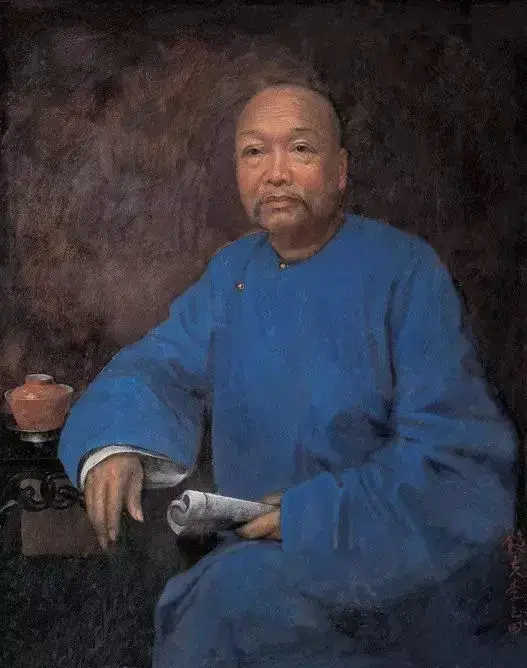
The Gongche Petition was a massive modern political petition and patriotic salvation movement initiated by provincial examination candidates in Beijing in April 1895 (the twenty-first year of the Guangxu era of the Qing Dynasty). Following the catastrophic defeat in the First Sino-Japanese War, news of the humiliating Treaty of Shimonoseki arrived in Beijing just as thousands of provincial scholars gathered for the triennial metropolitan examinations. Outraged by the territorial cession of Taiwan and astronomical war indemnities, Taiwanese candidates led by Wang Chunyuan first submitted impassioned protests to the Censorate. Concurrently, Kang Youwei and Liang Qichao convened provincial scholars at Songyun Convent outside Xuanwumen, drafting an 18,000-word memorial demanding the rejection of the peace treaty, relocation of the capital, military modernization, and comprehensive institutional reforms. Although the collective petition was halted when the Qing court rushed to ratify the treaty, over thirty independent provincial petitions and Kang's subsequent personal memorial broke the long-standing imperial prohibition against literati political activism. The Gongche Petition marked the transition of bourgeois reformist thought from scholarly enlightenment into national political mobilization, opening the prelude to the Hundred Days' Reform of 1898.
Naval clashes erupt off Pungdo, initiating war between Qing China and Meiji Japan, leading to successive Qing defeats
Li Hongzhang and Ito Hirobumi conclude the treaty ceding Taiwan, Penghu, and Liaodong with 200 million taels indemnity
Taiwanese scholars Wang Chunyuan, Luo Xiuhui, and Huang Zongding submit memorials to the Censorate protesting the cession of Taiwan
Kang Youwei convenes provincial scholars at Songyun Convent and drafts the 18,000-word memorial demanding resistance and institutional reform
News arrives of imperial authorization for treaty ratification in Yantai; the 18-province joint memorial is aborted as candidates disperse
Plenipotentiaries exchange instruments of ratification in Yantai, formally enacting the Treaty of Shimonoseki and sparking national grief
Having earned the jinshi degree, Kang submits his 18,000-word memorial through the Censorate to Emperor Guangxu
Emperor Guangxu rescripts that Kang's memorial be transcribed and distributed to the Grand Council and provincial governors for deliberation
Kang Youwei and Liang Qichao establish the Universal Gazette and the Society for the Study of National Strengthening in Beijing
In 1894 (the twentieth year of the Guangxu reign), the First Sino-Japanese War broke out between Qing China and Meiji Japan. The Beiyang Fleet, once considered the premier naval force in East Asia, was completely annihilated in the Yellow Sea and Weihaiwei, while Qing land armies suffered crushing defeats across the Korean Peninsula and the Liaodong Peninsula. This catastrophic collapse shattered thirty years of accomplishments under the Self-Strengthening Movement and the facade of the Tongzhi Restoration. The Qing Empire found itself facing unprecedented humiliation and the immediate danger of imperialist partition. Capitalizing on its military triumph, Japan compelled the Qing court to dispatch Li Hongzhang to Japan as plenipotentiary to negotiate terms of peace.
On April 17, 1895 (the twenty-third day of the third month of the twenty-first year of Guangxu), Li Hongzhang and Japanese Prime Minister Ito Hirobumi signed the Treaty of Shimonoseki at the Shunpanro hall. The treaty stipulated that the Qing court recognize the complete independence of Joseon Korea, cede the Liaodong Peninsula, the entire island of Taiwan and all affiliated islands, and the Penghu Archipelago to Japan, pay an astronomical indemnity of 200 million taels of silver, open Shashi, Chongqing, Suzhou, and Hangzhou as treaty ports, and permit Japanese nationals to establish industrial manufacturing enterprises in open ports. This treaty subjected China to unprecedented subjugation and national peril.
The conclusion of the Treaty of Shimonoseki coincided with the triennial metropolitan imperial examination (huishi) held in Beijing. Thousands of provincial degree holders (juren) from across the eighteen provinces of the empire had assembled in the imperial capital. The catastrophic news of territorial cessions and massive indemnities struck Beijing like a thunderbolt, triggering intense shock and indignation across scholar-official circles. Since the Shunzhi reign in the early Qing dynasty, the imperial authorities had instituted strict prohibitions against lower-degree scholars forming political societies, assembling in public, or petitioning the throne on affairs of state. However, confronted with imminent existential ruin, these centuries-old institutional taboos evaporated overnight.
Indignation swept through the streets of Beijing, while prominent court figures shared this deep grievance. Hanlin Academy Reader Wen Tingshi and Associate Grand Secretary Weng Tonghe strongly opposed royal ratification of the treaty. Taiwanese scholars in Beijing, facing the tragic prospect of foreign occupation and separation from their ancestral homeland, were overwhelmed with grief. Taiwanese candidates Wang Chunyuan, Luo Xiuhui, and Huang Zongding resolved to resist at all costs. The patriotic anger of the assembled literati rapidly coalesced into a unified demand for systemic self-strengthening and radical institutional reform.
The term gongche (literally "public carriage") possesses deep roots in Chinese institutional and cultural history. It first appeared in the ancient Classic of Poetry (Shijing), where it referred to chariot warfare conducted on behalf of sovereign rulers. During the Han Dynasty, when scholars and men of merit were officially summoned by imperial decree to take up public posts, the imperial court dispatched specially designated government carriages to transport them to the capital ministries. Consequently, the term evolved into an official institution; the Han court created the office of the Prefect of the Public Carriage (Gongcheling) and the Public Carriage Major (Gongche Sima) responsible for receiving petitions from subjects and welcoming summoned talents.
As recorded in the Records of the Grand Historian (Shiji), Dongfang Shuo arrived in Chang'an and submitted an imperial memorial at the Public Carriage Office that filled three thousand bamboo slips. Throughout the Han period, virtuous and outspoken scholars waited for imperial audiences at the Gongche. By the Tang and Song dynasties, as imperial civil service examinations replaced aristocratic recommendation as the primary ladder of bureaucratic recruitment, the term gongche naturally became affiliated with examination candidates. In Ming and Qing times, gongche had become the universal literary designation for juren degree holders journeying to the capital to sit for the metropolitan examinations, with the imperial stipend for travel expenses echoing ancient Han conveyance provisions. This deep institutional resonance led contemporaries and subsequent historians to designate the patriotic petition movement of 1895 as the "Gongche Petition."
On March 18, 1895, Guangdong scholar Kang Youwei arrived in Beijing accompanied by his disciple Liang Qichao to sit for the metropolitan examinations. By March 21, clandestine intelligence regarding the humiliating treaty provisions had already leaked into literati circles. Following the formal signing on March 23, public outrage erupted. Before the treaty was formally ratified by the throne, candidates from various provinces spontaneously organized separate delegations to submit petitions to the Censorate (Duchayuan). Crowds of scholars in ceremonial robes gathered outside the Censorate gates, submitting memorials and confronting senior ministers in the streets.
Among all provincial delegations, the Taiwanese candidates experienced the deepest anguish. Confronting the imminent annexation of their homeland, Wang Chunyuan of Anping, Luo Xiuhui of Fengshan, and Huang Zongding of Tamsui, joined by Taiwanese metropolitan officials Li Qingqi and Ye Tiyan, submitted a joint petition to the Censorate on April 22 (the twenty-eighth day of the third month). They argued passionately that Taiwan was the natural maritime bulwark guarding China's seven southeastern provinces, declaring that if the court abandoned Taiwan, millions of its loyal inhabitants would fight to the death against the invaders. This heroic plea galvanized the resolve of the entire candidate community in Beijing.
Kang Youwei, who had spent years examining Western political thought and institutional models, perceived this crisis as a historic opportunity to unite China's intellectual elite and press the Qing court into systemic reform. Kang and Liang chose the Songyun Convent in Dazhiqiao Hutong outside Xuanwumen as their operational headquarters. Songyun Convent had originally served as the residence and shrine of Yang Jisheng (styled Jiaoshan), a renowned Ming dynasty official who had been martyred after courageously impeaching the corrupt Grand Secretary Yan Song. Because Yang was venerated as the ultimate exemplar of moral rectitude and ministerial integrity, Songyun Convent functioned as an ideological sanctuary for literati assemblies. Kang and his associates mobilized scholars across provincial guilds, advocating for a unified memorial endorsed by all eighteen provinces.
The assembled scholars unanimously tasked Kang Youwei with drafting the collective petition. Over a period of one day and two nights in his lodgings near Xuanwumen, Kang composed an 18,000-word memorial titled Memorial to the Reigning Emperor (Shang Jinshang Huangdi Shu), assisted by Liang Qichao who transcribed and proofread the text. The memorial systematically analyzed the domestic and institutional roots of the defeat, warning that China would follow the tragic fates of Poland and India if it clung to obsolete ancestral precedents. The petition advanced four overarching national salvation strategies.
The first strategy urged the emperor to issue edicts to inspire national morale. Kang proposed an imperial edict of self-reproach (zui ji zhi zhao) acknowledging royal errors and rallying domestic and overseas Chinese in national unity. He demanded an edict of clear retribution (ming fa zhi zhao) to severely penalize ministers and generals who had fled battle or advocated appeasement, while lavishly rewarding officers and soldiers who had fought with distinction. Furthermore, an edict seeking talent (qiu cai zhi zhao) should abolish bureaucratic seniority and recruit reform-minded scholars.
The second strategy advocated relocating the imperial capital to secure national survival (qiandu ding tianxia zhi ben). Kang argued that Beijing, situated vulnerably near the northern frontier and maritime coast, was prone to naval blockade and swift terrestrial assault. The Qing court should immediately relocate the capital to Xi'an in the Guanzhong basin, establishing deep strategic defense behind mountain ranges. By forcing Japanese invasion forces to overextend their supply lines into China's vast interior, the empire could sustain protracted resistance. Kang demanded that the throne renounce the peace treaty and divert the 200 million taels of silver earmarked for indemnities directly into funding military mobilization.
The third strategy proposed modernizing the armed forces (lianbing qiang tianxia zhi shi). The obsolete Green Standard Army and regional mercenary forces (yong) should be disbanded and reconstructed along Western military lines. Military leadership should be based on competence rather than seniority, modern firearms and naval ironclads should be procured, and patriotic military divisions should be raised among Chinese merchant communities in Southeast Asia to reinforce national defense.
The fourth strategy constituted the core institutional reform program: implementing systemic institutional reforms (bianfa cheng tianxia zhi zhi). Kang emphasized that military and strategic adjustments were mere emergency expedients; enduring salvation required comprehensive domestic modernization across three dimensions: enriching the state (fuguo), nurturing the populace (yangmin), and educating the people (jiaomin).
Under the program of enriching the state, the memorial advocated issuing uniform national paper currency, establishing a national mint for standardized silver coinage, founding a modern postal network, and eliminating administrative barriers to encourage private commercial capital in constructing railways, opening mines, founding machinery factories, and operating modern shipping lines.
Under nurturing the populace, Kang proposed four practical initiatives: agricultural development through agricultural societies, modern machinery, and scientific silk and tea societies; promotion of manufacturing via an Imperial Technology Bureau (Kaogongyuan) translating Western industrial treatises and enforcing patent rights; commercial patronage through modern chambers of commerce, joint-stock corporations, and the abolition of domestic transit taxes (likin); and poverty relief through state-sponsored frontier reclamation projects and welfare hospices for the disabled and destitute.
Under educating the people, the memorial called for establishing modern primary, secondary, and higher educational academies nationwide, abolishing the rigid eight-legged essay in civil examinations in favor of practical policy and Western scientific disciplines, rewarding scholarly authorship, permitting independent newspapers, streamlining imperial ministries to eliminate redundant offices, eradicating corruption, and establishing consultative councilors (yilang) to allow scholar-gentry participation in state governance. This visionary document constituted the first comprehensive bourgeois reform blueprint in modern Chinese history.
Once the draft was established at Songyun Convent, Kang Youwei and his disciples launched an extensive mobilization campaign across Beijing. Liang Qichao and Mai Menghua visited provincial guildhalls representing Hunan, Sichuan, Zhejiang, Jiangxi, Zhili, and Shandong, urging scholars to transcend regionalism in the face of national peril.
Young examination candidates, already agitated by frontline losses, responded with great fervor. Scholars flocked to Songyun Convent to append their signatures and personal seals to the petition. Transcripts circulated rapidly across provincial guildhalls. According to Kang Youwei's later account in The Record of the Gongche Petition (Gongche Shangshu Ji), over 1,200 candidates representing eighteen administrative provinces signed the petition within several days, creating an unprecedented spectacle of collective political mobilization outside the Xuanwumen gates.
For decades, mainstream historiography adhered to Kang Youwei's account in My History (Wo Shi) and The Record of the Gongche Petition, which asserted that on May 2, 1895 (the eighth day of the fourth month), Kang led over a thousand candidates and several thousand citizens to the Censorate, but senior officials refused to accept the petition on grounds that the throne had ratified the treaty the previous day.
However, modern archival research conducted by historians including Huang Zhangjian, Kong Xiangji, and Peking University professor Mao Haijian at the First Historical Archives of China has revised this traditional narrative through examination of Censorate registers, Grand Council diaries, and imperial diaries.
Archival records reveal two distinct dimensions of the Gongche movement. The first dimension comprised over thirty independent petitions organized by provincial candidate groups. The Censorate accepted thirty-one separate memorials signed by 1,555 candidates between late March and early May, presenting all of them directly to Emperor Guangxu. In fact, on May 2 alone, the Censorate accepted and forwarded fifteen separate anti-treaty memorials without obstruction.
The second dimension was Kang Youwei's joint eighteen-province memorial. Archival evidence shows that Kang's massive document was never formally submitted to the Censorate on May 2. As recorded in the preface to The Record of the Gongche Petition by "The Disillusioned Old Man of Shanghai" (Hushang Aishi Laoren Weihuanshi), news arrived late on May 1 that Emperor Guangxu, pressured by Empress Dowager Cixi and peace advocates, had dispatched authorization to exchange ratifications in Yantai. Realizing that ratification was an accomplished fact and fearing imperial prosecution, the gathered candidates disbanded in disarray on May 2, with several provincial representatives withdrawing their signatures.
This archival reality is corroborated by Xu Qin's 1897 account in Notes on Master Nanhai's Four Memorials, which explicitly recorded that the planned submission was aborted after signatories scattered upon hearing the ratification news. Kang Youwei's later claims that the Censorate refused the petition and that over a thousand scholars assembled simultaneously inside Songyun Convent (which possessed an interior courtyard capable of holding only dozens of people) were retrospective literary embellishments designed to enhance his political stature.
Furthermore, scholar Zhang Hairong confirmed through The Collected Works of Jing Yuanshan that the pseudonymous author "Weihuanshi" was Shen Shandeng, a Qing Hanlin compiler and 1868 metropolitan graduate living in Shanghai. While Kang's faction utilized Shanghai printing houses to build his reputation as a national reform leader, the intellectual and social shockwave generated by his 18,000-word memorial remained immense and undeniable.
Although the collective petition dissolved prior to formal submission, Kang Youwei capitalized on his institutional advancement. On May 7, 1895 (the thirteenth day of the fourth month), the metropolitan examination results were posted, and Kang earned the jinshi degree, subsequently receiving an appointment as an expectant Secretary in the Ministry of Works. With this legitimate status as an imperial official, Kang possessed the statutory privilege to memorialize the throne.
On May 9, 1895 (the fifteenth day of the fourth month), Kang formally submitted a revised version of his 18,000-word memorial to the Censorate in his capacity as expectant Secretary. The Censorate duly processed the document, transcribed a court copy, and delivered it directly to the Yangxin Hall for the Guangxu Emperor's personal inspection.
Emperor Guangxu, deeply anguished by the territorial losses and diplomatic humiliation, was profoundly moved by Kang's incisive analysis, patriotic devotion, and systemic reform proposals. The emperor issued an imperial rescript commanding the Grand Council to prepare multiple copies of the memorial and distribute them to grand councilors, imperial princes, and provincial governors-general across the empire for formal deliberation.
This imperial endorsement catapulted Kang from an obscure provincial scholar to the preeminent spokesperson of national reform. Emperor Guangxu subsequently summoned Weng Tonghe and Sun Jianai to inquire into Kang's scholarship and governance concepts, elevating reform discourse from peripheral literati agitation into the highest policy agenda of the imperial court.
The political momentum generated by the Gongche Petition swiftly transformed into organized sociopolitical activism. In August 1895 (the seventh month of the twenty-first year of Guangxu), backed by imperial tutors Weng Tonghe and Sun Jianai, Kang Youwei and Liang Qichao founded the Universal Gazette (Wan Guo Gong Bao, later renamed Chinese and Foreign Chronicle or Zhongwai Jiven) in Beijing, distributing copies daily without charge to court ministers to promote Western political and scientific knowledge.
Simultaneously, Kang and Liang established the Society for the Study of National Strengthening (Qiangxuehui) in Beijing. This marked the founding of China's first modern bourgeois political association. The society attracted reform-minded Hanlin scholars such as Wen Tingshi and Shen Zengzhi, drew support from Western figures including Timothy Richard, and received financial overtures even from Li Hongzhang. The society sponsored intellectual lectures, translated Western scientific texts, and deliberated institutional change.
When examination candidates returned to their native provinces, the reformist ethos diffused throughout the empire. In Shanghai, Liang Qichao assumed the editorship of the Current Affairs Newspaper (Shiwu Bao), captivating readers with his dynamic prose style and achieving a circulation exceeding ten thousand copies. In Tianjin, Yan Fu established the National News (Guowen Bao) and translated Thomas Huxley's Evolution and Ethics, propagating concepts of natural selection and national survival. In Hunan, Tan Sitong and Tang Caichang founded the Southern Study Society (Nanxuehui) and the Shiwu Academy, inspiring progressive Governor Chen Baozhen to implement local modernization reforms. The spark ignited by the Gongche Petition thus matured into the nationwide Hundred Days' Reform.
While the Gongche Petition failed to prevent the ratification and implementation of the Treaty of Shimonoseki, it fundamentally dismantled the centuries-old imperial ban on literati political activism. Through collective resistance in a moment of acute existential peril, isolated intellectuals from diverse provinces forged cohesive mutual networks. Kang Youwei established preeminent moral authority among the scholar-gentry. Supported by Emperor Guangxu and reformist court ministers, Kang rapidly founded the Society for the Study of National Strengthening and the Zhongwai Jiwen, establishing China's first modern political reform faction in the imperial capital.
The reform movement swiftly radiated into the commercial and cultural centers of southern China. Reform study societies and newspapers proliferated in Shanghai, Hunan, and Guangdong, while progressive regional governors such as Chen Baozhen initiated provincial modernization programs. Hundreds of voluntary scholarly associations and dozens of modern periodicals emerged nationwide, giving rise to an influential political coalition of gentry, officials, scholars, and progressive merchants that transformed the late Qing political landscape.
From the perspective of modern intellectual history, the Gongche Petition marked the transition of bourgeois reformist thought from isolated theoretical inquiries into a nationwide political crusade. Kang Youwei's comprehensive blueprint—encompassing constitutional monarchism, educational modernization, legal codification, railway networks, mining development, and industrial manufacturing—transcended the narrow technological paradigm of the Self-Strengthening Movement, advancing China's quest for modernization into the realm of fundamental institutional transformation.
Furthermore, the Gongche Petition fostered civic consciousness and political rights among Chinese intellectuals. For millennia, imperial tradition had dictated that affairs of state were the exclusive prerogative of the emperor and court ministers. For the first time in imperial history, traditional scholars assembled in public squares to express collective political dissent regarding national sovereignty. This historic breakthrough eroded the ideological foundations of imperial autocracy, paving the intellectual and institutional path for the Hundred Days' Reform, the Late Qing Constitutional Reforms, and ultimately the 1911 Revolution.