Enlistment of Han Militias
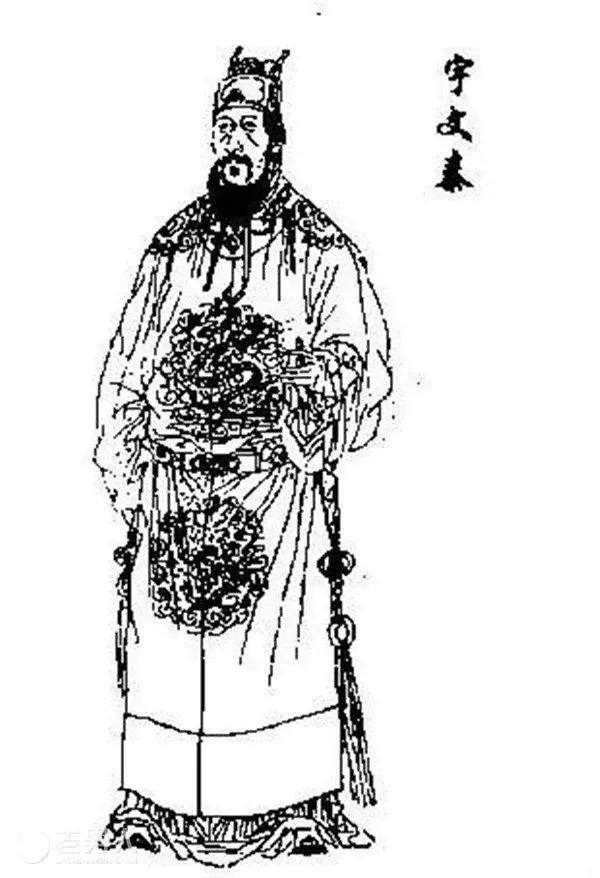
Yuwen Tai promulgated the Six Decrees, recruiting Han gentry and rural militias while bestowing Xianbei clan surnames.
· HISTORICAL EVENT
府兵制
The Fubing System (府兵制), or divisional militia system, was an influential military-agrarian institution that originated in Western Wei and evolved through the Northern Zhou, Sui, and Tang dynasties. In the 540s, Yuwen Tai consolidated power in the Guanzhong basin, confronting constant military invasion from Eastern Wei alongside acute manpower shortages among Xianbei tribal warriors. Adopting recommendations from Han advisor Su Chuo, Yuwen Tai mobilized…
The Fubing System (府兵制), or divisional militia system, was an influential military-agrarian institution that originated in Western Wei and evolved through the Northern Zhou, Sui, and Tang dynasties. In the 540s, Yuwen Tai consolidated power in the Guanzhong basin, confronting constant military invasion from Eastern Wei alongside acute manpower shortages among Xianbei tribal warriors. Adopting recommendations from Han advisor Su Chuo, Yuwen Tai mobilized powerful Han lineage magnates and local rural militias into the state armed forces. In 550, Yuwen Tai established the command network of Eight Pillar Generals (Ba Zhuguo), Twelve Senior Generals, and twenty-four armies, laying the institutional foundation of the divisional militia system. Subsequently, Emperor Wu of Northern Zhou renamed soldiers as palace attendants and enlisted ordinary agrarian households under the equal-field system. In 590, Emperor Wen of Sui enacted historic legislation transferring soldier households into civil county registries, allocating farmland and formalizing the principle of integrating agriculture with military readiness. During the reign of Emperor Taizong of Tang, garrisons were standardized as Zhechong Garrisons, numbering six hundred and thirty-four establishments across strategic circuits to safeguard the throne and project power across Inner Asia. By the mid-eighth century, the decay of the equal-field system and widespread land monopolization impoverished militia households. In 749, the Tang court formally suspended militia conscription, terminating the system in favor of mercenary armies. Spanning two centuries, the Fubing System shaped the Guanlong aristocratic coalition and early imperial statecraft.
Yuwen Tai promulgated the Six Decrees, recruiting Han gentry and rural militias while bestowing Xianbei clan surnames.
Yuwen Tai established the command structure of Eight Pillar Generals and twenty-four armies, instituting distinct military households.
Emperor Wu of Northern Zhou designated militia troops as palace attendants, opening garrison enlistment to all equal-field agrarian peasants.
Emperor Wen of Sui abolished separate military registers, transferring soldiers into civil census registries and securing military-agrarian integration.
Emperor Taizong standardized 634 Zhechong Garrisons, heavily concentrating forces in Guanzhong under rotational palace guard duty.
Amid the collapse of the equal-field system and widespread militia desertion, the Tang court introduced recruited long-service soldiers.
Emperor Xuanzong issued an imperial edict terminating all militia muster inspections, concluding the Fubing System.
Following the collapse of the Northern Wei dynasty amidst the Six Frontier Garrisons Rebellions, northern China fractured into two rival successor states: Eastern Wei, dominated by Gao Huan, and Western Wei, headed by Yuwen Tai. Western Wei occupied the rugged, sparsely populated Guanzhong and Longyou regions, supporting an estimated population of merely several million. Its agrarian output and fiscal resources were substantially inferior to the fertile Central Plains commanded by Eastern Wei. Gao Huan regularly mobilized massive hosts exceeding several hundred thousand troops to conquer Guanzhong.
In brutal campaigns including the Battle of Shayuan and the Battle of Mangshan, Western Wei achieved tactical victories through defensive maneuvers. However, these engagements inflicted staggering attrition upon the core Western Wei fighting elite—the Xianbei frontier veterans of the Wuchuan garrison. Faced with the demographic weight of Eastern Wei, Yuwen Tai recognized that continuing to rely solely upon a dwindling caste of tribal nomadic cavalrymen would invite dynastic extinction.
Confronted with systemic peril, Yuwen Tai demonstrated remarkable political pragmatism. Although Xianbei veterans were depleted, the Guanzhong basin possessed deep reserves of Han lineage magnates—including prominent aristocratic clans such as the Wei of Jingzhao, the Liu of Hedong, and the Yang of Hongnong—who commanded armed fortress communities (wubao). During the Datong reign, Yuwen Tai elevated brilliant Han scholar Su Chuo, promulgating the Six Decrees to audit fiscal records, register land, and enforce administrative accountability.
In 542 (Datong 8), Yuwen Tai broke established ethnic barriers by issuing decrees authorizing the large-scale enlistment of powerful Han local magnates and rural militias into imperial units. To cultivate cross-ethnic cohesion, Yuwen Tai adapted bureaucratic titles from the classical Rites of Zhou while bestowing honorable Xianbei clan surnames upon meritorious Han commanders and soldiers. Soldiers were granted full exemption from agrarian land taxes and corvee labor. This decisive reform harnessed local Han lineage power into the central military apparatus, establishing the indispensable social foundation for the Fubing System.
Around 550 (Datong 16), having integrated regional Han militias with veteran Xianbei forces, Yuwen Tai reorganized the western military apparatus, establishing the Twenty-Four Armies hierarchy. This institution erected a centralized, pyramid-shaped chain of command directly subordinated to the imperial state.
At the apex stood eight Pillar Generals of the State (Ba Zhuguo). Prince Guangling Yuan Xin, representing the Western Wei imperial lineage, occupied the titular first rank, while Yuwen Tai, serving as Commander-in-Chief of Central and Foreign Military Affairs, exercised supreme operational control. The remaining six active Pillar Generals were Li Hu (grandfather of Tang founder Li Yuan), Li Bi (great-grandfather of rebel leader Li Mi), Zhao Gui, Yu Jin, Dugu Xin (father-in-law to both Sui founder Yang Jian and Tang founder Li Yuan's father), and Houmochen Chong. Intermarried across multiple generations, these eight foundational lineages constituted the core of the formidable Guanlong aristocratic bloc.
Beneath the six active Pillar Generals served twelve Senior Generals (Da Jiangjun), including Yang Zhong, father of Yang Jian. Each Senior General commanded two Commissioners with the Equivalence of the Three Excellencies (Kaifu Yitong Sansi), establishing twenty-four subordinate commanderies known collectively as the Twenty-Four Armies. Each army established localized military garrisons (junfu), organized down through ranks of Yitong, Grand Area Commander, and Chief Commander to lead basic tactical units of one hundred and fifty men.
Soldier households attached to the Twenty-Four Armies were removed from ordinary county civil registers and inscribed upon military household rosters (junfu hu). Military status was made strictly hereditary; households were governed exclusively by their garrison commanders, dedicated to campaigns and palace defense, and granted absolute exemption from agrarian taxation and labor service. Through this architecture, dispersed private lineage militias were transformed into a cohesive, professional standing military force under centralized monarchical authority.
Following the establishment of the Northern Zhou dynasty, the Fubing System evolved toward broader social integration. Under the regency of Yuwen Hu, the Twenty-Four Armies were reinforced. When Emperor Wu of Northern Zhou (Yuwen Yong) assumed personal rule, the court embraced the grand geopolitical goal of conquering Northern Qi and reunifying northern China, necessitating an expanded military establishment.
Between 575 and 577, Emperor Wu enacted transformative social reforms across the military system. The emperor issued decrees renaming all militia soldiers as palace attendants (shiguan), bestowing prestige and direct symbolic affiliation with the sovereign. Crucially, Emperor Wu abolished the traditional restriction that reserved garrison service exclusively to Xianbei aristocrats and powerful Han magnates, commanding local authorities to recruit ordinary agrarian subjects across the realm. Able-bodied peasants holding land under the equal-field system were encouraged to enlist voluntarily in the garrisons.
This reform eliminated tribal aristocratic monopolies over military violence. Vast numbers of free agrarian peasants were integrated into the imperial armed forces, multiplying state military manpower several-fold. Soldiers tilled state-allocated farmlands during agricultural seasons, assembled for periodic tactical maneuvers, and mobilized for national campaigns. Leveraging this formidable military machine, Emperor Wu launched a massive eastern offensive in 577, annihilating the rival Northern Qi dynasty and reuniting northern China under a single sovereign.
Following Yang Jian's usurpation of the Northern Zhou throne and the founding of the Sui Dynasty, the reunification of all China under centralized autocracy demanded the complete eradication of separate military caste distinctions.
Throughout the Northern and Southern Dynasties, soldiers and civilians had remained rigidly separated under distinct legal categories. In May 590 (Kaihuang 10), Emperor Wen of Sui issued a landmark imperial decree: "Let all soldier households be relieved of separate military status, registered under their local counties, allocated farmland to till, and treated equally with ordinary subjects." This historic decree abolished the centuries-old independent military household system.
Garrison soldiers were integrated into ordinary prefectural civil census registers, receiving hereditary personal land (yongyetian) and oral share land (koufentian) under the equal-field statutes alongside civilian peasants. Militia soldiers lived in rural villages, cultivating crops alongside family members during peacetime. During agricultural lulls, local garrison officers conducted tactical maneuvers in archery and formation drilling. When foreign war erupted, soldiers mobilized upon imperial command; upon demobilization, they returned immediately to their villages. The central command was reorganized under the Sixteen Imperial Guards, while local garrisons were designated as Biaoqi Garrisons and Cheqi Garrisons. By subordinating soldiers to civil administration, the Sui Dynasty unified national labor and tax resources, institutionalizing the classic principle of integrating agriculture with military readiness.
Following the rise of the Tang Dynasty, Emperor Gaozu (Li Yuan) and Emperor Taizong (Li Shimin) refined the divisional militia system into its most mature form. In 636 (Zhenguan 10), Emperor Taizong formally redesignated local military garrisons as Zhechong Garrisons (Zhechong Fu), drawing the title from the ancient text Yanzi Chunqiu. Each garrison was administered by a Zhechong Commandant (Zhechong Duwei, rank 4) assisted by two Guanyi Vice Commandants.
The Tang court established six hundred and thirty-four Zhechong Garrisons across the empire. Reflecting the foundational geopolitical doctrine of maintaining a heavy central core to control the periphery, garrisons were heavily concentrated in the capital region. The Guannei Circuit around Chang'an housed two hundred and sixty-one garrisons, representing over forty percent of the imperial total, flanked by dense clusters across Henan and Hedong, while remote frontier circuits held almost none. The permanent peacetime establishment hovered around six hundred thousand trained militia soldiers.
Garrison recruitment adhered to strict socioeconomic standards. Local magistrates selected middle-ranking adult males aged twenty or twenty-one from prosperous peasant households with multiple adult sons, prioritizing physical vigor and financial solvency. Service extended until formal retirement at age sixty. In exchange for bearing arms, militia households received full statutory exemptions from the grain tax (zu), cloth tribute (yong), and corvee labor (diao). However, soldiers were legally obligated to furnish their own personal military equipment. In accordance with the Tang Six Codes and the New Book of Tang, each soldier personally supplied one bow, thirty arrows, a quiver, a broadsword, whetstones, fire-making drills, felt caps, a traveling cloak, and food ration bags, while nine-man squads collectively maintained pack animals and trenching tools.
Operationally, the system functioned through periodic rotational guard duty (fanshang). Based upon travel distance from Chang'an and Luoyang, soldiers reported in shifts to serve one month of palace security duty under the command of the Sixteen Imperial Guards. During major foreign campaigns, the emperor issued bronze fish tallies and the Ministry of War dispatched mobilization orders; Zhechong Commandants assembled the militia and transferred command to imperial campaign commanders. Upon the conclusion of hostilities, the expeditionary forces disbanded: generals surrendered operational authority to the court, and soldiers returned to their village fields. This structural separation ensured that generals did not command private armies, shielding the dynasty from military coups. Under this system, early Tang armies subjugated the Eastern Turkic Khaganate, Xueyantuo, Gaochang, and Tuyuhun, expanding imperial boundaries across Central Asia.
The viability of the Fubing System rested upon a single socioeconomic foundation: the state's capacity to allocate adequate land to every peasant household under the equal-field system. From the reigns of Emperor Gaozong and Empress Wu Zetian through the Kaiyuan era of Emperor Xuanzong, demographic expansion, private land transactions, and uncontrolled estate accumulation by aristocratic clans and Buddhist monasteries dismantled equal-field distribution.
Deprived of statutory land allocations, peasant soldiers sank into tenant bondage or vagrancy, leaving them financially incapable of purchasing expensive war horses, weapons, and iron armor. Simultaneously, imperial military expeditions shifted toward remote deserts in the Western Regions and mountainous frontiers in Manchuria. Protracted frontier campaigns lasted years, inflicting horrific mortality rates while the imperial court withheld customary military rewards. In the capital, corrupt commanders of the Sixteen Guards exploited rotating garrison soldiers as menial laborers to construct private villas, subjecting proud warriors to humiliation. Garrison service came to be viewed as a despised burden, sparking mass desertions.
Confronted with hollow garrison rolls, Grand Councilor Zhang Yue proposed in 723 (Kaiyuan 11) the creation of recruited permanent long-service soldiers (changzheng jian'er), initiating the transition toward paid mercenary standing forces. By the close of the Kaiyuan reign, Zhechong Garrisons possessed zero troops on active duty. In May 749 (Tianbao 8), Emperor Xuanzong issued an edict terminating all further militia conscription and leaving vacant garrison officer positions unfilled. Having flourished for two centuries, the Fubing System was abolished, supplanted by mercenary armies commanded by regional military governors (jiedushi), paving the path toward the catastrophic An Lushan Rebellion.
The establishment of the Fubing System reshaped the social and political power structure of medieval China. Through the interconnected hierarchy of the Eight Pillar Generals, Twelve Senior Generals, and Twenty-Four Armies, Yuwen Tai forged an enduring alliance between Xianbei tribal commanders and prominent Han lineage magnates. This military-political fraternity, known as the Guanlong aristocratic coalition, dominated northern politics across two centuries, successively producing the ruling dynasties of Western Wei, Northern Zhou, Sui, and Tang.
The Fubing System operated in seamless symbiosis with the equal-field system and the tripartite tax system (zuyongdiao). By allocating farmland directly to peasant households, the imperial state secured agrarian subsistence while requiring soldiers to equip themselves for military campaigns. This design minimized state fiscal outlays while embedding military readiness within local agrarian society. Mobilizing self-equipped agrarian freeholders, the early Sui and Tang empires projected military force across unprecedented geographic expanses.
The decline of the Fubing System reflected the transformation of medieval landholding. As land monopolization dismantled the equal-field system, the collapse of garrison militias forced the imperial court to rely upon professional mercenary frontier armies. Because mercenary soldiers served indefinitely under frontier commanders who distributed pay and plunder, military loyalty shifted from the throne to regional military governors (jiedushi). This concentration of provincial military and fiscal authority culminated in the An Lushan Rebellion, inaugurating over a century of regional warlord fragmentation throughout the late Tang and Five Dynasties eras.
Historians and political institutionalists have praised the Fubing System as one of the most effective military designs in Chinese imperial history. In the Book of Zhou, the dynastic compilers recorded: "Yuwen Tai established the divisional militias, bringing together powerful lineage leaders; with small forces he overcame vast hosts, pacifying internal rebellions with lasting splendor." In the New Book of Tang, Treatise on Military Affairs, the historians summarized: "In antiquity, soldiers emerged from the people, farming during peace and marching during war. The Fubing System placed the heavy forces in the capital to control the periphery, preserving farming while denying private command to generals; from Sui through early Tang, internal peace prevailed and none could withstand the empire." In the Mirror of Tang History, Song historian Fan Zuyu observed: "The greatness of the Tang derived entirely from the strength of the divisional militias; when the militias decayed and mercenary recruitment arose, generals concentrated absolute power, from which the catastrophic disasters of the Tianbao era were born."