Enthronement of Khubilai Khan
In the third month, Khubilai ascends the throne at Kaiping, appointing Han scholar-officials to construct a centralized monetary system.
Yuan Dynasty (元朝) · HISTORICAL EVENT
中统钞发行
The Issuance of the Zhongtong Paper Currency (中统钞发行) was an epochal monetary unification reform enacted in 1260 (the first year of Zhongtong) by Khubilai Khan at Kaiping Prefecture (later Shangdu). Following the Mongol conquest of northern China, regional Han warlords (shihou) printed autonomous paper script, while debased copper coins and decaying Jin dynasty vouchers circulated concurrently, creating hyperinflation and commercial paralysis. Ascending…
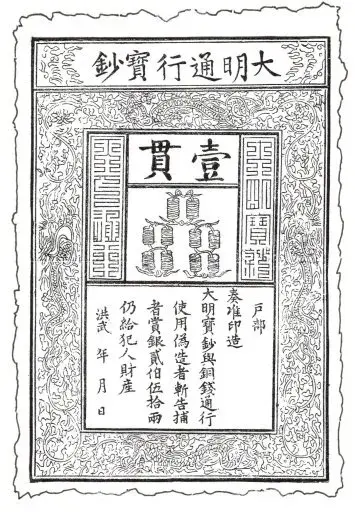
The Issuance of the Zhongtong Paper Currency (中统钞发行) was an epochal monetary unification reform enacted in 1260 (the first year of Zhongtong) by Khubilai Khan at Kaiping Prefecture (later Shangdu). Following the Mongol conquest of northern China, regional Han warlords (shihou) printed autonomous paper script, while debased copper coins and decaying Jin dynasty vouchers circulated concurrently, creating hyperinflation and commercial paralysis. Ascending the throne in 1260 amidst an existential civil war against his younger brother Ariq Böke, Khubilai elevated talented administrators Liu Bingzhong and Wang Wentong to overhaul the imperial economy. Wang Wentong established a groundbreaking principle: a centralized, unbacked paper currency guaranteed exclusively by central silver reserves. Promulgated in October 1260, the Zhongtong Yuanbao Jiaochao (Zhongtong Paper Currency) circulated in nine standard denominations tied directly to silver weights. By establishing the Pingzhun Ku (Price Stabilization Repositories) to regulate open-market purchasing power, the Yuan court maintained stable paper purchasing power for decades, creating the earliest nationwide pure paper fiat currency system in world history.
In the third month, Khubilai ascends the throne at Kaiping, appointing Han scholar-officials to construct a centralized monetary system.
In the fourth month, Wang Wentong is appointed Left Vice-Chancellor, formulating the silver-backed paper currency framework.
In the seventh month, the court briefly experiments with silk-backed notes before transitioning to a pure silver-standard paper design.
In the tenth month, Khubilai formally promulgates the Zhongtong Yuanbao Jiaochao nationwide, pegging one string of paper to one tael of silver.
The court establishes Pingzhun Ku repositories across major cities to regulate currency supply through bullion exchanges.
Imperial edicts completely outlaw autonomous warlord banknotes and prohibit private bullion transactions, solidifying the paper monopoly.
In the decades between the collapse of the Jurchen Jin dynasty in 1234 and the rise of Khubilai Khan, northern China endured acute monetary fragmentation. Because early Mongol khans possessed no centralized fiscal institutions, regional military commanders in Zhending, Dongping, and Daming printed private paper scrip and forged iron coins. Deprived of common exchange standards, regional banknotes fluctuated violently in value. Concurrently, obsolete Jin dynasty banknotes and Southern Song bills circulated illicitly, fueling hyperinflation and driving merchants to abandon currency in favor of primitive barter.
In the spring of 1260, Khubilai marched north from the middle Yangtze, holding an imperial assembly at Kaiping where he proclaimed himself Great Khan. Concurrently, his brother Ariq Böke was crowned khan by traditionalist Mongol princes in Karakorum, igniting a bitter civil war. Financing standing armies, securing grain supply lines, and maintaining aristocratic loyalties required immense liquid revenues, yet northern treasuries were depleted. Khubilai recognized that eliminating decentralized currencies and monopolizing imperial monetary issuance was an absolute prerequisite for imperial survival and administrative consolidation.
Following his enthronement, Khubilai established the Central Secretariat (Zhongshu Sheng), appointing the seasoned Confucian economist Wang Wentong as Left Vice-Chancellor. Working alongside advisors Yao Shu and Liu Bingzhong, Wang analyzed the collapse of Jin dynasty paper money, concluding that previous currencies failed because states lacked metallic reserves and permitted uncontrolled regional overprinting.
Wang submitted a comprehensive monetary memorial to Khubilai advocating three foundational principles: First, enforce an absolute imperial monopoly over currency manufacture, penalizing unauthorized private printing with death. Second, assemble substantial bullion reserves of refined silver in central vaults to anchor public confidence. Third, establish standard paper denominations for all tax assessments, commercial contracts, and state payments. Khubilai enthusiastically approved the proposal, ordering the construction of advanced printing bureaus in Pingyang and Yanjing utilizing high-grade mulberry bark paper and intricate anti-counterfeit woodblocks.
In July 1260, the government briefly tested silk-backed notes (Zhongtong Silk Notes), but the physical vulnerability of raw silk to dampness and wear made them unsuitable for general circulation. Consequently, in October 1260, the court officially suspended silk notes and promulgated the silver-backed Zhongtong Yuanbao Jiaochao across all circuits. Denominations ranged from ten cash to two strings (guan), with one tael of pure silver legally fixed to one string of Zhongtong paper currency, establishing a transparent decimal conversion system.
To protect the currency against inflation and market depreciation, Wang Wentong established the revolutionary Pingzhun Ku (Price Stabilization Repositories) in metropolitan cities and trade crossroads. These state warehouses held massive emergency stockpiles of silver bullion and grain. When excessive paper circulation threatened to drive down note values, repositories purchased notes with silver at fixed official rates; when money tightened, they injected notes into the market. This early prototype of open-market liquidity intervention ensured that Zhongtong notes maintained steady purchasing power for nearly three decades.
Simultaneously with the issuance of the Zhongtong currency, the Yuan court enacted draconian financial regulations. Decrees ordered all regional warlords, gentry estates, and private merchants to surrender Jin dynasty notes, local scrip, and Southern Song vouchers to government offices for conversion into Zhongtong notes at fixed official exchange ratios within designated deadlines, after which obsolete scrip became illegal. The court strictly forbade private gold and silver transactions, requiring all domestic commerce to be settled in imperial paper.
Backed by state authority and disciplined stabilization reserves, regional warlord currencies vanished from circulation. The Zhongtong currency expanded smoothly across Hebei, Shanxi, Shandong, and Shaanxi. Following the conquest of the Southern Song in 1276, the Yuan court retired southern Song paper money (huizi) in exchange for Zhongtong notes, creating the first unified, nationwide paper currency system in the history of China.
The successful deployment of the Zhongtong currency furnished Khubilai Khan with the liquid capital necessary to wage protracted civil war against Ariq Böke and consolidate his rule over the Mongol world. Reliable paper tax revenues financed the construction of the dual imperial capitals Dadu and Shangdu, while bankrolling the two-decade naval and amphibious campaigns that ultimately conquered the Southern Song dynasty, providing the economic foundation for the reunification of China.
In the macro-history of global finance, the Zhongtong currency occupies a seminal position. Moving beyond Song dynasty paper notes (which served primarily as receipts for heavy iron cash) and Jin dynasty unsecured vouchers, the Yuan state created an independent, unbacked fiat paper currency supported by institutional silver reserves. Its self-regulating stabilization mechanism prefigured modern central banking practices by centuries, exciting the admiration of European visitors such as Marco Polo.
The portability and standardized value of Zhongtong notes eliminated the peril and logistical expense of hauling heavy copper coins across immense continental distances. From Dadu and Shangdu to Quanzhou and Central Asian caravan routes, merchants conducted high-volume wholesale commerce using paper currency. This monetary integration stimulated unprecedented long-distance exchange, integrating northern pastoral resources with southern agricultural wealth under a common commercial medium.
In the History of Yuan (Yuanshi), imperial historians recorded: "When Emperor Shizu created the Zhongtong currency, it was anchored in silver and operated for decades to the great benefit of the realm. Its institutional design was thorough, utilizing stabilization repositories to balance value. Even the master economists of antiquity could not have improved upon it."
The Ming scholar Qiu Jun observed in Supplement to the Exposition of the Great Learning: "The Yuan rulers utilized paper currency backed by gold and silver. None of their monetary designs was superior to the Zhongtong system. It saved metal while causing no harm to commerce, operating successfully for generations as an exemplary financial model."
The Venetian explorer Marco Polo wrote in The Travels of Marco Polo: "The Great Khan causes to be made of the bark of a certain tree a manner of paper, which passes for money all over his realm, and no one dare refuse it under pain of death. With this money people may purchase anything they please, and its credit is so absolute throughout all the dominions that the Great Khan's treasury is the richest in the world."