Accession and Elimination of Ring leaders
Chongzhen ascends the throne, revokes eunuch authority, and compels Wei Zhongxian and Cui Chengxiu to commit suicide
Ming Dynasty (明朝) · HISTORICAL EVENT
钦定逆案
The Imperially Promulgated Treason Registry (钦定逆案) was a major judicial cleansing and political adjudication enacted between 1628 (the first year of the Chongzhen era) and 1629 (the second year of the Chongzhen era), through which the Chongzhen Emperor (Zhu Youjian) dismantled the notorious eunuch faction of Wei Zhongxian, prosecuted complicit bureaucrats, and exonerated persecuted Donglin scholar-officials. During the Tianqi era of Emperor Xizong,…
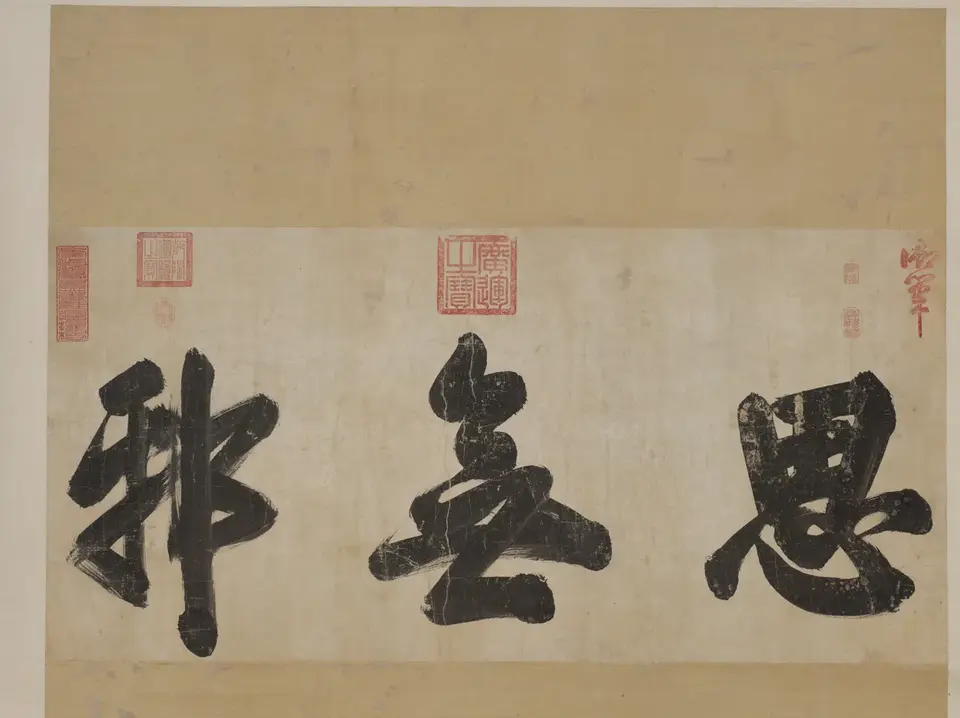
The Imperially Promulgated Treason Registry (钦定逆案) was a major judicial cleansing and political adjudication enacted between 1628 (the first year of the Chongzhen era) and 1629 (the second year of the Chongzhen era), through which the Chongzhen Emperor (Zhu Youjian) dismantled the notorious eunuch faction of Wei Zhongxian, prosecuted complicit bureaucrats, and exonerated persecuted Donglin scholar-officials. During the Tianqi era of Emperor Xizong, senior palace eunuch Wei Zhongxian seized supreme executive authority. Aided by Minister of War Cui Chengxiu and unprincipled officials, the eunuch clique fabricated political treason cases, tortured leading Donglin ministers in the imperial prisons, and mandated the construction of living temples honoring Wei throughout the provinces. Following his enthronement in 1627, the young Chongzhen Emperor executed a masterstroke of political maneuver, stripping the eunuch leadership of military guards and forcing Wei Zhongxian and Cui Chengxiu to commit suicide. In 1628, Chongzhen commanded Senior Grand Secretary Han Kuang, Grand Secretary Li Biao, and the Three Judicial Ministries to conduct an exhaustive audit of Tianqi archives. In March 1629, the emperor promulgated the Imperially Promulgated Treason Registry, convicting 258 civilian and military officials under seven statutory categories ranging from execution to permanent banishment, alongside dozens of corrupt eunuchs. The court officially cleared the names of Yang Lian, Zuo Guangdou, and other murdered martyrs. While the registry eradicated the eunuch faction, factional bitterness remained deeply entrenched, paralyzing the late Ming government until its final collapse.
Chongzhen ascends the throne, revokes eunuch authority, and compels Wei Zhongxian and Cui Chengxiu to commit suicide
Chongzhen directs Han Kuang and the Three Judicial Ministries to conduct an exhaustive audit of Tianqi archives
Chongzhen imperially ratifies seven grades of punishment for 258 complicit officials, publishing the list nationwide
All living shrines of Wei Zhongxian are demolished, and posthumous honors are conferred on Donglin martyrs
During the reign of Emperor Xizong (Tianqi era), the head of the Directorate of Ceremonial, Wei Zhongxian, capitalized on the monarch's youthful indulgence in carpentry to monopolize imperial edicts. To cement his control over the bureaucracy, Wei recruited opportunistic civil and military officials, forming a vast political syndicate known as the Eunuch Faction, headlined by prominent henchmen styled the "Five Tigers," "Five Leopards," and "Ten Dogs."
The faction launched ruthless purges against the Donglin academy scholars and upright censors who advocated administrative rectitude. Fabricating spurious corruption and treason charges, Wei unleashed the secret police (Eastern Depot and Embroidered Uniform Guard) to imprison and murder prominent Donglin leaders, including Yang Lian, Zuo Guangdou, and Gao Panlong. Simultaneously, local administrators were coerced into erecting living shrines across the empire dedicated to Wei Zhongxian, mandating ceremonial prostrations equal to those offered to the sovereign.
In August 1627, Emperor Xizong died without an heir. His seventeen-year-old younger brother, Zhu Youjian (Prince of Xin), succeeded to the throne as the Chongzhen Emperor. Recognizing the entrenched power of the eunuch clique, Chongzhen initially feigned passivity, outwardly honoring Wei Zhongxian while systematically revoking his command over palace guards and intelligence networks.
In October, censor Qian Jiazheng boldly submitted an indictment cataloging ten capital crimes committed by Wei Zhongxian. Seizing this opportunity, Chongzhen stripped Wei of his titles and exiled him to the ancestral mausoleums in Fengyang. Realizing his doom was imminent, Wei hanged himself at Fucheng; his primary civil collaborator Cui Chengxiu also committed suicide. Chongzhen ordered their corpses exhumed and decapitated, crushing the core leadership of the faction.
Following the eradication of the ringleaders, the handling of hundreds of serving bureaucrats who had sycophantically served the eunuch faction emerged as the supreme political dilemma. While several cautious grand secretaries advocated leniency to prevent administrative panic, Chongzhen took an unyielding stance, declaring that state law and moral order could not be restored without an uncompromising audit.
In the spring of 1628 (first year of Chongzhen), the emperor formally commissioned Senior Grand Secretary Han Kuang and Grand Secretary Li Biao to coordinate an extraordinary joint judicial commission consisting of Minister of Justice Qiao Yunsheng, Left Censor-in-Chief Cao Sicheng, and the Chief Minister of the Court of Judicial Review. The commission was empowered to scrutinize all imperial memorials, depot records, provincial shrine accounts, and promotion files from the Tianqi reign.
Over the course of a year, the Chongzhen Emperor summoned judicial officials to numerous palace audiences, personally examining evidence and cross-referencing drafted memorials to prevent arbitrary persecution or corrupt shielding. The judicial commission established seven rigorous grades of guilt based on the extent of collaboration.
On March 15, 1629 (second year of Chongzhen), the emperor held a solemn court outside the Meridian Gate to promulgate the Imperially Promulgated Treason Registry. The seven categories were: First Grade ("Prime Conspirators"): 19 individuals, including Cui Chengxiu and Wei Liangqing, sentenced to execution and forfeiture of family property; Second Grade ("Collaborators of the Secondary Rank"): 11 individuals, including Wei Guangwei and Gu Bingqian, sentenced to border exile; Third Grade ("Associates of Palace Attendants"): 35 individuals, sentenced to three years of penal servitude followed by cashiering; Fourth Grade ("Lesser Associates"): 12 individuals, sentenced to dismissal from official registries; Fifth Grade ("Promoters of Shrines"): 24 individuals, stripped of rank and registered as commoners; Sixth Grade ("Shrine Flatterers"): 101 individuals, penalized by forfeiture of stipends; Seventh Grade ("Inadvertently Implicated"): 56 individuals. In total, 258 civil and military officials were legally convicted, alongside dozens of palace eunuchs who were executed.
Upon promulgation, Chongzhen ordered the registry printed and distributed to every prefectural and county yamen across the empire as an eternal warning. Simultaneous decrees mandated the total demolition of all living shrines dedicated to Wei Zhongxian, the effacement of commemorative stelae, and the reallocation of shrine properties to public treasuries.
Concurrently, the crown issued sweeping exoneration edicts, fully clearing the names of Yang Lian, Zuo Guangdou, Gao Panlong, and other martyrs. Their official ranks and hereditary honors were restored, posthumous titles were bestowed, and their surviving descendants were awarded imperial appointments and financial subsidies, sparking widespread jubilation among the scholarly elite.
The Imperially Promulgated Treason Registry legally dismantled the political network that had dominated the Tianqi court. A total of 258 officials were dismissed, exiled, or executed; hundreds of idolatrous shrines were razed; and the reputations of upright scholars and ministers were thoroughly restored.
The creation of the Treason Registry represented one of the most sweeping anti-corruption and judicial purges in late imperial China, successfully restoring moral authority to the crown. However, it inadvertently intensified the virulent factional warfare that plagued the final decade of the Ming Dynasty. Disgraced elements and anti-Donglin factions (including regional blocs like the Qi, Chu, and Zhe factions) continuously schemed to overturn the registry, generating persistent parliamentary paralysis under grand secretaries like Wen Tiren. This perpetual factional infighting consumed vital state revenues and military attention, severely crippling the empire's ability to resist the Manchus and suppress domestic peasant rebellions.