Lin Zexu Appointed Imperial Commissioner
The Daoguang Emperor grants Lin plenipotentiary authority over Guangdong maritime defenses to eradicate opium smuggling.
Qing Dynasty (清朝) · HISTORICAL EVENT
虎门销烟
Destruction of Opium at Humen (虎门销烟) was a monumental historical event from June 3 to June 25, 1839, during which Imperial Commissioner Lin Zexu publicly destroyed over twenty thousand chests of confiscated British and American contraband opium on the beaches of Humen in Guangdong Province. In the early nineteenth century, Great Britain systematically smuggled vast quantities of narcotic opium into China to reverse a structural trade deficit, resulting in…
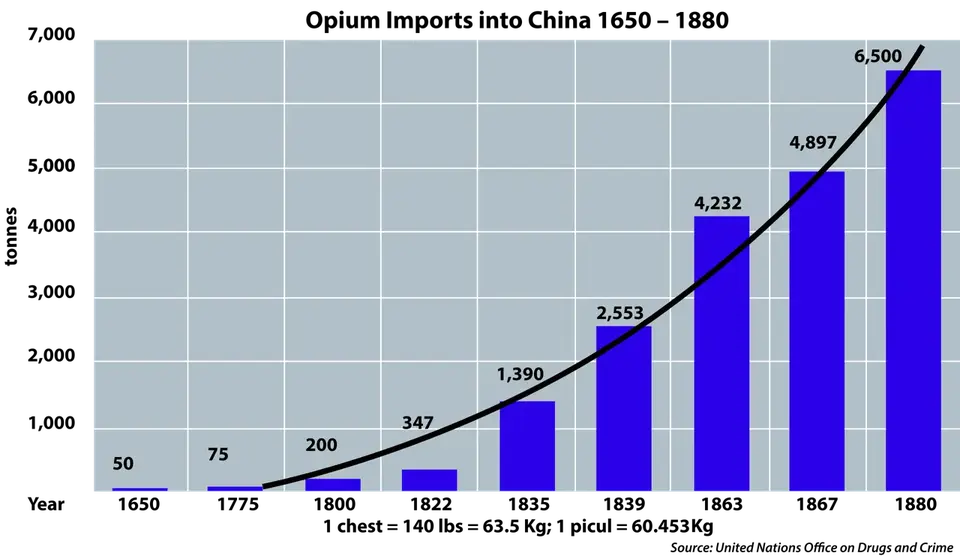
Destruction of Opium at Humen (虎门销烟) was a monumental historical event from June 3 to June 25, 1839, during which Imperial Commissioner Lin Zexu publicly destroyed over twenty thousand chests of confiscated British and American contraband opium on the beaches of Humen in Guangdong Province. In the early nineteenth century, Great Britain systematically smuggled vast quantities of narcotic opium into China to reverse a structural trade deficit, resulting in catastrophic silver outflows, state treasury depletion, widespread drug addiction across all social strata, and the disintegration of Qing military readiness. Accepting the urgent memorial submitted by Huguang Governor-General Lin Zexu, the Daoguang Emperor commissioned him as Imperial Envoy with plenipotentiary powers to eradicate the maritime opium traffic in Guangzhou. Upon arrival, Lin clamped down on domestic smugglers, blockaded the foreign Thirteen Factories enclave, and forced British Superintendent of Trade Charles Elliot along with foreign merchants to surrender their narcotics. Lin excavated two massive granite basins on Humen Beach, utilizing a saltwater and quicklime dissolution process over twenty-three days to dissolve 2,376,254 jin of raw opium, establishing an enduring milestone in global drug eradication and anti-colonial resistance.
The Daoguang Emperor grants Lin plenipotentiary authority over Guangdong maritime defenses to eradicate opium smuggling.
Lin enters Guangzhou, establishing his headquarters at Yuehua Academy and declaring his unwavering commitment to eradicate the drug trade.
Lin demands the unconditional surrender of all contraband opium within three days and the signing of formal non-smuggling bonds.
Confronting foreign defiance, Lin seals the foreign enclave, withdrawing Chinese servants and cutting off water and provisions.
Charles Elliot issues an official declaration requiring British merchants to surrender their opium stocks to the Chinese government.
Lin and Guan Tianpei establish forward headquarters at Humen Fortress to receive and inspect arriving opium vessels.
Officials finalize the collection of 19,187 chests and 2,119 loose sacks of opium, totaling over 2.37 million jin.
Public dissolution begins using the seawater and quicklime method before thousands of assembled spectators.
Foreign observers including Bridgman verify the meticulous destruction process, disproving rumors of illicit diversion.
All confiscated opium is destroyed and washed into the ocean, successfully concluding the twenty-three-day campaign.
During the first half of the nineteenth century, Great Britain became the first industrialized nation, generating an urgent capitalist demand for overseas consumer markets and cheap agrarian raw materials. With a population of several hundred million, Qing China appeared to British mercantile interests as an immense potential market. However, under China's traditional, self-sufficient agrarian economy, foreign manufactured textiles and metal wares found negligible domestic demand and consistently experienced poor sales.
Conversely, Chinese tea, raw silk, and fine porcelain enjoyed enormous popularity throughout the British Isles and continental Europe, with import volumes steadily climbing every year. Under this legitimate commerce, China maintained an overwhelming trade surplus, obliging Great Britain to export millions of silver taels annually to settle its balance of payments. To reverse this profound bullion drainage, the British East India Company and affiliated private merchants illicitly introduced narcotic opium as a strategic trade commodity to pry open Chinese borders.
The British colonial government in India monopolized poppy cultivation and established state processing factories across Bengal and Malwa to manufacture high-purity opium cakes. British merchants transported manufactured textiles to India, shipped Indian opium to China through covert coastal smuggling networks, and utilized the silver extracted from China to purchase tea and silk for London, creating a lucrative triangular trade. This contraband commerce not only reversed the bilateral trade deficit but also delivered immense profits to British commercial syndicates.
Early Qing monarchs had enacted strict imperial decrees proscribing opium imports as illicit contraband. Yet driven by enormous speculative profits, foreign merchants colluded with corrupt coastal Qing mandarins and naval patrol officers, anchoring receiving ships at Lingding Island to smuggle narcotics into Guangdong, Fujian, Zhejiang, and inland provinces.
Between 1820 and 1838, foreign merchants smuggled over 400,000 chests of opium into China, draining more than 200 million silver taels from the domestic economy. What had historically been a steady inflow of global bullion turned into a severe annual drain of several million taels, depleting the imperial treasury and threatening imperial finances with insolvency.
This massive hemorrhage disrupted China's bimetallic monetary system, causing a destructive currency crisis known as the appreciation of silver against copper cash. While ordinary peasants conducted daily market transactions in copper coins, state agricultural taxes were assessed and collected strictly in silver. During the late Qianlong era, one silver tael traded for approximately 1,000 copper cash; by 1838, it skyrocketed to over 1,600 copper cash per tael. This monetary inflation increased real tax burdens on peasant households by sixty to seventy percent, impoverishing agrarian communities and sharpening socioeconomic unrest.
Opium addiction spread throughout Chinese society. From imperial princes, court dignitaries, and civil mandarins to scholars, merchants, day laborers, and frontline garrisons of the Eight Banners and Green Standard Army, smoking opium became a ubiquitous vice. Millions of subjects became hopelessly addicted; officials abandoned administrative responsibilities, scholars failed examinations, and garrison troops were reduced to emaciated wrecks incapable of marching or firing muskets.
Confronting this national peril, Sub-Director of the Court of Sacrificial Worship Xu Naiji submitted a memorial in 1836 advocating legalization and taxation, proposing that opium be treated as foreign medicine subject to customs duties, while continuing the ban solely for civil officials and military personnel. This appeasement stance provoked fierce condemnation from patriotic scholar-officials. Minister of the Court of State Ceremonial Huang Juezi submitted a famous memorial calling for rigorous eradication, arguing that capital punishment should be imposed on stubborn opium addicts who failed to reform within a year.
Lin Zexu, then Governor-General of Huguang, championed strict prohibition, having successfully eliminated opium dens and seized contraband across Hubei and Hunan. In a celebrated memorial to the Daoguang Emperor, Lin warned: "If we permit this poison to continue unabated, in a few decades China will have neither soldiers left to defend against foreign foes nor silver left to provision an army!" Moved by this grave assessment, the Daoguang Emperor granted Lin Zexu imperial plenipotentiary powers on December 31, 1838, designating him Imperial Commissioner with command over Guangdong naval forces to stamp out the opium scourge.
On March 10, 1839, Lin Zexu arrived in Guangzhou and established his headquarters at Yuehua Academy. Recognizing that foreign smugglers had long operated with impunity through the connivance of corrupt mandarins and Cohong merchants, Lin publicly declared: "Having received the imperial commission, I shall not depart until this opium evil is eradicated to the very roots; I swear to persevere to the end, and never will I compromise!"
Lin commenced operations by targeting domestic collaborators and illicit distribution channels. He consulted gentry scholars and examination candidates to compile detailed dossiers on covert smugglers, corrupt officials, and warehouse networks, acquiring definitive evidence of illicit collusion between foreign captains and Cohong brokers.
Lin severely admonished Cohong merchant leaders, ordering them to redeem their guilt by demanding the immediate surrender of all foreign opium stocks. Simultaneously, collaborating with Guangdong Governor Deng Tingzhen and Naval Commander-in-Chief Guan Tianpei, Lin launched police sweeps across Guangzhou, arresting over 1,600 local opium dealers, brokers, and den keepers. Imperial forces seized 460,000 liang of prepared opium paste and 42,700 opium pipes, demolishing Guangzhou's underground distribution apparatus.
With domestic distribution severed, Lin targeted the foreign mercantile syndicates. On March 18, 1839, Lin summoned the Cohong merchants and issued an ultimatum to foreign merchants, giving them three days to surrender every chest of contraband opium stored aboard receiving vessels in Chinese waters and to sign formal bonds pledging: "Foreign vessels shall never again dare to bring opium; if any is brought, upon discovery the cargo shall be confiscated and the offenders subjected to capital punishment according to law."
Accustomed to past imperial laxity, foreign merchants resisted the commissioner's edict. Led by Lancelot Dent, the head of the British trading house Dent and Company, merchants devised delaying tactics, offering a token surrender of 1,037 chests while refusing to execute the required legal bonds.
Faced with this defiance, Lin took uncompromising action. On March 22, he issued a judicial warrant ordering Dent to appear at Yuehua Academy for formal interrogation; Dent refused and plotted to escape. On March 24, Lin ordered imperial naval detachments and green standard troops to establish a total land and maritime perimeter around the foreign Thirteen Factories enclave on the Pearl River.
Chinese naval war junks deployed in battle array across the river, while infantry sealed off all street exits. Lin ordered all Chinese compradors, translators, cooks, and servants to withdraw from the compound, severing external communication and intercepting all provisions, including fresh water and food. Approximately 350 foreign merchants, including Dent and British sailors, were contained within the factory complex.
On the evening of March 24, Chief Superintendent of British Trade Charles Elliot arrived from Macau, maneuvering an armed cutter through the naval lines into the Thirteen Factories. Rather than instructing British merchants to abide by Chinese law, Elliot raised the Union Jack and attempted to escalate a criminal smuggling case into an interstate diplomatic confrontation.
Elliot assumed unified command over British merchants and attempted to smuggle Dent out, but Qing sentries thwarted the escape. Observing Elliot's defiance, Lin intensified the siege. Commander Guan Tianpei personally directed patrols along the riverfront with continuous drumbeats and artillery drills, conveying absolute military resolve.
After days under complete isolation and water shortages, panic gripped the foreign enclave. American and Dutch traders, unwilling to risk their commercial futures for British contraband, petitioned Lin expressing willingness to surrender their drug cargoes.
Recognizing that the imperial commissioner would not relent and that protracted defiance risked military catastrophe, Elliot yielded. On the morning of March 28, Elliot issued a formal public notice in the name of the British Crown ordering all British merchants to surrender their opium to him for official delivery to the imperial commissioner.
On April 11, 1839, after verifying Elliot's cargo manifests, Lin Zexu, accompanied by Governor Deng Tingzhen and Commander Guan Tianpei, journeyed to Humen Fortress to oversee the physical collection of the surrendered narcotics.
Lin stationed Guangdong naval squadrons across the channels of Lingdingyang and Chuanbi, directing foreign receiving hulks to anchor at designated inspection bays off Zhenkou. Imperial officers boarded each vessel, cross-examining bills of lading against cargo holds and examining the chemical purity of the opium balls.
To eliminate fraudulent substitution of dirt or rocks for narcotics, and to prevent pilfering by escort guards, Lin enforced a mutual surety system involving groups of ten inspectors. Every broken chest required mutual counter-signatures from Cohong brokers, foreign owners, linguists, and imperial magistrates before being weighed, numbered with classical seal characters, and sealed with the commissioner's red wax stamp.
This logistical undertaking continued from April 12 until May 18, 1839. Lin's administration successfully confiscated 19,187 full chests and 2,119 loose sacks of opium from twenty-two British, American, and Indian mercantile houses, representing a total weight of 2,376,254 Chinese jin.
The Daoguang Emperor initially considered ordering the opium transported to Beijing for ceremonial destruction before the Meridian Gate. However, Lin and Deng memorialized that transporting millions of pounds of narcotics across thousands of miles carried severe risks of theft and bribery by transit guards, arguing for public destruction at Humen Beach. The emperor granted immediate approval.
To guarantee that no chemical residues remained for addicts to scavenge, Lin rejected traditional burning methods. Traditional burning with tung oil allowed sticky drug resins to soak deep into sandy soil, which opium addicts subsequently excavated and boiled to extract consumable paste.
Drawing upon chemical principles, Lin designed the innovative seawater and quicklime dissolution method. Workers excavated two massive pits on high ground overlooking Humen Beach, each measuring 150 feet square. The pits were paved with granite slabs and lined with heavy timber boards to prevent seepage, connected to seawater channels and drainage sluice gates.
On June 3, 1839, under brilliant sunshine and brisk sea breezes, Lin Zexu, Deng Tingzhen, and Guan Tianpei presided over the opening ceremony before crowds of thousands. Soldiers flooded the pits with seawater, shredded the hard opium balls into quarters, and soaked them until the resin softened. Laborers then dumped hundreds of bushels of unslaked quicklime into the pits.
The quicklime reacted violently with the seawater, generating immense boiling heat. The churning alkaline solution degraded the morphine alkaloids, transforming the noxious narcotics into a foul, boiling brownish sludge. Workers continuously stirred the boiling vats with long wooden scrapers to ensure complete decomposition. At low tide, the sluice gates were raised, and the dissolved sludge washed into the open sea, leaving no trace behind. Freshwater flushes thoroughly cleansed the stone pits after each cycle.
To disprove rumors fabricated by British smugglers that imperial authorities intended to resell the confiscated opium secretly, Lin invited foreign captains, merchants, and missionaries to inspect the destruction works at Humen Beach.
On June 17, 1839, American merchant captain C.W. King and missionary Elijah Coleman Bridgman, editor of the Chinese Repository, visited Humen. Lin welcomed the observers and permitted them to stand beside the boiling pits, using bamboo poles to inspect the decomposing sludge.
Bridgman recorded the operation in the Chinese Repository: "We carefully examined the whole process of destruction. The thoroughness, care, and fidelity with which the Chinese officers and laborers performed their duties far exceeded our expectations. Not a single ounce of opium could have been stolen. We cannot imagine that any other government in the world, in executing so arduous a task, could have conducted itself with greater fidelity and transparency."
The destruction continued without interruption for twenty-three days, concluding on June 25, 1839. In total, 2,376,254 jin of contraband opium were dissolved and washed out to sea. On the final day, tens of thousands of cheering citizens assembled along Humen Beach, celebrating the victory along the Pearl River.
The destruction of 2,376,254 jin of contraband opium severed foreign trafficking cartels that had plundered Chinese resources for decades. It disrupted the British commercial network built on Indian opium exports, checked the outflow of silver, and reasserted Chinese legal jurisdiction over foreign commerce. This resolute action fortified national pride across China and demonstrated that imperial authority would enforce sovereign laws against foreign contraband.
During his tenure in Guangzhou, Lin Zexu recognized the technological superiority of Western naval architecture and artillery, breaking through the prevailing complacency of the imperial court. Lin established a translation translation bureau in Guangzhou to translate Western books, newspapers, and cartography, compiling works such as Records of the Four Continents. Scholar Wei Yuan expanded this material into the seminal Illustrated Treatise on the Maritime Kingdoms, articulating the pioneering doctrine of learning foreign technologies to counter foreign encroachment. Humen marked the beginning of China's intellectual transition toward modernization.
Beyond Chinese history, the destruction of opium at Humen stands as an unprecedented triumph in the global history of public health and anti-narcotics enforcement. At a time when European powers aggressively peddled narcotics worldwide, China became the first sovereign state to deploy law enforcement and chemical dissolution to eradicate illegal drugs.
Lin's environmentally conscious seawater-quicklime technique demonstrated extraordinary practical ingenuity. In recognition of this legacy, the League of Nations designated June 3 as International Anti-Smoking Day in 1928, and the United Nations General Assembly established June 26, the day following the completion of the destruction, as the International Day Against Drug Abuse and Illicit Trafficking.
The decisive blow struck against opium profits prompted British merchants to mobilize political influence in London. Smuggling magnates like William Jardine lobbied the British government to demand financial indemnities and territorial concessions under the banner of defending free trade. British Foreign Secretary Lord Palmerston dispatched an expeditionary fleet to launch the First Opium War in 1840, initiating a century of imperialist incursions and unequal treaties that transformed China into a semi-colonial society.