Institutional Inception
Establishment of the Zongli Yamen and founding of the Anqing Arsenal by Zeng Guofan inaugurate the movement
Qing Dynasty (清朝) · HISTORICAL EVENT
洋务运动
The Self-Strengthening Movement (洋务运动) was a comprehensive modernization movement and institutional survival initiative directed by reform-minded Qing officials from the 1860s through the 1890s. The dual catastrophe of defeat in the Second Opium War and internal chaos from the Taiping Rebellion brought the Qing dynasty to the brink of collapse. Recognizing Western military superiority, central figures led by Prince Gong (Yixin) and provincial governors…
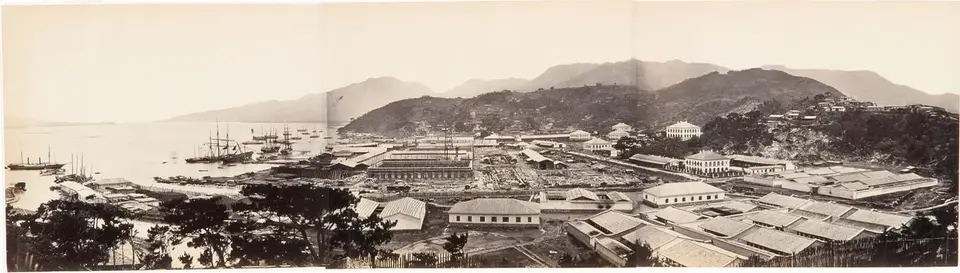
The Self-Strengthening Movement (洋务运动) was a comprehensive modernization movement and institutional survival initiative directed by reform-minded Qing officials from the 1860s through the 1890s. The dual catastrophe of defeat in the Second Opium War and internal chaos from the Taiping Rebellion brought the Qing dynasty to the brink of collapse. Recognizing Western military superiority, central figures led by Prince Gong (Yixin) and provincial governors including Zeng Guofan, Li Hongzhang, Zuo Zongtang, and Zhang Zhidong championed the doctrine of adopting foreign technology to strengthen imperial defenses while preserving Confucian governance. During its early phase, the movement advanced under the slogan of Self-Strengthening, establishing state-run military arsenals such as the Jiangnan Machine Bureau, the Fuzhou Navy Yard, and the Tianjin Arsenal. Shifting toward Wealth Accumulation in the 1870s, reformers initiated modern civilian enterprises through government-supervised merchant enterprises, developing the China Merchants' Steam Navigation Company, the Kaiping Coal Mines, and the Hanyang Iron Works. Simultaneously, the state built modern naval fleets centered on the Beiyang Fleet, founded Western-language academies including the Tongwen Guan, and dispatched student cohorts to the United States and Europe. Constrained by the refusal of the Qing ruling class to reform autocratic monarchical institutions, the movement failed to revitalize the state. The total annihilation of the Beiyang Fleet during the First Sino-Japanese War in 1895 marked the collapse of its state-strengthening ambitions, yet it laid the foundational groundwork for modern Chinese industrialization and early national capitalism.
Establishment of the Zongli Yamen and founding of the Anqing Arsenal by Zeng Guofan inaugurate the movement
Li Hongzhang establishes the Jiangnan Machine Bureau in Shanghai, creating East Asia's premier arms facility
Zuo Zongtang creates the Fuzhou Navy Yard and naval school, laying the foundation for modern Chinese shipbuilding
Founding of the China Merchants' Steam Navigation Company; the first cohort of the Chinese Educational Mission departs for America
Promulgation of the Beiyang Navy Regulations marks the formal founding of the fleet anchored at Weihaiwei and Port Arthur
Annihilation of the Beiyang Fleet at Weihaiwei and signing of the Treaty of Shimonoseki seal the collapse of the movement
By the mid-nineteenth century, the Qing Empire confronted an existential crisis without precedent in imperial history. The First Opium War of 1840 breached Qing maritime isolation, forcing the imperial court to sign unequal treaties. In 1856, the Second Opium War erupted; Anglo-French forces captured the imperial capital of Beijing, burned the Old Summer Palace, and forced Emperor Xianfeng to flee to Chengde, where he died in exile, severely undermining dynastic prestige.
Concurrently, domestic agrarian discontent erupted into the Taiping Rebellion, which swept across southern and central China, establishing a rival capital in Nanjing that lasted for over a decade. The traditional Eight Banners and Green Standard armies proved utterly ineffective against rebel forces, compelling the imperial throne to rely entirely on regional Han scholar-general militias, specifically Zeng Guofan's Xiang Army and Li Hongzhang's Huai Army. Confronting advanced Western naval guns and massive domestic insurrections, progressive Qing elites recognized that the empire faced the most profound crisis in thousands of years.
During military campaigns against the Taipings and diplomatic interactions with Western powers, provincial governors such as Zeng Guofan and Li Hongzhang observed the decisive battlefield superiority of modern rifled muskets, steam gunboats, and artillery. This experience revived the strategic proposal first articulated by Wei Yuan: learning the superior skills of foreigners to subdue foreigners.
In 1861, following the death of Emperor Xianfeng, Empress Dowager Cixi and Prince Gong staged the Xinyou Coup, establishing the Zongli Yamen to manage foreign affairs and modernization programs under Prince Gong's direction. Scholar-official Feng Guifen formulated the guiding intellectual doctrine: taking Chinese ethical relationships as the fundamental basis, supplemented by Western methods for wealth and power. This concept, later synthesized by Zhang Zhidong as Chinese learning for fundamental principles and Western learning for practical applications, became the official ideological framework for modernizing industry while preserving imperial autocracy.
The Self-Strengthening Movement began in the 1860s with a focus on modern armaments production. Qing reformers recognized that preserving dynastic rule required modern weapons manufacturing. In 1861, Zeng Guofan established the Anqing Arsenal in Anhui, China's first modern state-run arms factory. Operating on mechanical energy, the facility manufactured gunpowder, firearms, and the first Chinese-built steam engine, culminating in 1865 with the launch of the Huanghu, China's first domestic steam-powered wooden ship.
In 1865, Li Hongzhang merged several foreign artillery factories in Shanghai with a purchased American-owned ironworks to create the Jiangnan Machine Bureau. Employing thousands of Chinese workers and equipped with modern steam machinery, the bureau mass-produced Mauser rifles, Armstrong artillery pieces, and modern chemical explosives. It also featured a translation department that translated Western scientific, mathematical, and military treatises, emerging as the largest integrated industrial defense base in East Asia.
Concurrently, Zuo Zongtang established the Fuzhou Navy Yard at Mawei in 1866, constructing expansive shipyards and naval schools directed by French naval engineers to produce steam cruisers and transport vessels. In Tianjin, Chonghou created the Tianjin Arsenal to supply northern coastal defenses. These defense establishments introduced steam-powered mechanization, trained China's first generation of industrial machinists, and transitioned imperial forces from traditional cold weaponry toward modern firearm technologies.
As military industrialization progressed, reformers encountered severe financial deficits and raw material shortages. Heavy military manufacturing required substantial capital outlays, mechanical maintenance, and expensive foreign engineering salaries, which the imperial treasury could not sustain. Furthermore, modern arsenals relied entirely on costly imported pig iron and refined coal. Li Hongzhang recognized that wealth accumulation had to precede military self-strengthening, requiring the creation of commercial enterprises to generate revenues.
Beginning in the 1870s, reformers shifted their efforts toward mining, textile, and transport infrastructures, pioneering the institutional models of government-supervised merchant enterprises and joint-stock operations. In 1872, Li Hongzhang established the China Merchants' Steam Navigation Company in Shanghai, breaking foreign shipping monopolies along the Yangtze River and coastal waterways and retaining tens of millions of silver taels in domestic revenue.
Subsequently, modern civilian industrial enterprises flourished. In 1878, Li Hongzhang founded the Kaiping Mines, installing Western pneumatic drilling and drainage equipment to resolve coal shortages for the northern fleet while constructing the Tangshan-Xugezhuang Railway, China's first working railway line. In 1880, the Imperial Telegraph Administration was founded in Tianjin, linking imperial ports through telegraph cables and reducing state communications from weeks to hours. In Hubei, Governor-General Zhang Zhidong established the Hanyang Iron Works in 1890, creating China's earliest integrated iron and steel plant to supply railway rails. These enterprises laid the institutional foundations for the rise of Chinese merchant capitalism.
In 1874, the Japanese military expedition to Taiwan revealed the extreme vulnerability of Qing maritime defenses. This triggered an intellectual debate over maritime versus inland frontier defense. Li Hongzhang championed maritime defense, arguing that coastal ports directly guarded the imperial capital and demanded concentrated military investments. Conversely, Zuo Zongtang advocated balanced defense, asserting that Xinjiang was the strategic buffer of northwestern China. The court adopted both recommendations: Zuo Zongtang reconquered Xinjiang, while Li Hongzhang organized modern coastal defense.
Following the Sino-French War in 1885, the Qing court established the Board of Admiralty to supervise maritime forces. Investing heavily in European shipbuilders, the court acquired the heavy ironclad battleships Dingyuan and Zhenyuan from the Vulcan Shipyard in Germany, supplemented by cruisers commissioned from Armstrong in Britain. When the Beiyang Fleet was formally commissioned in 1888, it comprised over twenty frontline warships, supported by fortified naval bases and dry docks at Port Arthur and Weihaiwei, ranking as the leading naval force in East Asia. The court also established the Nanyang and Fujian regional fleets, creating a maritime defense network.
To overcome technological dependency on foreign engineers, the reformers overhauled traditional educational mechanisms. The imperial civil service examination system, centered exclusively on the Confucian classics and eight-legged essays, failed to produce technical, legal, and navigational specialists. In 1862, the imperial government founded the Tongwen Guan in Beijing, teaching English, French, and Russian, before expanding curricula to encompass mathematics, physics, international law, and astronomy under the headship of American educator W. A. P. Martin.
Provincial leaders established specialized academies to support modern industries. Zuo Zongtang created the Naval Academy at Fuzhou, providing training in naval architecture and celestial navigation. Li Hongzhang established the Beiyang Naval Academy and the Military Academy in Tianjin, retaining British and German instructors to train future leaders such as Yan Fu and Sa Zhenbing.
Between 1872 and 1875, through the advocacy of Rong Hong and the sponsorship of Zeng Guofan and Li Hongzhang, the Qing government dispatched 120 young boys to study in the United States. Known as the Chinese Educational Mission, these students enrolled in Yale, MIT, and Columbia, studying engineering, metallurgy, and law. Returning to China, they spearheaded domestic railroad engineering, mining, and diplomatic services. Naval trainees were likewise sent to Britain and France, introducing modern scientific methodology and democratic thought into China.
By the late 1880s, institutional corruption and political inertia paralyzed the movement. To finance the reconstruction of the Summer Palace for personal leisure, Empress Dowager Cixi diverted millions of taels from naval defense funds. Simultaneously, conservative factions led by Grand Secretary Weng Tonghe halted warship procurements and ammunition modernizations for the Beiyang Fleet, leaving Chinese vessels technologically outmoded compared to the expanding Imperial Japanese Navy.
In 1894, the First Sino-Japanese War erupted. Li Hongzhang adhered to a passive strategy of preserving vessels rather than aggressively seizing maritime command. Chinese armies suffered defeat at Pyongyang and retreated across the Yalu River; despite courageous resistance in the Battle of the Yalu River, the Beiyang Fleet withdrew into Weihaiwei. In early 1895, Japanese land and naval forces surrounded the naval base, destroying the fleet and driving Admiral Ding Ruchang to commit suicide. In April 1895, Li Hongzhang signed the Treaty of Shimonoseki, ceding the Liaodong Peninsula and Taiwan while paying 200 million taels in indemnities. The destruction of the fleet extinguished thirty years of self-strengthening dreams, marking the failure of technological borrowing detached from institutional reform.
The Self-Strengthening Movement initiated China's transition toward modern industrial development within the framework of an imperial state. The mechanical manufacturing plants, mining facilities, telecommunication lines, and railroads built over three decades fractured the traditional self-sufficient agrarian economy, fostering the rise of private merchant capitalism and domestic commercial enterprises.
Furthermore, academies like the Tongwen Guan and Fuzhou Naval Academy broke the intellectual monopoly of the civil service examinations, introducing mathematics, physics, engineering, and international law into Chinese state institutions. The generation of engineers, military commanders, and translators cultivated by these programs provided the technical expertise and progressive leadership that underpinned the subsequent Hundred Days of Reform and the 1911 Revolution.
The fundamental reason the Self-Strengthening Movement failed to avert national decline lay in the structural contradictions of the ti-yong formula. As representatives of the imperial scholar-gentry, the reformers sought not to transform society, but to protect the autocratic Qing dynastic system. They imported Western arms and machinery while maintaining the decadent political bureaucracy, corrupt court politics, and fossilized social order intact.
Enterprises functioned as bureaucratic extensions of provincial yamens, compromised by administrative venality and cronyism while suppressing private mercantile initiative. The catastrophe of the First Sino-Japanese War, in which the Beiyang Fleet was annihilated by a constitutional, thoroughly reformed Japanese state, demonstrated that grafting advanced Western weaponry onto an unreformed autocratic body could not preserve imperial sovereignty.
In his final years, Li Hongzhang remarked bitterly: "Throughout my life, military training and naval construction were mere paper tigers, never truly free to be handled effectively. They were like patching a dilapidated house—a plasterer pasting paper over cracks may give the appearance of an orderly room, but when a typhoon strikes, the walls collapse and the plasterer is left helpless."
Liang Qichao evaluates in his Biography of Li Hongzhang: "He understood military matters but not civil administration; he understood diplomatic negotiations but not domestic statecraft; he revered the court but ignored the populace. He spoke daily of self-strengthening, yet remained ignorant of the true path to national strength. Nevertheless, his efforts in constructing navies, laying railroads, and founding modern factories mark him as a pioneer of modern Chinese industrialization."
Chen Xulu concludes in The Metabolism of Modern Chinese Society: "The Self-Strengthening Movement took the first step in China's modernization, serving as the pivot linking traditional and modern eras. The reformers intended to preserve the feudal dynasty, but historical development surpassed their intentions: they planted the dragon seeds of feudal defense and harvested the fleas of its dissolution, ultimately paving the way for national capitalism and republican revolution."