Accession and Regency
Emperor Zhang dies; ten-year-old Emperor He ascends the throne with Empress Dowager Dou serving as regent.
Eastern Han Dynasty (东汉) · HISTORICAL EVENT
汉和帝诛窦宪
The Emperor He of Han's Purge of Dou Xian (汉和帝诛窦宪) was a decisive palace coup in 92 through which the young monarch Emperor He (Liu Zhao) allied with court eunuchs to crush the autocratic consort clan of Dou Xian. Following Emperor Zhang's death in 88, the ten-year-old Emperor He inherited the throne while Empress Dowager Dou assumed regency. The empress's brother Dou Xian rapidly concentrated imperial administration and palace security within his…
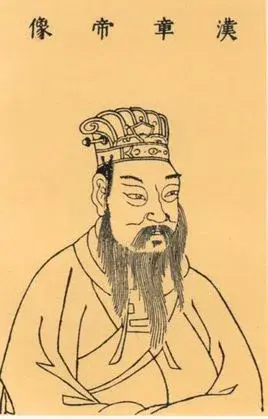
The Emperor He of Han's Purge of Dou Xian (汉和帝诛窦宪) was a decisive palace coup in 92 through which the young monarch Emperor He (Liu Zhao) allied with court eunuchs to crush the autocratic consort clan of Dou Xian. Following Emperor Zhang's death in 88, the ten-year-old Emperor He inherited the throne while Empress Dowager Dou assumed regency. The empress's brother Dou Xian rapidly concentrated imperial administration and palace security within his family, behaving with unbridled tyranny. After defeating the Northern Xiongnu and carving an inscription at Mount Yanran, Dou Xian was appointed General-in-Chief, amassing supreme authority while his inner circle plotted treason. Refusing to remain a figurehead, the fourteen-year-old Emperor He recognized that civil officials were beholden to Dou Xian and turned secretly to the loyal and discreet palace eunuch Zheng Zhong, while consulting his elder brother Prince Liu Qing to study historical precedents from dynastic annals. In the sixth month of 92, when Dou Xian returned to Luoyang, Emperor He closed the palace gates, dispatched guards to execute Dou's inner partisans, revoked Dou's military seals, and ordered the Dou brothers banished to their estates to commit suicide. The coup returned direct governance to the emperor, launching the prosperous Yongyuan era, but permanently opened the door to eunuch empowerment in Eastern Han politics.
Emperor Zhang dies; ten-year-old Emperor He ascends the throne with Empress Dowager Dou serving as regent.
Dou Xian defeats the Northern Xiongnu and carves the Yanran inscription, returning as General-in-Chief.
Dou Xian plots regicide with Deng Die and Guo Huang; Emperor He confers secretly with Zheng Zhong and Prince Liu Qing.
Emperor He closes palace gates, directs Zheng Zhong to seize and execute Deng Die, and revokes Dou Xian's military authority.
Dou Xian and brothers are escorted to their estates, where local magistrates compel them to commit suicide.
The consort clan is liquidated; Emperor He assumes personal authority, opening the prosperous Yongyuan era.
While Emperor Zhang was celebrated for benevolent administration, his later favoritism toward Empress Dou and her brother Dou Xian sowed the seeds of severe consort interference. In 88, Emperor Zhang died, and the ten-year-old Crown Prince Liu Zhao took the throne. Empress Dowager Dou assumed the regency, immediately transferring inner court security and administrative seals to Dou Xian. Elevating his younger brothers Dou Du, Dou Jing, and Dou Gui to key imperial guard posts, the Dou family established an unchallenged monopoly over civil and military appointments.
Dou Xian was ruthless and arrogant. He forcibly seized the private estate of Princess Qinshui and arranged the assassination of Liu Chang, Prince of Duxiang, within the palace precinct. Facing execution when the murder was exposed, Dou Xian volunteered to lead an expedition against the Northern Xiongnu to redeem his crime. In 89, Dou Xian and general Geng Bing routed the Northern Xiongnu at Mount Jilu, advancing deep into Mongolia and carving a triumphal inscription atop Mount Yanran.
Upon his triumphant return, Dou Xian was made General-in-Chief, outranking the Three Excellencies. The Dou brothers acted with total impunity; Dou Jing permitted family retainers to plunder merchants and abduct women in Luoyang while judicial magistrates dared not intervene. By 92, Dou Xian conspired with his son-in-law Guo Huang and infantry commander Deng Die to launch a palace coup, aiming to assassinate the teenage monarch and seize the throne.
Despite his youth, the fourteen-year-old Emperor He possessed extraordinary political acumen and courage. Determined to eliminate the treasonous consort clan, he recognized that senior ministers such as Grand Tutor Deng Biao were former clients of the Dou family. Monitored day and night by consort spies, the emperor found himself completely isolated within the inner palaces.
In this peril, Emperor He observed that Palace Attendant eunuch Zheng Zhong was circumspect, brave, and had strictly avoided alignment with Dou Xian. The emperor took Zheng Zhong into his confidence, holding clandestine meetings to plan the coup. To glean strategic precedents, Emperor He summoned his loyal half-brother Prince Liu Qing of Qinghe, directing him to borrow the Account of Consort Clans from the Book of Han from outside libraries. Emperor He studied the downfall of the Lu clan under Emperor Wen and Dou Ying under Emperor Wu, meticulously crafting an operational blueprint.
On the twenty-third day of the sixth month of 92, Dou Xian returned to Luoyang from his frontier garrison. Seizing the strategic opportunity, Emperor He visited the Front Hall of the Northern Palace, issuing imperial warrants to the Commander of the Guards and Northern Army colonels to place troops on maximum readiness. Imperial guards slammed shut all inner and outer palace gates, severing communications between Dou Xian and his supporters.
Simultaneously, Emperor He directed Zheng Zhong and palace security detachments to storm the residences of Dou's core conspirators. Guards arrested Deng Die, Deng Lei, and imperial attendant Guo Huang, executing them immediately in the Northern Army prison. This preemptive decapitation eliminated Dou Xian's operational network within the capital.
With the partisans destroyed, Emperor He dispatched imperial messengers to the General-in-Chief's mansion to confiscate Dou Xian's seal and ribbons, revoking his military command and demoting him to Marquis of Guanjun. To avoid provoking open rebellion while Empress Dowager Dou remained alive, the emperor refrained from public execution in Luoyang, instead ordering Dou Xian and his brothers to depart immediately for their provincial estates.
Once the Dou brothers arrived at their estates, local commandery magistrates, acting on sealed imperial mandates, surrounded their residences and compelled Dou Xian, Dou Du, and Dou Jing to drink poison. The younger brother Dou Gui was spared capital punishment due to his prior modesty. Hundreds of aristocratic clients and retainers linked to the Dou clan were purged; the great court historian Ban Gu was arrested for his association with Dou Xian and died in prison. The consort clan was utterly eradicated, returning sovereign authority to the emperor.
Emperor He's swift and bloodless coup eradicated a parasitic consort clan that had threatened to overturn the dynasty. Taking direct personal control of administration, Emperor He implemented tax remissions, disciplined regional officials, relieved agrarian debt, and supported Ban Chao's total pacification of Central Asia. The empire reached its historical demographic zenith with over 53 million registered subjects, celebrated in history as the "Flourishing of the Yongyuan Era."
The coup entailed a disastrous structural cost for the Eastern Han dynasty. Because the emperor relied entirely upon eunuch Zheng Zhong to bypass civil bureaucracy and strike the consort clan, Emperor He rewarded Zheng Zhong with aristocratic titles and direct participation in confidential state deliberations. This shattered the dynastic taboo barring eunuchs from high civil authority, inaugurating a century of destructive cyclical warfare between rival consort clans and eunuch cabals that ultimately destroyed the Eastern Han dynasty.
In the Book of the Later Han (Hou Han Shu, Basic Annals of Emperor He), Fan Ye praised the emperor's courage: "Emperor He ascended the throne in tender youth while administration issued from the inner chambers. The consort Dou Xian abused authority, his feral ambition nearly toppling the sacred vessels of state. Fortunately, the emperor was blessed with natural brilliance and resolute judgment; consulting Zheng Zhong within, he severed the wicked faction with supreme bravery, restoring peace to the ancestral altars like a true hero of the Han house."
In On the Comprehensive Mirror for Aid in Governance, Ming-Qing thinker Wang Fuzhi critically observed: "Emperor He's elimination of Dou Xian was secretive and decisive, conforming to ancient imperial standards. Yet by rewarding Zheng Zhong as a meritorious minister, the catastrophe of eunuch interference took root. To drive away jackals by welcoming thieves ensures that while the beasts depart, vipers take their place."