First Clash at Uzala Village
Cossack forces under Yerofey Khabarov intruded into the lower Amur, prompting Ningguta Commander Haise to lead Qing troops into battle, marking the first direct military engagement between China and Russia.
Qing Dynasty (清朝) · HISTORICAL EVENT
《尼布楚条约》
The Treaty of Nerchinsk (尼布楚条约), signed on August 27, 1689 (康熙二十八年七月十四日) between the Qing dynasty (清朝) of China and the Tsardom of Russia (沙皇俄国), was the first border agreement between China and a European state negotiated under the principles of modern international law. Concluded at the Siberian garrison of Nerchinsk (Russian: Нерчинский договор), the agreement marked the first occasion in Chinese imperial history where an equal bilateral compact was…
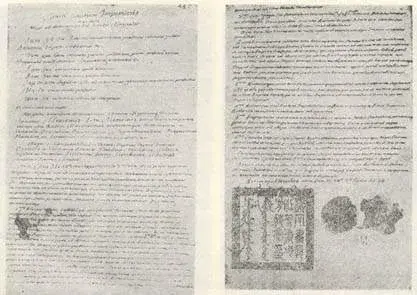
The Treaty of Nerchinsk (尼布楚条约), signed on August 27, 1689 (康熙二十八年七月十四日) between the Qing dynasty (清朝) of China and the Tsardom of Russia (沙皇俄国), was the first border agreement between China and a European state negotiated under the principles of modern international law. Concluded at the Siberian garrison of Nerchinsk (Russian: Нерчинский договор), the agreement marked the first occasion in Chinese imperial history where an equal bilateral compact was reached through sovereign diplomatic protocol rather than traditional tributary hierarchies. The treaty was simultaneously executed in Latin, Manchu, and Russian, with the Latin instrument formally designated as the authoritative legal benchmark. Under its provisions, the eastern boundary between the two empires was established along the Kerbichi River, the Argun River, and the mountain ridge of the Outer Khingan Range (Stanovoy Range). All waterways flowing south of the crest into the Amur (Heilongjiang) basin were designated Chinese territory, whereas rivers draining north into the Arctic Ocean were assigned to Russia. The unsettled tract between the Outer Khingan Mountains and the Uda River was left undecided for subsequent delimitation. The treaty also stipulated that the Tsarist government dismantle and abandon the fortified post of Albazin (Yaksa), repatriating its entire garrison and Russian inhabitants to Siberian territory. Both states pledged to prohibit unauthorized frontier crossings, strictly extradite future fugitives, and permit merchants bearing valid official travel passports to engage in reciprocal cross-border trade without hindrance. By establishing these demarcations, the Treaty of Nerchinsk provided firm legal confirmation that the vast valleys of the Heilongjiang and Ussuri rivers, together with Sakhalin Island, formed integral parts of the Chinese domain. It checked early Tsarist eastward penetration into the Amur watershed and instituted an enduring institutional framework that safeguarded geopolitical peace and frontier stability across northeast Asia for over a century and a half.
Cossack forces under Yerofey Khabarov intruded into the lower Amur, prompting Ningguta Commander Haise to lead Qing troops into battle, marking the first direct military engagement between China and Russia.
Yeniseysk voyevoda Afanasy Pashkov advanced to the Shilka River and erected the ostrog of Nerchinsk, establishing Russia's permanent administrative springboard north of the Amur.
Polish fugitive Nikifor Chernigovsky occupied the old Daurian settlement of Albazin, rebuilding the fortress; three years later, the outpost was officially recognized by the Tsarist government.
Following the pacification of the Three Feudatories, the Kangxi Emperor inspected Jilin Ula, resolved to expel Russian invaders, and initiated fortress construction and grain stockpiling at Aigun.
The Qing court created the Military Governorship of Heilongjiang, appointing Sabsu as its first General to direct frontier administration, troop deployments, and logistical preparations.
General Sabsu and Lieutenant-General Pengchun led three thousand troops to capture Albazin; Russian commander Tolbuzin capitulated and withdrew, after which Qing forces demolished the fortress and returned south.
Supported by Nerchinsk voyevoda Ivan Vlasov, Tolbuzin broke his pledge and reoccupied Albazin, constructing a bastioned earthen fortress designed for protracted defense.
Sabsu encircled Albazin with 2,400 troops, killing Tolbuzin with artillery fire; with the garrison reduced to several dozen starving men, the Tsarist government dispatched a diplomatic appeal for a ceasefire.
The Tsars appointed Stolnik Fyodor Golovin as Ambassador Extraordinary; he departed Moscow with a five-hundred-man escort, conscripting additional Siberian garrisons en route to amass over two thousand troops.
The Qing court commissioned Songgotu to travel to Selenginsk; Galdan's invasion of Khalkha severed northern routes, compelling the Qing mission to return temporarily to Beijing.
Adopting the Kangxi Emperor's pragmatic bottom line of accepting the Argun River, Songgotu led a powerful army and river flotilla to Nerchinsk, engaging Golovin's embassy in sixteen days of intense negotiations.
Qing and Russian plenipotentiaries signed the treaty in a marquee outside Nerchinsk, swearing solemn oaths and exchanging instruments, establishing the eastern border and restoring the Amur basin to China.
The Qing court dispatched Minister Bahai to survey the frontier and erect multilingual boundary stelae at the confluence of the Kerbichi and Shilka rivers and along the Outer Khingan Range.
Tsarist envoy Evert Ysbrants Ides arrived in Beijing; the Qing court implemented the treaty's commercial terms, establishing a triennial duty-free caravan quota of two hundred Russian merchants.
The Tsardom of Russia was originally an inland European realm possessing no geographic contiguity with China. Beginning in the late sixteenth century during the reign of Tsar Ivan IV (Ivan the Terrible), Tsarist colonial forces, spearheaded by Cossack adventurers, crossed the Ural Mountains and launched an extensive, centuries-long territorial expansion across Siberia and the Far East. In 1648 (the fifth year of the Shunzhi reign), Russian expeditions reached the Kamchatka Peninsula and the Bering Strait, advancing to the rim of the Pacific Ocean. By 1651 (the eighth year of the Shunzhi reign), Russian detachments had pushed eastward to Lake Baikal, where they founded the stockade fortress of Irkutsk.
During the mid-seventeenth century, Cossack armed bands led by figures such as Yerofey Khabarov intruded into the middle and lower reaches of the Heilongjiang (Amur River) basin within Chinese domain. These detachments plundered indigenous villages, extorted sable pelt tributes through arson and massacre, and disrupted the longstanding administrative ties connecting native populations with the Qing imperial court. The fierce resistance mounted by indigenous frontier peoples against Tsarist incursions gradually escalated into direct, large-scale armed clashes between the official armed forces of the Qing Empire and the Tsardom of Russia. Throughout this era, Moscow dispatched several diplomatic embassies to Beijing—including those led by Fyodor Baykov and Nikolai Spathari—yet these missions collapsed without substantive accords owing to irreconcilable protocol disputes and clashing strategic territorial claims. Concurrently, while Tsarist Russia pursued internal centralization and empire-building, the Moscow court suffered intense palace factionalism. In 1682 (the twenty-first year of the Kangxi reign), the boy-tsars Peter I and Ivan V ascended the throne jointly as co-rulers, while actual imperial power was exercised by their elder sister, Regent Tsarevna Sophia Alekseyevna, whose regency endured until Peter seized sovereign control in late 1689.
In 1658 (the fifteenth year of the Shunzhi reign), the Yeniseysk voyevoda Afanasy Pashkov led armed Cossacks to the Shilka River, a major tributary of the Amur, where he established the ostrog of Nerchinsk. In 1666 (the fifth year of the Kangxi reign), a Polish exile named Nikifor Chernigovsky gathered a band of fugitives, occupied the abandoned site of the Daurian chieftain Albaza, and constructed a fortified stockade known as Albazin (Yaksa). In 1669 (the eighth year of the Kangxi reign), the Moscow government officially pardoned Chernigovsky and incorporated Albazin into the Tsarist administrative system, dispatching royal administrators to govern the outpost. Relying on Nerchinsk and Albazin as forward military springboards, armed Cossack detachments expanded down the Amur, erecting outposts and terrorizing indigenous Daur, Oroqen, Evenk, and Hezhen communities. This aggressive encroachment posed an acute and mounting threat to the security and sovereignty of the Qing dynasty along its northeastern frontier.
At its founding in Manchuria in the late Ming and early Qing period, the Later Jin regime had vigorously consolidated northeastern frontier defenses. Nurhaci and Hong Taiji repeatedly dispatched military expeditions to pacify and organize the tribes along the lower Amur and east of the Ussuri River, integrating the indigenous peoples into the Eight Banners administrative network as companies and banners. Following the Qing entry into the Central Plains through Shanhai Pass in 1644 (the first year of the Shunzhi reign), the Qing court established national rule and subsequently eradicated the remnants of the Southern Ming in 1661. However, upon the ascension of the young Kangxi Emperor, internal pacification remained incomplete. The court confronted the burgeoning Rebellion of the Three Feudatories across southern China, the resistance of the Zheng regime on Taiwan, the eastward expansion of the Dzungar Mongol nobility in the northwest, and more than three decades of chronic Russian border harassment in the northeast. In response to this complex geopolitical dilemma, the Kangxi Emperor adopted a deliberate grand strategy: resolving domestic rebellions first before turning to external frontier menaces.
In 1681 (the twentieth year of the Kangxi reign), the Qing court fully extinguished the Revolt of the Three Feudatories; in 1683 (the twenty-second year of the Kangxi reign), Qing forces recovered Taiwan, securing maritime stability. The pacification of the domestic heartland enabled the Kangxi Emperor to direct undivided state resources toward terminating the northeastern frontier crisis. Even during the campaigns against the Three Feudatories, the Emperor had meticulously monitored Heilongjiang defense developments, convening court deliberations to devise plans for reclaiming Albazin. In 1682 (the twenty-first year of the Kangxi reign), the Emperor undertook an imperial inspection tour of Shengjing (Mukden) and Jilin Ula, examining local topography, frontier defense works, and ethnic allegiances, determined to eradicate the Russian bases. In 1683 (the twenty-second year of the Kangxi reign), the Qing court established the Military Governorship of Heilongjiang, appointing Sabsu as its inaugural General. Stone-and-earthen fortresses were constructed at Aigun and Mergen, postal relay stations were laid out across land and river networks, grain transport fleets were assembled, and elite Eight Banners detachments equipped with specialized artillery were deployed along the frontier, establishing comprehensive logistical and military readiness.
In June 1685 (the fifth month of the twenty-fourth year of the Kangxi reign), the Kangxi Emperor issued formal orders to eliminate the Russian invaders at Albazin. Lieutenant-General Pengchun and General Sabsu led a combined army and naval flotilla of three thousand troops from Aigun, advancing swiftly to invest the fortress. On June 23, Pengchun dispatched an ultimatum to the Russian commander Aleksei Tolbuzin, urging him to withdraw peacefully from Chinese territory, which Tolbuzin rejected. At dawn on June 26, Qing artillery batteries unleashed a concentrated bombardment with Hongyi heavy cannons while rattan-shield marine infantry severed the garrison waterborne escape routes. Shaken by the devastating bombardment and facing total encirclement, Russian defenses crumbled. Tolbuzin surrendered and pleaded for quarter. In accordance with the Kangxi Emperor's instructions to exhibit imperial clemency, Pengchun spared the garrison, permitting them to withdraw to Nerchinsk with their personal arms and baggage. The Qing forces leveled the wooden fortifications of Albazin to the ground and withdrew downriver.
However, no sooner had the Qing forces departed than the voyevoda of Nerchinsk, Ivan Vlasov, reinforced Tolbuzin with fresh troops and modern firearms, ordering him to violate his pledge and reoccupy the ruins of Albazin in late 1685. Employing European bastioned engineering techniques, the Russians constructed an exceptionally solid earthen fortress with deep trenches and thick ramparts, preparing for long-term resistance. In May 1686 (the fourth month of the twenty-fifth year of the Kangxi reign), an incensed Kangxi Emperor commanded the complete annihilation of the renegade garrison. Sabsu, Langtan, Bandarsan, and Mala led 2,400 Eight Banners troops back to Albazin, encircling the fortress with an intricate system of counter-trenches and establishing an airtight riverine blockade. During months of continuous bombardment, Qing sharpshooters and artillerymen killed Tolbuzin with a direct artillery strike. Deprived of grain and ravaged by scurvy, the garrison was reduced from over 820 men to a few dozen survivors.
The Tsarist government in Moscow recognized that its meager forces in Eastern Siberia could never sustain an attrition war against the logistical might of the Qing Empire. Furthermore, Russia had joined the Holy League against the Ottoman Empire in Europe, launching the grueling Crimean Campaigns and facing the mortal peril of a two-front war. Compelled by military crisis, the Tsarist court dispatched an official diplomatic dispatch to Beijing, beseeching the Emperor to lift the siege of Albazin and pledging to send a plenipotentiary embassy to the border for peaceful demarcation. Demonstrating the magnanimity of a great sovereign, the Kangxi Emperor ordered an immediate ceasefire, withdrew his forces to a safe cordon, and permitted Russian medical personnel and provisions to enter the besieged fort, paving the way for the historic peace negotiations at Nerchinsk.
In January 1686 (the twenty-fifth year of the Kangxi reign), as the second siege of Albazin approached its zenith, the Tsarist government finalized the dispatch of a major diplomatic embassy to negotiate a border settlement with China. The co-tsars Peter I and Ivan V, alongside Regent Sophia, appointed High Court Stolnik and seasoned diplomat Fyodor Alexeyevich Golovin as Ambassador Extraordinary and Plenipotentiary. Ivan Vlasov, the experienced voyevoda of Nerchinsk, was named secondary envoy, accompanied by secretary Semyon Kornitsky to manage diplomatic protocol and official correspondence. On February 5, 1686 (January 26, Old Style), Golovin's embassy departed Moscow. To project military intimidation, the Tsarist court assigned Golovin an armed escort of five hundred heavily armed musketeers and cavalry, supported by a baggage train of 270 wagons laden with armaments, provisions, and trade goods.
Traversing the vast, inhospitable expanse of Siberia, Golovin utilized royal decrees to mobilize regional garrisons. Upon reaching Tobolsk, the administrative center of Siberia, Golovin conscripted over 1,400 Cossack horsemen, foot musketeers, and dragoons, drawing further levies from Tomsk and Yeniseysk. By the time Golovin reached Lake Baikal and Selenginsk in Eastern Siberia after more than two years of march, his armed retinue had swelled to over two thousand men, three-quarters of whom were battle-hardened professional soldiers. The initial diplomatic instructions issued by the Moscow Foreign Office (Posolsky Prikaz) bore an intensely expansionist mandate: Golovin was directed to demand that the entire Heilongjiang (Amur River) serve as the frontier, with all territory north of the river ceded to Russia; if that failed, he was to propose the Shilka River, Albazin, or the Bureya River (Niuman River) as fallback boundaries. Simultaneously, Golovin was instructed to secure unrestricted trade privileges within China and steadfastly refuse the extradition of Gantimur (Gentuermu), a Daur chieftain who had defected to Russia with his clan.
The Qing court prepared for the frontier conference with equal gravity. In June 1688 (the fifth month of the twenty-seventh year of the Kangxi reign), the Kangxi Emperor formally commissioned the imperial demarcation delegation. He appointed Songgotu, Grand Secretary of the Baohe Hall and Chamberlain of the Imperial Bodyguard, as Senior Plenipotentiary Ambassador. Tong Guogang, Imperial Chamberlain, Banner Commander, Duke of the First Class, and maternal uncle to the Emperor, was appointed secondary envoy, accompanied by Arni (Minister of the Court of Colonial Affairs), Maci (Senior Censor-in-Chief), Mala (Commander of the Guards), and Han civilian dignitaries including Zhang Penghe (Minister of Works) and Chen Shian (Hanlin Academician). Seasoned frontier commanders, notably Sabsu, Langtan, and Bandarsan, joined the delegation to provide battlefield expertise and geographic assessments. To ensure security and imperial dignity, the Qing mission was accompanied by an elite escort of Eight Banners vanguard cavalry, armored guards, and specialized musketeers, coordinated with extensive waterborne and cavalry detachments mobilized throughout the northeastern military commands.
Recognizing the immense linguistic, cultural, and legal divide between the two empires, the Kangxi Emperor issued special decrees assigning two European Jesuit missionaries resident in the imperial court to serve as official Latin translators and diplomatic advisers: Father Thomas Pereira, a Portuguese Jesuit of the Directorate of Astronomy, and Father Jean-François Gerbillon, a French Jesuit scholar. The Emperor placed high trust in their loyalty and linguistic erudition. Prior to their departure, Songgotu submitted a memorial setting forth China's historical claims. The Kangxi Emperor approved the memorial, establishing the fundamental territorial doctrine recorded in the Strategic Guidelines for the Pacification of the Russians (Pingding Luosha Fanglue): "Nerchinsk, Albazin, and the entire upper and lower reaches of the Heilongjiang, together with all rivers and streams flowing into it, have belonged to China's indigenous hunting tribes since ancient times. They never pertained to the Russians and must on no account be surrendered to them." The Qing delegation's original negotiating position was anchored on two non-negotiable points: the complete recovery of Nerchinsk and Albazin to restore Chinese historical sovereignty over the Amur basin, and the formal repatriation of the defected Daur chieftain Gantimur.
On June 28, 1688 (the thirtieth day of the fifth month of the twenty-seventh year of the Kangxi reign), Songgotu and Tong Guogang led the vast Qing diplomatic train out of Beijing, marching north toward the designated rendezvous at Selenginsk in Outer Mongolia. However, as the mission traversed Khalkha Mongol territory, northern Asia was plunged into an acute geopolitical convulsion. Galdan Boshugtu Khan, the ambitious ruler of the Western Mongol Dzungar Khanate, spearheaded an army of thirty thousand nomadic cavalry across the Khangai Mountains, launching an unprovoked invasion of the Khalkha Mongol pastures. Galdan's troops routed the forces of the Tusheet Khan and the Jebtsundamba Khutuktu, sacking Urga and plundering nomadic encampments. Hundreds of thousands of displaced Khalkha Mongols fled southward toward the Great Wall to seek Qing protection. With the Mongolian steppe engulfed in flames and communication lines severed, Songgotu realized that advancing further would risk entrapment by Dzungar cavalry. In July, upon receiving Songgotu's memorial, the Kangxi Emperor ordered the mission to halt its advance and return to Beijing.
Following the breakdown of the Selenginsk rendezvous, Beijing and Moscow maintained communication through courier dispatches. Golovin's embassy at Selenginsk had likewise suffered logistical distress and sporadic skirmishes with Khalkha bands. Through months of reciprocal correspondence, both courts agreed in the spring of 1689 to relocate the peace conference eastward to Nerchinsk, the fortified Russian stronghold situated on the Shilka River.
This relocation coincided with a profound strategic shift for the Qing Empire. Galdan's sudden consolidation of Outer Mongolia, accompanied by covert diplomatic feelers between the Dzungars and Russian Siberian authorities, confronted the Qing Empire with the grave specter of a coordinated two-front threat across its northern and northwestern borders. Demonstrating profound grand-strategic insight, the Kangxi Emperor recognized that the Qing state could not simultaneously wage two major wars along its far-flung frontiers. To marshal all military, financial, and logistical resources toward crushing Galdan and consolidating imperial unification, the court had to secure a prompt, definitive peace treaty with Russia in the northeast. On June 13, 1689 (the twenty-sixth day of the fourth month of the twenty-eighth year of the Kangxi reign), prior to Songgotu's departure, the Emperor issued a secret instruction that revised China's negotiating bottom line: "If we insist on Nerchinsk as the boundary, Russian traders will possess no foothold, rendering commerce impossible. When discussions commence, you must initially maintain the claim to Nerchinsk; yet if their envoys entreat for Nerchinsk, you may yield a step and accept the Argun River as the boundary." This pragmatic concession provided the crucial key that ultimately unlocked the diplomatic impasse.
Songgotu's mission resumed its northward march on June 15, 1689. Traversing dense primeval forests, rugged ridges, and treacherous wetlands for over two months, the Qing delegation reached the southern bank of the Shilka River opposite the Nerchinsk fortress on July 31 (the fifteenth day of the sixth month). The Qing assembly projected overwhelming state power. According to Father Gerbillon's journal, the vanguard Heilongjiang river flotilla commanded by General Sabsu comprised nearly one hundred war junks manned by over three thousand marines. The overland Eight Banners guards, musketeers, and elite retainers numbered approximately 2,200 soldiers, accompanied by several thousand logistical support personnel, pack camels, and over 15,000 horses, establishing a disciplined, formidable encampment.
On August 19, 1689 (the fifth day of the seventh month), Golovin and the main Russian embassy arrived at Nerchinsk. That very afternoon, Golovin dispatched an envoy across the river to Songgotu's pavilion, arrogantly demanding that the conference site be chosen exclusively by the Russian delegation on the northern bank and that each side enter the conference tent with no more than three hundred armed guards. Songgotu and Tong Guogang conferred with the ministers, accepting the proposed open ground and guard limits, but insisted on a strict reciprocal condition: all entering guards must carry only side-daggers for personal protection, with firearms, bows, and polearms strictly forbidden. Both sides formally agreed that each delegation would be escorted by 260 dagger-bearing guards, who would undergo mutual physical searches before taking up defensive perimeters several dozen paces outside the central marquee. However, as Golovin subsequently admitted in his official report to the Tsar, Russian guards concealed hand grenades beneath their heavy overcoats, while the cannons of the Nerchinsk fortress were loaded with shrapnel and kept at full battle readiness day and night.
From August 22 to September 7, 1689 (the eighth to the twenty-fourth day of the seventh month of the twenty-eighth year of the Kangxi reign), the Sino-Russian delegations engaged in sixteen days of intense negotiations. Formal plenary conferences inside the grand marquee occurred only on the first two days and the final day of signing; the remainder of the time consisted of arduous back-and-forth shuttle diplomacy conducted by the Jesuit interpreters and senior counselors.
The grand pavilion was erected on an open plain along the Shilka River, roughly five li equidistant from the Nerchinsk fortress and the Qing encampment. On the morning of August 22, the conference opened. Songgotu, Tong Guogang, Arni, Maci, Mala, and Sabsu entered in ceremonial Qing ministerial robes, accompanied by Fathers Gerbillon and Pereira. Golovin, Vlasov, and Kornitsky appeared in elaborate European diplomatic court attire. The opening session erupted into sharp verbal confrontation. Golovin opened by accusing the Qing Empire of waging an unprovoked assault upon Albazin without a formal declaration of war, instigating frontier bloodshed. Songgotu countered forcefully, reciting the three-decade chronicle of Cossack plunder, burning, illegal occupation, and massacres of indigenous hunters across the Amur watershed since the incursions of Khabarov. Songgotu asserted that the Amur basin, the territories east of Lake Baikal, and the Khalkha Mongol lands were ancestral domains of the Chinese realm whose peoples paid tribute to the Qing Emperor, declaring that Russia bore sole responsibility for the bloodshed. The first day concluded with both delegations staking historical claims and testing each other's resolve without achieving substantive progress.
On August 23, the second plenary session convened to present concrete territorial proposals. Golovin put forward Moscow's maximum expansionist demand: adopting the Heilongjiang (Amur River) as the border, with all lands north of the river ceded to Russia and lands to the south remaining Chinese. Songgotu vehemently rejected this proposal, stating that the continuous lands on both sides of the Amur were historically indivisible and that the Qing Emperor would never surrender ancestral soil. Countering Golovin, Songgotu proposed establishing the Sino-Russian boundary at Lake Baikal and the Lena River. Infuriated, Golovin denounced the Chinese proposal. After hours of bitter debate, Golovin realized he could not obtain the entire north bank of the Amur and made a secondary concession, proposing the Bureya River (Niuman River) in the lower reaches as the boundary. Desiring to reach an accord, Songgotu offered a substantial concession by proposing Nerchinsk itself as the frontier. Yet Golovin remained obstinate, refusing to cede Albazin and the upper Amur posts. To intimidate the Qing delegation, Golovin ordered three hundred armed Cossack musketeers to reinforce the fortress perimeter and threatened to terminate talks unilaterally, plunging the conference into a perilous crisis.
Concurrently, Songgotu demanded the demarcation of the central frontier between Russian Siberia and Outer Mongolia (Khalkha). Golovin adroitly rebuffed the demand, claiming he lacked authority from the Tsar to delineate the central sector and asserting cynically that since Khalkha was occupied by Dzungar forces, the Qing court lacked standing to negotiate its borders. Facing Russian resistance and the ongoing Dzungar campaign, Songgotu was forced to suspend discussion of the central Mongolian frontier and concentrate entirely upon the eastern sector.
On August 24, diplomatic tensions reached a breaking point. Observing China's unyielding stance on Albazin, Golovin declared an indefinite suspension of talks and demanded that the Qing ambassadors cosign an official declaration confirming the breakdown of negotiations. Songgotu and Tong Guogang categorically refused to sign. Golovin immediately ordered the strengthening of Nerchinsk defenses, summoned frontier garrisons into the fort, and dispatched an express courier to the remnants at Albazin with secret orders to harvest all unripened grain and prepare for siege warfare.
Confronted with Tsarist intransigence and armed posturing, Songgotu executed a coordinated strategy combining subtle diplomacy with decisive military pressure. On August 25 and 26, Songgotu dispatched Father Gerbillon into the Nerchinsk fortress to conduct secret talks with Golovin. Gerbillon conveyed a major Qing compromise: China would drop its claim to the Nerchinsk fortress, proposing instead that the Kerbichi River, flowing into the Shilka, serve as the boundary, extending eastward along the crest of the Outer Khingan Mountains to the sea, with lands to the south belonging to China and lands to the north belonging to Russia. On August 27, Father Pereira entered the fortress to negotiate, but an arrogant Golovin insisted that even if China retreated to the Kerbichi, Russia would never abandon Albazin. Pereira rebuked Golovin's intransigence and withdrew.
With diplomatic channels exhausted, Songgotu unleashed decisive military countermeasures. On August 27, Songgotu ordered Qing Eight Banners cavalry and marine units to cross the Shilka River in force, seizing high ground and key defiles around the Nerchinsk fortress, severing its external lines of communication. Simultaneously, Songgotu dispatched a flying column of five hundred Eight Banners cavalry on an express raid to Albazin, where they encircled the outpost, destroyed the surrounding grain fields, and burned the Cossack crops to the ground.
At this critical juncture, internal social contradictions within the Russian colonial administration erupted. Local Buryat Mongols and Evenk clans, long subjected to brutal Cossack exactions and tribute extortion, rose in armed rebellion against Tsarist rule. Inspired by the approach of the Qing forces, between six and seven hundred Buryat and Khalkha warriors attacked the outer defenses of Nerchinsk, sending tribal chieftains into Songgotu's camp to petition for allegiance to the Qing Empire and imploring the Qing command to launch a coordinated storming of the fortress.
The tightening encirclement by Qing forces and the native uprising shattered Golovin's resolve. Golovin recognized that Nerchinsk's stocks of powder and provisions were meager, rendering the post incapable of withstanding a combined assault by thousands of Qing regulars and native insurgents. More critically, Golovin understood Moscow's strategic vulnerability: with Russia bogged down in the Crimean campaigns against the Ottoman Empire, the annihilation of his two-thousand-man expedition and the loss of Nerchinsk would bring severe disgrace and punishment upon his return to Moscow. Conversely, concluding a border treaty would avert military catastrophe while securing vital overland trade privileges with China.
Late on the night of August 27, an anxious Golovin sent emissaries across the lines under lanterns to probe Qing intentions. On August 28, Golovin formally invited Gerbillon into the fortress for decisive closed-door talks. Inside the governor's residence, Golovin abandoned his belligerence, informing Gerbillon that Russia accepted in principle China's proposal to delineate the frontier along the Kerbichi River, the Argun River, and the Outer Khingan Mountains, and consented to the complete demolition of Albazin and the repatriation of its garrison.
With the core territorial principle established, intense negotiations ensued regarding specific articles. Regarding the Uda River region, Golovin claimed that the topography of the eastern Outer Khingan Range was unexplored, that neither empire had surveyed the region, and that he lacked imperial instructions concerning the Uda River. He insisted that the tract between the Outer Khingan Mountains and the Uda River remain undelimited until both monarchs could commission future surveys. Songgotu consulted his colleagues; concluding that China had successfully secured the entire Amur main stem and reclaimed Albazin, he agreed to leave the Uda River tract open. Concerning fugitive extradition, Songgotu initially pressed for the return of Gantimur, but Golovin adamantly refused, arguing that Gantimur had been baptized into Orthodox Christianity and invested with Tsarist nobility, warning that surrendering him would violate Christian faith and the Tsar's honor. Recognizing the Kangxi Emperor's overarching goal to conclude peace swiftly and pivot west, Songgotu adopted a pragmatic legal compromise: past defections would be forgiven, while all future fugitives would be strictly arrested and extradited. With the mediation of Gerbillon and Pereira, all six core articles and the solemn treaty oath were finalized.
Following the oral agreement, the delegations commenced drafting and refining the written instruments. During the conference, the treaty was drafted in Manchu, Russian, and Latin. Subsequently, ancillary texts were produced, including the Latin journals of Pereira, the French records of Gerbillon, and official Qing translations such as the Veritable Records of the Qing Chinese version, Xu Yuanwen's stele translation, and the Western Qing translation. Textual comparisons reveal subtle nuances in article ordering, terminology, and phrasing, reflecting the late-stage diplomatic maneuvers and compromises between the two parties.
The Manchu text, drafted by the Qing delegation, comprised eight articles. It prioritized China's central security objectives: first, prominent clauses strictly forbidding cross-border trespassing by hunters and armed bands, prescribing execution for offenders; second, explicit phrasing defining the undelimited zone as "all rivers and lands situated south of the Uda River and north of the Khingan Mountains"; third, a dedicated concluding article affirming perpetual peace and amity between both realms. The Manchu text embodied the Qing resolve to safeguard northeastern sovereignty and eliminate border strife.
The Russian text, composed by Kornitsky under Golovin's direction, contained six articles structured around Tsarist commercial interests. It prioritized unrestricted cross-border trade for passport-bearing merchants and the retention of all pre-treaty fugitives. Penal provisions against cross-border raiding were relegated to the final clause. Furthermore, the Russian text inserted subjective wording regarding the undelimited zone, describing it as "between the Uda River pertaining to Russia and the mountains bordering the Amur pertaining to the Qing Empire," subtly claiming the Uda River as Russian. The Russian text also added "to its very source" regarding the Argun River border and recorded the date under the Byzantine Creation Era calendar as August 27, 7197 (September 6, 1689), one day prior to the official ceremony.
Confronted with structural and textual divergences between the Manchu and Russian drafts, both delegations agreed that Latin—the accepted international language of European diplomacy—would serve as the sole authoritative benchmark text. Father Pereira, Father Gerbillon, and the Russian delegation's Polish scholar, Andrei Belobotsky, labored exhaustively across adjoining tents to draft, reconcile, and refine the Latin instrument. The authoritative Latin text was not a mere literal translation of either draft, but a negotiated legal synthesis. It comprised six comprehensive articles: it integrated China's stringent border security provisions directly into Article II following the demolition of Albazin; it accommodated Russian trade and fugitive terms in dedicated clauses; it purged Russia's unilateral claim to the Uda River, neutrally specifying that "the demarcation of the rivers and lands lying between the Khingan Mountains and the Uda River remains undecided"; and it struck the superfluous phrase "to its source" concerning the Argun. Modern international legal scholars and historians concur that the signed and sealed Latin instrument constitutes the sole authentic original treaty, serving as the definitive legal standard for interpreting all linguistic variants.
On September 7, 1689 (the twenty-fourth day of the seventh month of the twenty-eighth year of the Kangxi reign; Russian Creation Calendar August 28, 7197), under clear skies along the Shilka River, the delegations assembled for the historic signing ceremony.
Inside the grand conference marquee five li outside Nerchinsk, the ministers assumed their seats. Senior Ambassador Songgotu, Duke Tong Guogang, Arni, Maci, and Mala represented the Qing court, while Ambassador Golovin and Vlasov represented the Tsardom of Russia. The plenipotentiaries signed their names upon the prepared Manchu, Russian, and duplicate Latin instruments. On behalf of the Qing Empire, Songgotu affixed the official vermilion seal of the "General Governing the Regions of Heilongjiang," while Golovin and the Russian envoys impressed their red wax seals bearing the Tsarist double-headed eagle.
The signing was followed by a solemn religious oath. Songgotu led the Qing dignitaries in burning incense toward Heaven, reciting an oath that invoked Heaven and Earth to witness their fidelity and punish any violators. Golovin and the Russian envoys placed their hands upon the Christian Bible and a golden crucifix, swearing before Almighty God to preserve perpetual peace and observe every covenant without deceit. The plenipotentiaries then embraced in the center of the tent and exchanged the ratified instruments. To celebrate the historic achievement, the delegations exchanged magnificent gifts, including sable pelts, fine silks, horses, European clocks, firearms, and silverware, concluding the sixteen-day confrontation with a banquet.
The authoritative Latin text of the Treaty of Nerchinsk comprises six comprehensive articles, detailed as follows:
The conclusion of the Treaty of Nerchinsk legally established the eastern boundary between the Qing Empire and the Tsardom of Russia across the Far Eastern Amur basin. Adopting the Kerbichi River, the Argun River, and the Outer Khingan Mountains as natural demarcation lines, the treaty explicitly affirmed that all lands south of the Outer Khingan Range, encompassing the entire drainage basins of the Heilongjiang and Ussuri rivers as well as Sakhalin Island—spanning millions of square kilometers—constituted sovereign Chinese territory. This stipulation terminated over thirty years of Tsarist armed infiltration and colonial expansion in the Amur watershed, obliging Russia to dismantle Albazin and evacuate all settlers. The frontier established at Nerchinsk ensured continuous geopolitical peace across northeast Asia for over a century and a half, until the mid-nineteenth century.
The Treaty of Nerchinsk represents the earliest international agreement in Chinese history concluded with a European sovereign power under modern international legal norms and sovereign equality. Throughout sixteen days of negotiation and treaty exchange, both parties discarded the traditional tributary framework of Chinese imperial diplomacy, adhering to European diplomatic protocols regarding full powers, bilateral marquee sessions, reciprocal oaths, and multilingual instruments.
Crucially, the treaty marked the first official usage of "China" as a modern sovereign legal designation in an international compact. In the authoritative Latin text (Imperii Sinici) and the Manchu version (Dulimbai gurun), Songgotu was designated the Plenipotentiary of the "Emperor of China," while all boundary delimitations, territorial clauses, and commercial stipulations consistently employed the legal terms "China" and "Chinese." This demonstrated that the Qing court not only viewed itself as the legitimate successor of the Central Plains dynasties, but also formally proclaimed under international law that its sovereign domain—encompassing Manchuria, Mongolia, and the Chinese heartland—constituted an indivisible, unified state named China.
In 1690 (the twenty-ninth year of the Kangxi reign), the year following the signing, the Qing government dispatched Minister Bahai on an extensive border survey. Bahai traversed the Argun, the Kerbichi, and the passes of the Outer Khingan Range, erecting official stone boundary stelae at the confluence of the Kerbichi and Shilka rivers and atop Mount Weiyi'ke Alin along the crest of the Outer Khingan Mountains. The stelae were inscribed with the full treaty provisions in Manchu, Chinese, Russian, Mongolian, and Latin, with a preface composed by Grand Secretary Xu Yuanwen.
Subsequently, the Qing court instituted annual and triennial border patrol systems to inspect boundary markers and prevent illegal hunting. As late as 1851 (the first year of the Xianfeng reign), Hulunbuir Company Commander Changxing was dispatched on an official inspection of the Kerbichi and Uda sources, compiling his detailed Inspection Record. Administratively, the Qing court created Deputy Lieutenant-Generalships at Aigun and Qiqihar and the Generalship of Hulunbuir, establishing military agricultural colonies and expanding household registration over the Solon, Daur, and Evenk peoples, elevating northeastern frontier administration to unprecedented efficiency.
Article V of the Treaty of Nerchinsk dismantled longstanding border blockades, establishing a modern legal framework permitting passport-bearing merchants of both empires to conduct cross-border commerce. In 1693 (the thirty-second year of the Kangxi reign), Tsarist envoy Evert Ysbrants Ides reached Beijing to deliver royal credentials. The Kangxi Emperor approved Moscow's petition for regular commerce, permitting an official Russian trade caravan of up to two hundred merchants to visit Beijing once every three years, granting them an eighty-day trading window and full exemption from customs tariffs.
Between 1698 and 1718, ten official Russian state caravans visited Beijing. Russian merchants imported Siberian sables, beaver pelts, fox furs, gold, and European manufactured watches, exchanging them for Chinese silk, porcelain, cotton fabrics, and tea. Chinese tea became a staple consumer commodity across all social strata in Russia, integrating permanently into Russian daily life. Frontier trade relieved chronic supply shortages in Siberian settlements and fostered cultural and commercial ties between the two nations.
From a grand-strategic perspective, the Treaty of Nerchinsk was a masterstroke of Qing diplomacy amid complex geopolitical perils. By stabilizing thousands of li of northeastern frontier, the treaty shattered Tsarist schemes to forge a military alliance with Galdan's Dzungar Khanate to execute a pincer attack against the Qing Empire. Without sacrificing resources in an attrition war in the Far East, the Qing court disengaged from the northeastern quagmire, securing its eastern flank and redirecting Eight Banners armies, heavy artillery, and financial resources toward the primary northwestern theater.
In 1690 (the twenty-ninth year of the Kangxi reign), the year following the treaty, the Kangxi Emperor personally led an expedition into the steppe, shattering Galdan's forces at the Battle of Ulan Butung with heavy artillery. In 1696, imperial armies crushed the remaining Dzungar elite at the Battle of Jao Modo, leading to Galdan's defeat and suicide, permanently incorporating Khalkha Mongolia into direct Qing administrative rule. Building upon the secure northern perimeter established at Nerchinsk, the Kangxi, Yongzheng, and Qianlong emperors systematically prosecuted campaigns that eliminated Dzungar power and pacified the Muslim principalities of Altishahr, consolidating Xinjiang, Tibet, Qinghai, and Mongolia within a unified Chinese state.
While securing general peace along the eastern border, the treaty left geographic ambiguities. Article I classified the vast tract between the Outer Khingan Mountains and the Uda River as an undelimited zone. Later historians offered differing interpretations: scholars such as Guo Moruo, Tan Qixiang, and Yu Shengwu held that the undelimited zone spanned the coastal lands south of the Uda River and north of the main Outer Khingan Range. Liu Yuantu argued that the range splits into northern and southern branches near the source of the Uda, with the undelimited zone lying between these branches. Scholar Lyu Yiran demonstrated that proposals adopting the northern branch were initial Qing negotiating ploys rejected by Russia, and that all three binding treaty texts confirmed the Uda River as the legal northern boundary of the undelimited zone.
Despite the treaty, Tsarist imperialist circles retained ambitions toward the Amur basin. Peter I declared that Russia must command the mouths of the Neva, Don, and Amur rivers; Catherine II prioritized acquiring the Amur; and Nicholas I vowed to fulfill his ancestors' aspirations. In the mid-nineteenth century, as the Qing Empire was battered by the Taiping Rebellion and the Second Opium War, East Siberian Governor-General Nikolay Muravyov repudiated the Treaty of Nerchinsk after nearly 170 years of observance. In 1858, Muravyov coerced Qing General Yishan into signing the unequal Treaty of Aigun, seizing over 600,000 square kilometers north of the Amur; in 1860, through the Convention of Peking, Russia annexed approximately 400,000 square kilometers east of the Ussuri River, including Sakhalin Island. These nineteenth-century transformations underscored the predatory character of imperialist power politics, while conversely highlighting the monumental historical achievement of the Treaty of Nerchinsk in preserving Chinese territorial integrity during the seventeenth century.
Official Qing records evaluated the Treaty of Nerchinsk and the Albazin campaigns with high praise. The Veritable Records of the Qing Emperor Shengzu (Da Qing Shengzu Ren Huangdi Shilu) and the Strategic Guidelines for the Pacification of the Russians (Pingding Luosha Fanglue) concluded that the Kangxi Emperor displayed unparalleled strategic wisdom, deploying artillery and combined forces to capture Albazin and break the enemy's spirit, while subsequently extending imperial clemency to dispatch plenipotentiaries to Nerchinsk to demarcate boundaries under sacred oaths, ensuring that "thousands of li of northeastern territory enjoyed perpetual tranquility."
In his Military Operations of the Qing Dynasty (Shengwuji), the late Qing pioneer of northwestern historical geography Wei Yuan observed: "At that time, the White Tsar had passed and a new White Tsar had ascended... Recognizing that China's eastern frontier was remote from Moscow and separated by nomad lands, unlike the western lands which bordered on their immediate flank, they agreed to meet our minister Songgotu at the river... Thus, thousands of li of northeastern frontier were incorporated into the imperial domain." Wei Yuan praised the treaty for incorporating the vast northeastern frontier into China's formal administrative territory.
Late Qing statesman Zhang Zhidong remarked on dynastic frontier policy: "Previous aggressive dynasties exhausted their peoples in conquest, but the martial glory of our dynasty under Kangxi and Qianlong was supreme. What could they not have achieved with their armies? Yet once Albazin was taken, boundary stones were fixed; when Kyakhta was opened, trade was established... This is called restraining military might, the twelfth aspect of benevolent governance." Zhang Zhidong lauded the Kangxi Emperor for halting military action after victory, combining imperial strength with benevolent neighborliness.
Frontier scholar He Qiutao recorded in his Treatise on the Northern Frontiers (Shuofang Beicheng) that Songgotu steadfastly defended China's territorial rights at Nerchinsk, ensuring that thousands of li along the Amur remained intact within the empire, settling three decades of border strife and setting an enduring precedent for legalistic frontier defense.
In his Selected Documents on Modern Chinese Diplomatic History, modern diplomatic historian Jiang Tingfu delivered an incisive analysis: "The Treaty of Nerchinsk focused on border delimitation on our side, and on commerce on the Russian side. Both parties achieved their aims, which is why this treaty endured for over one hundred and sixty years. Under this treaty, not only were the provinces of Heilongjiang, Jilin, and Liaoning entirely Chinese territory, but present-day Russian Amur Oblast and Primorsky Krai were also Chinese domain... China achieved this success partly because Russia lacked power in the Far East and possessed little geographical knowledge or urgent need for expansion, and partly because the Kangxi Emperor handled the matter with supreme skill: preparing thoroughly militarily while leaving diplomatic leeway for Russia. Consequently, vast territories were preserved, and China's campaigns in Outer Mongolia were never hampered by Russian interference... Among international treaties, the Treaty of Nerchinsk possesses an illustrious and honorable history."
Historian Guo Tingyi summarized in An Outline of Modern Chinese History: "This was a negotiation between equals and an equal treaty, checking Russian incursions into the Amur basin and preserving the integrity of the Northeast for one hundred and sixty years. While Russia was constrained by circumstances and lacked strength in East Asia during China's golden age, the Kangxi Emperor's skillful handling was of paramount importance, though the Nerchinsk region itself could not be retained."
In his Comprehensive History of the Qing Dynasty, Xiao Yishan provided a critical assessment: "Commentators claim China won a total victory, unaware that the Russians, after decades of creeping occupation, temporarily suspended their ambitions upon gaining commercial profits to solve their grain problems. The Qing court, wishing to display imperial clemency, regarded distant frontiers as negligible, so that by the Xianfeng era, thousands of li of fertile lands along the coast and north of the river were snatched away by Russia, leaving historical lamentation." Similarly, historian Lu Simian observed in his General History of China: "The Russians regarded this treaty as coerced by military intimidation and harbored resentment, while China failed to actively colonize and administer the borderlands, laying the seeds of the treaties of 1858 and 1860."
Professor Dai Yi, the preeminent authority on Qing history, provided an authoritative synthesis in The 1689 Sino-Russian Treaty of Nerchinsk: first, the treaty was negotiated on an equal footing and proved advantageous to both governments; second, although China conceded lands east of Lake Baikal and around Nerchinsk, it forced the Russian military to evacuate Albazin, recovered sovereign control over the Amur basin, and legally affirmed Chinese ownership over the Heilongjiang and Ussuri valleys; by concluding peace, the Qing government was able to concentrate all state resources on defeating Dzungar secessionism and achieving national unification.
In the General History of China edited by Bai Shouyi, chapter author Shan Suyu noted: "The Treaty of Nerchinsk was the first treaty concluded between China and Russia on an equal negotiating foundation. Its provisions reflected the core principles of both governments, benefiting Russia by securing its hold over Siberia and granting trade privileges, while legally affirming Chinese sovereignty over the Heilongjiang and Ussuri basins and checking Tsarist expansion."
Contemporary historian Bo Yang observed in The Chinese: A Comprehensive History: "This was a momentous treaty that reconciled China and Russia, securing one hundred and seventy years of peace—comparable to the Chanyuan Covenant of the eleventh century between the Song and Liao empires. Russia lacked strength in the Far East, while China would have exhausted its power in an endless war across frozen wilderness... Thus, the Treaty of Nerchinsk served as a dam against Russia and a shield for China."
French diplomatic historian Gaston Cahen analyzed in History of the Relations of Russia with China: "The consequences of the Treaty of Nerchinsk became manifest soon thereafter: for China, it meant the destruction of the Eleuths (Dzungars); for Russia, it meant the flourishing of caravan commerce with China."
Renowned historian Immanuel C. Y. Hsu (Xu Zhongyue) wrote in The Rise of Modern China: "The treaty was the first agreement between China and a 'Western' power, concluded on equal terms and generally satisfactory to both parties. Russia gained control over Nerchinsk and approximately 93,000 square miles of undelimited territory, alongside trade privileges; China was gratified to see the Russian problem at Albazin solved and Russia likely to remain neutral in the contest between Beijing and Galdan. However, a major loophole remained: the boundary between Mongolia and Siberia was left undefined because Golovin insisted he had no instructions to negotiate that sector."
American historian Leften S. Stavrianos observed in A Global History: From Prehistory to the Present: "The boundary was established along the Stanovoy Mountains north of the Amur River; thus, the Russians were forced to withdraw completely from the disputed basin. In return, the Russians received commercial privileges, allowing their subjects to cross the border and trade without interference... With the Treaty of Nerchinsk, the first phase of Russian expansion across Asia came to a close. For the next one hundred and seventy years, the Russians observed the treaty, remaining outside the Amur valley."
French biographer Henri Troyat noted in Peter the Great: "Vasily Golitsyn suffered defeat in another realm—diplomacy. The Treaty of Nerchinsk, signed with China, ceded both banks of the Amur to that empire. Thus, the navigable river held by Russia for over thirty years fell to the Chinese, forming the new border between the two realms. Few in the Kremlin realized the strategic dangers of this concession, and Sophia paid little heed to the affair."
Scholars of the Soviet Academy of Sciences (such as A. L. Narochnitsky in History of International Relations in the Far East) advanced traditional Tsarist apologetics, alleging: "The Treaty of Nerchinsk was imposed upon Russia by the Qing dynasty through military threats and the dispatch of massive armies that illegally occupied Russian territory. The terms reflected the military superiority of the seventeenth-century Qing Empire in the Far East... At the cost of major concessions, which Russia regarded as temporary, the Tsarist government checked further Qing aggression into Eastern Siberia." While rejected by Chinese scholars as expansionist historiography, this assessment indirectly acknowledged the decisive military and diplomatic initiative commanded by the Qing Empire during the negotiations.