Submission of Memorial
Wang Anshi presents his Ten Thousand Word Memorial proposing systematic reforms to ancestral administrative institutions
Northern Song Dynasty (北宋) · HISTORICAL EVENT
熙宁变法
The Xining Reforms (熙宁变法) were an extensive series of socio-economic and institutional transformations initiated by Chancellor Wang Anshi with the steadfast backing of Emperor Shenzong between 1069 and 1077 during the Northern Song dynasty. Confronted with a bloated bureaucracy, a costly yet militarily ineffective army, persistent fiscal exhaustion, and looming threats along the frontiers from Western Xia and the Liao dynasty, Emperor Shenzong elevated…
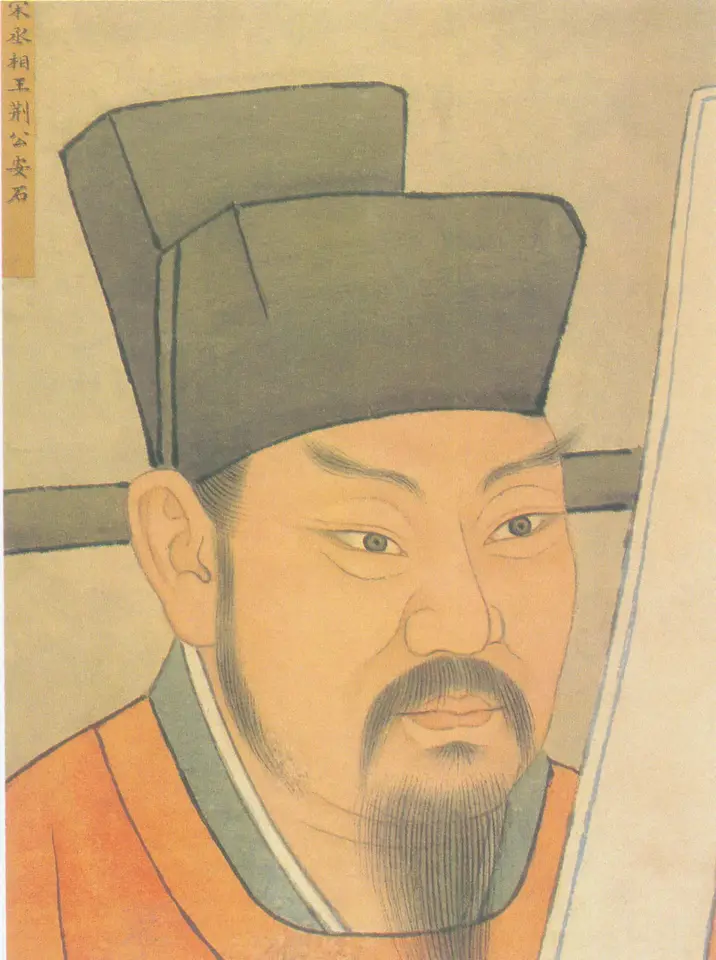
The Xining Reforms (熙宁变法) were an extensive series of socio-economic and institutional transformations initiated by Chancellor Wang Anshi with the steadfast backing of Emperor Shenzong between 1069 and 1077 during the Northern Song dynasty. Confronted with a bloated bureaucracy, a costly yet militarily ineffective army, persistent fiscal exhaustion, and looming threats along the frontiers from Western Xia and the Liao dynasty, Emperor Shenzong elevated Wang Anshi to vice grand chancellor and established the Finance Planning Commission to overhaul state governance. A succession of comprehensive policies was enacted, including the Equitable Transport Law, the Green Sprouts Law, the Agricultural Water Conservancy Law, the Hired Service Law, the Market Exchange Law, and the Baojia militia system. These measures aimed to stimulate agrarian productivity, curb merchant monopolization, expand treasury revenues, and reorganize defense forces without levying excessive direct burdens on common households. Although the reforms brought substantial fiscal replenishment and funded infrastructural modernization, they infringed upon the entrenched privileges of aristocratic lineages, wealthy landholders, and prominent merchants. The resulting fierce resistance polarized the scholar-official class into irreconcilable reformist and conservative factions, touching off decades of intense partisan turmoil throughout the late Northern Song period.
Wang Anshi presents his Ten Thousand Word Memorial proposing systematic reforms to ancestral administrative institutions
Emperor Shenzong ascends the throne and summons Wang Anshi to the capital to direct imperial policy
Wang Anshi becomes Vice Grand Chancellor; Finance Planning Commission is created, issuing Equitable Transport and Green Sprouts Laws
Wang Anshi becomes Grand Chancellor; the Hired Service Law and Baojia militia system are promulgated
The Market Exchange Law and Square Field and Equitable Tax System are enacted across the circuits
Zheng Xia submits the Illustration of Displaced People, prompting conservative backlash; Wang briefly leaves the capital
Wang Anshi retires permanently to Jinling while Emperor Shenzong continues executing reform measures
Emperor Shenzong dies; Empress Dowager Gao assumes regency and appoints Sima Guang to repeal the new laws
Event Name: Xining Reforms (熙宁变法); Alternative Name: New Policies of Wang Anshi / Wang Anshi's Reforms (王安石变法), Xifeng Reforms (熙丰变法); Event Type: Political and Economic Reform (政治经济改革); Dynasty: Northern Song (北宋); Location: Kaifeng (Dongjing Central Court) and Circuits across the Empire; Time Period: 1069 (Second Year of Xining) - 1085 (Eighth Year of Yuanfeng); Parties Involved: Northern Song Imperial Court, Reformist Faction (New Party), Conservative Faction (Old Party); Key Figures: Emperor Shenzong of Song, Wang Anshi, Lu Huiqing, Han Jiang, Sima Guang; Cause: The structural crises of redundant officials, bloated armies, and runaway expenditures resulting in severe fiscal deficits and frontier insecurity; Outcome: Substantial fiscal revenue increases and agricultural infrastructure expansion, followed by factional strife and policy rollbacks after Shenzong's death; Impact: Reshaped state financial administration and military mobilization while precipitating decades of devastating bureaucratic factionalism;
From its founding, the Northern Song dynasty concentrated civilian and military authority within the imperial center to avert regional militarism. Over a century of sustained peace, expansive hereditary privilege pathways and ballooning civil service examination quotas created a swollen bureaucratic apparatus. To suppress agrarian unrest and assimilate dislocated populations, the state maintained colossal standing armies of regular and provincial troops whose provisioning consumed the vast majority of annual revenues. By the reigns of Emperor Renzong and Emperor Yingzong, imperial treasuries suffered perennial deficits, saddling the court with debilitating financial distress.
In 1058, during the Jiayou era, Wang Anshi submitted his celebrated Ten Thousand Word Memorial, analyzing institutional decay and advocating sweeping reforms in legal codes, governance morality, official selection, and practical statecraft, though the imperial leadership took no immediate action. In 1067, the energetic Emperor Shenzong ascended the throne, eager to overcome state weakness and expand imperial borders. Deeply admiring Wang Anshi's intellectual vigor, Shenzong summoned him to court. In 1068, Wang submitted another decisive policy memorial outlining the principle of securing state wealth by fostering productivity rather than extorting higher tax rates, establishing an unwavering consensus between ruler and minister.
In the second month of 1069, Emperor Shenzong formally appointed Wang Anshi as Vice Grand Chancellor, commencing the reform movement. Countering conservative skepticism, Wang famously declared that celestial portents, ancestral precedents, and human criticism should never deter necessary reform. To circumvent entrenched bureaucratic inertia within the conventional State Finance Commission, the court established the Finance Planning Commission. Jointly overseen by Wang Anshi and Chen Shengzhi, this supreme planning agency formulated reform ordinances, coordinated state revenues and expenditures, and recruited visionary officials such as Lu Huiqing, Zhang Dun, and Zeng Bu into executive positions.
Beginning in mid-1069, core economic measures were promulgated in rapid sequence. In the seventh month, the court enacted the Equitable Transport Law, allocating state reserve funds to purchase surplus regional commodities when cheap and transport them according to market dynamics, neutralizing merchant cartels. In the ninth month, the Green Sprouts Law was introduced based on regional grain loan experiments conducted earlier in Shaanxi. Under this law, the state provided low-interest loans in grain or cash to farming households during the spring sowing season, repayable after the summer and autumn harvests to insulate peasants from usury while augmenting treasury funds. In the eleventh month, the Agricultural Water Conservancy Law was issued, offering state credit to encourage local irrigation works and land reclamation. In 1070, the Hired Service Law abolished compulsory corvee labor in favor of graduated exemptions fees, allowing farmers to focus on cultivation while the state hired paid laborers. In 1072, the Market Exchange Law stabilized urban consumer prices, and the Square Field and Equitable Tax System initiated nationwide cadastral land surveys to eliminate landlord tax evasion.
Simultaneously, Wang Anshi reorganized state defense to curb military expenditure. In late 1070, the Baojia militia system was decreed, organizing village households into defensive units of ten, fifty, and five hundred households. Rural males trained during agricultural downtime to maintain local order and serve as army reserves. The Arms Supervisory Agency improved weapons standards, while the Divisional Command system remedied structural detachment between commanders and garrison troops. However, these sweeping reforms disrupted elite economic interests and prompted vocal opposition from venerated statesmen, including Sima Guang, Han Qi, Fu Bi, and Ouyang Xiu. Opponents alleged that local officials coerced poor households into taking unwanted loans to meet revenue quotas. Intense debates engulfed the court, yet Emperor Shenzong persistently backed Wang Anshi, allowing the reforms to generate immense fiscal wealth and defensive capabilities.
The Xining Reforms produced tangible fiscal and infrastructural achievements. The application of state trading, low-interest agricultural credit, and fair market procurement replenished state treasuries to unprecedented levels, reversing decades of chronic deficits. Irrigation programs rehabilitated more than ten thousand waterways and reclaimed extensive fertile tracts across the countryside. The Baojia and reorganized field commands enhanced regional border readiness, directly underwriting successful frontier offensives that recovered Hehuang territories. Nevertheless, severe administrative malpractices, quota quotas imposed by local officials, and mounting corruption generated widespread discontent, culminating in the wholesale abolition of the measures following Emperor Shenzong's death.
The Xining Reforms represented one of the most comprehensive programs of state-directed economic intervention in imperial Chinese history. Conceptual innovations regarding state procurement, monetization of labor services, and progressive land assessments provided vital institutional precedents for subsequent dynasties. Conversely, the ideological dogmatism that accompanied the political struggle fractured the civil bureaucracy into irreconcilable factions. The resulting bitter partisan strife persisted for decades, destabilizing governance and severely undermining the political resilience of the Northern Song dynasty.