Solstice Mutiny and Seizure of Beizhou
Wang Ze leads Xuan'yi troops to kill commanders during the winter solstice, seizing Beizhou and capturing Prefect Zhang Deyi.
Northern Song Dynasty (北宋) · HISTORICAL EVENT
贝州王则起义
Wang Ze's Uprising in Beizhou (贝州王则起义) was a major combined soldier mutiny and millenarian rebellion from the eleventh month of 1047 to the intercalary first month of 1048 in Beizhou, Hebei West Circuit. During the Qingli era, prolonged border confrontations against the Liao dynasty and Western Xia consumed vast state revenues, turning Hebei into a militarized frontline where local populations endured crushing tax levies, corvée labor, and abusive…
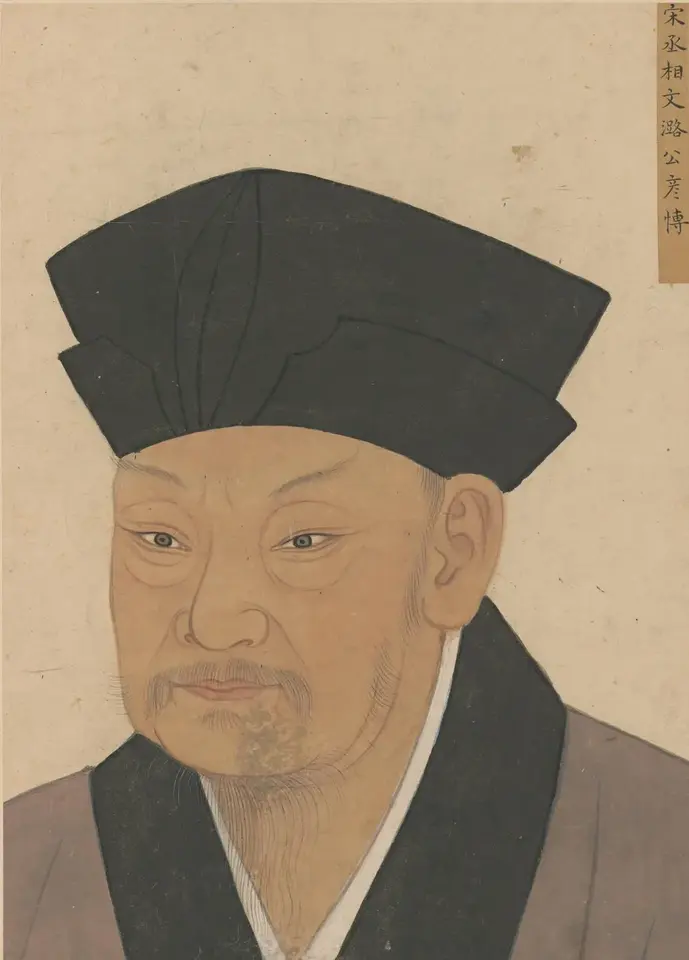
Wang Ze's Uprising in Beizhou (贝州王则起义) was a major combined soldier mutiny and millenarian rebellion from the eleventh month of 1047 to the intercalary first month of 1048 in Beizhou, Hebei West Circuit. During the Qingli era, prolonged border confrontations against the Liao dynasty and Western Xia consumed vast state revenues, turning Hebei into a militarized frontline where local populations endured crushing tax levies, corvée labor, and abusive military conscription. Wang Ze, a famine refugee from Zhuozhou who served as a squad commander in the Xuan'yi garrison corps, mobilized popular discontent by joining the Maitreya Sect and organizing impoverished soldiers and dispossessed farmers. On the winter solstice of 1047, Wang Ze launched an unexpected mutiny, capturing the prefectural seat and imprisoning Prefect Zhang Deyi. He established the independent Anyang State, proclaimed the Desheng era, and assumed the title of Prince of Dongping, while insurgent fighters tattooed the slogan "The Righteous Army destroys the Zhao to attain victory" onto their faces. The rebels repulsed imperial counteroffensives for more than two months. In response, Emperor Renzong dispatched Vice Grand Councilor Wen Yanbo to assume supreme command. Wen Yanbo feigned an assault on the northern walls while covertly driving subterranean tunnels under the southern battlements. Song shock troops surged through the tunnels, capturing Wang Ze after desperate street clashes. Wang Ze was executed in Kaifeng, and Beizhou was renamed Enzhou. The uprising revealed deep systemic rot within Song mercenary forces.
Wang Ze leads Xuan'yi troops to kill commanders during the winter solstice, seizing Beizhou and capturing Prefect Zhang Deyi.
Wang Ze assumes the title of Prince of Dongping, proclaiming the Anyang State with facial tattoos pledging to overthrow the Zhao house.
Ming Gao assaults the fortress with scaling engines; Wang Ze deploys boiling pitch and artillery, repelling imperial troops with heavy losses.
Emperor Renzong appoints Vice Grand Councilor Wen Yanbo to take command with tens of thousands of elite capital guard divisions.
Song commandos infiltrate through southern tunnels; street battles rage across Beizhou; Wang Ze is captured attempting to break out.
Wang Ze is executed by slow slicing in Kaifeng; Emperor Renzong razes the city ramparts and renames the region Enzhou.
Following the Chanyuan Covenant in 1004, the Hebei Circuit served as the paramount northern frontier facing the nomadic cavalry of the Khitan Liao dynasty. During the Qingli reign of Emperor Renzong, prolonged wars against Li Yuanhao's Western Xia in the northwest drained imperial treasuries, prompting the central government to transfer immense grain levies, courier transport burdens, and corvée duties onto the agricultural populace of Hebei. Thousands of peasant households fell into bankruptcy and fled their lands. To deter widespread agrarian unrest, the court adhered to its traditional policy of enlisting famine victims into imperial armies, swelling provincial regiments with destitute recruits.
However, recruits inducted into regional auxiliary units like the Xuan'yi Corps endured harsh debasement. They were conscripted into exhaustive physical labor, including canal excavation and grain haulage, while their stipends and rations were systematically embezzled by corrupt military supervisors, leaving soldiers underfed and without winter garments. Confronting identical misery, rank-and-file soldiers and bankrupt peasants shared profound grievances against the Zhao-Song dynastic house. Clandestine religious associations emerged as natural vehicles for organizing underground resistance.
Wang Ze was originally an impoverished farmer from Zhuozhou who fled famine to Beizhou (modern Qinghe, Hebei), working as a sheep-herder before enlisting in the local Xuan'yi garrison, where his battlefield courage earned him promotion to squad commander. In Beizhou, Wang Ze encountered religious preacher Li Jiao and joined the subterranean Maitreya Sect. The sect preached the millenarian doctrine that the historical Buddha Shakyamuni had declined and that Maitreya Buddha was descending to rule the world, mobilizing popular discontent against the existing dynastic order.
Together with Li Jiao, Zhang Luan, and Bu Ji, Wang Ze established clandestine operational cells across Beizhou, Dezhou, Jizhou, and Qizhou, recruiting soldiers, craftsmen, and rural laborers. The conspirators initially planned to coordinate a simultaneous uprising across multiple prefectures on New Year's Day of 1048 during imperial celebration ceremonies. However, in late November 1047, sect members in Qizhou were compromised and arrested. Recognizing that secrecy was broken, Wang Ze resolved to strike immediately on the winter solstice, capitalizing on the moment when prefectural magistrates would be assembled for ceremonial banquets with fortifications unguarded.
At dawn on the winter solstice of 1047, Beizhou Prefect Zhang Deyi assembled civil and military officials at Kaiyuan Temple to conduct imperial solstice rituals. Wang Ze led hundreds of armed Xuan'yi mutineers in a sudden assault on the administrative compound, cutting down Regional Inspector Tian Yuanjun and Patrol Commander Ren Li on the spot. The insurgents then charged into Kaiyuan Temple, capturing Prefect Zhang Deyi and Vice Prefect Dong Yuanheng without resistance. Sympathetic jailers and city guards opened the prisons, releasing captives and seizing armories. Over ten thousand soldiers, craftsmen, and laborers rallied to the cause, placing the entire city under rebel control within hours.
Consolidating control, Wang Ze established a revolutionary administration, declaring himself Prince of Dongping, founding the Anyang State, and inaugurating the Desheng reign era. He named ideologue Zhang Luan as Grand Councilor and Bu Ji as Bureau of Military Affairs Commissioner. To signify their irrevocable break with the Song dynasty, rebel fighters tattooed the six characters "The Righteous Army destroys the Zhao to attain victory" onto their faces and arms. The Anyang regime opened state granaries to feed starving citizens, publicly burned land deeds, debt registers, and tax ledgers, and abolished onerous dues, winning fervent backing across the region and transforming Beizhou into an unyielding bastion.
News of Beizhou's fall panicked Emperor Renzong and the central court in Kaifeng. Situated along critical water transport routes only several hundred li from the imperial capital and bordering the Liao frontier, Beizhou presented a lethal threat should the rebels ally with Khitans or drive southward toward the Yellow River. Emperor Renzong mobilized pacification armies under Jia Changchao from neighboring circuits, appointing Military Commissioner Ming Gao to lead elite capital guards to besiege the fortress.
Wang Ze organized an impenetrable defense, deepening the moats and fortifying the battlements. Utilizing Beizhou's formidable border citadel walls, defenders positioned rolling boulders, caltrops, and heavy arcuballistas along parapets. When Ming Gao arrived, he constructed counter-walls and deployed dozens of scaling ladders and battering rams in day-and-night assaults against the gates. Wang Ze directed defenders to pour boiling oil, flaming pitch, and burning lime down onto the storming columns, smashing rams with catapult stones and burning siege engines to ashes. Ming Gao's assault brigades suffered devastating casualties and were repeatedly repulsed, locking the siege into a bloody stalemate.
By the first month of 1048, the siege had dragged on for over two months without progress. With imperial authority seriously compromised, Emperor Renzong dismissed failed commanders and appointed Vice Grand Councilor Wen Yanbo as Supreme Pacification Commissioner of Hebei, with Ming Gao as his deputy, dispatching tens of thousands of elite imperial guard cavalry and infantry from the capital.
Upon arriving at the frontline, Wen Yanbo realized that frontal assaults against the united populace would incur unacceptable losses. He adopted a sophisticated strategy combining political warfare with tactical misdirection. Publicly, he issued amnesty proclamations to undermine rebel solidarity, while openly directing soldiers to dig entrenchments, erect high observation towers, and bombard the northern parapets continuously with stone-throwing mangonels. Convinced that the decisive assault would strike the northern ramparts, Wang Ze concentrated his veteran shock troops, siege weapons, and defensive supplies along the northern walls.
While the bombardment diverted attention to the north, Wen Yanbo covertly selected hundreds of skilled sappers to excavate an expansive subterranean tunnel beneath the southern battlements. The shaft stretched hundreds of feet, tunneling under the deep moat to surface within an abandoned overgrown conduit inside the southern perimeter. On the night of the second day of the intercalary first month, the tunnel was complete. Wen Yanbo unleashed a massive diversionary bombardment against the northern gates, while Ming Gao directed shock troops under Wang Xin and Yuan Gang to crawl through the southern tunnel.
Surging out of the tunnel under cover of darkness, Song commandos scaled the southern battlements, cut down sentries, lowered the drawbridge, and opened the southern gates to cavalry columns waiting outside. Song cavalry poured through the breach, setting fire to buildings and advancing through the avenues. Alerted by alarms, Wang Ze hurried back with his veteran guards, engaging the invaders in savage close-quarters street fighting. Refusing to yield, rebel leaders Zhang Luan and Bu Ji fell in hand-to-hand combat. Overwhelmed by superior numbers, Wang Ze fought his way to the eastern gates with surviving comrades, where he was encircled and taken captive, concluding the sixty-six-day defense of Beizhou.
In late February, Wang Ze was conveyed in heavy shackles to the capital city of Kaifeng. Emperor Renzong reviewed the prisoner at Zichen Palace and commanded that Wang Ze be executed by dismemberment (lingchi) in the public market. Following the rebellion, Song authorities razed the defensive walls of Beizhou to the ground and officially downgraded the prefecture's name to "Enzhou," signifying imperial benevolence over subdued rebels. Thus ended the dramatic uprising that shook the foundations of the Northern Song state.
The suppression of Wang Ze's uprising resulted in the execution of its paramount leaders, the slaughter of thousands of insurgent soldiers, and the complete destruction of the Anyang rebel regime. To eradicate the ideological seedbed of the mutiny, Song authorities razed Beizhou's formidable ramparts, erased its historical name by rechristening it "Enzhou," and carried out systematic inquisitions against the Maitreya Sect across the northern circuits. Wen Yanbo was elevated to Grand Councilor for his triumph, while Ming Gao ascended to Vice Commissioner of Military Affairs.
In institutional terms, the insurrection produced profound reverberations throughout mid-Northern Song politics. First, it stripped away the serene veneer of the "Renzong Prosperity," proving that the central mercenary army of hundreds of thousands was inefficient, corrupt, and incapable of quickly reducing a single rebel fortress. Second, the mutiny highlighted the dangerous alienation of provincial garrison troops (xiangjun), compelling statesmen like Sima Guang and Ouyang Xiu to reexamine the costs of the standing mercenary model. Ultimately, the trauma of the Beizhou mutiny furnished primary historical arguments that inspired Emperor Shenzong and Wang Anshi to implement the Baojia community-militia system and downsize redundant standing armies during the Xining Reforms.