Accession of Emperor Wu
Emperor Wu ascends the throne, appoints Zhao Wan and Wang Zang, and initiates Confucian reforms
Western Han (西汉) · HISTORICAL EVENT
独尊儒术
The Exclusive Recognition of Confucianism (独尊儒术) was a transformative ideological realignment enacted during the reign of Emperor Wu of the Western Han dynasty, establishing Confucianism as the paramount state orthodoxy. In the early decades of the Western Han, emperors embraced Huang-Lao Taoist quietism and minimal interference to allow war-ravaged agrarian economies to recover. Following the sustained prosperity of the Rule of Wen and Jing, emerging…
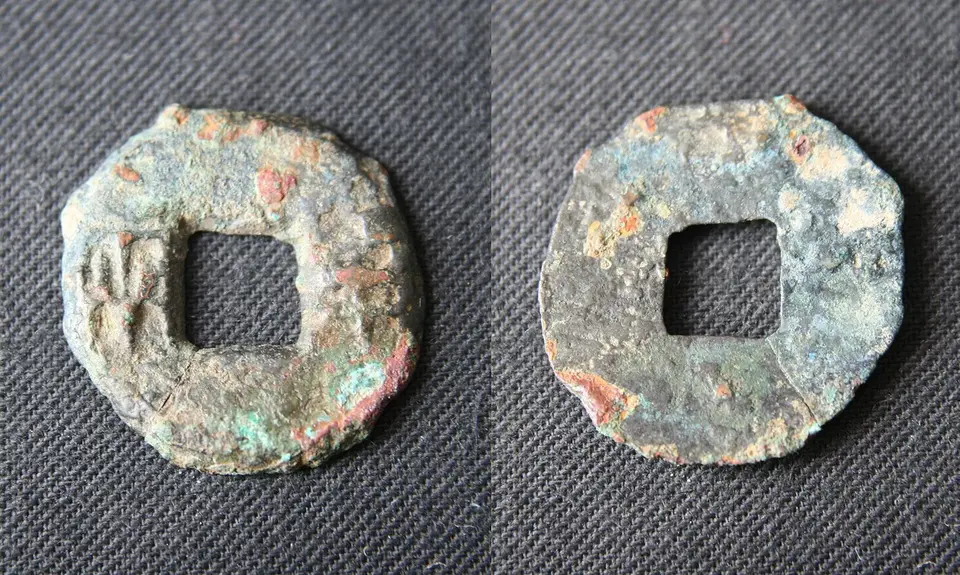
The Exclusive Recognition of Confucianism (独尊儒术) was a transformative ideological realignment enacted during the reign of Emperor Wu of the Western Han dynasty, establishing Confucianism as the paramount state orthodoxy. In the early decades of the Western Han, emperors embraced Huang-Lao Taoist quietism and minimal interference to allow war-ravaged agrarian economies to recover. Following the sustained prosperity of the Rule of Wen and Jing, emerging structural dilemmas—including the autonomous defiance of regional feudatories, unchecked land monopolization by rural gentry, and unrelenting border raids by the nomadic Xiongnu—rendered passive governance obsolete. Ascending the throne with sweeping geopolitical ambitions, Emperor Wu summoned worthy and righteous scholars in 140 BCE. In 134 BCE, the preeminent philosopher Dong Zhongshu presented his landmark Three Memorials on Heaven and Man, articulating a comprehensive metaphysical system incorporating the Mandate of Heaven, cosmic resonance, and the exclusive exaltation of the Six Classics. Convinced by Dong's arguments, Emperor Wu dismantled non-Confucian academic chairs, instituted Erudites of the Five Classics, established the Imperial Academy at Chang'an, and reformed the civil recommendation system to select officials versed in Confucian moral statecraft. This decisive convergence of imperial autocracy and Confucian ethics extinguished the pluralistic intellectual landscape of the Warring States period, elevating Confucianism to supreme ideological hegemony across two millennia of imperial Chinese history.
Emperor Wu ascends the throne, appoints Zhao Wan and Wang Zang, and initiates Confucian reforms
Empress Dowager Dou suppresses the reforms; Zhao Wan and Wang Zang commit suicide in prison
Empress Dowager Dou dies; Emperor Wu assumes direct rule and resumes institutional promotion of Confucianism
Dong Zhongshu submits his celebrated memorials, proposing the exclusive exaltation of Confucianism
Gongsun Hong establishes the Imperial Academy and Erudites of the Five Classics, formalizing civil recommendation
Emperor Wu performs the solemn imperial sacrifices at Mount Tai, displaying the supreme cosmological authority of Confucian ritual
Event Name: Exclusive Recognition of Confucianism (独尊儒术); Alternative Name: Dismissing the Hundred Schools and Reverencing Confucianism (罢黜百家,独尊儒术), Han Wudi's Promotion of Confucianism (汉武帝尊儒); Event Type: Establishment of State Ideology and Cultural-Educational Reform (国家意识形态确立与文教改革); Dynasty: Western Han (西汉); Location: Chang'an (Weiyang Palace, Imperial Academy) and Commandery Commanderies; Time Period: 140 BCE (First Year of Jianyuan) - 124 BCE (Fifth Year of Yuanshuo); Parties Involved: Emperor Wu's Imperial Court, Confucian Scholars (Dong Zhongshu, Gongsun Hong, Zhao Wan, Wang Zang), Huang-Lao Taoist Faction (Empress Dowager Dou); Key Figures: Emperor Wu of Han, Dong Zhongshu, Gongsun Hong, Empress Dowager Dou, Zhao Wan, Wang Zang; Cause: The inability of early Han Huang-Lao quietism to satisfy the administrative needs of consolidating an imperial autocracy and centralizing command; Outcome: Abolition of non-Confucian academic chairs, institution of Erudites of the Five Classics, creation of the Imperial Academy, and Confucianization of civil recruitment; Impact: Established Confucianism as the orthodox state ideology for over two millennia, profoundly shaping traditional Chinese governance, ethics, and scholarship;
Following the founding of the Western Han by Emperor Gaozu, imperial administrators recognized the catastrophic errors of the Qin dynasty's draconian Legalism. Guided by chancellors Xiao He and Cao Shen, the state adopted Huang-Lao statecraft, which emphasized passive restraint, minimal taxation, and non-interference. While this policy nurtured the economic recovery of the Rule of Wen and Jing, its inherent passivity proved increasingly incapable of resolving deep socio-economic contradictions. Autonomous imperial princely feudatories continually contested central hegemony, culminating in the Rebellion of the Seven States. Simultaneously, powerful mercantile families and landlords engrossed prime arable lands, generating legions of landless peasants, while northern frontiers suffered devastating incursions from the Xiongnu confederation. To preserve imperial longevity, the court required an authoritative philosophy capable of legitimizing absolute autocratic rule, justifying imperial expansion, and enforcing social hierarchy.
Following the repeal of the Qin ban on private books during the reign of Emperor Hui, Confucian textual traditions revived rapidly. Prominent masters such as Fu Sheng reconstructed the Book of Documents, while distinct schools of the Classic of Poetry and Spring and Autumn Annals established institutional followings. In 140 BCE, the sixteen-year-old Emperor Wu ascended the throne, determined to free himself from the conservative tutelage of his grandmother, Empress Dowager Dou, an ardent devotee of Huang-Lao. Emperor Wu promoted reform-minded Confucian scholar-officials, including his uncle Tian Fen, Zhao Wan, and Wang Zang, issuing decrees summoning virtuous scholars from across the realm and setting the stage for an ideological revolution.
In 140 BCE, during the first year of the Jianyuan era, Emperor Wu appointed Confucian literatus Zhao Wan as Imperial Counselor and Wang Zang as Chamberlain for Attendants, initiating the Jianyuan Reforms. Zhao Wan and Wang Zang petitioned the throne to erect a sacred Bright Hall south of Chang'an to receive feudal lords, promulgate royal decrees, and conduct ancestral worship according to ancient Confucian rites. Furthermore, they urged the young sovereign to cease reporting daily governance matters to Empress Dowager Dou in the Eastern Palace. These institutional moves deeply alarmed the dowager empress and her entrenched court allies.
Empress Dowager Dou commanded profound authority over the military guard and veteran statesmen. In 139 BCE, she launched a fierce political counterstrike, castigating Confucian doctrines as hypocritical fabrications that undermined ancestral dynastic statutes. Framing Zhao Wan and Wang Zang on charges of administrative misconduct, she had them cast into prison, where both committed suicide. Chancellor Tian Fen was dismissed, and all Confucian policy measures were dismantled. Confronted by his grandmother's unyielding supremacy, Emperor Wu retreated pragmatically, temporarily halting the reforms while remaining steadfast in his ideological vision.
In 135 BCE, Empress Dowager Dou passed away, eliminating the primary obstacle to imperial centralization. Assuming unconstrained personal rule, Emperor Wu reappointed Tian Fen as Grand Chancellor, dismissed ministers adhering to Huang-Lao or Legalist tenets, and systematically restored imperial patronage to Confucian scholars. In 134 BCE, the first year of the Yuanguang era, the emperor issued an imperial decree commanding regional commanderies and feudal kingdoms to recommend accomplished literary and moral candidates for personal imperial examinations at the capital.
Among the hundreds of candidates who journeyed to Weiyang Palace, Dong Zhongshu, former Chancellor of Jiangdu and premier master of the Gongyang school of the Spring and Autumn Annals, delivered the most profound performance. Emperor Wu posed three consecutive exhaustive inquiries addressing the interaction of celestial patterns, earthly governance, structural decay, and the restoration of dynastic order. Drawing upon profound classical learning and sharp political realism, Dong responded with his historic Three Memorials on Heaven and Man, constructing a comprehensive theoretical foundation for imperial autocracy.
Dong Zhongshu synthesized classical Confucianism with Yin-Yang cosmology, Five Elements theory, and Legalist administrative centralization. He formulated the doctrine of the Interaction between Heaven and Mankind, asserting that the emperor derived absolute earthly authority as the Son of Heaven while warning that natural catastrophes served as celestial admonitions against tyrannical misrule. This theological construct simultaneously sanctified imperial autocracy and provided a moral mechanism to restrain monarchical excess.
Crucially, Dong recognized that an expansive empire necessitated unified ideological discipline. Citing the foundational principle of Great Unification from the Spring and Autumn Annals, he argued that ideological fragmentation among divergent philosophical schools left common subjects bewildered and rendered central decrees ineffective. Dong explicitly urged the sovereign: "All disciplines not within the Six Arts and the doctrines of Confucius should have their avenues severed and not be permitted to advance together. Only when depraved doctrines are extinguished can institutional order be harmonized and imperial statutes made transparent." Emperor Wu enthusiastically endorsed this counsel, adopting it as the foundational ideological doctrine of the Western Han.
In 124 BCE, during the fifth year of the Yuanshuo era, Grand Chancellor Gongsun Hong and Minister of Ceremonies Zang Tong formally submitted a joint petition requesting the institutionalization of imperial higher education. Emperor Wu approved the establishment of the Imperial Academy at Chang'an, instituting specialized chairs for Erudites of the Five Classics—the Classic of Changes, Book of Documents, Classic of Poetry, Book of Rites, and Spring and Autumn Annals. The court allocated official state stipends for an initial cohort of fifty apprentice disciples, selecting promising youths from regional commanderies and exempting them from corvee labor.
To complement the Imperial Academy, Emperor Wu abolished all academic chairs dedicated to non-Confucian philosophical traditions. In addition, the central court formalized the civil recommendation system across all commanderies, mandating that local magistrates annually recommend individuals renowned for filial piety and incorruptibility. By directly linking the mastery of Confucian canonical texts with bureaucratic advancement and aristocratic status, the imperial state constructed an institutional ladder for civil literati, permanently anchoring Confucianism at the core of dynastic administration.
Although Emperor Wu established Confucianism as the sole orthodox state philosophy, actual governance synthesized Confucian rhetoric with pragmatic Legalist mechanisms, establishing the durable imperial paradigm of external Confucian benevolence masking internal Legalist autocracy. While utilizing Confucian ceremonial rites and moral propaganda to cultivate popular loyalty, Emperor Wu relied extensively upon harsh penal officials such as Zhang Tang and Du Zhou to suppress rebellious nobles and wealthy merchants. The state monopolized salt, iron, and liquor production and executed aggressive frontier warfare, reflecting unabashed Legalist economic and military strategies.
This synthesis effectively codified Confucian moral obligations into enforceable statutory law. Dong Zhongshu introduced the practice of Deciding Legal Cases by the Spring and Autumn Annals, which permitted magistrates to adjudicate judicial sentences based directly upon the moral motives and canonical intent articulated in Confucian classics. This institutional integration wove Confucianism indelibly into the legal, administrative, and social fabrics of the Chinese empire, consummating the structural triumph of exclusive Confucian orthodoxy.
The establishment of exclusive Confucian orthodoxy fundamentally transformed imperial governance, educational structures, and intellectual paradigms. Through the dissolution of non-Confucian academic chairs, the founding of the Imperial Academy, and the systemic institutionalization of the filial and incorrupt recommendation pathways, the state successfully tied classical scholarship directly to bureaucratic recruitment. Confucian classics advanced from private academic traditions to state-mandated constitutional textbooks, producing an enduring cadre of literati-bureaucrats whose shared ideological values unified the imperial administration.
This ideological pivot constituted an enduring watershed in Chinese intellectual and political history. Politically, it endowed imperial autocracy with cosmological legitimacy and a moral framework, ensuring the long-term structural resilience of the unified multi-ethnic Chinese state. Socially, the canonical moral doctrines of the Three Fundamental Bonds and Five Constant Virtues permeated grassroots communities, cementing patriarchal kinship systems and communal ethics. However, the elimination of ideological competition simultaneously curtailed the vigorous pluralism of pre-Qin intellectual thought, gradually petrifying into dogmatic canonical orthodoxy that constrained subsequent philosophical and institutional innovation.