Expedition Launch
The Qing court endorses Zuo Zongtang's frontier defense strategy, appointing him Imperial Commissioner to lead the Western Expedition.
Qing Dynasty (清朝) · HISTORICAL EVENT
新疆建省
The Establishment of Xinjiang Province (新疆建省) was a historic milestone in 1884 (the 10th year of the Guangxu reign) during which the Qing central government reformed frontier administration by creating a standardized province across Xinjiang. Following the Qianlong Emperor's suppression of the Dzungar Khanate and the Afaqi Khoja rebellions in the mid-18th century, the Qing court maintained a militarized military-general administration headed by the…
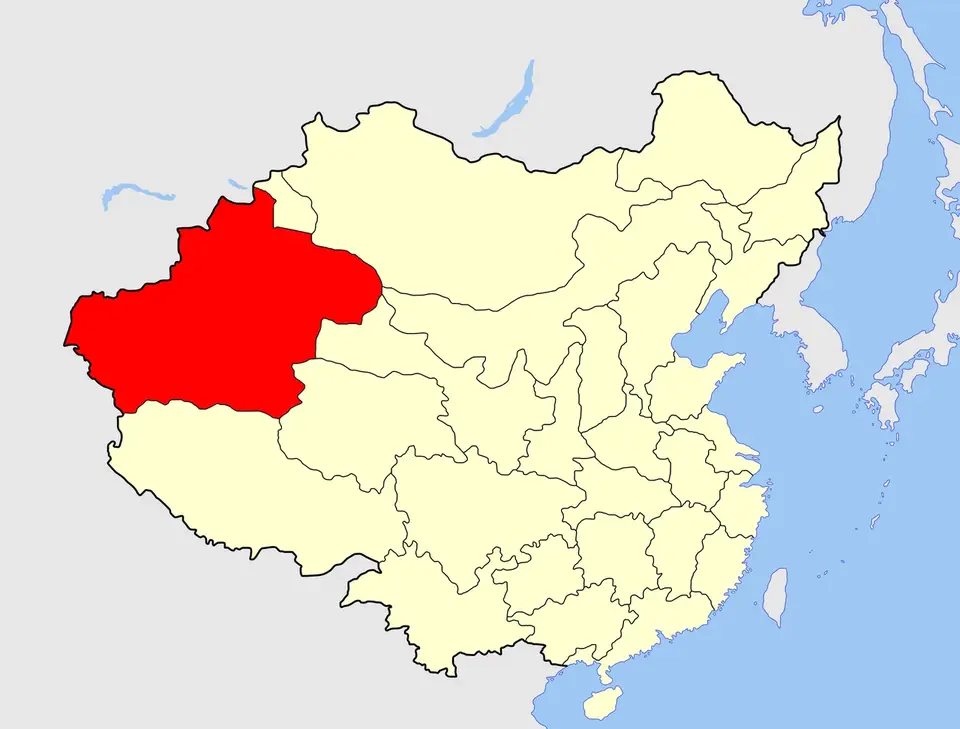
The Establishment of Xinjiang Province (新疆建省) was a historic milestone in 1884 (the 10th year of the Guangxu reign) during which the Qing central government reformed frontier administration by creating a standardized province across Xinjiang. Following the Qianlong Emperor's suppression of the Dzungar Khanate and the Afaqi Khoja rebellions in the mid-18th century, the Qing court maintained a militarized military-general administration headed by the General of Yili, while preserving the hereditary local Beg system in southern Xinjiang. This pluralistic administrative system generated institutional friction and administrative stagnation. In the 1860s and 1870s, Kokandian commander Yaqub Beg invaded southern Xinjiang, while Tsarist Russia seized Yili, threatening northwest territorial integrity. Imperial Commissioner Zuo Zongtang led the Western Expedition Army to eradicate Yaqub Beg's regime and recover Xinjiang, while diplomat Zeng Jize negotiated the return of Yili. Supported by foundational proposals from Gong Zizhen and Wei Yuan, Zuo Zongtang and military commander Liu Jintang persistently petitioned the throne to replace military rule with the standard provincial prefecture-and-county system. In November 1884, the Guangxu Emperor issued an edict creating the Gansu-Xinjiang Province with its capital at Dihua (modern Urumqi) and appointing Liu Jintang as its inaugural governor. Divided into four circuits overseeing prefectures, departments, and counties, and terminating hereditary Beg privileges, Xinjiang's provincial establishment formalized territorial sovereignty and integrated frontier governance into the unified Chinese state.
The Qing court endorses Zuo Zongtang's frontier defense strategy, appointing him Imperial Commissioner to lead the Western Expedition.
Vanguard commander Liu Jintang eradicates Yaqub Beg's regime; Zuo Zongtang submits his first formal memorial urging provincial establishment.
Zuo Zongtang advances to Hami with his coffin, supporting diplomat Zeng Jize in signing the Treaty of Saint Petersburg to recover Yili.
Liu Jintang is appointed to oversee Xinjiang military and civil administration, drafting the Regulations for Civil Governance in Xinjiang.
The Guangxu Emperor issues an edict officially creating Gansu-Xinjiang Province and naming Liu Jintang as its inaugural governor.
Liu Jintang implements the four-circuit system across prefectures and counties, formally abolishing the hereditary Beg nobility.
State-sponsored reclamation projects cultivate vast tracts of reclaimed farmland and hundreds of community academies flourish.
In 1759 (Qianlong 24), having pacified the Dzungar Khanate and the rebellion of the Khoja brothers, the Qing Dynasty reunified the regions north and south of the Tianshan Mountains. The Qianlong Emperor bestowed the name "Xinjiang" (meaning "old homeland newly returned"). To govern this vast region, the Qing court instituted a military administration headed by the General of Yili stationed in Huiyuan, who commanded imperial defense. Subordinate generals, brigade commanders, and councilors were garrisoned across vital oases. In the Tarim Basin of southern Xinjiang, the court preserved the indigenous Beg system, appointing local Uyghur aristocrats to hereditary titles to oversee tax collection and local justice under imperial surveillance.
Over a century of operation, this militarized dual-track system manifested severe institutional flaws. The Eight Banners and Green Standard garrisons were unsuited for civilian agrarian governance. Imperial garrisons relied entirely on annual financial subsidies from inland provinces totaling millions of taels. The hereditary Beg nobility exploited local commoners, breeding intense social discontent. Furthermore, strict bans on inland Han migration into southern Xinjiang prevented deep socioeconomic and cultural integration. During the Daoguang era, reformist scholar Gong Zizhen authored his visionary Proposal on Establishing Provinces in the Western Regions, and Wei Yuan penned the Military Chronicles of the Holy Empire, both advocating for peasant colonization and regular county governance as essential precursors to modern frontier statecraft.
In 1864 (Tongzhi 3), under the spillover effects of the Taiping and Shaan-Gan Muslim Rebellions, widespread uprisings erupted across Xinjiang, collapsing imperial frontier garrisons. In 1865, Yaqub Beg, an officer from the Central Asian Khanate of Kokand, invaded southern Xinjiang, establishing a harsh, foreign-backed military dictatorship. Capitalizing on the chaos, Tsarist Russian troops occupied the strategic Yili Valley in 1871. With the vast majority of Xinjiang lost to foreign invaders and local rebels, the Qing Empire faced imminent territorial disintegration across the northwest.
In the mid-1870s, a fierce debate erupted at the imperial court between proponents of maritime defense and continental frontier defense. Prominent statesman Li Hongzhang argued that scarce treasury revenues should be devoted entirely to modern coastal defense, proposing the abandonment of western desert frontiers. In contrast, Shaan-Gan Governor-General Zuo Zongtang vigorously refuted the abandonment scheme. He declared that safeguarding Xinjiang was vital for protecting Mongolia, and securing Mongolia was essential for defending the capital at Beijing. The court endorsed Zuo Zongtang's dual-defense policy, appointing him Imperial Commissioner to oversee military operations in Xinjiang.
In 1875 (Guangxu 1), Zuo Zongtang established operational headquarters in Lanzhou, adopting the strategic doctrine of "advancing deliberately and striking decisively, securing the north prior to reclaiming the south." Zuo reconstructed supply corridors toward Hami and Barkol, stockpiled granaries, and placed field commander Liu Jintang at the helm of Hunan Army vanguard divisions. In the spring of 1876, the expeditionary force advanced past the frontiers, sweeping across northern strongholds including Urumqi, Changji, and Manas.
In the spring of 1877, Liu Jintang marched southward over the Tianshan ranges, capturing strategic passes at Dabancheng, Toksun, and Turpan, severing Yaqub Beg's defensive lines. Confronted by impending defeat, Yaqub Beg died under suspicious circumstances at Korla. Imperial forces surged across the Tarim Basin, liberating Aksu, Ushturpan, Kashgar, Yarkand, and Khotan within months. By early 1878, Yaqub Beg's foreign occupying forces were crushed, restoring the entire Tianshan territory to Qing authority.
In 1880, facing Tsarist Russia's recalcitrance to surrender Yili, the sixty-eight-year-old Zuo Zongtang ordered his coffin to be carried along with his personal army as he established military headquarters at Hami, demonstrating unyielding resolve for total war. Bolstered by this military posture, imperial diplomat Zeng Jize conducted arduous negotiations in Saint Petersburg, concluding the Treaty of Saint Petersburg in 1881, successfully recovering the sovereign territory of the Yili Valley.
Throughout the reconquest campaigns, Zuo Zongtang and Liu Jintang recognized that the outdated military-general system was incapable of maintaining permanent stability. In 1877, Zuo submitted an official memorial urging the court: "To plan for lasting peace and relieve the court of western anxieties, establishing a province and instituting counties is the paramount imperative." He argued for treating Xinjiang not as an exotic isolated borderland, but as an integral domestic domain.
Following the recovery of Yili, the court appointed Liu Jintang in 1882 to oversee military and civil administration in Xinjiang, succeeding Zuo Zongtang who had been recalled to Beijing. Basing himself at Dihua, Liu embarked on extensive surveys across both sides of the Tianshan ranges, surveying arable lands, registering displaced populations, and compiling the comprehensive Regulations for Civil Governance in Xinjiang.
Liu Jintang proposed that military officers should immediately yield civil administrative authority to a provincial governor; standard circuits, prefectures, and counties should be configured according to oasis geography; the hereditary Beg system should be replaced by imperial magistrates; and agricultural reclamation should be promoted by recruiting civilian migrants alongside military farming units. This reform blueprint earned the full endorsement of Zuo Zongtang and the Grand Council.
On November 19, 1884 (the seventeenth day of the tenth month of Guangxu 10), the Guangxu Emperor issued an imperial edict formally ratifying the creation of the province, officially styled "Gansu-Xinjiang Province" (commonly known as "Xinjiang Province"). The edict decreed: "Xinjiang encompasses vast territory. In order to nurture the populace and secure the borders, an imperial province must be established. As requested, let a Governor of Gansu-Xinjiang be established, residing at Dihua, concurrently holding the rank of Vice Minister of War and Associate Chief Censor to direct civil and military affairs."
Liu Jintang was appointed as the inaugural Governor of Xinjiang, with Wei Guangtao appointed as Provincial Administrative Commissioner to oversee provincial finances and civil bureaucracy. Territorially, Xinjiang was divided into four administrative circuits: the Zhendi Circuit (based in Dihua, overseeing Zhendi and northern domains); the Aksu Circuit (based in Aksu, governing central oases); the Kashgar Circuit (based in Shufu, administering southwestern frontier cities including Kashgar, Yarkand, and Khotan); and the Yita Circuit (based in Ningyuan/Yining, overseeing the northwestern border sectors).
Under these four circuits, the province comprised six prefectures (Dihua, Zhenxi, Kashgar, Yarkand, Wensu, and Yili), two directly controlled departments, eight directly controlled subprefectures, one department, and fourteen regular counties. The governor exercised unified leadership over local civil, fiscal, judicial, and defense affairs, fundamentally superseding the decentralized martial authority of past decades.
The institutional transformation featured two crucial reforms: the separation of military from civil governance, and the complete abolition of the Beg aristocracy. While the post of General of Yili was retained, its jurisdiction was strictly confined to frontier border defense, diplomacy with Tsarist Russia, and Banner garrisons along the northwestern perimeter. All provincial civil administration, tax revenues, and judicial matters were subordinated solely to the civil governor's yamen.
In southern Xinjiang, Liu Jintang decisively dismantled the centuries-old Beg nobility. Historically, hereditary Begs held unchecked power over local judicial disputes, taxation, and corvee mobilization, acting as despotic feudal lords. Under the new regulations, all administrative and judicial authority was transferred directly to centrally appointed prefects, subprefects, and magistrates.
To ease this sociopolitical transition, the administration provided compensatory pensions and titular civil honors to cooperative Beg families, while prohibiting them from maintaining private detention facilities or imposing arbitrary corporal punishments. Educated Uyghur commoners were recruited as auxiliary clerks and translators. This reform eliminated the local feudal aristocracy and established direct imperial bureaucratic governance over agrarian communities.
Following provincial establishment, Governor Liu Jintang implemented comprehensive policies to rejuvenate frontier productivity. Expanding Zuo Zongtang's state farming programs, the governor encouraged civilian, official, and military colonization. Tens of thousands of impoverished migrants from Shanxi, Shaanxi, and Gansu were provided free seeds, farm oxen, reclamation tools, and three-year tax exemptions. Massive irrigation projects along the Kaidu, Yarkand, and Manas rivers brought hundreds of thousands of wasteland acres under active cultivation.
In commerce and taxation, the administration abolished illicit transit duties and arbitrary levies, harmonizing Xinjiang's land tax rates with inland regulations. A provincial mint was established in Dihua to cast standard coinage, stabilizing local market currencies. Free commercial transit encouraged merchants from across the empire to open trading houses, sparking an economic revival across border oasis towns.
Culturally, Liu Jintang promoted national integration through education. Hundreds of community schools (yishu) and Confucian academies were founded across the province. Literati scholars were invited from inland provinces to instruct Han, Uyghur, Hui, and Kazakh pupils in reading, mathematics, and classical literature, with students receiving monthly imperial educational stipends. These educational institutions bridged cultural divides, anchoring frontier communities to the broader Chinese national identity.
The imperial edict of 1884 brought an end to over a century of martial military-general rule in Xinjiang. The region transitioned swiftly to an integrated bureaucratic state governed from Dihua, structured into circuits, prefectures, and counties. The abolition of Beg prerogatives unified administrative law across Banner garrisons and civilian populations. Hundreds of thousands of war refugees returned to productive farming, while subsidized migration reclaimed over a million acres of farmland, restoring socioeconomic vitality to the war-ravaged province.
The establishment of Xinjiang Province was a transformative event in modern Chinese frontier statecraft. Structurally, it shattered the outdated policy of maintaining frontier isolation, embedding Xinjiang inextricably into the administrative architecture of the Chinese imperial state. This centralized reorganization curtailed British and Russian geopolitical conspiracies to partition China's northwest territory. It permanently shaped the modern provincial administrative borders and urban networks of Xinjiang, providing an enduring structural bulwark for the unity of the Chinese nation.
Modern historians view the establishment of Xinjiang Province in 1884 as one of the most successful defensive and modernizing administrative reforms undertaken in late imperial China. In confronting aggressive imperialist encroachment, the Qing court modernized territorial statecraft by discarding loose suzerainty in favor of direct provincial governance. This reform preserved the northwest territorial integrity of the modern Chinese nation and permanently anchored Xinjiang within the multi-ethnic Chinese state.