Golden Casket Pact Allegation
Empress Dowager Du allegedly mandates fraternal succession on her deathbed.
Northern Song Dynasty (北宋) · HISTORICAL EVENT
烛影斧声疑案
The Mystery of the Candle Shadow and Axe Sound (烛影斧声疑案), unfolding on the night of November 14, 976, refers to the sudden, enigmatic demise of Song founding monarch Emperor Taizu (Zhao Kuangyin) and the immediate accession of his younger brother, Prince of Jin Zhao Guangyi (Emperor Taizong). This incident represents the most debated palace succession crisis in imperial Chinese history. According to contemporary accounts such as The Continued Wilderness…
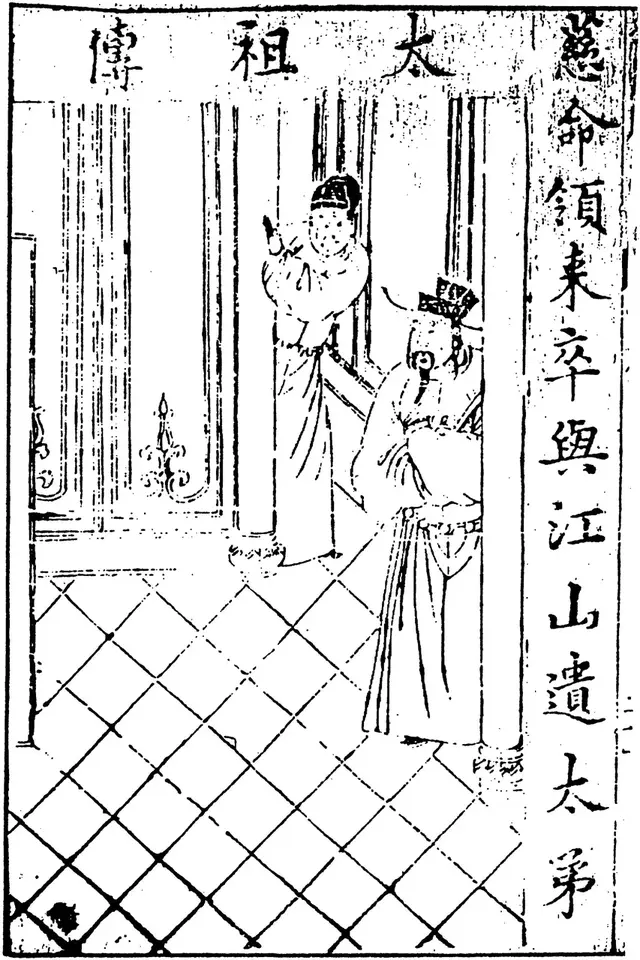
The Mystery of the Candle Shadow and Axe Sound (烛影斧声疑案), unfolding on the night of November 14, 976, refers to the sudden, enigmatic demise of Song founding monarch Emperor Taizu (Zhao Kuangyin) and the immediate accession of his younger brother, Prince of Jin Zhao Guangyi (Emperor Taizong). This incident represents the most debated palace succession crisis in imperial Chinese history. According to contemporary accounts such as The Continued Wilderness Records of Xiangshan, during a fierce blizzard, the ailing Taizu summoned Guangyi to the private Wansui Palace, ordering attendants to withdraw. Palace staff standing outside observed shadows dancing across the paper lattice windows, noticing Guangyi retreating in apparent refusal, followed by the sound of a ceremonial crystal axe striking the pavement and Taizu's shouted words: "Do it well!" When Taizu was discovered dead at dawn, Empress Song dispatched head eunuch Wang Ji'en to summon the emperor's son Zhao Defang. Instead, Wang colluded with Guangyi, escorting the prince into the bedchamber. Terrified, Empress Song surrendered her fate to the new sovereign. Over subsequent years, Taizu's adult sons Zhao Dezhao and Zhao Defang died under suspicious circumstances, cementing the perpetual suspicion that Taizong murdered his brother to usurp the imperial throne.
Empress Dowager Du allegedly mandates fraternal succession on her deathbed.
Taizu proposes moving the capital to Luoyang; Guangyi opposes, exposing political fractures.
Taizu drinks with Guangyi in Wansui Palace; attendants observe shadows and axe strikes.
Taizu is found dead; Wang Ji'en betrays Empress Song to summon Zhao Guangyi to the palace.
Zhao Guangyi ascends the throne; Empress Song submits to preserve her family.
Rebuked by Taizong following the northern campaign, Taizu's eldest son commits suicide.
Taizu's youngest son Zhao Defang dies mysteriously in his palace at age twenty-three.
Younger brother Tingmei dies in remote exile after being slandered for conspiracy.
Following the founding of the Northern Song Dynasty in 960, Emperor Taizu successfully consolidated imperial authority by disarming regional warlords. However, the dynastic succession remained precarious. Official chronicles claim that in 961, the dying Empress Dowager Du instructed Taizu to bequeath the crown to his younger brother Zhao Guangyi to prevent infant monarchs from destabilizing the state—an agreement recorded as the Golden Casket Covenant.
Despite possessing two capable sons, Zhao Dezhao and Zhao Defang, Taizu never designated an official crown prince. Instead, he appointed Zhao Guangyi as Governor of Kaifeng and Prince of Jin, ranking him above grand chancellors. Over fifteen years, Guangyi built an extensive network of loyal bureaucrats, generals, and intelligence agents, creating an autonomous power center within the capital that cast a long shadow over the palace.
In the spring of 976, Taizu toured Luoyang and contemplated moving the capital westward to Luoyang or Chang'an, seeking mountain terrain to offset Kaifeng's vulnerable flatlands. Zhao Guangyi and court elites fiercely opposed the proposal to safeguard their metropolitan investments. Guangyi argued that imperial survival depended "on virtue rather than strategic terrain." Yielding with a sigh, Taizu predicted future economic strain. The episode exposed deep strategic discord between the imperial brothers, alerting Taizu to Guangyi's entrenched political entanglements.
On the night of November 14, 976, a ferocious early winter blizzard struck Kaifeng. Emperor Taizu, a robust fifty-year-old warrior, fell critically ill in his residence at Wansui Palace. Scenting crisis, Taizu sent an urgent summons for the Prince of Jin.
Guangyi arrived without delay. Ordering all chamberlains, palace maidservants, and imperial physicians to leave the hall, the two brothers drank wine behind barred doors. Standing outside on the snowy terrace, attendants could observe only distorted silhouettes cast upon the translucent paper window screens. In the flickering candlelight, Guangyi was seen repeatedly rising from his seat, bowing, and pulling back his sleeves in defensive postures.
Late into the night, the attendants heard the sharp sound of an axe striking the ground, followed by Taizu's booming voice shouting through the darkness: "Do it well! Do it well!" Moments later, the lights were extinguished, leaving the palace in complete silence. Guangyi emerged, announced that the emperor had retired to sleep, ordered everyone not to disturb him, and exited the Forbidden City.
At daybreak on November 15, chamberlains entered the imperial bedchamber and discovered Emperor Taizu cold and lifeless.
Shocked and grieving, Empress Song acted decisively to safeguard her family. Aware that Taizu's eighteen-year-old son Zhao Defang was vulnerable without institutional backing, the Empress dispatched Chief Palace Eunuch Wang Ji'en on horseback to summon the young prince immediately to claim the throne.
However, Wang Ji'en had long been secretly bribed by Zhao Guangyi. Disobeying imperial commands, Wang galloped directly through the snow to the Prince of Jin's mansion. At the gates, Wang encountered Guangyi's private physician, Cheng Dexuan, waiting outside in the freezing weather. Cheng claimed that three phantom calls of "The Prince summons you!" had driven him from his house. Wang entered the residence, informed Guangyi of the emperor's death, and urged him: "Delay will see the realm taken by others; advance to the palace at once!"
Guangyi followed Wang Ji'en and Cheng Dexuan into the imperial precincts. Leading Guangyi into an antechamber, Wang entered the inner quarters to announce his return.
Empress Song inquired eagerly: "Has Defang arrived?" Wang answered coldly: "The Prince of Jin has arrived." Looking up, the Empress saw Zhao Guangyi striding into the room in regal dignity. Realizing her cause was lost, Empress Song knelt in tears and pleaded: "The lives of mother and son are entrusted entirely to Your Majesty!" Guangyi wept, promising: "We shall share wealth and honor; harbor no anxiety."
On November 16, 976, Guangyi officially ascended the imperial throne as Emperor Taizong, adopting the era name Taiping Xingguo. To deflect suspicion, Taizong had Chancellor Zhao Pu reveal the alleged Golden Casket Covenant, claiming Empress Dowager Du had mandated fraternal succession.
Nevertheless, genuine claimants were soon eliminated. In 979, following the disastrous Battle of Gaoliang River, Taizu's eldest son Zhao Dezhao petitioned for rewards for front-line officers. Taizong snapped: "Wait until you become emperor to distribute rewards!" Despondent and terrified, Dezhao slit his throat upon returning home. In 981, Taizu's younger son Zhao Defang died suddenly in his sleep at age twenty-three. Finally, their younger brother Zhao Tingmei was framed for treason, exiled to Fangzhou, and coughed up blood until his death in 984. The imperial lineage of the founding emperor was systematically excised from the throne.
The Candle Shadow incident altered the biological descent of the Song imperial house. By eliminating Taizu's sons, Taizong ensured that the crown descended exclusively through his lineage for six generations throughout the Northern Song. However, a historic irony unfolded in 1127 during the Jingkang Incident when Jurchen invaders captured the entire Taizong imperial line. The sole surviving prince, Emperor Gaozong, had no surviving male heir and designated Zhao Shen, a seventh-generation descendant of Emperor Taizu, as his successor (Emperor Xiaozong), returning the throne to the founding lineage 160 years later.
Beset by guilt and anxiety over his contested legitimacy, Emperor Taizong accelerated the institutional transition toward hyper-centralized bureaucratic absolutism. To neutralize military mutiny, Taizong drastically expanded the imperial examinations to pack government bureaus with loyal civilian literati, instituted aggressive surveillance networks through imperial censors, and micromanaged field armies via rigid tactical diagrams. These deep-seated defensive neuroses severely undermined the operational flexibility of Song frontier armies against Khitan and Tangut invasions.