Official Confirmation of the Crown Prince
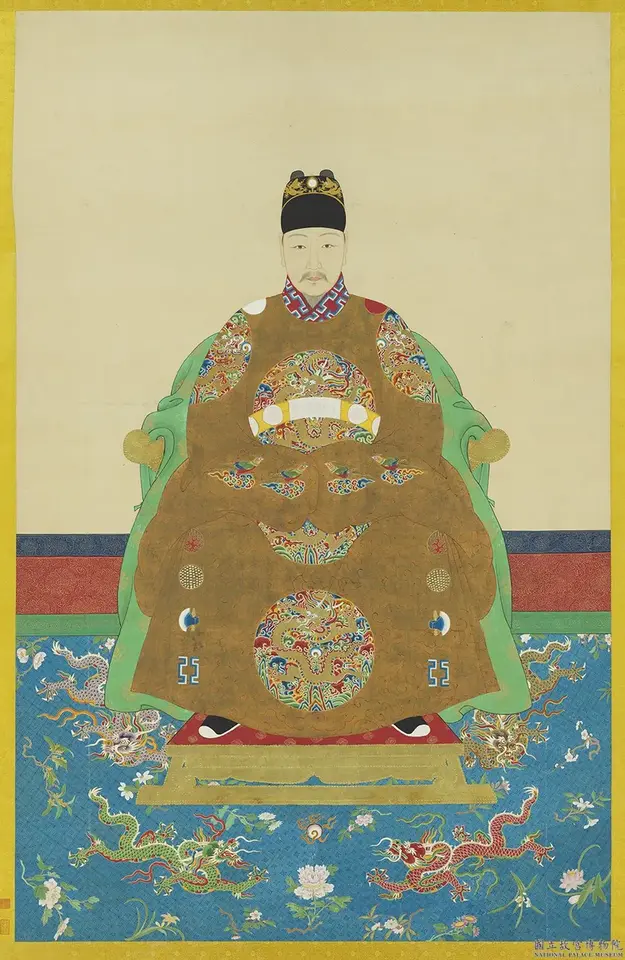
After fifteen years of factional conflict, Emperor Wanli formally names eldest son Zhu Changluo Crown Prince.
Ming Dynasty (明朝) · HISTORICAL EVENT
梃击案
The Case of the Wooden Club Assault (梃击案) was a shocking assassination attempt against Crown Prince Zhu Changluo in June 1615, standing as the foremost of the Three Great Cases of Late Ming. For decades, Emperor Wanli favored Noble Consort Zheng and sought to elevate her son Zhu Changxun to the throne, sparking a bitter fifteen-year constitutional standoff known as the "Controversy over the Dynastic Foundation." Reluctantly yielding to bureaucratic…
The Case of the Wooden Club Assault (梃击案) was a shocking assassination attempt against Crown Prince Zhu Changluo in June 1615, standing as the foremost of the Three Great Cases of Late Ming. For decades, Emperor Wanli favored Noble Consort Zheng and sought to elevate her son Zhu Changxun to the throne, sparking a bitter fifteen-year constitutional standoff known as the "Controversy over the Dynastic Foundation." Reluctantly yielding to bureaucratic pressure, Wanli named his eldest son Zhu Changluo Crown Prince in 1601, yet court anxieties over royal usurpation never ceased. On the afternoon of June 1, 1615 (fifth month, fourth day), a peasant named Zhang Chai armed with a thick jujube-wood cudgel slipped through Donghua Gate into the Forbidden City. Reaching Ciqing Palace, the Crown Prince's residence, Zhang bludgeoned gatekeeper Li Jian and sprinted toward the inner chambers before being subdued by palace guards under Han Benyong. While conservative ministers attempted to dismiss Zhang Chai as a lunatic, Prison Official Wang Zhicai conducted a private interrogation, eliciting Zhang's confession that Consort Zheng's trusted eunuchs, Pang Bao and Liu Cheng, had promised him rewards to strike down the prince. To shield his beloved consort and younger son, Wanli convened a rare assembly of grand secretaries, embracing the Crown Prince to project family tranquility and decreeing Zhang Chai's public execution alongside the covert execution of the two eunuchs inside palace walls. The compromise halted the trial but permanently fractured Ming governance along factional lines.
After fifteen years of factional conflict, Emperor Wanli formally names eldest son Zhu Changluo Crown Prince.
Prince of Fu Zhu Changxun reluctantly departs for his provincial fief in Luoyang after years of delays.
Laborer Zhang Chai breaches palace security with a wooden club, wounding a gatekeeper before being subdued.
Conservative magistrates attempt to classify the intruder as an insane trespasser to stifle deeper investigation.
Wang Zhicai obtains a full confession from Zhang Chai implicating palace eunuchs Pang Bao and Liu Cheng.
Zhang Wenda convenes thirteen departmental magistrates; Zhang Chai confirms the treasonous recruitment on the stand.
Wanli convenes grand secretaries, holding his son's hand to declare family unity and quash factional investigation.
Zhang Chai is executed by lingchi; Pang Bao and Liu Cheng are executed covertly inside the palace to terminate the case.
In 1586, Emperor Wanli's favorite imperial concubine, Noble Consort Zheng, gave birth to his third son, Zhu Changxun. Wanli immediately elevated Zheng to Imperial Noble Consort while neglecting his eldest son, Zhu Changluo, born to Lady Wang in 1582. Fearing the emperor would dismantle the ancestral succession rule of primogeniture to favor Consort Zheng's son, senior scholar-officials in the Grand Secretariat and Censorate mounted fierce resistance, initiating the fifteen-year "Controversy over the Dynastic Foundation."
Throughout this protracted crisis, Wanli retaliated by abandoning daily audiences, leaving memorials unread, and purging hundreds of defiant officials through beatings and exile. Yet bureaucratic resistance proved unyielding. Pressed by public outrage and his mother, Empress Dowager Li, Wanli capitulated in October 1601, formally investing nineteen-year-old Zhu Changluo as Crown Prince and naming Zhu Changxun Prince of Fu.
Despite his formal installation, Crown Prince Zhu Changluo remained trapped in an environment of perpetual fear. His mother Lady Wang was placed under virtual house arrest in the remote Jingyang Palace, denied contact with her son. Meanwhile, Consort Zheng retained absolute mastery over the inner palace, packing administrative posts with loyal relatives such as Zheng Guotai.
According to Ming dynastic precedent, imperial princes who attained adulthood were required to leave the capital to reside permanently in their designated provincial fiefdoms. However, Wanli and Consort Zheng repeatedly delayed Prince of Fu's departure for thirteen years, demanding tens of thousands of acres of estate lands and fueling pervasive court suspicion that an imperial replacement was being engineered. Only in 1614, after relentless bureaucratic memorials and the deathbed intervention of the Empress Dowager, did the Prince of Fu depart for Luoyang. Even then, Consort Zheng's eunuch apparatus held suffocating surveillance over the Crown Prince's living quarters at Ciqing Palace.
On the afternoon of June 1, 1615, amidst relaxed security prior to the Dragon Boat Festival, a burly peasant armed with a heavy jujube-wood cudgel walked through Donghua Gate into the imperial precinct. Passing unguarded passages, he sprinted straight toward Ciqing Palace.
Palace eunuch Li Jian attempted to intercept him at the outer gate, but the intruder struck Li squarely across the head with the cudgel, leaving him bleeding on the flagstones. Armed and shouting, the intruder charged beneath the eaves of the front hall toward the heir apparent's private quarters. Hearing the commotion, senior attendant Han Benyong rallied fellow eunuchs with benches and iron chains, swarming the assailant, pinning him to the ground, and delivering him in bonds to Gate Commander Zhu Xiong.
Following the arrest, Imperial Inspector Liu Tingyuan conducted a superficial preliminary examination. Liu reported that the assailant was Zhang Chai, a destitute laborer from Jizhou who had fallen victim to religious charlatans and spoke in disjointed, incoherent phrases. Liu advocated treating the episode as an isolated breach by a lunatic and urged immediate flogging to death.
When the case moved to the Ministry of Justice, Section Chief Hu Shixiang and other court conservatives echoed the lunacy claim, desperate to extinguish the scandal before imperial concubines were implicated. However, discerning censors protested that Zhang Chai had navigated deep imperial corridors directly to the heir's private courtyard, proving deliberate coordination.
As the court moved to close the case, Ministry of Justice Prison Official Wang Zhicai suspected foul play. On June 7, exploiting his official supervisory access, Wang conducted an unscheduled private interview with Zhang Chai in the prison cells. Eschewing torture, Wang provided hot food and wine to the famished prisoner, gently urging him: "Speak the truth and you may live; take the blame for others and you will die upon the block this very day."
Overcome by terror and gratitude, Zhang Chai confessed in detail. He revealed that two local conspirators, Ma Sandao and Li Wai'er, had brought him to Beijing and introduced him to senior palace eunuchs Pang Bao and Liu Cheng. The eunuchs had hidden him inside the palace, fed him delicacies, provided the wooden club, and promised him fertile estates if he clubbed the man in the yellow robe. Stunned by the treasonous revelation, Wang transcribed the confession and delivered it to Minister of Justice Zhang Wenda.
Recognizing the existential magnitude of the crisis, Minister Zhang Wenda took decisive measures to prevent a palace coverup. On June 11, Zhang convened all thirteen departmental directors of the Ministry of Justice for an open joint tribunal.
During the grand examination, Wang Zhicai read Zhang Chai's written deposition aloud while conservative officials listened in helpless mortification. Zhang Chai confirmed every word, identifying Consort Zheng's trusted confidants, Pang Bao and Liu Cheng, as his recruiters and detailing how they had provided him safe passage into the palace. News of the testimony exploded across Beijing. Censors, scholars, and grand secretaries submitted a blizzard of memorials demanding the immediate arrest and interrogation of the two inner-palace eunuchs.
Cornered by universal outrage, Consort Zheng wept hysterically before Emperor Wanli, professing innocence. Knowing that a public judicial probe would destroy his favorite consort and implicate his beloved younger son, Wanli commanded her: "The ministers are aroused beyond control; I cannot protect you unless you throw yourself upon the Crown Prince's mercy!" Consort Zheng swallowed her imperial pride, visiting the Ciqing Palace to weep before Zhu Changluo. The mild-mannered prince agreed to yield to his father's wishes.
On June 24, breaking a decades-long habit of seclusion from state ceremonies, Emperor Wanli convened Grand Secretary Fang Congzhe, junior ministers, and censors in the Qianqing Palace. Ailing and leaning upon attendants, the emperor took the hands of Crown Prince Zhu Changluo and young grandson Zhu Youxiao, declaring forcefully: "Observe the deep filial devotion between father and son! How dare external courtiers manufacture malicious rumors? This is an intimate family affair, not a field for factional strife!"
Crown Prince Zhu Changluo bowed beside his father, confirming his filial devotion and begging ministers to drop the issue. Having transformed a treasonous conspiracy into a domestic misunderstanding, Wanli ordered Fang Congzhe to draft imperial decrees directing that Zhang Chai be executed publicly while the two implicated eunuchs were dealt with privately inside the palace.
On June 27, 1615, Zhang Chai was dragged to Beijing's bustling Caishikou market and executed by dismemberment (lingchi). Accomlices Ma Sandao and Li Wai'er were sentenced to penal military exile on distant frontiers.
However, the pivotal masterminds—Pang Bao and Liu Cheng—were never permitted to face trial before civil magistrates. Under secret imperial instructions, senior supervisors of the Directorate of Ceremonial suffocated both eunuchs with earth bags or beat them to death inside the palace precinct, announcing that they had succumbed to sudden illness. Their bodies were cremated, destroying all physical evidence and bringing the Wooden Club Assault to a calculated and abrupt termination.
The conclusion of the Wooden Club Assault represented an ugly compromise among imperial authority, the inner palace, and the bureaucracy. By covertly executing key witnesses inside palace walls to shield his favorite consort, Emperor Wanli trampled imperial judicial integrity, breeding cynicism across the scholar-official class and dealing an irreparable blow to dynastic credibility.
As the opening chapter of the Three Great Cases of Late Ming, the Wooden Club Assault unleashed vicious political polarization. Officials polarized into hostile camps: the Donglin faction championed moral governance and relentless anti-corruption probes, while rival alliances (Zhe, Qi, and Chu) allied with imperial favorites. This bitter feud metastasized into the Red Pill Case and the Palace Eviction Case in 1620, culminating in the rise of Eunuch Dictator Wei Zhongxian, the purging of Donglin martyrs, and the administrative breakdown that sealed the fall of the Ming Dynasty in 1644.