Relocation to Jiankang
Sima Rui moves to Jiankang under the guidance of Wang Dao, laying the foundation for southern rule
Eastern Jin Dynasty (东晋) · HISTORICAL EVENT
王与马共天下
The Co-governance of the Wang and Sima Lineages (王与马共天下) was a distinctive constitutional and political arrangement established during the transition between the Western and Eastern Jin dynasties, characterized by a formal balance of power between the Sima imperial house and the preeminent Langya Wang aristocratic clan. In the wake of the devastating War of the Eight Princes and the catastrophic fall of the northern capitals to nomadic confederations,…
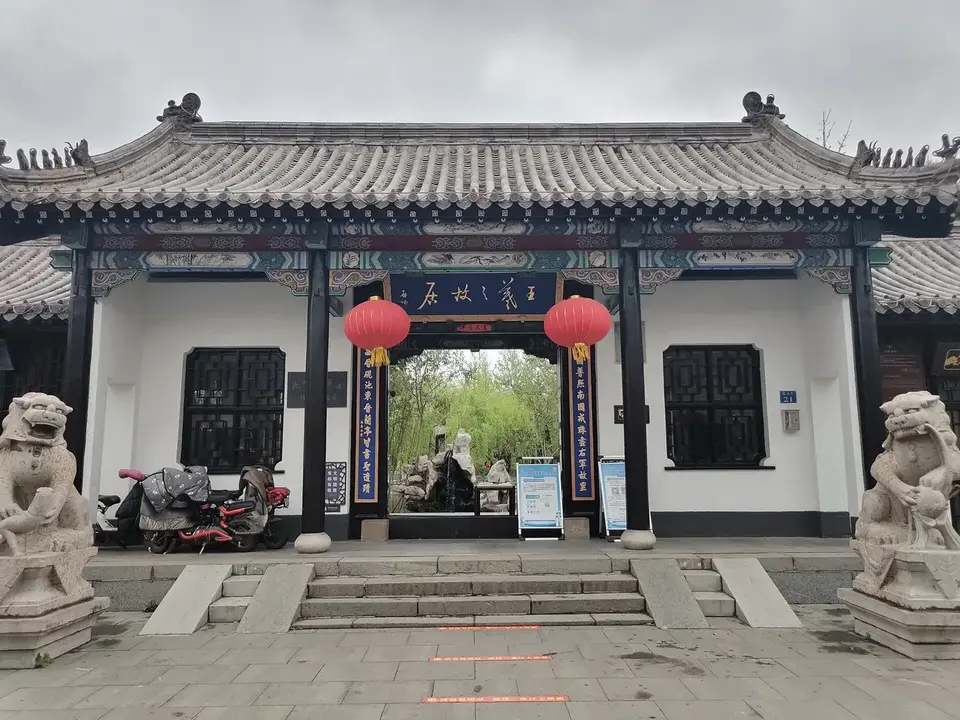
The Co-governance of the Wang and Sima Lineages (王与马共天下) was a distinctive constitutional and political arrangement established during the transition between the Western and Eastern Jin dynasties, characterized by a formal balance of power between the Sima imperial house and the preeminent Langya Wang aristocratic clan. In the wake of the devastating War of the Eight Princes and the catastrophic fall of the northern capitals to nomadic confederations, mass migrations of northern gentry and displaced commoners fled south across the Yangtze River. Sima Rui, the Prince of Langya and a distant imperial scion, relocated to Jiankang under the strategic guidance of cousins Wang Dao and Wang Dun. Through exquisite political diplomacy, Wang Dao reconciled the mutual suspicions separating the emigre northern grandees from the native Jiangnan landowning lineages, winning the allegiance of southern leaders such as Gu Rong and Ji Zhan. Upon his formal imperial coronation as Emperor Yuan in 318, Sima Rui conspicuously invited Prime Minister Wang Dao to ascend the imperial throne and share the sovereign dais before the assembled civil assembly. While Wang Dao respectfully declined, the popular saying "The Wangs and the Simas rule the realm together" came to define the supreme power structure of the age. Under this dual hegemony, Wang Dao directed civil administration within the central ministries while Wang Dun exercised autonomous military command over the crucial upper Yangtze garrisons, inaugurating a golden era of aristocratic oligarchy in imperial China.
Sima Rui moves to Jiankang under the guidance of Wang Dao, laying the foundation for southern rule
Wang Dao orchestrates public imperial honors; Gu Rong and native magnates submit to Sima Rui
Luoyang falls to northern nomads; large-scale migrations of northern scholar-gentry settle in Jiankang
Following the fall of Chang'an, Sima Rui assumes the title Prince of Jin with Wang clan backing
Emperor Yuan is crowned and invites Wang Dao to share the dais, coining the phrase Co-governance
Emperor Yuan attempts to curb aristocratic power; Wang Dun storms Jiankang, prompting the emperor's death
Emperor Ming defeats Wang Dun's forces; Wang Dao remains chancellor, cementing aristocratic rule
Event Name: Co-governance of the Wang and Sima Lineages (王与马共天下); Alternative Name: The Wang and Sima Jointly Rule the Realm (王马共天下), Advent of Aristocratic Oligarchy in Eastern Jin (东晋门阀政治开端); Event Type: Institutionalization of Aristocratic Oligarchy (门阀政治统治格局确立); Dynasty: Eastern Jin (东晋); Location: Jiankang (Modern Nanjing, Jiangsu) and the Yangtze River Circuits; Time Period: 307 (First Year of Yongjia) - 324 (Second Year of Taining); Parties Involved: Langya Wang Clan (Wang Dao, Wang Dun), Sima Imperial House (Emperor Yuan, Emperor Ming), Southern Indigenous Clans (Gu Rong, Ji Zhan, Zhou Qi); Key Figures: Sima Rui, Wang Dao, Wang Dun, Gu Rong, Ji Zhan, Zhou Qi, Liu Wei, Diao Xie; Cause: The complete collapse of Western Jin autocracy during the Disaster of Yongjia, driving the imperial clan to establish a southern regime dependent upon northern aristocratic support; Outcome: Sima Rui founded the Eastern Jin and invited Wang Dao to share the imperial dais, institutionalizing joint governance between monarch and aristocracy; Impact: Established a century-long precedent of aristocratic oligarchical governance in southern China, preserving classical Chinese civilization along the Yangtze;
Following the Western Jin dynasty's conquest of Eastern Wu in 280, the imperial court viewed the southern Jiangdong territories with lingering suspicion, rotating northern garrisons to police the region and alienating native southern elites. During the chaotic reigns of Emperor Hui and Emperor Huai, regional insurrections led by Chen Min and Qian Hui threatened to tear the south asunder. Prominent indigenous leaders, most notably Zhou Qi of Yixing, mobilized private kinship militias to crush these uprisings in campaigns celebrated as the Three Pacifications of Jiangnan, preserving localized social stability for their ancestral estates. However, as fratricidal conflict among the imperial princes consumed the northern armies, the southern provinces were left without central administration or dynastic military garrisons, generating a profound administrative vacuum.
Amid the terminal decline of the Luoyang regime, Prince Regent Sima Yue dispatched his distant imperial cousin, Sima Rui, to take command of Xiapu, subsequently authorizing his transfer to Jiankang in 307. Possessing neither personal military prowess nor direct lineage prestige, Sima Rui's political ascendancy was engineered entirely by the preeminent northern aristocratic lineage of Langya: the Wang family. Statesman Wang Dao possessed visionary diplomatic acumen, while his cousin Wang Dun commanded battle-tested military formations. Recognizing that the northern heartland was irremediably lost, the Wang cousins resolved to harness the southern territories as a durable territorial base to ensure the survival of the imperial house and perpetuate their clan's hereditary prominence.
In the autumn of 307, Sima Rui and his chief counselor Wang Dao arrived in Jiankang. Initially, the entrenched southern indigenous clans treated the penniless northern prince with cool disdain. For months following his arrival, influential southern magnates, including Gu Rong, Ji Zhan, He Xun, and Zhou Qi, maintained closed doors and declined to appear at court, plunging the fledgling regime into acute political paralysis. Wang Dao understood that without the active endorsement of indigenous elites, northern emigres could never consolidate a viable state on the southern side of the river.
During the Shangsi Festival purification ceremonies held along the Qinhuai River in the third month of 308, Wang Dao staged a calculated political performance. He had Sima Rui ride within an imperial carriage surrounded by imposing regalia and grand banners, while Wang Dao, Wang Dun, and leading northern aristocrats rode alongside on horseback in attitudes of reverent obedience. Beholding the prestigious northern grandees demonstrating such solemn deference to Sima Rui, the southern magnates Gu Rong and Ji Zhan were awed, lining the roadways to bow before the prince. Wang Dao capitalized on this breakthrough by personally visiting the estates of Gu Rong and He Xun, soliciting their administrative counsel and conferring executive posts. Reassured that their regional interests would be honored, southern magnates rallied behind the administration, swiftly stabilizing the political landscape.
In 316, armies of the Han-Zhao state stormed Chang'an, capturing Emperor Min and bringing the Western Jin dynasty to an end. In the third month of 317, propelled by the unanimous acclaim of northern emigres and southern lineages, Sima Rui assumed the title Prince of Jin at Jiankang. Following confirmation of Emperor Min's execution in 318, Sima Rui formally ascended the imperial throne as Emperor Yuan of the Eastern Jin dynasty.
During the solemn coronation ceremony at the Taiji Hall, an unprecedented incident occurred in imperial court protocol: as Emperor Yuan took his place upon the nine-dragon imperial couch, he stepped down, approached Chancellor Wang Dao, and grasped his court robes, repeatedly urging the chancellor to ascend the dais and sit beside him to receive the homage of the assembled ministers. Emperor Yuan proclaimed: "Were it not for your family, I would not possess this day! The realm belongs to you as much as to me; let us share this throne!" Horrified by this breach of hierarchical propriety, Wang Dao fell to his knees in panic, declining: "If the sun were to descend to the level of common creation, how could the living beings look up to its radiant light! Your Majesty presides over all subjects; for a minister to share the dais would violate cosmic moral order." Though Emperor Yuan attempted to pull Wang Dao upward several times, the chancellor resolutely refused. Nevertheless, the reality that sovereign authority was jointly shared between the monarch and the leading aristocratic clan was broadcast across the empire, coining the immortal proverb: "The Wangs and the Simas rule the realm together."
With the consolidation of the Eastern Jin state, the Langya Wang clan commanded preeminent authority across both court ministries and regional commands. Wang Dao served as Chancellor, Supervisor of the Masters of Writing, and Director of the Imperial Secretariat, directing the central administration in Jiankang. He oversaw civil appointments, state revenues, and judicial statutes, acting as the indispensable diplomatic mediator balancing the rival interests of northern emigre clans and indigenous southern lineages. Concurrently, his cousin Wang Dun was appointed Commander of Military Affairs for five strategic provinces, governing Jingzhou and Jiangzhou from the critical fortress of Wuchang along the middle Yangtze.
From Wuchang, Wang Dun controlled hundreds of thousands of infantry and naval squadrons, positioned upstream to exert commanding military pressure over the capital downstream. Meanwhile, kinship relatives such as Wang Shu, Wang Bin, Wang Yi, and Wang Leng monopolized the vice-chancellorships, regional governorships, and elite guard commands. Major policy decrees could not be executed without the dual approval of Wang Dao within the imperial secretariat and Wang Dun along the upper river, reducing the imperial sovereign to an administrative figurehead.
Though Emperor Yuan owed his throne to the Wang clan, he deeply chafed under his loss of sovereign autonomy and the pervasive dominance of aristocratic ministers. In his later years, the emperor distanced himself from Wang Dao, elevating non-aristocratic legalistic advisers, including Diao Xie and Liu Wei, to high office. These officials enforced strict statutory codes to suppress the landholdings of grandee families while organizing personal imperial guard divisions to counterbalance the private armies of the Wang clan.
This monarchical counter-offensive provoked the immediate wrath of Wang Dun. In 322, under the pretext of purging court traitors Liu Wei and Diao Xie, Wang Dun launched an armed rebellion, sailing his forces downstream from Wuchang to capture the imperial capital of Jiankang. Imperial troops were crushed; Diao Xie was executed, Liu Wei fled north, and Emperor Yuan was reduced to a captive monarch, dying of despair shortly thereafter.
Ascending the throne, the capable Emperor Ming bided his time until Wang Dun fell terminally ill in 324. Forging alliances with prominent commanders such as Wen Qiao, Xi Jian, and Yu Liang, Emperor Ming mobilized forces to eradicate the rebel faction. Significantly, despite Wang Dun's treason, Chancellor Wang Dao remained untouched at court due to his moderate statesmanship and deep standing among the civil gentry. Following Wang Dun's defeat, the institutional structure of power-sharing between the imperial house and leading aristocratic lineages was permanently codified. Subsequent great lineages—including the Yu of Yingchuan, the Huan of Qiaoguo, and the Xie of Chenjun—alternated control of executive and military power, cementing aristocratic oligarchy as the enduring constitutional hallmark of the Eastern Jin dynasty.
The historical arrangement known as Co-governance of the Wang and Sima Lineages marked the formal compromise between monarchical authority and aristocratic oligarchs, securing the survival of the Eastern Jin regime in the south. Sima Rui preserved imperial title and ancestral continuity, while the Langya Wang lineage acquired preeminent control over the chancellorship, military appointments, and civil recruitment. This constitutional compromise reconciled the interests of northern emigres and southern indigenous elites, creating a stable political condominium in an alien landscape.
This event inaugurated the golden age of aristocratic oligarchy in imperial Chinese history. Throughout the Eastern Jin dynasty, sovereign autocracy was permanently curtailed, with the Sima emperors functioning largely as symbolic figures while actual executive and military power rotated among leading high-born lineages, including the Wang, Yu, Huan, and Xie clans. This equilibrium shielded the southern state from northern nomadic conquest, preserving the refined literary, philosophical, and institutional heritage of classical Chinese civilization. However, aristocratic exclusivity and the monopolization of state resources concurrently sapped military initiative, ensuring that the Eastern Jin remained incapable of reconquering the Central Plains until the rise of general Liu Yu from the lower military orders brought the aristocratic era to an end.