Palace Fires
Lightning destroys the Qianqing and Kunning palaces, precipitating massive reconstruction demands.
Ming Dynasty (明朝) · HISTORICAL EVENT
矿监税使
The Mining and Tax Commissioners (矿监税使) was an extortionate fiscal program instituted during the late Wanli era of the Ming Dynasty. In 1596 (the twenty-fourth year of the Wanli era), facing empty treasuries caused by the Three Great Campaigns and massive palace reconstruction costs, the Wanli Emperor bypassed normal civil administration. He dispatched trusted palace eunuchs as imperial commissioners to oversee mining operations and collect transit duties…
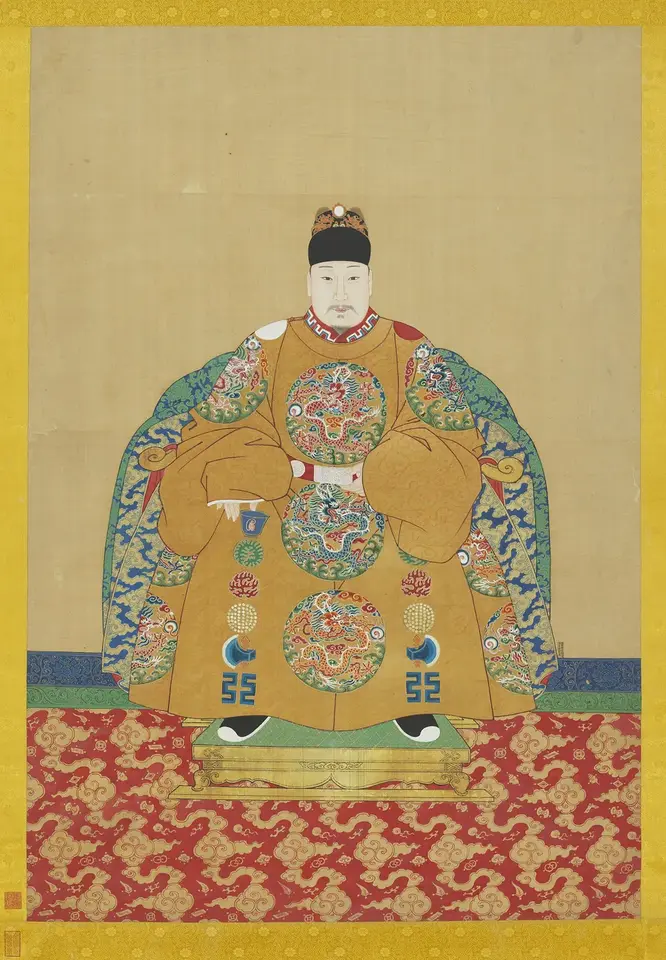
The Mining and Tax Commissioners (矿监税使) was an extortionate fiscal program instituted during the late Wanli era of the Ming Dynasty. In 1596 (the twenty-fourth year of the Wanli era), facing empty treasuries caused by the Three Great Campaigns and massive palace reconstruction costs, the Wanli Emperor bypassed normal civil administration. He dispatched trusted palace eunuchs as imperial commissioners to oversee mining operations and collect transit duties nationwide. Endowed with the prerogative of secret imperial reporting and authority over civil magistrates, these eunuchs mobilized local gangs to extort merchants, demolish civilian residences, and desecrate ancestral tombs under the pretext of prospecting. The resulting nationwide riots—most notably the Linqing and Suzhou riots—paralyzed commerce until Emperor Taichang abolished the system immediately upon his accession in 1620.
Lightning destroys the Qianqing and Kunning palaces, precipitating massive reconstruction demands.
Wanli Emperor decrees the dispatch of palace eunuchs to supervise nationwide mining and commercial duties.
Popular riot against Chen Feng erupts in Wuchang; citizens drown eunuch subordinates in the Yangtze.
Canal boatmen and merchants storm and burn the tax offices of Ma Tang, executing thirty-seven collectors.
Weaver Ge Cheng leads thousands of textile workers against Sun Long, forcing the eunuch commissioner to flee.
Imperial court recalls several mining commissioners while retaining commercial tax officials.
Wanli Emperor dies; Emperor Taichang ascends the throne and issues an edict terminating the system.
During the mid-to-late Ming Dynasty, the urban economy and commercial exchange flourished across the lower Yangtze and southeastern coastal provinces. However, from 1592 onward, the imperial government was engulfed in three prolonged military crises: suppressing the mutiny of Bo Bai in Ningxia, repelling Toyotomi Hideyoshi's invasions of Joseon Korea, and crushing the rebellion of Yang Yinglong in Bozhou. Known collectively as the Three Great Campaigns of Wanli, these conflicts drained over twelve million taels of silver from the imperial granaries, exhausting the reserves built under Grand Secretary Zhang Juzheng.
Compounding this crisis, in March 1596, violent lightning storms burned the Qianqing and Kunning palaces to ashes, followed by a fire destroying the Three Great Halls the subsequent year. Rebuilding these monumental structures required immense timber harvesting and engineering expenditures estimated in the millions of silver taels. The Ministry of Revenue repeatedly petitioned that state treasuries were empty and incapable of sustaining further allocations.
Unwilling to open his private palace treasury (Neitang) and deeply resentful of Confucian civil officials who resisted irregular exactions, the reclusive Wanli Emperor decided to circumvent the regular bureaucratic machinery. Lured by false memorials from opportunists claiming that mountain ranges and river basins concealed rich gold and silver veins, the emperor mobilized his palace eunuchs to extract silver directly from mines, commercial routes, and waterways across the empire.
In June 1596, the Wanli Emperor formally appointed dozens of senior palace eunuchs as mining and commercial tax commissioners to provincial circuits and prefectures.
Prominent commissioners included: Chen Zeng in Shandong, Chen Feng in Huguang, Liang Yong in Shaanxi, Sun Long in Suzhou and Hangzhou, Gao Huai in Liaodong, Ma Tang in Linqing and Tianjin, and Hao Long in Jiangxi.
These commissioners were granted extraordinary imperial privileges: they carried imperial tallies, possessed the authority of direct secret memorials to the throne, could command regional garrison troops, and held power to reprimand or impeach provincial governors and circuit judges. While the emperor summarily punished civil officials who criticized the commissioners, he readily arrested magistrates whom the eunuchs accused of obstruction.
Upon reaching their assigned jurisdictions, the commissioners recruited local outlaws, river pirates, and urban thugs to establish an extensive network of extortion.
Regarding mining, because northern and central provinces lacked profitable gold and silver deposits, commissioners pointed arbitrarily to private dwellings, ancestral halls, and orchards, claiming that rich veins lay beneath. They demanded extortionate payoffs, threatening that refusal would prompt crews to demolish houses and excavate family graves. Numerous innocent households were driven into ruin and suicide.
In commerce, commissioners erected arbitrary customs barriers along the Grand Canal and main river arteries. Cargo vessels were subjected to multiple overlapping inspections, with levies imposed even on shipments of vegetables, poultry, and thread. Domestic commerce and river transit collapsed under the strain.
The vast majority of the extorted wealth was pocketed by the commissioners and their underlings. Imperial statutes mandated that proceeds be divided equally between the palace treasury and central ministries. In practice, eunuchs retained upwards of eighty to ninety percent for personal enrichment.
Contemporary observers lamented that less than one-tenth of extorted funds reached Beijing. Historical analyses indicate that between 1596 and 1620, the commissioners delivered approximately twenty-four million silver taels to the inner court—averaging one million taels annually—while the economic damage inflicted upon provincial commerce amounted to hundreds of millions.
The relentless exactions provoked explosive resistance among urban merchants, artisans, and commoners:
In 1599, Chen Feng's brutal torture of scholars in Wuchang provoked an insurrection of over ten thousand residents, who surrounded his residence and drowned sixteen of his henchmen in the Yangtze River; In April 1601, Ma Tang's arbitrary seizures at Linqing triggered an uprising of dockworkers and merchants, who burned the tax offices to the ground and killed thirty-seven corrupt tax collectors; In June 1601, Sun Long's exorbitant levies on silk looms triggered the famous Ge Cheng riot in Suzhou, where ten thousand textile weavers went on strike and routed the commissioner's agents; In Liaodong, Gao Huai's cruel extortions caused mutinies in Liaoyang and Qianxian, deeply demoralizing the northeastern frontier garrisons.
Despite hundreds of impassioned memorials submitted by grand secretaries and provincial censors protesting the devastation, the Wanli Emperor refused to abandon the policy.
In 1605 (the thirty-third year of Wanli), facing diminishing returns, the emperor recalled some mining commissioners but stubbornly kept tax commissioners in place. Only in 1606 was the administrative quota reduced to one commissioner per provincial administration commission.
In August 1620, the Wanli Emperor died. His successor, Emperor Taichang (Zhu Changluo), immediately promulgated the late emperor's testamentary edict: all mining and tax commissioners were permanently recalled to Beijing, all arbitrary customs barriers were dismantled, and regular commercial duties were restored to civil magistrates. The twenty-four-year calamity was finally brought to an end.
The system extracted over twenty-four million silver taels for the inner court over twenty-four years, but caused widespread economic dislocation. Upon its formal abolition in 1620, provincial commerce briefly revived, though the damage to public trust proved irreparable.
First, it crippled domestic commercial growth and nascent industrial manufacturing in the Jiangnan silk and handicraft sectors, driving thousands of private enterprises into bankruptcy. Second, it undermined judicial institutions and civil administrative authority by subjecting regional officials to the despotic whims of palace eunuchs. Third, in Liaodong, Gao Huai's persecutions of frontier officers and regional populations fractured the unity of border defenses, providing Nurhaci's emerging Jurchen confederacy with an exceptional opportunity to overrun the northeastern frontier.
In the History of Ming (Mingshi), historians concluded: "In the Wanli Emperor's late years, scarcely a day passed without thoughts of silver... The dispatch of palace eunuchs poisoned the realm, exhausting the populace and destabilizing the dynastic foundations. The fall of Ming began with Wanli, and the calamity of mining taxes was the foremost culprit!"
Philosopher Gu Yanwu recorded in Record of Daily Knowledge: "Since the commissioners set forth in 1596, the realm knew no peace. Outlaws fabricated claims of buried treasure, demolishing residences and desecrating tombs. Commerce ceased, and the moral prestige of the court dissolved."
Qing historian Zhao Yi observed in Notes on the Twenty-Two Histories: "The Wanli Emperor's avarice stemmed from his core nature. Dispatching eunuchs treated common subjects as bitter enemies; even the first Qin emperor and Emperor Wu of Han never matched such rapacity."