Disaster at Sanfengshan
Tolui wipes out 140,000 Jin troops; key commanders including Wanyan Chenheshang are killed
Southern Song Dynasty (南宋) · HISTORICAL EVENT
蔡州之战
The Siege of Caizhou (蔡州之战) was the climactic military operation fought between September 1233 and February 1234, in which an allied force of the Mongol Empire and the Southern Song Dynasty besieged and stormed Caizhou (modern Runan, Henan Province), annihilating the Jurchen Jin Dynasty. Following the catastrophic defeat at the Battle of Sanfengshan in 1232 and the subsequent investment of Kaifeng, Emperor Aizong (Wanyan Shouxu) escaped south across the…
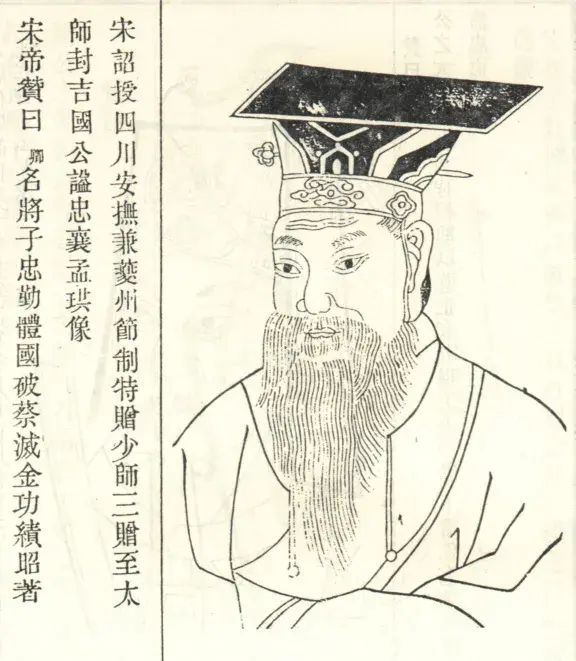
The Siege of Caizhou (蔡州之战) was the climactic military operation fought between September 1233 and February 1234, in which an allied force of the Mongol Empire and the Southern Song Dynasty besieged and stormed Caizhou (modern Runan, Henan Province), annihilating the Jurchen Jin Dynasty. Following the catastrophic defeat at the Battle of Sanfengshan in 1232 and the subsequent investment of Kaifeng, Emperor Aizong (Wanyan Shouxu) escaped south across the Yellow River, taking refuge in the isolated border citadel of Caizhou in June 1233. Mongol commander Taghachar encircled the city with entrenchments but met fierce resistance. In November 1233, the Southern Song concluded an offensive alliance with the Mongols, dispatching renowned general Meng Gong with twenty thousand elite soldiers and three hundred thousand bushels of rice to spearhead the siege. The allied armies coordinated closely; after Meng Gong rescued the wounded Mongol general Zhang Rou during a failed assault, the allies breached the Chaitan and Lianjiang river dykes, destroying Caizhou's water barriers. Facing acute famine, Emperor Aizong abdicated on the night of February 8, 1234, in favor of General Wanyan Chenglin (Emperor Modi). The following morning, Song troops breached the southern gate, Emperor Aizong hanged himself in the Youlan Pavilion, Commander Wanyan Haxiehu drowned himself in the Ru River, and Emperor Modi was killed in action. The fall of Caizhou marked the end of the Jurchen Jin dynasty after one hundred and twenty years of rule.
Tolui wipes out 140,000 Jin troops; key commanders including Wanyan Chenheshang are killed
Emperor Aizong flees Kaifeng across the Yellow River; General Cui Li surrenders the capital to the Mongols
Emperor Aizong escapes Guide mutineers and establishes his court at the isolated water citadel of Caizhou
Taghachar invests Caizhou with trenches; Wanyan Haxiehu repels Mongol probes during the Double Ninth Festival
Meng Gong leads 20,000 Song troops with 300,000 bushels of rice to reinforce the siege, joining forces with Taghachar
The allies breach the Chaitan and Lianjiang dykes, draining the protective moats and capturing the outer walls
Inner city defenders resort to cannibalism; Emperor Aizong abdicates in favor of General Wanyan Chenglin
Song troops breach the south gate; Aizong hangs himself, Emperor Modi is killed, and the Jin Dynasty falls
In January 1232, the Mongol host under Ögedei Khan and his brother Tolui executed a daring winter maneuver across the Han River valley, confronting the last field army of the Jin dynasty at Mount Sanfeng in Henan. Trapped in blinding blizzards without provisions, the Jin army was annihilated. Legendary Jurchen commanders including Wanyan Chenheshang, Wanyan Heda, and Yila Pua were killed or executed, wiping out one hundred and forty thousand veteran soldiers and leaving central China entirely defenseless.
In March 1232, the Mongol army laid siege to the Jin capital of Kaifeng. Although the garrison defended the walls with advanced firearms such as fire-lances and thunderclap bombs, a devastating epidemic and acute starvation claimed hundreds of thousands of lives within the city. Recognizing that Kaifeng was doomed, Emperor Aizong escaped across the Yellow River with a handful of imperial guards in December 1232. Shortly thereafter, garrison commander Cui Li staged a coup, surrendered the capital, and handed over the imperial clan to the Mongols for execution.
After escaping Kaifeng, Emperor Aizong attempted to rally troops in Weizhou and Guide (modern Shangqiu), but mutinies among his surviving commanders shattered all hopes of mounting a field counteroffensive. In June 1233, guided by loyal chancellor Wanyan Haxiehu, Emperor Aizong retreated south to Caizhou (modern Runan County, Henan Province).
Situated along the Ru River and encircled by deep lakes and wetlands, Caizhou was considered a formidable water citadel with moderate food reserves. Upon arriving, Emperor Aizong issued appeals to gather scattered garrisons and appointed Wugulun Gao to organize defenses. However, every other strategic city in Henan and Shaanxi had fallen to the Mongols, leaving Caizhou an isolated redoubt without external relief.
Since the humiliation of the Jingkang Incident in 1127, when the Jurchens captured the Northern Song capital and abducted Emperors Huizong and Qinzong, the Southern Song court had harbored deep-seated enmity toward the Jin. While Jin forces were collapsing under Mongol pressure, Emperor Aizong sent envoys to the Song capital of Hangzhou, warning Emperor Lizong that "if the Mongols destroy Jin, Song will be their next victim; aiding Jin is your only true defense."
However, memories of centurylong tribute extortions and recurrent Jurchen raids blinded the Southern Song court to the geopolitical reality of the balance of power. Viewing the Mongol advance as a heaven-sent opportunity to avenge ancestral humiliation and recover the northern homelands, Emperor Lizong rejected Jin diplomatic overtures. When the Mongols proposed a joint military campaign and promised to cede portions of Henan to Song upon victory, the Southern Song enthusiastically ratified the alliance.
In September 1233, Mongol Supreme Commander Taghachar arrived outside Caizhou with tens of thousands of elite cavalry, ordering his men to construct deep trenches and wooden palisades around the perimeter to isolate the city. On the ninth day of the ninth month, during the Double Ninth Festival, Emperor Aizong conducted solemn rituals in the governor's palace, praying to heaven for dynastic survival before personally distributing imperial wine to his garrison commanders.
While the ceremony was underway, Mongol reconnaissance scouts approached the walls. Inspired by the imperial audience, General Wanyan Haxiehu opened the gates and led a surprise counterattack, catching the Mongols off guard, killing over one hundred enemy horsemen, and repelling an assault on the eastern gate. Recognizing that the garrison was prepared to fight to the death behind their water defenses, Taghachar suspended direct storming attempts, settling into a protracted war of attrition.
In November 1233, the Southern Song intervention force arrived on the battlefield. Commanded by General Meng Gong and Jiang Hai, the expeditionary army comprised twenty thousand veteran troops from the Jinghu theater accompanied by three hundred thousand bushels of rice. The arrival of Song supplies completely relieved Mongol logistical shortages, and Taghachar forged a close friendship with Meng Gong, swearing brotherhood over wine.
In early December, Taghachar ordered Chinese general Zhang Rou to lead five thousand heavy infantry in a frontal assault on the city walls. The defenders unleashed dense volleys of crossbow bolts and hurled rolling boulders from the parapets. Struck by multiple arrows, Zhang Rou fell from a siege ladder into the moat, surrounded by Jin counterattack units. In the crisis, Meng Gong personally led a detachment of elite Song shock troops into the fray, fighting through heavy fire to drag the wounded Zhang Rou to safety, solidifying the operational unity of the coalition armies.
Caizhou's defensive strength lay in its water barriers. To the west lay the deep Chaitan Lake, defended by the towering Chaitan Tower, which connected to the Lianjiang River to create an impenetrable moat. Meng Gong surveyed the defenses and proposed draining the lakes into the Ru River to neutralize the water obstacles.
On the seventh day of the twelfth month, Mongol engineers breached the Lianjiang dyke north of the city. The following morning, Meng Gong led an assault on Chaitan Tower, killing the defenders and digging a trench through the Chaitan dyke to divert the waters into the Ru River. Once drained, the deep lakes turned into dry mudflats, allowing the coalition to deploy siege engines directly against the masonry ramparts.
On the ninth day of the twelfth month, the coalition filled the inner moats with earth and sandbags, launching a coordinated assault from the west and south. Assisted by a treacherous Jin defector named Wang You, Mongol assault teams climbed the battlements, capturing the outer city while General Yuan Zhi was slain. Emperor Aizong was forced to withdraw his surviving forces inside the narrow inner city.
Trapped inside the inner city, conditions deteriorated into horrific desperation. Food supplies had been completely exhausted by early winter; the garrison first slaughtered warhorses, then boiled leather armor, saddles, and bowstrings for broth, before descending into rampant cannibalism.
To maintain defensive numbers, Emperor Aizong mobilized the aged and adolescent boys into the ranks and disguised able-bodied women in male military attire to haul stones to the battlements. Reviewing his haggard soldiers, Emperor Aizong wept openly: "I served as Grandee for ten years, Crown Prince for ten years, and Emperor for ten years. I know I have committed no great crime, and I do not fear death. My only grief is that our dynastic line of more than a century should perish with me, classed alongside history's most debauched and wicked tyrants!"
By early February 1234, coalition trebuchets were pounding the inner palace walls day and night. On the night of February 8, realizing that the final collapse was imminent, Emperor Aizong summoned his court and announced his abdication in favor of General of the East Wanyan Chenglin, a brave scion of the imperial house. When Chenglin tearfully refused, the emperor pleaded: "My body is heavy and I cannot mount a horse to break through; you are agile, brave, and possess military genius. If you escape, our ancestral line may yet survive!" Overwhelmed by the emperor's tears, Chenglin accepted the throne.
At dawn on February 9, 1234, Wanyan Chenglin was formally enthroned as Emperor Modi in a hurried, sorrowful ceremony. Before the rites were concluded, the battle drums of the final assault shook the palace walls. Southern Song vanguard troops under Meng Gong breached the southern gate, raising the Song banner on the parapets, while Mongol cavalry broke through the western fortifications.
High ministers hurried from the throne room to join the street fighting. Emperor Aizong walked into the Youlan Pavilion and hanged himself. In accordance with his final instructions, his attendant Jiao Dece dragged the emperor's body to the rear courtyard and set it on fire, ensuring that the sovereign's remains would not be desecrated by the enemy.
Simultaneously, Emperor Modi led a suicidal counterattack in front of the inner palace. Informed of Emperor Aizong's death, Chancellor Wanyan Haxiehu raised his sword to the sky and cried: "Our lord is dead! Why should I live? I shall not perish at the hands of the enemy, but follow my master into the underworld!" Haxiehu killed several enemy soldiers and threw himself into the icy waters of the Ru River, followed by one thousand elite soldiers who drowned themselves rather than surrender.
Emperor Modi was overwhelmed and killed in action; his reign lasted only a few hours, the shortest in Chinese imperial history. Taghachar and Meng Gong entered the smoking courtyard of the Youlan Pavilion, extinguished the flames consuming Emperor Aizong's body, and divided the imperial bones between their courts to report victory. After one hundred and twenty years of rule, the Jin Dynasty was extinguished in the ruins of Caizhou.
The fall of Caizhou marked the complete eradication of the Jurchen Jin dynasty, which had dominated northern China for over a century since its foundation in 1115 by Wanyan Aguda. When Meng Gong returned to the Southern Song capital of Hangzhou carrying the remains and imperial regalia of Emperor Aizong, Emperor Lizong conducted a triumphant victory ceremony at the ancestral temple, offering the relics to the spirits of Emperors Huizong and Qinzong. This victory provided immense psychological catharsis for the Southern Song, avenging more than a century of national humiliation.
Strategically, the eradication of the Jin dynasty was a diplomatic and geopolitical disaster for the Southern Song. The Song court failed to appreciate that the Jin Empire had served as an indispensable physical buffer absorbing the crushing momentum of the Mongol nomadic armies. With the Jin extinguished, the vast buffer zone evaporated, placing the borders of the Mongol Empire directly along the Yangtze and Huai river valleys. Deprived of strategic depth, the Southern Song was forced into a desperate, solitary confrontation with the most lethal military power in the world.
Decades of relentless warfare between the Mongols and the Jin left Henan and the central plains devastated, with irrigation networks obliterated and the countryside depopulated. Mere months after Caizhou's fall, the Southern Song court recklessly launched the "Duanping Expeditions" to recover the ancient Northern Song capitals without adequate supplies or garrison reserves. The invading Song armies were ambushed and routed by Mongol forces on the barren plains of Henan, triggering forty years of brutal Mongol-Song warfare that culminated in the fall of Xiangyang and the final catastrophe at the Battle of Yamen in 1279.