Initiation of Monopolies
Emperor Wu adopts the proposals of Kong Jin and Sang Hongyang to establish state salt and iron monopolies.
Western Han (西汉) · HISTORICAL EVENT
盐铁会议
The Debate on Salt and Iron (盐铁会议) was a monumental ideological and economic court conference convened in 81 BCE (the sixth year of the Shiyuan era) under Emperor Zhao of the Western Han Dynasty. Presided over by Chancellor Tian Qianqiu and dominated by Imperial Censor Sang Hongyang, the assembly brought together over sixty virtuous scholars and Confucian literati from various commanderies to debate the fundamental roots of civilian distress. The…
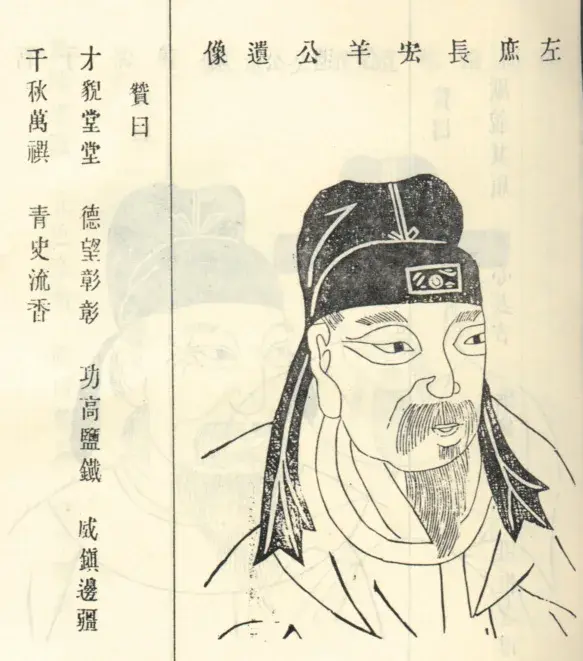
The Debate on Salt and Iron (盐铁会议) was a monumental ideological and economic court conference convened in 81 BCE (the sixth year of the Shiyuan era) under Emperor Zhao of the Western Han Dynasty. Presided over by Chancellor Tian Qianqiu and dominated by Imperial Censor Sang Hongyang, the assembly brought together over sixty virtuous scholars and Confucian literati from various commanderies to debate the fundamental roots of civilian distress. The conference pitted the Legalist-influenced state mercantilism and imperial monopolies of Emperor Wu against the orthodox Confucian ideal of virtuous governance and non-interference. The resulting compromise led to the abolition of liquor monopolies and internal iron offices, steering the empire toward the restorative policies of the Zhao-Xuan Resurgence.
Emperor Wu adopts the proposals of Kong Jin and Sang Hongyang to establish state salt and iron monopolies.
Sang Hongyang implements nationwide equitable transport, price stabilization, and liquor monopolies.
Emperor Wu issues the Edict of Repentance at Luntai, renouncing further military expansion.
Emperor Wu dies; eight-year-old Emperor Zhao ascends the throne under coregents Huo Guang and Sang Hongyang.
Du Yannian advises Huo Guang to consult civilian grievances; Emperor Zhao orders commanderies to recommend literati.
Over sixty virtuous scholars and literati gather at Weiyang Palace to commence deliberations on state monopolies.
Debates expand from salt and iron monopolies into frontier military expenditures, criminal codes, and ethics.
Emperor Zhao promulgates edict abolishing liquor monopolies nationwide and iron agencies within capital passes.
Sang Hongyang is executed following the abortive Prince Dan of Yan conspiracy, cementing Huo Guang's supremacy.
Huan Kuan arranges court transcripts into the sixty-chapter philosophical treatise Yantie Lun.
During the early Western Han Dynasty, the central government practiced the Taoist philosophy of non-action and light taxation, enabling private iron smelters and salt merchants to accumulate immense fortunes. However, upon ascending the throne, Emperor Wu embarked on extensive campaigns to repel Xiongnu incursions, secure the Hexi Corridor, and expand into the Western Regions and Southern Yue. The enormous military expenditures and diplomatic operations swiftly drained the imperial treasury.
To finance these imperial campaigns without excessively increasing direct agricultural taxes on commoners, Emperor Wu appointed fiscal technocrats like Sang Hongyang, Kong Jin, and Dongguo Xianyang. Sang Hongyang designed and implemented sweeping state monopoly policies: establishing state agencies to control salt and iron manufacturing, introducing equitable transport (Junshu) and market stabilization (Pingzhun) systems, and creating official liquor monopolies. While these state enterprises filled imperial coffers and funded national defense, they gradually encroached upon private trade and strained the agrarian populace.
By the twilight of Emperor Wu's reign, continuous foreign wars and state exactions had caused widespread depopulation, peasant unrest, and rural destitution. The state-run iron offices often manufactured coarse, oversized tools that proved ill-suited for delicate agricultural tasks, while corrupt monopoly officers forced farmers into compulsory purchases and labor.
Recognizing that imperial overextension threatened dynastic stability, Emperor Wu issued the historic Edict of Repentance at Luntai in 89 BCE, rejecting further westward military expansion and redirecting state priority toward agrarian rehabilitation. Following Emperor Wu's demise, young Emperor Zhao ascended the throne under the coregency of Huo Guang and Sang Hongyang. Huo Guang favored rural recovery and non-interference, setting the stage for a systemic challenge against Sang Hongyang's centralized financial apparatus.
In June 82 BCE (the fifth year of the Shiyuan era), Palace Attendant Du Yannian advised General-in-Chief Huo Guang to emulate the lenient governance of Emperor Wen by easing taxes and consulting public sentiment. Huo Guang endorsed the initiative and petitioned Emperor Zhao to issue an imperial decree ordering the metropolitan region to recommend two virtuous scholars and each peripheral commandery to recommend one literary scholar of distinction.
In February 81 BCE, more than sixty recommended scholars and literati arrived at Weiyang Palace in Chang'an. Predominantly hailing from the eastern heartlands of Lu, Qi, and Yan, these scholars held deep classical Confucian convictions and possessed direct insight into rural grievances, though none held high imperial office. Notable representatives included Tang Sheng of Maoling, Wan Sheng of Lu, Zhu Zibo of Runan, Liu Ziyong of Zhongshan, and Zhu Sheng of Jiujiang.
The imperial conference was formally presided over by the aging Chancellor Tian Qianqiu. Imperial Censor Sang Hongyang, the architect of state economic control, led imperial treasury officials and imperial censors to defend state policies. During the debates, Sang Hongyang spoke 114 times, his censorial aides 19 times, and chancellor assistants 15 times, while Chancellor Tian Qianqiu intervened occasionally to moderate contentious arguments centered on the imperial query regarding civilian distress and moral edification.
At the opening of the proceedings, the literati launched an uncompromising assault on state intervention. They argued that the establishment of monopolies over salt, iron, and liquor, together with equitable transport systems, was the primary cause of civilian hardship. By having official bureaus hoard resources and extract minute commercial margins, the throne set a pernicious example of greed, corrupting ancient customs of modesty and benevolence. They petitioned for the immediate abolition of all monopoly agencies to restore moral order.
Sang Hongyang countered with strategic and military imperatives. He insisted that the northern campaigns against the nomadic Xiongnu had rescued border populations from perpetual plunder. Maintaining garrisons, border beacons, and frontier agricultural colonies required vast continuous financial allocations. If state monopolies were terminated, border defense funds would evaporate immediately, precipitating the catastrophic collapse of frontier defenses. Furthermore, natural resources belonged to the state; without official control, wealthy clans and private magnates would monopolize mountains and lakes, mint private currency, forge weapons, and gather outlaws to threaten imperial authority.
The scholars responded by describing the poor utility of monopoly products. Private blacksmithing had relied on diligent craftsmanship and competitive pricing, accommodating seasonal farm needs with flexible credit. In contrast, state iron agencies utilized conscript labor seeking only to satisfy bureaucratic quotas, producing brittle, oversized tools that broke easily and hindered tillage. Farmers were forced to walk great distances to government agencies, where officials demanded exorbitant prices without allowing buyers to inspect goods, leaving impoverished tillers to cultivate soil with crude wooden implements.
The debate turned to the systems of equitable transport (Junshu) and market stabilization (Pingzhun).
Sang Hongyang defended these institutions as vital tools to curb merchant speculation and balance regional price differentials. In the past, transporting distant local tributes cost more than the tribute itself, allowing speculative merchants to exploit price swings. Under equitable transport, local taxes were collected in regional commodities and transported to high-priced consumer zones, while market stabilization offices purchased grain and goods when cheap and released them when dear. This mechanism, he argued, balanced plenty and scarcity across the realm while curbing merchant exploitation without taxing common farmers.
The literati exposed the entrenched administrative corruption of the system. In practice, transport officials frequently demanded goods that local districts did not produce, forcing farmers to sell their harvests at depressed rates to acquire required commodities. Corrupt clerks colluded with urban merchants to undervalue peasant textiles and withhold grain supplies, releasing stockpiles only when shortages caused prices to skyrocket. Rather than curbing merchant greed, the system transformed the bureaucratic apparatus into an predatory commercial syndicate.
The controversy expanded into the fundamental grand strategy governing external relations with the Xiongnu.
Adhering to classical Confucian ideals, the literati advocated demobilizing frontier armies and reinstating the traditional policy of peace through marriage alliances (Heqin) and lavish gifts. Citing Confucius's dictum that distant peoples should be attracted through cultivated moral virtue, they argued that barren steppe lands were unsuitable for agricultural civilization. Decades of aggressive campaigning had exhausted domestic reserves and halved household populations. They urged dismantling frontier watchtowers and reliance on ethical benevolence to inspire nomadic submission.
Sang Hongyang vigorously repudiated moral appeasement as fatal naivety. He recalled that early Han emperors had offered generous subsidies and imperial princesses to the Xiongnu, yet nomad cavalry continued annual border raids, slaughtering officials and civilians indiscriminately. Demobilizing troops under the illusion of moral conversion was akin to inviting catastrophe. Decisive campaigns under Emperor Wu had shattered the Xiongnu royal courts, liberated the Hexi Corridor, and opened trade routes to the Western Regions. Border garrisons and watchtowers constituted an enduring bulwark protecting central plains civilization, and national defense could never rely on abstract moralizing.
The discussion escalated into a systemic debate between Confucian moralism and Legalist statism.
The literati condemned Emperor Wu's reliance on harsh legalist clerks such as Zhang Tang, Du Zhou, and Wang Wenshu. They argued that severe punishments and collective familial accountability had fostered a climate of terror, driving honest citizens into rebellion and repeating the structural errors that brought down the Qin Dynasty. Sustainable order required moral edification, ritual propriety, and benevolent leniency.
Sang Hongyang defended rigorous legal enforcement as essential for social stability. Human nature inherently gravitated toward personal profit, and without strict statutes, powerful clans and criminal elements would dominate the vulnerable. The Han legal system strategically integrated Legalist discipline with Confucian virtue. Strict laws served to suppress lawlessness and preserve imperial unity, providing the peace without which moral teaching remained powerless.
The ultimate philosophical confrontation centered on the supremacy of righteousness versus pragmatic utility.
The literati insisted on the Mencian tenet that rulers should never speak of profit, as official prioritization of material gain provoked universal greed and led to moral decay. Sang Hongyang invoked Guan Zhong's pragmatic principle that moral decorum flourished only when people possessed ample granaries. Accumulating wealth through state management was not petty greed, but the highest expression of benevolence required to repel foreign invasions and relieve domestic famines.
The five-month conference reflected the ongoing political rivalry between Huo Guang and Sang Hongyang. Huo Guang utilized the literati's moral platform to diminish Sang Hongyang's fiscal hegemony. Recognizing that a total abolition of state monopolies would bankrupt the imperial treasury while acknowledging civilian distress, Emperor Zhao and Huo Guang crafted a measured compromise.
In July 81 BCE, an imperial edict decreed: First, the state monopoly on liquor was abolished across all commanderies, permitting private brewing and trade subject to standard market taxation; Second, state iron agencies in the capital passes were dissolved, allowing local inhabitants to mine and forge tools freely; Third, state salt offices and exterior iron agencies, along with the equitable transport and market stabilization systems, were retained to sustain imperial finances.
The resolution formalized the empire's strategic transition from aggressive statism toward restorative economic relaxation. Huo Guang subsequently distributed vacant lands to destitute farmers and lowered tax levies, consolidating the institutional foundations of the Zhao-Xuan Resurgence. Decades later, scholar Huan Kuan compiled and polished the court records into the sixty-chapter masterwork Discourses on Salt and Iron (Yantie Lun).
The conference concluded with the abolition of imperial liquor monopolies and internal pass iron agencies, relieving immediate fiscal pressure on core agricultural regions. Sang Hongyang's political standing was noticeably weakened, and his execution the following year during the Prince Dan conspiracy brought total dominance to Huo Guang's reformist faction.
The Debate on Salt and Iron marked the definitive ideological accommodation between Legalist statism and Confucian moral philosophy in imperial Chinese statecraft. The policy adjustments alleviated agrarian strain, paved the way for the Zhao-Xuan Resurgence, and permanently established Confucian moral rhetoric as the supreme standard of imperial legitimacy, while pragmatically preserving state control over vital strategic resources.
In the Book of Han (Hanshu), Ban Gu recorded: "During the Shiyuan era, scholars and literati were summoned to discuss governance. All petitioned to abolish salt, iron, liquor, and equitable transport offices, promoting agriculture over trade and refraining from competing with the populace for profit, so that moral civilization might flourish. Imperial Censor Hongyang argued these were vital state foundations to pacify frontiers and supply military needs."
In the preface to Discourses on Salt and Iron (Yantie Lun), Huan Kuan evaluated: "The virtuous scholars and literati illuminated the ancient six arts, clarifying the roots of statecraft and correcting contemporary excesses. Their debates thoroughly investigated the causes of prosperity and ruin, bequeathing enduring wisdom for generations."