Accession of Emperor Shunzong
Emperor Dezong dies; the stroke-afflicted Li Song ascends the throne, launching reforms with Wang Shuwen and Wei Zhiyi.
Tang Dynasty (唐朝) · HISTORICAL EVENT
永贞革新
The Yongzhen Reform (永贞革新), also historically remembered as the Incident of the Two Wangs and Eight Marshals, was a brief and dramatic political reform movement in 805 led by Emperor Shunzong (Li Song) alongside reformist scholar-officials Wang Shuwen and Wang Pi. Following the An Lushan Rebellion, the Tang court was incapacitated by palace eunuchs commanding the elite Shence Army and insubordinate regional military commissioners (fanzhen). Having…
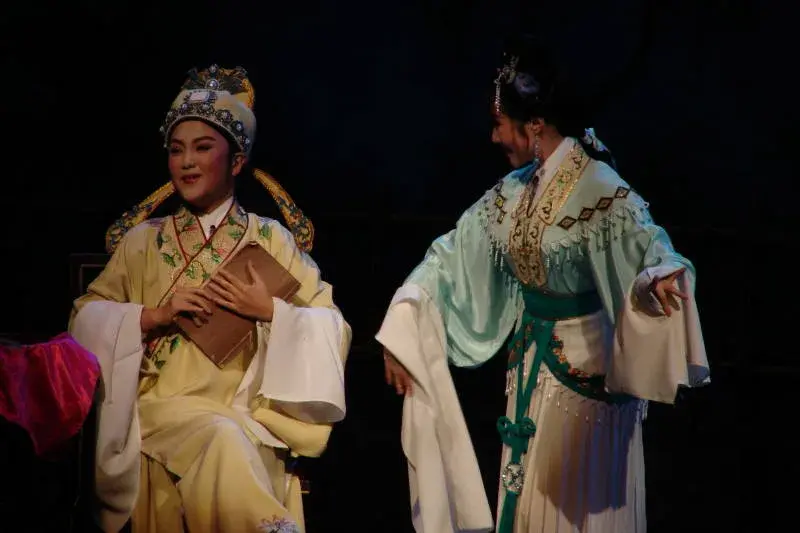
The Yongzhen Reform (永贞革新), also historically remembered as the Incident of the Two Wangs and Eight Marshals, was a brief and dramatic political reform movement in 805 led by Emperor Shunzong (Li Song) alongside reformist scholar-officials Wang Shuwen and Wang Pi. Following the An Lushan Rebellion, the Tang court was incapacitated by palace eunuchs commanding the elite Shence Army and insubordinate regional military commissioners (fanzhen). Having served as Crown Prince for more than two decades, Li Song covertly assembled an intellectual inner circle featuring Wang Shuwen, Wang Pi, Wei Zhiyi, and brilliant young literati such as Liu Zongyuan and Liu Yuxi. Ascending the throne in 805 despite being partially incapacitated by a stroke, Emperor Shunzong launched sweeping institutional reforms. The faction abolished the predatory "palace market" system, disbanded the thuggish "Five Quarters falconry bands," canceled arbitrary tribute deliveries from regional warlords, and appointed Du You to overhaul the imperial finances. Crucially, they attempted to seize control of the Shence Army from eunuch commanders. However, this direct threat to vested interests provoked an immediate counter-coup by eunuch lieutenant Ju Wenzhen and allied provincial governors, who forced Shunzong to abdicate in favor of Crown Prince Li Chun (Emperor Xianzong). Wang Shuwen was executed, and Liu Zongyuan, Liu Yuxi, and six other reformers were exiled as remote prefectural marshals, bringing a tragic close to the 140-day reform.
Emperor Dezong dies; the stroke-afflicted Li Song ascends the throne, launching reforms with Wang Shuwen and Wei Zhiyi.
Decrees terminate the palace markets and Five Quarters bands, suspending regional tribute levies to public acclaim.
Eunuch commanders force the appointment of Prince Li Chun as Crown Prince; Wang Shuwen schemes to seize the army.
Shence officers refuse Fan Xichao's authority, neutralizing Wang Shuwen's attempt to disarm the eunuchs.
Ju Wenzhen stages a palace coup, forcing Emperor Shunzong to abdicate in favor of Emperor Xianzong.
The court exiles Wang Shuwen, Wang Pi, and the Eight Marshals, including Liu Zongyuan and Liu Yuxi.
Following Shunzong's death, Wang Shuwen is ordered to commit suicide, while the Eight Marshals remain in protracted exile.
Following the mid-Tang civil wars, imperial monarchs developed intense suspicion toward civilian bureaucrats and generals, delegating personal protection to court eunuchs. After the 783 Jingyuan Mutiny, Emperor Dezong formally placed the imperial palace guards—the elite Left and Right Shence Armies—under the direct command of eunuch commissioners. Endowed with permanent military supremacy, senior eunuchs monopolized policy formulation, engaged in extortion, manipulated ministerial appointments, and eventually gained the arbitrary power to depose and elevate reigning emperors.
Across the provinces, regional military governors maintained private armies, withheld central taxes, and treated offices as hereditary fiefdoms. To curry favor with the palace eunuchs and secure imperial tolerance, warlords remitted lavish "monthly tributes" to the emperor, costs that were extracted through crushing tax burdens on the common people. In the capital Chang'an, eunuchs operated the "palace market," seizing private goods at nominal prices, while the "Five Quarters youth," ostensibly imperial animal keepers, blackmailed city merchants with impunity.
During his twenty-six years as Crown Prince, Li Song observed the compounding crises of the realm and resolved to restore dynastic governance. While residing in the Eastern Palace, he recruited Wang Shuwen and Wang Pi, who gained his confidence through scholarly companionship. Through them, he established ties with talented and forward-thinking young scholar-officials including Hanlin Academician Wei Zhiyi, Investigating Censor Liu Zongyuan, Bureau Director Liu Yuxi, and fellow idealists Han Tai, Chen Jian, Han Ye, Ling Zhun, and Cheng Jiuyan.
In the first month of 805, Emperor Dezong died. Although Li Song had recently suffered a severe stroke that impaired his speech, he assumed the throne as Emperor Shunzong, adopting the Yongzhen era title. Working through trusted attendants, Shunzong promptly elevated Wang Shuwen to the Hanlin Academy, appointed Wei Zhiyi as Chancellor, positioned Wang Pi in the Secretariat, and mobilized Liu Zongyuan and Liu Yuxi to draft imperial edicts, swiftly inaugurating radical administrative changes.
The reform leadership moved decisively to alleviate public distress. On the day of his accession, Emperor Shunzong promulgated an imperial decree abolishing the despised "palace market" system and terminating the "Five Quarters youth," releasing imperial birds and hounds back into the wild. Merchants and ordinary citizens in Chang'an celebrated with unbridled joy.
Furthermore, the emperor halted all mandatory "extra tributes" from regional military commissioners, dismantling the corrupt circuit of warlord bribery. The court dismissed corrupt officials tied to the eunuchs, rehabilitated upright ministers banished under Emperor Dezong, including Lu Zhi and Yang Cheng, and appointed the veteran administrator Du You to direct the Ministry of Revenue and salt-and-iron monopolies, striving to balance the battered national exchequer.
The reformers recognized that administrative decrees would remain hollow unless military command of the Shence Army was wrested away from eunuch control. In the fifth month of 805, Wang Shuwen promoted veteran general Fan Xichao to lead the Shence frontier divisions, appointing himself as expeditionary army marshal to subordinate the eunuch command structure to civil authority.
This offensive galvanized the eunuch establishment into action. Chief eunuchs Ju Wenzhen and Liu Guangqi incited junior Shence officers to disobey Fan Xichao's operational directives, effectively paralyzing the takeover. Concurrently, the eunuchs formed an alliance with conservative civilian ministers such as Gao Ying and mobilized powerful provincial governors, notably Wei Gao of Xichuan and Pei Jun of Jingnan, to bombard the throne with petitions condemning Wang Shuwen's circle and demanding that Crown Prince Li Chun be made imperial regent.
Beset by overwhelming opposition, the reform coalition fragmented internally as Chancellor Wei Zhiyi distanced himself from Wang Shuwen in fear of eunuch retribution. In the seventh month of 805, Ju Wenzhen shut the palace gates, carrying out a palace coup that coerced the ailing Emperor Shunzong into declaring Prince Li Chun crown prince and regent, while stripping Wang Shuwen of his Hanlin post.
In the eighth month, the eunuchs produced an imperial rescript compelling Emperor Shunzong to abdicate as Retired Emperor, installing Li Chun as Emperor Xianzong. With the accession of the new emperor, the eunuchs and conservative officials executed a thorough purge. Wang Shuwen was stripped of rank, exiled to Yuzhou, and subsequently ordered to commit suicide; Wang Pi was banished to Kaizhou, where he soon died of despair; Wei Zhiyi was banished to Yazhou; and Liu Zongyuan, Liu Yuxi, and their six comrades were dispersed to remote, malaria-ridden southern frontiers as prefectural marshals, cementing the catastrophe of the "Eight Marshals."
The collapse of the Yongzhen Reform was the most valiant attempt by the mid-Tang crown and civil bureaucracy to arrest the empire's decline. Hampered by narrow political leverage, the lack of an independent military force, and the emperor's incapacitating illness, the initiative fell before entrenched power blocs. The tragedy permanently eliminated the possibility of peacefully stripping eunuchs of their military command, allowing eunuch factions to assassinate and appoint emperors at will over the next century.
In a historic paradox, the political disaster catalyzed a monumental flourishing in Chinese literature and thought. Exiled to the wild southern environments of Yongzhou, Langzhou, and Lianzhou, thinkers like Liu Zongyuan and Liu Yuxi engaged deeply with local commoners and rugged landscapes. Liu Zongyuan penned masterworks like Eight Records of Yongzhou and On Feudalism, transforming Classical Prose, while Liu Yuxi wrote unyielding folk-inspired ballads and philosophical meditations, transfiguring reformist martyrdom into timeless intellectual monuments.
In Zizhi Tongjian, Sima Guang offered a nuanced verdict: "Men like Wang Shuwen took advantage of Emperor Shunzong's affliction to seize court authority. In planning to recover military commands and suppress the eunuchs, their intentions were noble, yet their abilities were insufficient. Nevertheless, by abolishing palace markets and dismissing the Five Quarters bands, they brought genuine relief to the people, and their deeds cannot be dismissed as entirely without merit."
Song dynasty scholar Su Shi reflected mournfully in On Wang Shuwen: "With Shunzong ill, Shuwen monopolized authority, seeking by his lone strength to confront the combined weight of eunuchs and warlords—an undertaking doomed to defeat. That luminaries of unmatched genius like Liu Zongyuan and Liu Yuxi were ensnared in their downfall is truly a cause for deep sorrow."