Jinyang Uprising and Provisional Ordinances
Li Yuan enters Chang'an, revokes draconian Sui laws, and issues twelve provisional rules to stabilize Guanzhong.
Tang Dynasty (唐朝) · HISTORICAL EVENT
武德律令颁行
Promulgation of the Wude Legal Codes (武德律令颁行) designates the critical legislative campaign between 618 and 624 when the central government of Emperor Gaozu compiled and officially enacted the foundational statutory codes of the Tang Dynasty, predominantly utilizing the Sui Kaihuang Code as an architectural blueprint. Upon ascending the throne in 618, Emperor Gaozu promptly abolished Emperor Yang's harsh Daye Code, temporarily re-enacting the moderate…
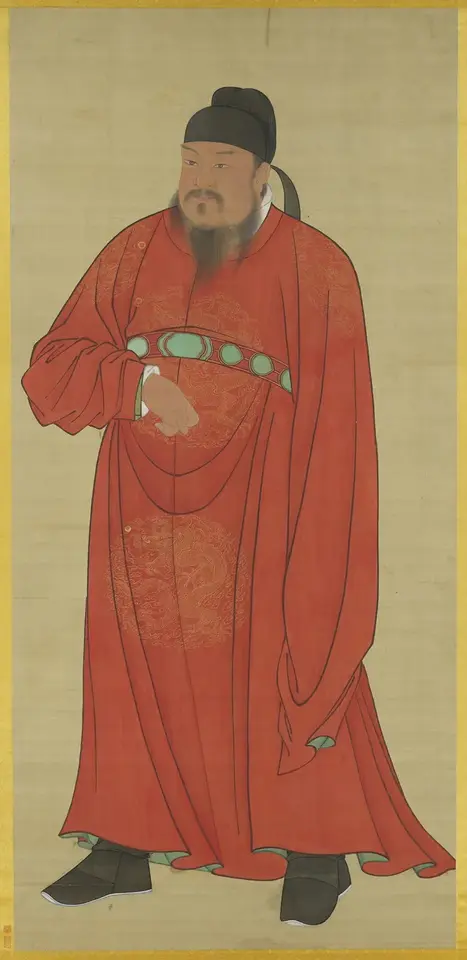
Promulgation of the Wude Legal Codes (武德律令颁行) designates the critical legislative campaign between 618 and 624 when the central government of Emperor Gaozu compiled and officially enacted the foundational statutory codes of the Tang Dynasty, predominantly utilizing the Sui Kaihuang Code as an architectural blueprint. Upon ascending the throne in 618, Emperor Gaozu promptly abolished Emperor Yang's harsh Daye Code, temporarily re-enacting the moderate Kaihuang Code while issuing Fifty-Three New Regulations in 619 to fulfill urgent wartime judicial needs. In 621, Emperor Gaozu issued imperial decrees appointing Senior Chancellor Pei Ji, Director of the Chancellery Xiao Yu, and other senior statesmen to steer a specialized codification commission in Chang'an. Following three years of systematic drafting and collation, in April 624 the court promulgated the Wude Code comprising 500 articles across twelve structural chapters, alongside thirty volumes of Statutes and fourteen volumes of Administrative Models. The new compendium expunged fifty-three overly intricate and punitive provisions from Sui statutes, reduced the penal labor terms for exile, and definitively established the fourfold statutory apparatus of laws, statutes, regulations, and models that formed the cornerstone of classical Chinese legal civilization.
Li Yuan enters Chang'an, revokes draconian Sui laws, and issues twelve provisional rules to stabilize Guanzhong.
Li Yuan ascends the throne; he officially abolishes the Daye Code and temporarily adopts the Kaihuang Code.
The court enacts fifty-three transitional articles amending Sui law to meet urgent wartime administrative demands.
Following northern reunification, Emperor Gaozu commissions Pei Ji and Xiao Yu to draft a comprehensive dynastic code.
The commission expunges harsh Sui provisions, adjusts exile distances, and limits mandatory convict labor to one year.
In April, the Wude Code (500 articles), thirty volumes of Statutes, and fourteen volumes of Models are formally promulgated.
The comprehensive system of codes, statutes, regulations, and models is instituted, anchoring Tang imperial administration.
In early Sui, Emperor Wen consolidated centuries of Northern and Southern Dynasties jurisprudence into the celebrated Kaihuang Code, establishing the Five Punishments and Ten Abominations that marked a pinnacle in early imperial statutory drafting. However, upon ascending the throne, Emperor Yang increasingly discarded these lenient traditions, enacting the oppressive Daye Code. When agrarian rebellions swept the empire during his later years, Emperor Yang abandoned all statutory restraints, imposing collective executions and summary decapitations even for minor property thefts, leaving the populace terrified under arbitrary legal oppression.
The complete collapse of late Sui jurisprudence accelerated the disintegration of imperial authority. When Li Yuan raised troops in Jinyang and entered Daxing (Chang'an) in 617, his paramount strategic priority was reassuring the panic-stricken populace. He immediately proclaimed Twelve Provisional Ordinances, decreeing that only murder, robbery, and bodily injury remained capital offenses while expunging all other draconian Sui ordinances. This judicious moderation secured the crucial allegiance of the Guanzhong aristocracy and populace, providing an enduring societal foundation for founding the Tang Dynasty.
In June 618, Li Yuan accepted the abdication of Emperor Gong and ascended the imperial throne as Emperor Gaozu of Tang. Confronting a fractured realm surrounded by rival warlord regimes, the nascent dynastic court needed to legitimize its sovereign mandate through statutory stability. To visibly repudiate Sui tyranny, Emperor Gaozu decreed the absolute revocation of the Daye Code, temporarily reinstating Emperor Wen's Kaihuang Code as an interim measure to ensure continuity in daily administration while preparing comprehensive dynastic legislation.
Nevertheless, the Kaihuang Code was the relic of a fallen predecessor, containing numerous specific provisions ill-suited to the demands of consolidating the new Tang sovereign order. As imperial campaigns gradually eliminated warlords such as Xue Ju, Liu Wuzhou, Wang Shichong, and Dou Jiande, unifying the northern plains, the creation of a definitive statutory code that honored dynastic legitimacy while offering equitable governance became an urgent imperial priority.
During the initial years of the dynasty, active warfare prevented the immediate completion of an exhaustive statutory code. To manage daily civil administration and judicial tribunals across newly annexed territories in Guanzhong, Hedong, and Bashu, Emperor Gaozu adopted an incremental legislative strategy. In 619, the Tang central court issued the Fifty-Three New Regulations as emergency statutory amendments to the temporarily retained Kaihuang Code.
These fifty-three special provisions targeted burdensome agricultural tithes, household registration technicalities, public land allotments, and rigid military disciplinary statutes inherited from Sui administration. By suspending obsolete penalties and simplifying bureaucratic procedures, the new regulations supplied magistrates with practical judicial standards during the transitional period, generating invaluable administrative feedback that guided the impending codification project.
By 621, following the decisive triumph of Qin Prince Li Shimin at the Battle of Hulao and the annihilation of both Dou Jiande and Wang Shichong, northern China was securely unified under Tang rule. Recognizing that conditions for definitive legislation had matured, Emperor Gaozu established a dedicated codification bureau in Chang'an.
Emperor Gaozu commissioned Chancellor Pei Ji to oversee the legislative bureau, appointing seasoned legal scholars including Director of the Chancellery Xiao Yu, Chief Minister of the Court of Judicature Feng Deyi, and judicial veteran Liu Zhenghui to direct the drafting council. The emperor mandated adherence to the Kaihuang Code as the structural foundation, requiring drafters to emphasize moderation, conciseness, and humaneness. Over three years of meticulous research, the commission reviewed Han, Wei, Jin, and Sui precedents to assemble a coherent statutory draft.
During the drafting process, the commission instituted two transformative statutory reforms. First, the drafters permanently integrated the Fifty-Three New Regulations into the primary penal statutes while simultaneously deleting fifty-three archaic and overly punitive articles inherited from the Kaihuang Code. This ensured dynastic structural continuity while imbuing the new legal code with a noticeably more moderate spirit.
Second, the commission restructured the system of penal exile and compulsory labor. Under Sui statutes, exile was divided into three distance tiers accompanied by two to three years of hard labor, frequently devastating the families of offenders. In response, the Tang commission increased the geographic distance for each tier by one thousand li (setting tiers at two thousand, two thousand five hundred, and three thousand li) while drastically reducing the mandatory labor servitude to a single year. This enlightened adjustment allowed convicts to settle, farm, and reconstitute their households upon completing their brief term. Furthermore, the code established strict prohibitions against carrying out executions on Buddhist and Daoist fasting days or during the first, fifth, and ninth lunar months, manifesting classical Confucian judicial benevolence.
In the fourth month of 624, Emperor Gaozu promulgated the Wude Code throughout the empire. The compendium preserved the classic twelve-chapter architectural structure established by Sui jurists: General Principles, Palace Security, Administrative Offices, Household and Marriage, Stables and Treasuries, Military Mobilization, Robbery and Theft, Assault and Litigation, Fraud and Counterfeiting, Miscellaneous Offenses, Arrest of Fugitives, and Judicial Decisions, totaling 500 concise statutory articles.
Simultaneously, the court promulgated thirty volumes of Wude Statutes governing administrative protocols and fourteen volumes of Wude Models regulating official documentation, alongside compiled imperial edicts known as Regulations. Consequently, the distinct Chinese quadripartite legal structure—Code (Lu) for penal definitions, Statutes (Ling) for administrative governance, Regulations (Ge) for dynamic statutory amendments, and Models (Shi) for operational bureaucratic procedures—reached institutional maturity.
The immediate accomplishment of the Wude legislation was endowing the newly unified empire with a comprehensive, authoritative, and equitable statutory system. Following centuries of division and late Sui devastation, Chinese society regained a coherent legal standard that harmonized northern legal rigors with southern administrative refinements. It provided uniform criteria for evaluating bureaucratic performance, collecting agricultural revenue, and adjudicating criminal disputes across all imperial prefectures.
Crucially, the twelve-chapter structural design adopted by the Wude Code achieved unprecedented conceptual harmony. Subsequent dynastic revisions—such as the Zhenguan Code under Emperor Taizong and the Yonghui Code with its celebrated Commentary under Emperor Gaozong—consistently retained the chapter organization, structural classifications, and substantive penal principles established in 624 without fundamental alterations. The Wude Code thus formed the direct structural archetype and enduring bedrock of classical Tang legal civilization.
The promulgation of the Wude legal apparatus signified the institutional maturation of Chinese statutory architecture. For the first time, imperial governance operated via a coordinated four-tiered statutory typology: the Code defined criminal acts and prescribed fixed punishments; the Statutes outlined administrative organizations and agrarian property systems; the Regulations incorporated current imperial decrees to amend statutory gaps; and the Models specified procedural forms and operational timetables for central and local ministries.
This quadripartite design preserved the sanctity and stability of primary penal law while allowing statutory flexibility in response to evolving socioeconomic dynamics. Magistrates and clerks were bound to procedural clarity, generating an institutionalized bureaucratic culture that significantly minimized administrative transaction costs and produced an enduring model of East Asian legal governance.
By repudiating late Sui cruelty, the Wude legislation embodied the Confucian paradigm of moral instruction reinforced by restrained punishment. The code abolished harsh mutilating penalties, curtailed convict servitude, and instituted statutory moratoria on executions during designated religious fasting periods. This synthesis of moral instruction and statutory precision offered legal security that facilitated economic recovery and fostered the vibrant civic life of the High Tang.
Across East Asia, the Tang statutory system pioneered by the Wude Code exerted transformative cultural resonance from the seventh through tenth centuries. Successive regimes across the Korean peninsula, early imperial Japan through the Taihō and Yōrō Codes, and historical Vietnamese dynasties systematically adopted Tang statutory typologies as their governing models. As the foundational enactment of the Tang legal order, the Wude Code stands as the historic origin of the mature East Asian Legal Family.