Demise of Emperor Taiding
In the seventh month, Emperor Taiding dies suddenly at Shangdu; Chancellor Dawlat Shah conceals the death to engineer a regency.
Yuan Dynasty (元朝) · HISTORICAL EVENT
两都之战
The War of the Two Capitals (两都之战), historically termed the Tianli Coup, was a major civil war of dynastic succession waged in 1328 between the two political capitals of the Yuan Empire: Dadu (the primary winter capital) and Shangdu (the summer capital). In July 1328, Emperor Taiding died suddenly at Shangdu. Left Chancellor Dawlat Shah concealed the imperial death to monopolize authority and install Taiding's young heir Aragibag. In response, Assistant…
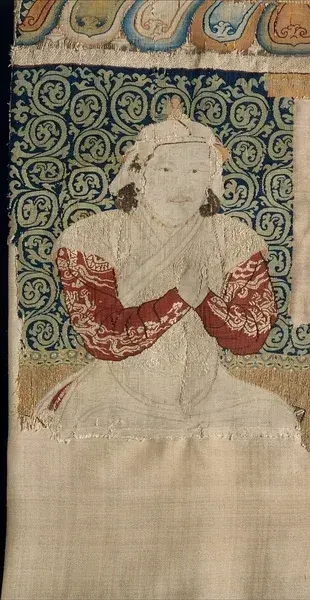
The War of the Two Capitals (两都之战), historically termed the Tianli Coup, was a major civil war of dynastic succession waged in 1328 between the two political capitals of the Yuan Empire: Dadu (the primary winter capital) and Shangdu (the summer capital). In July 1328, Emperor Taiding died suddenly at Shangdu. Left Chancellor Dawlat Shah concealed the imperial death to monopolize authority and install Taiding's young heir Aragibag. In response, Assistant Commissioner of Military Affairs El Temür staged a coup d'etat in Dadu, seizing the capital arsenals and dispatching couriers to summon Tugh Temür (the son of former Emperor Wuzong) from Jiangling to take the throne. In September, both factions crowned their respective emperors and mobilized large armies. Dawlat Shah dispatched northern nomadic cavalry and western princely forces to besiege Dadu, advancing to its northern outskirts. Displaying exceptional martial leadership, El Temür commanded the garrison troops in hard-fought engagements at Tongzhou, Baifu, and Honglou, crushing the northern columns. In October, a Dadu detachment executed a surprise strike against Shangdu's rear, forcing Dawlat Shah to surrender the imperial seal and concluding the war.
In the seventh month, Emperor Taiding dies suddenly at Shangdu; Chancellor Dawlat Shah conceals the death to engineer a regency.
On September 8, El Temür stages a coup d'etat in Dadu, securing the imperial guard and dispatching envoys to invite Tugh Temür.
On October 16, Tugh Temür enters Dadu and ascends the imperial throne, officially adopting the Tianli reign title.
In September, Dawlat Shah crowns Aragibag at Shangdu and launches a multi-pronged assault against Dadu.
In early October, El Temür crushes the Shangdu armies at Tongzhou, Baifu, and Honglou, lifting the siege of the capital.
On November 14, Dadu cavalry encircles Shangdu; Dawlat Shah surrenders the imperial seal and is executed, ending the civil war.
Since Kublai Khan established the dual-capital system, Yuan emperors rotated seasonally between Shangdu (in modern Zhenglan Banner, Inner Mongolia) during summer and Dadu (modern Beijing) in winter, maintaining dual administrative secretariats. On August 15, 1328 (the tenth day of the seventh month of the Zhihe era), Emperor Taiding died unexpectedly at Shangdu. Left Chancellor Dawlat Shah, a Muslim dignitary, feared that rival imperial factions would strip his family of administrative dominance. He concealed the emperor's death for weeks and prepared to enthrone Taiding's eight-year-old son Aragibag, aiming to rule as regent behind the infant monarch.
Dawlat Shah's autocratic posturing provoked outrage among imperial commanders stationed in Dadu. El Temür, commander of the elite Qipchaq Imperial Guard and Assistant Commissioner of Military Affairs, hailed from a distinguished military lineage and wielded deep influence among the capital garrison. Resenting Taiding's suppression of lineage privileges, El Temür resolved to restore the royal line of Emperor Wuzong (Külüg Khan). On September 8 (the fourth day of the eighth month), El Temür led loyal retainers in a night assault on the Xingsheng Palace, arresting Dawlat Shah's partisans and seizing the central armory. He immediately dispatched couriers to Jiangling in modern Hubei to escort Prince of Huai Tugh Temür back to Dadu, where he was crowned Emperor Wenzong on October 16.
Following El Temür's coup, Dawlat Shah formally enthroned Aragibag at Shangdu as Emperor Tianshun in September 1328. Dawlat Shah mobilized regional armies across the steppe, ordering Prince of Liao Toghtogha to advance through Gubeikou and Prince of Liang Wang Chan to lead heavy cavalry through the Juyong Pass, converging on Dadu. The Shangdu armies quickly overran frontier outposts, and advance cavalry units reached Gaolizhuang and the northern earth ramparts of Dadu, plunging the capital into panic.
Outnumbered, El Temür rejected councilors' advice to barricade the city gates, resolving instead to seize the operational initiative. Leading elite mounted guards through the Qihua Gate, El Temür ambushed the Liao cavalry at the Sancha River near Tongzhou, personally cutting down enemy vanguard commanders and rallying civilian morale within the besieged capital.
In early October, Wang Chan's western army occupied the western bank of the Lugou River, severing Dadu's grain routes from the south. El Temür dispatched his younger brother Sadun to defend the river crossing while leading the primary cavalry wing to encircle the enemy's flank. At the decisive clashes of Baifu (south of modern Changping) and Honglou, the two armies collided in brutal hand-to-hand combat. El Temür charged repeatedly into the enemy center, breaking Wang Chan's battle lines and routing the western army.
Following the victory at Baifu, El Temür advanced northward toward Nankou, scoring consecutive battlefield triumphs over surviving Shangdu garrisons emerging from the mountain passes. Simultaneously, Bayan, Governor of the Henan Branch Secretariat, declared allegiance to Dadu and severed supply lines running through the Central Plains, shifting the strategic balance decisively in Dadu's favor.
Confronted with the destruction of his field armies, Dawlat Shah was left defenseless at Shangdu. In mid-October, Dadu commanders Prince Yuelu Temür and Yaluhan led a fast-moving cavalry column through western Liaoning, bypassing the fortified Gubeikou pass to strike Shangdu from the rear. The outer defenses of Shangdu collapsed instantly, and Dadu cavalry reached the Jinlianchuan plain outside the palace gates.
On November 14 (the fourteenth day of the tenth month), realizing resistance was impossible, Dawlat Shah presented the imperial jade seal and surrendered unconditionally. The child-emperor Aragibag vanished amidst the chaos, while Dawlat Shah and his senior ministers were escorted to Dadu and executed. The War of the Two Capitals concluded with total victory for the Dadu faction.
Prior to the climactic clash at Baifu, brutal defensive engagements erupted around the strategic perimeter of the Lugou Bridge southwest of Dadu. Prince of Liang Wang Chan led tens of thousands of western cavalry along the eastern foothills of the Taihang Mountains, attempting to seize the stone crossing over the Hun River (modern Yongding River) to sever Dadu's grain supply from the south. El Temür dispatched his younger brother Sadun with several thousand elite Qipchaq guards to hold the bridgehead fortifications. Employing palisades, heavy crossbows, and spiked barricades, Sadun repelled dozens of cavalry assaults, staining the river red with blood.
The ferocious struggle at Lugou Bridge reached an agonizing standstill over several days. Unable to breach the stone crossing, Shangdu cavalry suffered severe attrition and supply depletion. Capitalizing on the deadlock, El Temür dispatched night raiding parties to torch hundreds of enemy baggage wagons, shattering the morale of the western army. The steadfast defense of Lugou Bridge preserved Dadu's lifeline to the south and bought the precious time necessary for El Temür to concentrate his mobile striking columns for the northern battlefield.
The decisive strategic tipping point of the civil war was governed by shifting loyalties among powerful regional Mongol princes. The Shangdu faction originally relied on massive cavalry reserves dispatched by Prince of Liao Toghtogha and steppe chieftains across the Mongolian plateau. However, while executing military maneuvers around Dadu, El Temür broadcast imperial manifestos in Emperor Wenzong's name, promising lavish titles and invoking the ancestral legitimacy of the martial Emperor Wuzong, systematically undermining Shangdu's internal cohesion.
In mid-October, Prince of Qi Yuelu Temür and eastern steppe lords calculated that Shangdu's cause was lost, renouncing Dawlat Shah and declaring allegiance to Dadu. Yuelu Temür deployed his cavalry to strike Shangdu's eastern flank, severing communications between the summer capital and the steppe interior. Simultaneously, provincial secretariats in Shaanxi and Sichuan intercepted Shangdu envoys and pledged military support to Dadu. Completely isolated and surrounded on all sides, the Shangdu regime collapsed, culminating in Dawlat Shah's surrender.
The War of the Two Capitals concluded with the total victory of the Dadu faction and the eradication of Emperor Taiding's political lineage. Dawlat Shah and dozens of senior ministers were executed, while the imperial court permanently centralized its administrative apparatus in Dadu. The victory marked the triumphant return of Emperor Wuzong's descendants to the throne, ending two decades of political eclipse and reducing the institutional prestige of Shangdu to that of a secondary seasonal residence.
The most catastrophic consequence of the civil war was the institutionalization of military dictatorship under El Temür. Showered with titles, estates, and supreme offices, El Temür and his kinsmen monopolized the imperial secretariats and commanded the elite guards, reducing the throne to a compliant pawn. Subsequent emperors—including Wenzong, Mingzong, Ningzong, and Huizong—were enthroned and deposed at the whim of powerful chancellors, shattering the administrative equilibrium of the Yuan state.
The conflict was the largest internal civil war fought within the Mongol heartland during the Yuan dynasty. Tens of thousands of veteran Mongol and auxiliary troops perished across the plains of Hebei and the passes of the Great Wall, devastating the imperial cavalry reserves. The internecine slaughter destroyed political solidarity among the Mongol nobility, leaving the dynasty militarily paralyzed when nationwide peasant uprisings erupted two decades later.
In the History of Yuan (Yuanshi), dynastic chroniclers evaluated El Temür's role: "El Temür rose through military brilliance. At the dawn of the Tianli era, he proclaimed righteousness and fought with total disregard for personal safety, confronting the armies of the realm with a handful of troops. Within weeks, he fought dozens of battles and pacified the state. His martial achievements were indeed grand."
The early Ming scholar Song Lian observed in the Annals of Emperor Wenzong: "Emperor Wenzong possessed scholarly refinement and aimed to reform governance following internal turmoil. However, El Temür's tyranny dominated the court, reducing imperial majesty to an empty title. The ruin of the Yuan house truly took root in this division."
The Qing historian Bi Yuan concluded in Continuation of the Comprehensive Mirror: "After Kublai Khan, succession disputes cursed every reign. Yet none was more destructive than the War of the Two Capitals. Dawlat Shah overreached, while El Temür leveraged the throne to build personal autocracy. Although Dadu prevailed, the foundations of the state were shattered beyond repair."