Illness of Empress Lu and Division of Armies
Empress Lu entrusts the Northern Army to Lu Lu and the Southern Army to Lu Chan, warning them to hold the palace.
Western Han (西汉) · HISTORICAL EVENT
诸吕之乱
The Disturbance of the Lu Clan (诸吕之乱) was a decisive palace coup and political restoration in the autumn of 180 BCE in the Western Han capital of Chang'an. Emperor Gaozu Liu Bang had previously forged the sacred White Horse Oath with his founding peers, proclaiming that "if anyone not of the Liu clan becomes a king, the empire shall unite to attack him." However, following the premature death of Emperor Huidi, Empress Dowager Lu assumed imperial regency…
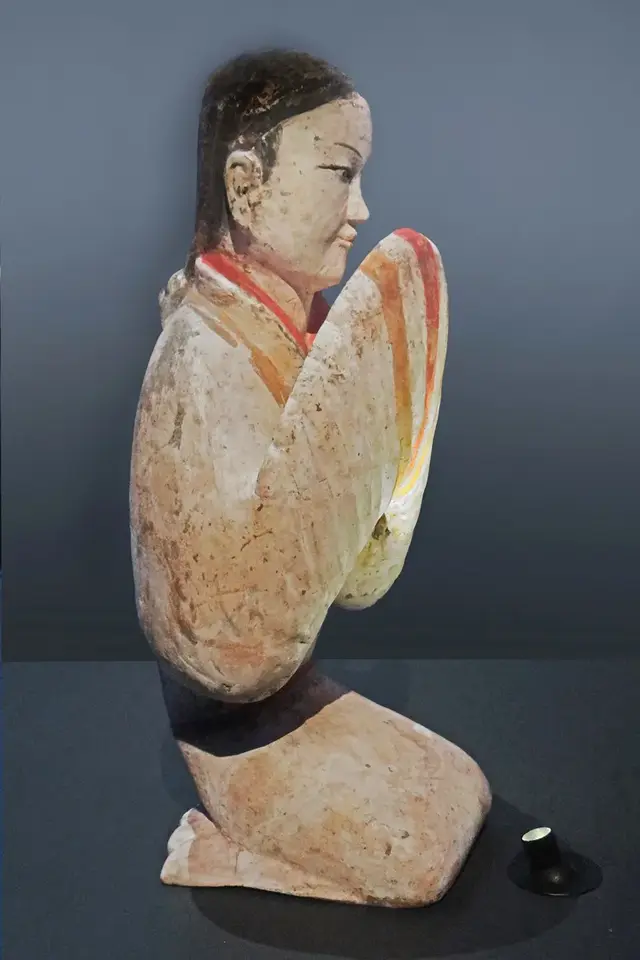
The Disturbance of the Lu Clan (诸吕之乱) was a decisive palace coup and political restoration in the autumn of 180 BCE in the Western Han capital of Chang'an. Emperor Gaozu Liu Bang had previously forged the sacred White Horse Oath with his founding peers, proclaiming that "if anyone not of the Liu clan becomes a king, the empire shall unite to attack him." However, following the premature death of Emperor Huidi, Empress Dowager Lu assumed imperial regency for eight years, flagrantly violating the covenant by crowning her nephews Lu Chan and Lu Lu as kings while persecuting Liu imperial scions. In the seventh month of 180 BCE, on her deathbed, Empress Lu placed Lu Lu over the Northern Army and Lu Chan over the Southern Army as Chancellor of State, effectively delivering the capital's military forces into the hands of her clan. Upon Empress Lu's demise, the Lu leaders convened to orchestrate a coup to seize the empire. Prince of Qi Liu Xiang launched an armed march from the east, while Guan Ying stationed his army at Xingyang in strategic coordination. Within the capital, Grand Commandant Zhou Bo and Chancellor Chen Ping secretly dispatched Li Ji to deceive Lu Lu into relinquishing his commander's seal. Zhou Bo entered the Northern Army camp and rallied the troops to bear their left arms in loyalty to the Liu dynasty; Marquis of Zhuxu Liu Zhang subsequently charged into Weiyang Palace and executed Lu Chan. Founding statesmen and imperial princes united to exterminate the Lu lineage, deposing the puppet young emperor and welcoming the benevolent Prince of Dai Liu Heng to ascend the throne as Emperor Wen. This coup eradicated consort tyranny and solidified early Han political stability.
Empress Lu entrusts the Northern Army to Lu Lu and the Southern Army to Lu Chan, warning them to hold the palace.
Empress Lu dies; Lu clan leaders plot treason in Chang'an, while Liu Zhang sends a secret courier to Qi.
Prince of Qi executes his chancellor to march west; Guan Ying halts at Xingyang and forms a pact with the vassals.
Li Ji persuades Lu Lu to surrender the seal; Zhou Bo orders troops to bare left arms, seizing the Northern Army.
Liu Zhang kills Lu Chan in Weiyang Palace; the Lu clan is exterminated, and the young emperor is deposed.
Zhou Bo and Chen Ping welcome Prince of Dai Liu Heng to ascend the throne, opening the era of Wen and Jing.
In 195 BCE, after crushing rival non-Liu vassal kings, Emperor Gaozu Liu Bang slaughtered a white horse to solemnize an inviolable covenant with his marquis-generals: "If anyone not of the Liu clan becomes a king, all under heaven shall unite to attack him; if anyone who has not earned merit and is not appointed by the sovereign becomes a marquis, all under heaven shall unite to execute him." This oath established the foundational constitutional order governing the Western Han imperial house and the founding military nobility. That same year, Emperor Huidi Liu Ying ascended the throne. Gentle and compassionate by nature, he was devastated by his mother Empress Lu's horrific cruelty toward Consort Qi and Prince Liu Ruyi, eventually withdrawing from governing affairs. Following Huidi's death at age twenty-three in 188 BCE, Empress Lu enthroned infant puppets and openly assumed absolute sovereign power.
Right Chancellor Wang Ling fiercely opposed the elevation of the Lu clan based on the White Horse Oath, prompting Empress Lu to strip him of executive authority; meanwhile, Chen Ping and Zhou Bo chose tactical compliance to preserve their positions. Empress Lu subsequently elevated her nephews Lu Tai, Lu Chan, Lu Lu, and Lu Tong as kings of vassal kingdoms, creating six additional Lu marquises. Simultaneously, she orchestrated the deaths of Gaozu's sons Liu You, Liu Hui, and Liu Jian, transferring central imperial authority into the hands of her maternal relatives and driving imperial clansmen and founding generals into deep, smoldering resentment.
In the seventh month of 180 BCE (Empress Lu 8), the aging Empress Dowager fell gravely ill. Fully conscious that her flagrant breaches of the White Horse Oath and persecutions of imperial princes had incited fierce animosity across the realm, she feared immediate retribution upon her death. Mobilizing her remaining strength, she enacted protective military dispositions, appointing her nephew Lu Lu as Supreme General in command of the Northern Army guarding the capital's northern perimeter, and appointing Lu Chan to command the Southern Army protecting the imperial palace compounds while naming him Chancellor of State.
Summoning Lu Chan and Lu Lu to her bedside, Empress Lu warned them urgently: "In former times, Emperor Gaozu pacified the world and made an oath with ministers that only members of the Liu clan should be kings. Now that the Lu clan has taken royal titles, the ministers are deeply dissatisfied. Once I pass away, the young emperor will lack authority, and the ministers will surely incite a revolt. You two must each hold fast to your armies to guard the palaces, maintain constant vigilance, and on no account leave your posts to escort my funeral bier. Guard your military command and never permit yourselves to be subjugated by others!" Shortly thereafter, Empress Lu died, leaving the capital's standing armies under the direct control of Lu Chan and Lu Lu.
Following the passing of Empress Lu, Lu Chan resided within the Southern Army and moved into Weiyang Palace to oversee imperial affairs, while Lu Lu commanded the Northern Army, establishing comprehensive control over palace security and royal edicts. Aware that imperial princes and veteran commanders like Zhou Bo and Guan Ying harbored deep enmity, the Lu leaders gathered at Lu Lu's residence to formulate a coup to overthrow the Liu dynasty. Yet intimidated by the immense military prestige and strategic prowess of the founding generals, they hesitated to strike immediately.
At that time, Liu Zhang, the Marquis of Zhuxu, was married to Lu Lu's daughter, which enabled him to uncover the conspirators' secret plotting. Outraged by the oppression of his clan and fearful of imminent destruction, Liu Zhang secretly dispatched a fast courier to his elder brother, Prince of Qi Liu Xiang, in Linzi. Liu Zhang detailed the usurpation plot, urging the Prince of Qi to mobilize his armies eastward toward the capital, promising that Liu Zhang and his brother Liu Xingju would coordinate with veteran ministers inside Chang'an to launch an internal revolt.
Upon receiving the dispatch, Prince of Qi Liu Xiang acted resolutely. To mobilize the full military strength of his realm, Liu Xiang deceived and executed Zhao Ping, the chancellor appointed by Empress Lu, absorbed territories granted to Lu Tong, and assembled tens of thousands of elite cavalry and infantry. Issuing a public manifesto to neighboring princes, he denounced the Lu clan for violating Gaozu's oath and murdering Liu princes, then marched westward toward the Hangu Pass.
Alarmed by the uprising, Chancellor Lu Chan dispatched Senior General Guan Ying with the capital army to intercept the Qi forces. Upon arriving at Xingyang, Guan Ying convened his lieutenants and resolved that marching against the imperial house on behalf of consort usurpers would bring dishonor and inevitable destruction. Guan Ying ordered his army to entrench at Xingyang, while covertly dispatching envoys to Liu Xiang and other vassals, proposing that all parties hold their borders and monitor developments in Chang'an, ready to march in unison should the Lu clan make an overt move. This alliance effectively neutralized the imperial field army and isolated the Lu conspirators within the capital.
When news of Guan Ying's standoff at Xingyang reached Chang'an, Lu Chan and Lu Lu grew increasingly desperate. Although Grand Commandant Zhou Bo held supreme military office, he was denied access to the Northern Army barracks because he lacked the commanding tiger tally; Chancellor Chen Ping likewise possessed no direct authority over the Southern Army. The two statesmen conferred and decided to exploit Lu Lu's vacillating character through deception.
Zhou Bo and Chen Ping detained Marquis of Quzhou Li Shang and compelled his son Li Ji, an intimate friend of Lu Lu, to persuade the young commander. Li Ji approached Lu Lu with feigned sincerity, arguing: "The ministers resent your kingship and royal titles. Now that the empress is deceased, your continued presence commanding the Northern Army fuels suspicions of treason. If you surrender your general's seal to the Grand Commandant and return peaceably to your fief of Zhao, the Qi armies will disband, the court will applaud your righteousness, and your family will enjoy enduring wealth."
Lu Lu believed the counsel, despite the desperate warnings of his aunt Lu Xu (widow of Fan Kuai), who hurled her jewels into the courtyard in tears, predicting that yielding military command would bring total extermination to the clan. On the day Gengshen of the eighth month, Zhou Bo dispatched envoys and used imperial protocol to escort Lu Lu out of camp. With the seal surrendered, Zhou Bo entered the Northern Army compound bearing the imperial tally.
Upon entering the parade grounds, Zhou Bo mounted the command platform and issued a momentous order to the assembled regiments: "Those who side with the Lu clan, bare your right arms! Those who side with the Liu clan, bare your left arms!" The soldiers, deeply loyal to Emperor Gaozu's memory, cheered thunderously and bared their left arms in unison, creating an unbroken sea of bare shoulders. Zhou Bo thereby assumed absolute command over the Northern Army, immediately locking down the armories and blocking all access gates.
Meanwhile, Chancellor Lu Chan, unaware that Lu Lu had surrendered his seal, attempted to force his way into Weiyang Palace to mobilize the young emperor. Marquis of Pingyang Cao Cu quickly alerted Zhou Bo that the palace gates were barred by imperial guards and that Lu Chan was seeking entry. Unwilling to leave the Northern Army unattended, Zhou Bo dispatched Liu Zhang with more than a thousand shock troops to relieve the palace. Liu Zhang stormed the palace gates, encountered Lu Chan pacing nervously near the courtiers' quarters, and charged forward. Lu Chan fled into a palace latrine, where Liu Zhang ran him through and cut him down.
With Lu Chan dead, the conspirators collapsed into disarray. Zhou Bo dispatched flying columns across Chang'an, tracking down and executing Lu Lu with clubs. Liu Zhang and Cao Cu led troops through the streets and imperial compounds, executing Lu Xu and hunting down all male and female relatives of the Lu clan without exception, dismantling the consort regime in a single afternoon.
Following the purge, Zhou Bo, Chen Ping, Guan Ying, and the imperial princes assembled to deliberate state affairs. The ministers declared that the young emperor and his imperial brothers were not genuine sons of Emperor Huidi, but commoners surreptitiously brought into the palace by Empress Lu after executing their mothers, and subsequently had them deposed. After weighing potential candidates, the assembly rejected Liu Xiang due to the overbearing cruelty of his maternal uncle Si Jun. Instead, they selected Prince of Dai Liu Heng, Gaozu's fourth son, renowned for filial piety, modesty, and the tranquil temperament of his mother Lady Bo. In the ninth month, the grand ministers welcomed Liu Heng from Dai to ascend the throne at Weiyang Palace as Emperor Wen of Han.
The Disturbance of the Lu Clan was settled within a single day of rapid, decisive action following months of tense standoff. The entire Lu consort lineage was eradicated, their royal and marquis fiefdoms abolished, and supreme authority restored unreservedly to the direct patrilineal house of Liu. The coup simultaneously dissolved the illegitimate line of puppet child monarchs and enthroned an exceptionally capable, mature statesman in Emperor Wen, preserving the structural integrity of the Western Han dynasty.
From the perspective of Han institutional evolution, the suppression of the Lu clan reaffirmed the constitutional sanctity of the White Horse Oath. It established an immutable legal taboo against granting kingship to external consort lineages that endured for centuries. Moreover, it established an enduring reconciliation between the emperor and the founding meritocracy. Emperor Wen governed through Daoist non-action, tax remissions, and penal moderation, inaugurating the first celebrated golden age in imperial Chinese history: the "Rule of Wen and Jing."