Inception of the Nine-Rank System
Cao Wei adopts Chen Qun's proposal to establish the Nine-Rank Controller system to evaluate talent
Wei, Jin, and Northern and Southern Dynasties · HISTORICAL EVENT
门阀政治与九品中正制
Aristocratic Clan Politics and the Nine-Rank System (门阀政治与九品中正制) refers to the profound institutional evolution spanning from 220 (the first year of the Huangchu era of Wei) to 583 (the third year of the Kaihuang era of Sui), during which the Nine-Rank Controller System served as the administrative mechanism underpinning the power-sharing and political monopoly of aristocratic clans alongside the imperial throne. Following the breakdown of the Han…
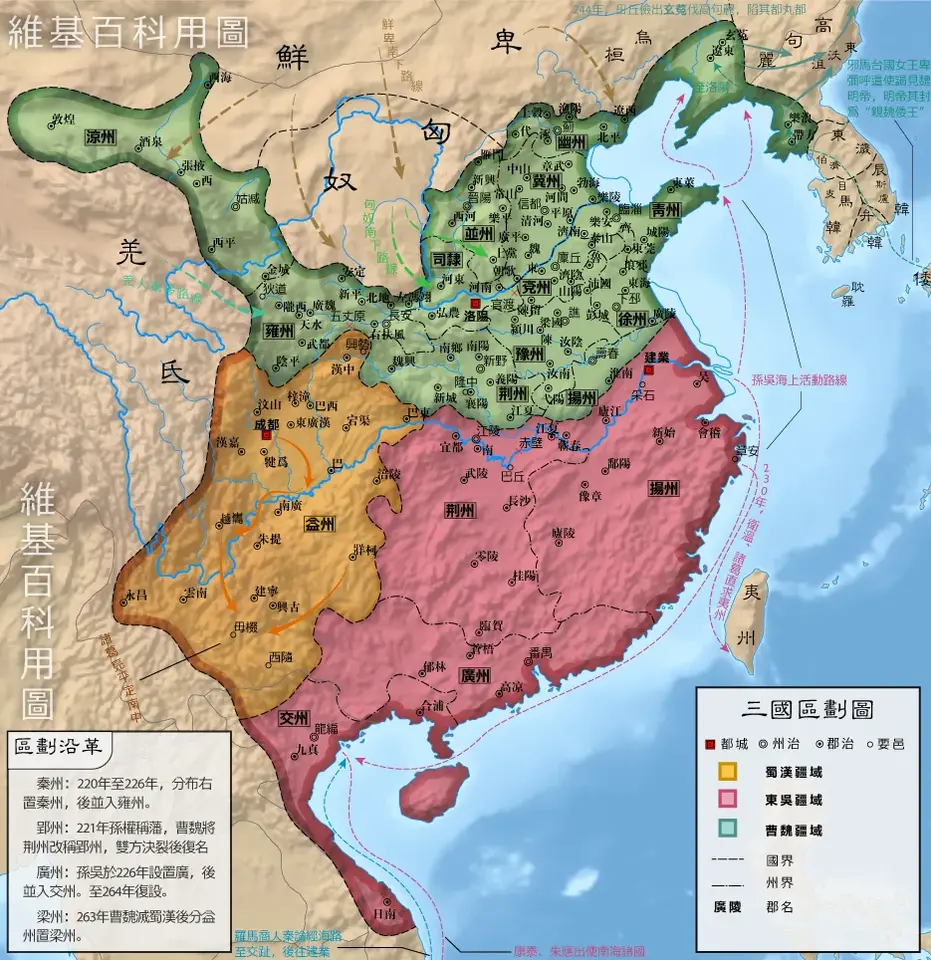
Aristocratic Clan Politics and the Nine-Rank System (门阀政治与九品中正制) refers to the profound institutional evolution spanning from 220 (the first year of the Huangchu era of Wei) to 583 (the third year of the Kaihuang era of Sui), during which the Nine-Rank Controller System served as the administrative mechanism underpinning the power-sharing and political monopoly of aristocratic clans alongside the imperial throne. Following the breakdown of the Han recommendation system, Cao Wei statesman Chen Qun devised the Nine-Rank System in 220, appointing regional controllers to grade candidate scholars into nine categories based on pedigree, morality, and ability. However, under the Western Jin Dynasty, the controller offices were monopolized by supreme aristocratic families, divorcing evaluations from competence and establishing the rigid rule where "no commoner occupied upper ranks, and no noble family languished in lower ranks." During the Eastern Jin, aristocratic clan politics reached its zenith: the Langya Wang clan co-ruled with Emperor Yuan (Sima Rui) under the maxim "The Wang and Sima share all under Heaven," followed by the Yu, Huan, and Xie clans directing armies and ministries. Xie An's triumph at the Battle of Fei River elevated clan prestige to its climax. In the Southern Dynasties, militarists and commoner clerks gradually stripped the nobility of military command, while Hou Jing's rebellion physically devastated the southern clans. In 583, Emperor Wen of Sui formally abolished the Nine-Rank System and instituted the Imperial Examination, terminating the era of aristocratic clan dominance.
Cao Wei adopts Chen Qun's proposal to establish the Nine-Rank Controller system to evaluate talent
Great aristocratic clans monopolize controller offices, giving rise to "no commoner in high ranks"
Sima Rui and Wang Dao establish Eastern Jin, inaugurating an era where clans co-ruled with emperors
Xie An and Xie Xuan lead the Beifu Army to victory at the Fei River, marking the apogee of clan hegemony
Rebel forces sack Jiankang and slaughter the southern nobility, fracturing clan power
Emperor Wen of Sui abolishes the Nine-Rank System and controllers, establishing the Imperial Examination
During the Western and Eastern Han Dynasties, official selection relied on the recommendation system (chaju) and imperial summons (zhengpi), wherein local magistrates evaluated neighborhood reputation to recommend candidates for filial piety and incorruptibility. By late Eastern Han, entrenched regional clans co-opted these selection channels, fostering nepotism and factional alliances.
The widespread civil wars of the Three Kingdoms era scattered scholars and ruined traditional ancestral communities. Upon establishing Cao Wei, Emperor Wen (Cao Pi) confronted intense socio-political fractures. To legitimize his dynasty and reconcile with the powerful aristocratic lineages of the Central Plains, Director of the Department of State Affairs Chen Qun drafted the Nine-Rank Controller System (Jiu Pin Guan Ren Fa) in 220.
Under Chen Qun's original framework, the central court appointed esteemed elder statesmen as Senior Controllers (Da Zhongzheng) for each province and Junior Controllers (Zhongzheng) for commanderies. These controllers were tasked with interviewing local intellectuals, recording their family pedigree (jiashi), personal virtue (xingxing), and administrative talent (caigan).
Candidates were stratified into nine hierarchical grades ranging from Upper-Upper to Lower-Lower. The Ministry of Personnel utilized these ratings to confer corresponding administrative offices. In its inception, the system emphasized personal capability alongside ancestral background, efficiently recruiting exiled talent and consolidating early Cao Wei rule.
Following the Sima clan's usurpation and the founding of the Western Jin Dynasty, the regime derived its core legitimacy from high-born aristocratic lineages. During the Taikang era, the Nine-Rank System underwent profound distortion.
Supreme ministerial lineages captured provincial and prefectural controller appointments. Objective assessments of virtue and administrative aptitude were discarded in favor of lineage verification. In his memorial to the throne, Western Jin censor Liu Yi lamented: "The high ranks contain no men of humble birth, while the low ranks contain no sons of powerful clans. Chancellors produce chancellors, and ministers breed ministers." Lineages such as the Taiyuan Wang, Langya Wang, and Chenjun Xie clans leveraged these privileges to monopolize high ministerial portfolios.
The collapse of Western Jin amid the Disaster of Yongjia caused mass migrations across the Yangtze. In Jiangnan, clan patriarch Wang Dao forged alliances with indigenous southern elites while his cousin Wang Dun commanded the armies of the middle Yangtze. Together, they enthroned Sima Rui as Emperor Yuan of Eastern Jin, creating a duopolistic power-sharing structure known as "The Wang and Sima share all under Heaven."
Throughout Eastern Jin, aristocratic clan politics became the standard model of governance. Paramount clans—the Langya Wang, Yingchuan Yu, Qiaoguo Huan, and Chenjun Xie—alternated in monopolizing cabinet authority and provincial military governorships. In 383, Xie An and Xie Xuan orchestrated the deployment of the Beifu Army, shattering the colossal army of Former Qin at the Battle of Fei River, preserving southern civilization and elevating aristocratic prestige to its historical zenith.
Beginning with the Liu Song Dynasty, military autocrats from humble backgrounds reclaimed imperial authority. Southern monarchs appointed commoner secretaries and administrative clerks to handle vital state documents, isolating noble ministers into ornamental dignities. Shielded by inherited luxury, aristocratic youth degenerated into idle courtiers unable to manage basic governance or mount a horse.
The cataclysmic Hou Jing Rebellion of 548 dealt a mortal blow to the southern nobility, as rebel forces sacked Jiankang and slaughtered thousands of aristocratic elites. In northern China, the rise of the Guanlong military aristocracy and the implementation of the Equal-Field System undermined traditional landlord power. In 583 (the third year of Kaihuang), Emperor Wen of Sui formally abolished the Nine-Rank System and dissolved the controller yamens, inaugurating open recruitment examinations. The four-century reign of aristocratic clan politics was permanently brought to a close.
The Nine-Rank System degenerated into an exclusive mechanism for aristocratic self-perpetuation before its eventual abolition by Emperor Wen of Sui. It was superseded by competitive, written examinations that opened bureaucratic careers to talent irrespective of family pedigree.
Aristocratic clan politics and the Nine-Rank System represented a distinct transitional phase in imperial China between ancient aristocratic feudality and bureaucratic meritocracy. During centuries of fragmentation, the system preserved classical scholarship, fostered extraordinary artistic achievements in calligraphy and literature, and advanced the economic development of southern China. However, its rigid social barriers entrenched institutional corruption, stifled social mobility, and weakened administrative vitality. Its replacement by the imperial examination system transformed Chinese imperial governance, creating the meritocratic bureaucratic structure that endured until the early twentieth century.